SOUNDTRACK: RHEOSTATICS-Starlight Club, Waterloo, ON (November 5, 2005).
After a summer tour, the Rheostatics live site picks up again in November with this, the first of the last few shows the site has until 2007.
This recording was recently added by Soundmann. The quality is excellent, and the show is fantastic.
It opens with a tremendous version of “Saskatchewan.” Then Dave throws in some banter about driving through town and that Ottawa Street exit. He also comments that Kitchener has really let itself go.
We also find out that Martin is getting shocked by his microphone, which will happen periodically.
They play a really fun version of “Me and Stupid” with a rocking ending. Later the crowd is really into the “Hey hey ho ho” ending of “Polar Bears and Trees.”
It also turns out that Ford Pier is helping out on keyboards tonight (although he seems kind of shy about it).
Tim seems to be having a slightly off night, though. His vocals on “Marginalized” make him sound a little under the weather, and he is really creaking on “Here Comes the Image.” And in “P.I.N.” he forgets to play the opening bass note after Martin’s guitar, and they all kind of lose it for a bit. They seem to be laughing and there’s no words until the second verse.
At the end of “Image” someone in the band asks “Michael” to tell us a story about the end of the world (he doesn’t).
At the end of “Jesus was Once a teenager Too” Martin gets a shock and walks off. Someone comments that in the past “every time we gave Martin an electric shock we’d give him a cigarette.”
Despite Tim’s poorer vocals earlier, they sound great for “Claire” and it is one of the best versions of this song ever.
“Stolen Car” is also great (Martin gets shocked again) it’s a long version with a lengthy jammy section and a noodly keyboard solo. There’s even a really aggressive punky “drive away” section.
“Power Ballad for Ozzy Osbourne” features Tim on drums (!) and Ford on keyboards.
Then they bust into a lengthy version of “Feed Yourself” with Trevor (whoever that is) on lead vocals. It sounds weird with someone very unlike Dave singing. But I like when he modifies the line “Like a box a chocolates and a Beatles song. These are the things you can count on” to “Like a box a chocolates and a Rheos song. These are the things you can count on.” There’s a long jam in this song too. And the end of the song sort of morphs into “Record Body Count” with Martin singing the new song while the old song is still in place. The band doesn’t really catch up until the 2nd verse.
Before the encore they talk about their upcoming ten night run at the Horseshoe. But don’t come on Tuesdays since Tuesdays are free the band only gives 65%. The encore features “This Song Ain’t Any Good” which Bidiniband will record later. “Self Serve Gas Station also has an interesting jam at the end.
For the last few songs, they play a really punky version of “Rock Death America”with a verse of Surrender thrown in for good measure. And they end with “Four Little Songs” Paul McLeod comes out for a little song and winds up singing the Rheos’ old song “Crescent Moon.”
What a great show.
[READ: September 7, 2015] “Montana Border”
I don’t often read stories about fighters, but I find that when I do, I rather like them.
This story was really interesting in its timelessness and almost placelessness. It could start anywhere, although it ends bear the Montana/Canada border.
Daniel earns his living by beating people up. He travels from town to town and gets into cage matches. They are a no holds barred, winner by knockout kind of deal. And he is really good at it. He’s not that big, but he is scrappy and he has only lost one fight. Well, he is 12-1 in official fights but he has won many other, less official ones.
Hardcastle has a great vocabulary for the fights. I like when Daniel hit his opponent who had “gone down like someone hit the off button and now he lay there limbstretched on the mat.” (more…)
I am a huge fan of the Rheostatics, but I never saw them live before they broke up. There was an attempt at a reunion a few years ago but it fell through (apparently do to Martin Tielli’s stage fright).
Then earlier in the spring I saw the incredible news. The band was going to reunite for three nights at the AGO. They were celebrating the 20th anniversary of their album Music Inspired by the Group of 7 and they were going to play the entire album. Now, I’ll admit it’s not my favorite Rheos album. I like it fine, and there’s some good stuff on it, but it is mostly instrumental, and there’s only really 2 “songs” on it. But who cared? It was the Rheostatics!
And who cared if the show was in Toronto, an 8 hour drive away. I knew the venue was small (it sold out pretty fast). On the day of tickets sales, I arrived late to work so I could order online. And after I secured them, I thought….now how in the hell am I going to do this?
Well, we decided to make a vacation out of it. The show was Saturday night, the kids didn’t start school until Tuesday, so I took some days off of work and we drove up to Niagara Falls on the Wed before the show. We toured the Falls and then drove to Toronto, where we did so much sightseeing, my legs were tired. And then, when concert time approached, Sarah and I headed off to the AGO. (more…)
SOUNDTRACK: RHEOSTATICS-Harbourfront Toronto, Canada Day (July 1, 2000).
This recording comes from an outdoor venue in honor of Canada Day.
As I understand it, the band was asked to write a new song for the Canada Day celebration and they came up with “When Monkeys Comes.” It opens with a kind of disco version of “Also Sprach Zarathustra” and then morphs into a jamming Rheos song. It doesn’t sound awesome on this mix (although the rest of the disc does), so it’s hard to get a real sense of what’s happening. It feels a little meandering. And since it doesn’t really appear anywhere else (except for an upcoming show), it’s hard to really parse it.
This show is interesting in that the band doesn’t talk very much–usually they’re very chatty. Dave Bidini says that since their set is short (barely over an hour), they didn’t want to talk to much, so it’s all about the music. They play the first seven songs without saying a word in between songs. Also interesting is that those first seven songs are all new–not yet recorded for the Night of the Shooting Stars album.
There is a drum machine or at least a lot of electronic drumming on a couple of songs, which I believe are supplied by Michael Phillip Wojewoda, erstwhile extra member of the band for years, and official drummer in a few months.
After playing the new songs, the band does play some older songs.
They are still doing songs from Harmelodia (“I Fab Thee” and “Song of the Garden”) and this crowd, which I assume is all ages, is probably a good place for them. They also play “The Ballad of Wendel Clark” which is super fun (and not played that often). There’s some great versions of “Stolen Car” and “Self Serve Gas Station.”
It’s a good set (with good sound quality), especially if you like NotSS.
[READ: March 6, 2015] new movies
I rarely talk about movie or movie reviews here. But since I like Galchen, and I’ve mentioned most of her writings so far, it seemed like a worthwhile inclusion. And she’s talking about Paddingon, a movie I’d like to see
What I liked about Galchen’s review was that it’s not so much about the movie (which she likes and says is silly and smart and witty and pretty) as it is about the story of Paddington.
I don’t know the plot of the movie (or the books, actually, although I do know the premise of who Paddington is), but it sounds like a fun farce, with Hugh Bonneville (Mr Crawley on Downton Abbey) dressing as a cleaning lady to aid Paddington on “an essential fact-finding mission.”
But Galchen talks about how the movie (like the book by Michael Bond) pays attention to money (the cost of marmalade for instance) and to the African-Caribbean immigration to London in the 1950s. Paddington is from darkest Peru (evidently Bond was going to have him be from Darkest Africa but there are no bears there). And its this immigrant story which the movie focuses on.
Galchen also talks about how characters like Paddington (or Curious George or Pinocchio) are stand ins for children. But if they were actual children in the stories we would be repelled by them.
It turns out that Galchen has visited darkest Peru on a research mission. They were checking fecal samples of the native chickens–looking for antibiotics. They also conducted a kind of socioeconomic census of the region, which was, of course, ridiculous as none of the natives had much of anything. Although she notes that the most common name for boys was Israel and the most common among girls was LadyDi.
This article didn’t make me want to see the movie any more than I do (because I am looking forward to it already), but it was certainly an interesting perspective and certainly one I wouldn’t be reading in Entertainment Weekly.
SOUNDTRACK: RHEOSTATICS-Bathurst Street Theatre, Toronto, ON (April 4 & 5 1997).
The Rheos played two nights at the Bathurst Theatre and as I was looking at the setlists I was really impressed that in the two nights the band played 44 songs. Of those 44 only 9 were played both nights. So they played 26 different songs between the two nights. That’s cool especially compared to some bands, like Rush, who play literally the same set list every night. Of course it’s possibly more fair for a fan who can only go to one show, but for fans who will go to both, what a treat. The first night was a bit more “hit” heavy with “Claire” and “Horses” and “All the Same Eyes.” Whereas the second night had some other great songs like “Christopher” and “Soul Glue” and a great version of “Shaved Head.”
I have already written about these shows, but in going over them I found that I was very harsh about the April 4th show. Unfairly so. I complained about the quality of the sound (which is actually not that bad). And I complained about the lack of violin in King of the Past which, come on Paul, lighten up, how are they going to play that? I also accused Dave of being early on the “King of the Past” first chorus, but it was actually Martin. Oh well.
In the April 4th show they tell the audience that they are recording a live album And they engage with a guy in the front row who I wearing a Mr Bean shirt and tell him to take it off. They say he has an “umber 31” shirt under it I think—no idea what that is.
This is the first mention I’ve heard of Harmelodia, the kids album. And “Easy to Be with You”‘s lyrics are not settled yet—with California being in place of Harmelodia. “Dope Fiends” has a drum solo but sadly it is cut off.
I mentioned in the original post that the April 5 show has a lot of tracks that made it to Double Live. Like “Good Canadian,” the improv piece—man the band was big into smoking, eh? They also mention the demise of the CBC Radio show Nightlines (which they’d record an album for soon).
They play “Public Square” from their debut album, which sadly gets cut off. And a fun acoustic version of “Legal Age Life.”
The band is having fun and are so nice–they seem genuinely pleased that people came from a long way to hear them.
Between the two nights, 11 songs made it onto Double Live (there are 29 on the album in total). They sound pretty different here (mixing and all) so it’s worth checking these out too.
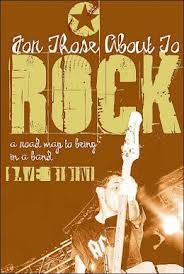
[READ: February 24, 2014] For Those About to Rock
In addition to his hockey books, Dave Bidini has written a number of books about being in a band. On a Cold Road was his memoir of touring with the Rheostatics and The Tragically Hip. Since he likes to write and since he’s a musician, it seemed to make sense to have him write a guide for beginning rockers. This book explicitly states in the first few pages that if you are as old as Bidini, the book is not for you. I am not quite that old, but I got the point. But what’s more rock n roll than not listening to the man? So I pressed on.
The book contains some real-world practical experiences for those who may be just starting out in a band. He says there was no book like this when he was a kid, so he hopes it’s useful. And the book ranges roughly between being a fun guide to rocking out and being a cautionary tale about how tedious and unfun being in a band can be (and how many people may try to take advantage of you). This book is also very specific about being in a touring Canadian band. He talks about slogging it through cold winters across the Trans Canada Highway, something that young bands from Florida certainly don’t have to deal with. But his specifics really help to shape the overall completeness of the book, so take his examples and make them your own.
So I play guitar, have never been in a band and while I always thought it would be fun to rock with others, never had any real desire to “tour.” Is this book still for me? Why yes, it is. Because Bidini has been playing music since the early 80s and he has some wonderful stories. (more…)
I have mentioned this disc before, but having listened to some live shows from around this time, it made me want to check out this disc again. I’ve always thought it was kind of a silly goof of a record without a lot to fully enjoy. And while the goofy tracks stand out, there’s also a lot of really good music on it.
“The Pooby Song” opens the song and while it is a slight and silly song, it is a fun folky introduction. What its title means is a mystery to me. The second song is the first version of “The Junction Foil Ball,” a great track that would later get re-recorded for The Night of the Shooting Stars. “Frank” is another interesting song with some cool scratchy guitars and a good riff. It doesn’t get played much live, but it could easily fit into their set.
“Majorca” is a pretty song from Tim, although it is very strange (to me) that these Canadians are singing about Majorca (a song they would play live in a few bootlegs). Another vaguely silly song is the sitar (?) based “Ugly Manhattan,” which makes fun of Wall Street. Perhaps the most unexpected song is “Trans Jam” a rap which features Farm Fresh and The Subliminal Kid. It’s quite good, too.
And yes, there is a lot of really silly stuff. “Henry’s Musical Beard” is a weird 27 second toss off. “Alien Boy” is a goof commercial about mysteries of the unknown. “Baby, I love You” is introduced as being by MC Vanilli and the Sedaka Prince. It’s an absurdly goofy “pop” song which reflects some pop song stylings rather well. “This is Nightlines” is a profane rambling by Dave about the radio show that’s going off the air.
And yet just as you think the end of the disc is going to be nothing but silly, they play a fantastic version of “Stolen Car” (click track notwithstanding).
It really makes me want to hear the some Nightlines shows. And, ta da, I recently found Network Effects, a site where a kind soul has been digitizing his taped copied of Nightlines sessions. That’s pretty cool–more radio stations should take chances like this.
[READ: February 24, 2014] A Wild Stab for It
I found a bunch of Dave Bidini’s smaller books online. And after reading his book about Keon, it seemed complementary to read this book about Game Eight.
Now, if you’re not Canadian or Russian, Game Eight might be meaningless to you. You might even somehow think that a game of Canada vs the USSR is an Olympic event. But it wasn’t. It was the Summit Series. Bidini assumes you know what the Summit Series is–this book is pretty explicitly for Canadian hockey fans (meaning pretty much every Canadian) who were alive in the 1970s. They would all know what Game Eight was and why it was so important. So, here’s some context from Wikipedia, because again, they summarize it better than I could:
The series was played at the height of the Cold War, and intense feelings of nationalism were aroused in both Canada and the Soviet Union, as well as on the ice. Known at the time simply as the Canada–USSR Series, it was an eight-game series of ice hockey between the Soviet Union and Canada, held in September 1972. It was the first competition between the Soviet national team and a Canadian team represented by professional players of the National Hockey League (NHL), known as Team Canada. It was the first international ice hockey competition for Canada after Canada had withdrawn from international ice hockey competitions in a dispute with the International Ice Hockey Federation (IIHF). The series was organized with the intention to create a true best-on-best competition in the sport of ice hockey. (more…)
SOUNDTRACK: RHEOSTATICS-Alt House, University of Western Ontario, London, ON (January 23 1997).
This show takes place at the University of Western Ontario, an unusual location for the band, but they had an appreciative crowd. There’s a long introduction in which Don Kerr is late to get to the drums. They say that he’s sick and, in fact, they’re all sick, but they don’t sound sick when they play.
The college atmosphere seems to relax them. Indeed, Martin tells a very lengthy story about a painter near his home town in Italy (as an introduction to “Motorino”). He rarely talks much on stage so this banter is a rarity. Dave asks if the fans like the banter. He takes a poll. Songs and banter? Much cheering. No banter. Apparently one vote. Upon hearing that one vote, Dave says, that guy, security! Some fans shout “only banter no music,” but the band doesn’t acknowledge that.
They once again mention martin’s new Chickadee banner and they even throw in some jokes about chickadees in “Four Little Songs.”
This show they explain that they get a little bored playing older songs so they like to mix them up a little. “Record Body Count” sounds rather different and it has a very pretty guitar outro by martin that leads into the intro of “Michael Jackson.”
The opening band was People From Earth, the band that Martin’s brothers were in. I can’t find out much about them and I can’t find any music from them, but I’m very curious to know what they sound like.
This is a really enjoyable show. The recording level is a little too quiet at times, but the sound is quite good.
[READ: February 24, 2014] Keon and Me
This rush of Rheostatics music has had me investigating what the band has been up to since they split up. They have all released some solo records, and Dave Bidini seems to have devoted a lot of his time to writing as well. In addition to his column at the National Post, he has written a dozen or so books. I’ve already read his two earliest books (which were about touring and hockey respectively) and thought I’d read some of his other books too (about baseball, hockey, touring, hockey, hockey, music etc). I thought about reading his third book, but then–amazingly coincidentally–his newest book, Keon and Me was staring at me from a pile of new books at work.
How exciting! Sure it was out of sequence, but that was fine.
The only problem (and the reason I wasn’t too too excited to read it in the first place) was that I had no idea who Keon was. I had gleaned that he was Dave Keon, a hockey player. But I’d never heard of him. It turns out he was the captain of the Toronto maple Leafs in the 70s, during the Leafs’ heyday. Aside from his achievements, which were quite impressive, what was most impressive about Keon was that he only got into one fight in his entire career–and that was in his last game with the Leafs–which garnered him a 2 minute penalty. That’s pretty impressive given that it was the era of goons and thugs when fighting was often more important than hockey.
But this book isn’t really a biography of Keon. Rather, it is a memoir of Bidini growing up and loving Keon. And of his fanaticism to the Leafs (who have sucked ever since Keon left). It is also the story of young Dave Bidini, grade schooler, who was bullied by the classroom thug (and biggest Flyers fan). (more…)
SOUNDTRACK: RHEOSTATICS-Live at Barrymore’s, Ottawa, ON, (February 2, 1996 & May 23, 1996).
There are many many Rheostatics shows recorded at Barrymore’s in Ottawa. These two are the earliest and, strangely perhaps, are only a few months apart.
The first show is over two hours long with a great set list. The problem is the audio. It was recorded from the floor and, like any bootleg quality show, you can hear more audience than band. That’s not entirely true, but you can’t hear the band talk at all and during songs you hear clinking glasses and conversations. It’s kind of a shame, because they cover Blondie’s “Heart of Glass” but you can barely tell what it is. So, it’s not a great show except for diehards.
The May 23 show, on the other hand, sounds great. The notes say it was also recorded from the audience, and yet it is crystal clear. And the set list doesn’t differ too too much from the Feb 2 show. The opening of the set sounds a little funny–the microphones are too loud or the guitars are too quiet, so “Claire” sounds off, but the rest of the show is very good. And as it does not feature Dave Clark, but rather Don Kerr on drums, the zaniness that Clark brought is gone, although the band is still quite funny.
There’s a very funny story about chickadees being quite the bad ass in terms of birds, and Tielli drew a great banner featuring a bad ass chickadee (see bottom of post). Tielli also mentions Nick Buzz, his side project which had an album out at this time. Bidini tells a great story about meeting and interviewing Joey Ramone (and getting his glasses fixed).
There’s talk of “Four Little Songs” have multiple sections so you never know what they’ll play, but I don’t think that every happened. And, finally, Tielli evidently had green hair that night (which leads to an impromptu version of “Heat Miser” (and his explanation of where the song came from).
This is a great show and a great introduction to an early Rheostatics setlist.
[READ: January 8, 2014] The Third Elevator
I don’t usually mention the book publisher when I post about books, but I’m quite taken with Madras Press. From their website:
Madras Press publishes limited-edition short stories and novella-length booklets and distributes the proceeds to a growing list of non-profit organizations chosen by our authors. The format of our books provides readers with the opportunity to experience stories on their own, with no advertisements or miscellaneous stuff surrounding them.
The format is a 5″ x 5″ square books that easily fit into a pocket. At present there are four series with four books in each series.
For a first book from a new publisher, this is certainly a peculiar story. It begins with a swan and a queen. The swan is the queen’s pet and never leaves her side. She wants the swan happily paired off with another beautiful swan, but he is quite picky. Until he meets a bluebird. The swan falls for the bluebird and they pair off. Soon the bluebird is sitting on an egg. But when it opens, it is not a bird at all, but a cloud, which hangs around and which the swan tries to protect. So far, so allegorical.
Then the story shifts two miles away to a glassed in lobby of a building that has three elevators. One goes into the ground where miners work. The miners are not allowed to leave the mine. They simply fill up the elevator with gold and send it up to the surface. A second eevator opens into the forest. The third elevator goes up into the sky.
Then we meet a logger. The logger is amazing at cutting things down. But whenever he so much as harms a tree it makes his insides burst. So he cuts down telephone poles and other man-made objects. And he is soon asked to leave the logging community, despite his family ties to it. (more…)
SOUNDTRACK: An open letter to the Rheostatics (2014).
To Dave, Martin, Tim and assorted drummers:
I’ve been a fan of the Rheostatics for a long time. I recall traveling to Toronto from New Jersey back in the 90s and tracking down Introducing Happiness at Sam the Record Man. And then later driving around the Niagara Falls region listening to the strange and wonderful album. I’ve enjoyed all of the subsequent albums.
You were a unique band with a unique sound. I was sad when you split up, even if that meant that now there were three solo projects to enjoy. Of course, there’s been a lot of bands that have broken up, it’s just part of being a fan. But the thing about the Rheostatics breakup is that you three (or four or five or six) have remained friendly. You’ve done a few reunion shows since the breakup, which I think that’s super cool. It’s especially cool because RheostaticsLive tends to post them after a while so that those of us who don’t make the shows can hear them.
I’ve never seen you guys live, and I imagine I never will. And I’m okay with that. What I’m mostly bummed about is that there will be no more new music from you. You put out approximately ten albums (there’s a few miscellaneous things that are hard to qualify). Those records include soundtracks and live albums and all manner of things, so there’s really seven proper albums (the others are great, don’t get me wrong). Anyhow, my gut feeling is that there needs to be some new Rheostatics music. I know you’ve all been doing solo stuff (and I have it), but sometimes the sum is greater, etc.
Clearly I’m getting at that it’s time for a new album from the Rheostatics. Before you scoff, I’m not talking reuniting for a grand tour, or even any tour, I’m not even talking a live show. Heck, I’m not even talking about you guys hanging out for more than a couple weeks. Just an album of new songs. A decade ago it would have been unthinkable that you would get together for the expense of an album without major label support. But now, the cost is so much lower and with your fan base expanding, I assume it would be easy to recoup the expenses.
So what do you say? Since it seems like everyone is still friendly and creative, maybe you can throw some ideas around in the email, see if there’s anything magical happening. Obviously, if there’s nothing there or you just can’t work together, then don’t continue. No one wants to hear a crappy Rheostatics album. But if there’s even a chance that you guys can throw some ideas together and pull out another “Horses,” or “Northern Wish” or “CCYPA,” or holy cow, “King of the Past,” or, hell, anything you’ve done, then it’s absolutely worth it.
I don’t imagine any of you will read this, but maybe if you google yourselves, Tim Vesely, Dave Bidini, Martin Tielli, you’ll see this and think that, yes, dammit, seven records of Rheostatics music is not enough.
Thanks for the music, Paul Debraski.
[READ: January 26, 2014] Worst. Person. Ever.
I told myself that I wanted to read this book before anyone requested it. And I did. In fact, I wanted to finish it before the weekend was up, which I did as well. It’s nice to meet a minor goal.
The last few Coupland books that I read (see last week) were very dark. Since those books, he has broadened his palette somewhat, including writing a children’s book and some more non-fiction. And then we get this. A vulgar, very funny sendup of modern culture. The introduction to the book says that it was based on a short story that he wrote for McSweeney’s #31 called “Survivior.” That story was written in the style known a biji which they described as
Biji is sort of a notebook, which contains legends, anecdotes, scientific notes and local wisdom. Accounts of everyday life mix with travel narratives as well as lists. It is meant to represent a picture of the culture at the time of writing.
I thought that this style was well suited to Coupland, because he includes all of that stuff anyway. And so he has taken that story and fleshed it out into this full novel.
The worst person ever is named Raymond Gunt. He thinks he’s Jason Bourne, but he’s really just a metaphorical extra in a Bourne movie (one who probably gets killed). Gunt is a cameraman working in England. He is divorced. His wife is a raging harpy (at least from his point of view, which is all we see). Since their divorce, she has become wildly successful in television production. He calls in on her at work and she tells him about a job working as a B cameraman on a show called Survival. He knows that the job must suck or she wouldn’t give it to him, but he needs to work. Of course, he is most upset at the thought of having to work with Americans (Americans are majorly abused in this story). Although by its very nature a B cameraman position is not as good as an A cameraman, Ray needs the work, so he agrees to fly to some godforsaken tropical island to watch beautiful people starve and try to have sex with each other.
On his way out of the building he sees a homeless guy. And since Ray is the worst person ever, he kicks him. But the homeless guy is no pushover and he chases after Ray. He catches Ray in an alley and pummels him, ultimately pushing his face into some garbage. The man is Neal and although he acts crazy, he’s actually quite sharp (why he is homeless is not addressed). After forcing Ray to sing the female verses of “Don’t You Want Me,” Neal gives him this sage advice:
“Stop being a cunt to the world and the world will stop being a cunt to you.”
Advice which Ray simply cannot follow.
When ray learns that he needs a personal assistant, um, slave, he immediately thinks of Neal. So he tracks him down, cleans him up and gives him a job. And off they jet to make some TV.
In the course of the book, a series of crazy things–the kind of things only Coupland thinks of–sidetrack them from Ray’s goal. (His real goal is to get laid, naturally). First, it turns out that Neal, despite being homeless, is a total babe magnet. And throughout the story, as he gets cleaner and fresher, he becomes irresistible This, of course, ruins Ray’s plans of bedding hot women. And as Neal gets cleaner, he becomes less and less Rays assistant and more and more Ray’s equal.
They jet to L.A., (he was supposed to be in first class, but was bumped and is super angry). He also gets in trouble with the airport bartender, Lacey, who comes back to haunt him in ways one could never predict. He gets first class seats on the way to Hawaii and he abuses the privilege. Then, because of unforeseen circumstances, they have to stay in Honolulu (with lots of Spam jokes). And because of those unforseen circumstances, they need to recast the show, which means Ray’s wife has to jet down and be around them. And Ray’s wife, Fiona, is delighted to make Ray’s life miserable. Eventually, they head to their intended island and prepare to set up for the show.
In the meantime, the U.S. has decided to destroy the Great Pacific Garbage Patch–in a very imaginative way. And ray is on hand to witness the destruction. This plan causes all manner of trouble with shipping and airplane traffic. Which has the effect of isolating everyone on the Survivor island–causing a literal survival situation.
Raymond Gunt may not be the worst person ever, but he is pretty darn close. He tries to sleep with anyone. He tries to screw over everyone else (but never seems to get anywhere). And he genuinely likes to torment others. And all the while he repeats his mantra, “I consider myself a reasonable enough citizen.” Despite Gunt’s personality, he (or at least the story) is funny enough that you want to keep reading (and maybe even to succeed in some of his designs). And that made this story a major page turner. And it was very funny as well.
Coupland really gets the feel for writing a British story. It doesn’t read like any of his other books and while it’s not full of crazy accents or overt Britishisms, his main character is defiantly not American. As I said, all Americans are fat, sweaty, stupid and prudish in Ray’s mind.
This is also the worst person that Coupland has ever written. He is such an abominable person with an incredibly filthy mouth. The above quote is just one of just many curses in the book. In fact there’s a whole subplot about how prudish Americans are about people saying “fuck” despite their cavalier acceptance of violence and other things (we say friggin, when everyone knows we mean fucking).
I have to assume Coupland had a ton of fun writing this. And it really comes through. I’m also going to guess that a lot of people’ won’t like this book because Gunt is so reprehensible. But if you can get past that, the story is funny, and makes some pointedly humorous observations about a lot of contemporary life. Like “Survival [sic] is a popular reality TV show… You’re either into this show or you’re not. It’s binary.” or “‘Come on Eileen’ was a single in 1982…What’s weird about this song is that it was so huge at the time and now you listen to it and wonder, what the hell was everyone thinking? Well, that’s pop culture for you.” It even has what seem like Wikipedia entries of things throughout in the book (and a YouTube link which is bizarre to see in print).
I really enjoyed this, and I’m thrilled that Coupland has unleashed his inner black humorist.
Watch him talk about the book with Jian Ghomeshi, a great interviewer
Dave Bidini was a driving force behind Rheostatics. Although when I think of the band, I think of Martin Tielli’s wackiness and Tim Vesely’s hits, which kind of makes Bidini the sort of stable, middle of the road guy. But I don’t think that’s right either as Bidini has both a wacky side and a hit-making side. But this “solo” project focuses mainly on Bidini’s storytelling skills. Most of the songs are little narratives, which is always enjoyable.
“Desert Island Poem” is actually a story of the dissolution of the Rheostatics–when they survived a plane crash in Drumhella and ate the drummer. “Memorial Day” surprises because of the clarinet solo (which works wonderfully). “We Like to Rock” and “Song Ain’t Any Good” are the other kind of song that Bidini writes–songs about playing music. These kind of songs are always dopey and “We Like to Rock” is no exception–I think I ‘d like it more if it weren’t so tinny sounding. “Song Ain’t Any Good” is kind of funny, especially if you get through the whole song, although I don’t know if multiple listens are rewarded.
On the other hand, “The Land is Wild” is a great song about Bidini’s other passion: hockey. This is a lengthy (nearly 7 minute) story about Bryan Fogarty, a young hockey player who was a star at 21 but a forgotten addict by 31. It’s a sad, cautionary tale about how the hockey establishment all but ignored him as he wasted away. “How Zeke Roberts Died” is a very similar song, it’s an 8 minute biography of Liberian singer Zeke Roberts. This song has lead vocals by a variety of singers.
“Last Good Cigarette” is a delightful ditty about smoking with famous people (and it is super catchy–ha-cha!). “Pornography” is a funny political song about George W. Bush that is also quite catchy. And the wonderfully titled, “The Story of Canadiana and Canadiandy” is about living close to America.
Although the album is mostly folky and kind of mellow, “Terrorize Me Now” shows some of Bidini’s more wild guitar noises. And the final song, “The Ballad of 1969” is a great song that is reminiscent of the kind of highs that the Rheos would hit. There’s a bonus untitled song [later called “The List (Killing Us Now)”] which is a simple song of people who have aggrieved him. It’s funny, especially in the live context it is given.
While not as great as a Rheostatics album, this release is like an extension of the band. Bidini has a new album out which I haven’t heard yet, but I’ll certainly be checking it out.
[READ: March 5, 2012] “Haven”
Munro is back (talk about prolific!) and she has created a darkly claustrophobic house in which to place the young protagonist of this story.
The story is set in the seventies. The protagonist is from Vancouver, but her parents are heading off to Africa for a year so they have sent her to live with her Uncle Jasper and Aunt Dawn. Despite this mission to Africa, they are not going there for a missionary purpose, they are going there to teach (and haven’t come across many heathen). They’re also Unitarian. Uncle Jasper, on the other hand, insists on saying grace before meals and gets on the protagonist when she starts eating before the prayers.
It turns out that Uncle Jasper is the man of the house. Aunt Dawn does not begin eating her meal until the discussion of grace is over (after receiving an invisible nod from Jasper). More examples of her deference are given, but the quote that sums up Aunt Dawn (whether she said it or not) is “A Woman’s most important job is making a haven for her man.” Although, given that, Jasper does show her some affection: a gift and some closeness towards the end of the story. (more…)
This song appears as a bonus track on the Bidiniband album. But I’ve been aware of it since 2007 when he played it on his solo tours. It is essentially a list of 4 Canadians who are “killing us, killing us now.” The list includes Tim Horton’s (purveyor of delicious donuts), Chad Krueger (from Nickelback), Zack Werner (a judge on Canadian Idol), and Stephen Harper (I shouldn’t have to tell you).
But the key to the song is the chorus: “where are the angry young ones….” This song should become the unofficial song from Occupy Wall Street. It would be very easy to modify. Hey Dave, if you’re free you should head on down and serenade these angry young ones.
Here’s a great live version done in a record store in which he is close enough to have a casual chat about the very song he is singing in the middle of the song.
He also ends it a little differently than the original. It’s catchy and easily adaptable. Good on ya, Dave.
[READ: November 19, 2011] “Who Wrote Shakespeare?”
No one has traded off of his Monty Python fame as much as Eric Idle. All of the other Pythons have moved on in one direction or another, but Eric keeps the torch alive (see Eric Idle Sings Monty Python and Spamalot). He even has a little nod to MP in this essay with the asterisk next to his name which leads to (*Most likely Michael Palin, really). This refusal to let go of Python has at least kept his wit sharp, as we see in this Shouts & Murmurs.
My main problem (as I’ve said before) with the Shouts & Murmurs is that they are usually too long. But, as Python knew, keep it short and funny and you’ll succeed. So this two-column piece never really flags in its simple premise.
Which is that everyone knows that Ben Jonson really wrote all of Shakespeare. Idle presents a list of all of the famous books that were really written by someone else. For example, “Simone de Beauvoir wrote all of Balzac and a good deal of ‘Les Misérables,’ despite the fact that she was not born yet when she did so.” And my favorite: “‘Moby Dick’ was written not by Herman Melville but by Hermann Melbrooks, who wrote most of it in Yiddish on the boat from Coney island.” The joke about Henry James is very funny and too good to spoil. (more…)
 SOUNDTRACK: RHEOSTATICS-Starlight Club, Waterloo, ON (November 5, 2005).
 After a summer tour, the Rheostatics live site picks up again in November with this, the first of the last few shows the site has until 2007.











 I Just Read About That...