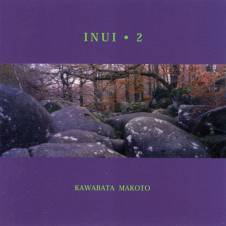
 SOUNDTRACK: KAWABATA MAKOTO [河端一]-INUI 2 (2000).
 Kawabata Makoto [河端一] is the guitarist and mastermind behind Acid Mothers Temple. The band is hugely prolific. But he still had time to record solo albums. Often times without any guitar.
This was Kawabata’s second solo LP, now available on bandcamp
INUI 2 was the first widely available solo CD by this prolific Japanese guitarist/composer/bearded guru. Known primarily for his recent work with oddballs Acid Mothers Temple, Kawabata’s career actually goes back to the late ’70s and spans many styles, including solo guitar improv, electronics, folk, and, of course, the deranged acid mayhem associated with the PSF scene. Performed entirely solo on violin, kemenje, zurna, electronics, sarangi, taiko, gong, water, bouzouki, cello, vibes, organ, and sitar, the four tracks that make up INUI 2 are perfectly executed dream-music, equal parts delicately floating and heavily droning. There’s also one all-too-short modal essay for bouzouki that is amazingly beautiful.
“Mou” (9:56) has a drone underpinning the song as he plays a quiet keyboard melody over the top. About half way through the zurna comes in playing its somewhat harsh melody (although it is less harsh here). This is a pretty cool chill out song. [Instruments: Violin, kemenje, zurna, electronics].
“Meii” (11:02) is composed of slowly plucked sarangi strings. They ring out loud and are accompanied by thumps on the taiko and occasional crashes of the gong. There is also a high pitched feedback/electronic sound that rings out form time to time. About midway through the bowing become s a little wild and improvisational until it settles back down again. [Instruments: Sarangi, taiko, gong, water].
“Shi” (3:47) is the ‘all too short” piece and I agree that it is too short. It features a quietly plucked string melody on the bouzouki that is very pretty. It has mild drones behind it. About half way through the melody changes, a faster more deliberate style but still quiet and pleasing. I could listen to this one for much much longer. [Instruments: bouzouki, cello, vibe, organ].
“Kan” (14:18) starts as harsh electronic drone with occasional blips of hi frequency sounds. It’s the first unpleasant sound on the disc. Although after 2 and a half minutes, the string drones enter and smooth things over. At some point a pulsing possibly, backwards recorded series of notes comes in to give the drone some drive. [Instruments: bowed sitar, violin, electric sitar, electronics].
[READ: September 10, 2019] “Ranch Girl”
This brief story was collected in Meloy’s Half in Love.
It starts with the fatalistic sentence:
If you’re white and you’re not rich or poor but somewhere in the middle it’s hard to have worse luck than to be born a girl on a ranch.
The unnamed protagonist grew up the daughter of the foreman of the Ted Haskell Running H Ranch. Haskell’s brand was a slanted H–she had seen it all her life and didn’t know an H was supposed to be upright until she went to school. (more…)

 SOUNDTRACK: KAWABATA MAKOTO [河端一]-INUI 1 (2000).
 Kawabata Makoto [河端一] is the guitarist and mastermind behind Acid Mothers Temple. The band is hugely prolific. But he still had time to record solo albums. Often times without any guitar.
 I Just Read About That...