Feeds:
Posts
Comments

Archive for the ‘Magazines’ Category

815

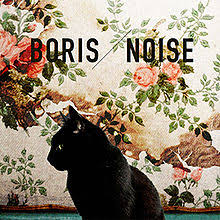
SOUNDTRACK: BORIS-Noise (2013).

You really never know what you’re going to get with Boris.  Most of the time, there are multiple editions of releases with different covers and different mixes.

In this case, despite the different covers of this record (see below), the track listing is exactly the same (except that the Japanese version came with a bonus disc).  Total length: 57:52

I like that this album cover parodies (sort of) Nirvana’s Bleach album cover.

“Melody” (黒猫メロディ) 6:40 The disc opens with some ringing alt-rock wit a distorted rocking chorus.   Despite the cover, it’s not like Nirvana, it’s more soaring  there’s catchy backing oohs and a cool hi-hat flourish.

“Vanilla” 4:15 is heavy in the same vein as “Melody” and “Ghost of Romance” (あの人たち) 5:49  has slow guitars and soaring leads with a heavy solo.  “Heavy Rain” (雨) 6:12 starts quite slowly with vocals by Wata and then there’s a big crash and the heavy section follows.  It alternates between quiet and loud at intervals.

“Taiyo no Baka” (太陽のバカ) 3:36 is almost a pop metal sound with dancey vocals and woah hos.  There’s even a simple guitar riff that follows along.  At three and a half minutes it’s a pure pop gem.

“Angel” 18:42 Angel, on the other hand pushes 19 minutes and it’s an epic workout.  It begins with a pretty, quiet guitar riff interlaced with a second guitar and interesting percussion.  There’s slow vocals as well.  But after 6 minutes, a loud distorted guitar interrupts the pretty melody, but it’s only playing an intermittent chord.  Even the powerful drums blasts don’t change the overall tempo of the song until a minute later when it takes on a loud droning quality with harmony vocals and a distorted bass moments.  There’s a soaring guitar solo as well.  By around 10 minutes the song turns into an uptempo rocker with falsetto vocals!  The song seems to climax at 13 minutes with a big gong.  But there’s more.  The song turns into a kind of soaring instrumental with echoing guitars and thumping drums.  With two minutes left the song returns to that opening guitar riff with a tidy solo over the top.  It’s like the song is nicely bookended with itself.  It’s quite the centerpiece.

“Quicksilver” 9:51 Who know what another band might follow a 20 minute song with, but Boris chose a nearly 10 minute song.  It seems at first that “Quicksilver” is going to be a short blast with the super fast pummeling hardcore sound.  There’s screamed vocals and wild drumming but it’snot that simple.  At 3 and a half minutes, the song slows down some although it stays heavy.  By around the 5th minute there;s lou dbacking voclals to accompant the lead vocal.  Once again, a false climax comes at 7 minutes but there’s more feedback to come along with a quiet, pretty guitar outro.  Until the final two minutes when there are loud droning chords that play through to the end.
“Siesta” (シエスタ) 2:50 Siesta is the shortest song on the disc, an instrumental that is kind of pretty and kind of woozy at the same time.  It’s definitely a slow down from the erst of the album and a nice conclusion.

This was the first Boris album I bought and it’s still a favorite.

The Japanese edition (cover to the right) came with this bonus disc, which I’ve not heard.

CD 2 (Another Noise) Total length: 23:26
1. “Bit” 9:35
2. “Kimi no Yukue” (君の行方) 4:51
3. “Yuushikai Revue” (有視界 Revue) 3:32
4. “Discharge” (ディスチャージ) 5:32

[READ: July 23, 2015] “Love is Blind and Deaf”

This was the 2015 New Yorker fiction issue.  It featured several stories and several one-page essays from writers I like.

In addition to those essays on Time-Travel it also included this short piece from Safran Foer.  I hadn’t seen much from Safran Foer recently, so I was interested to read this (very) short story.  It’s all of one page.

Much as Zadie Smith’s story about celebrities was unexpected, so was this one (on the following page in the magazine no less) about Adam & Eve.

We learn that Adam was blind and so never had to see Eve’s hideous birthmark.  And that Eve was deaf and never had to listen to Adam’s whiny narcissism.  And then they ate the apples and knew everything.  (more…)

Read Full Post »

815

SOUNDTRACK: BORIS-Attention Please (2011).

Attention Please marks a departure from the Heavy Rocks sound, returning to the dream pop sound explored on New Album, but this time, it has elements of noise pop and alternative rock. It features Wata’s vocals on every track.

Attention Please shares the songs “Hope,” “Party Boy” and “Spoon” with New Album
Attention Please shares the tracks “Aileron” with Heavy Rocks, although it is radially different.
New Album shares the tracks “Jackson Head” and “Tu, La La” with Heavy Rocks.

“Attention Please” 5:12 has a pulsing bass and gentle drums that lie under Wata’s whispered sensuous vocals.

“Hope” 3:26 Sounds a lot like the version on New Album, although the synths have been replaced by strings and the sound effects are removed.  This song feels more organic but still slick and catchy.

“Party Boy” 3:50 The thumping bass drum and a really buzzy bass give this version a very different sound.  There’s almost no synth although the vocals sound pretty much the same.  There’s a lot of strange effects that reward headphone listening–when Wata whispers in your ear it might even make you turn your head.  Although the song is basically the same, the New Album version is definitely catchier.

“See You Next Week” 3:56 has warping synth sounds that push the song forward as Wata’s whispered vocals come in.  The speed of the “percussion” is contrary to the gentle echoing vocals.  “Tokyo Wonder Land” 5:42 opens with repeated, high-pitched Huh huh huh and super distorted wild guitar riffs.

On “You” 6:13, it sounds like she’s singing “anatomy” quietly at a whisper (which she obviously isn’t).  It’s a slow, smooth song that meanders beautifully.

“Aileron” at 2:01, this is a much abbreviated version from the one on Heavy Rocks.  This one is all acoustic with some pretty guitar soloing going underneath the lovely melody.  The melody is the same but the whole song is very different.

“Les Paul Custom ‘86” 2:09 has whispered vocals from Wata and the men.  There’s guitar washes and a sense of menace but mostly it’s kind of tinny and effects-filled.  Its one of the few songs where understanding the words might actually help.

“Spoon” 4:16 For this version, there;s no keyboard notes, just heavy guitar.  But that whole shoegaze vibe from Wata’s vocals remains. The only real nod to the other version is the sound of breaking glass at the end of select verses.

“Hand in Hand” 4:30 is quiet and pretty with the tinny guitar and Wata’s gentle soaring vocals.

Between these three discs you get a pretty complete picture of the music of Boris–largely heavy,but always guitar based.  They really show off their diversity with this trio.

[READ: July 22, 2015] “Escape from New York”

This was the 2015 New Yorker fiction issue.  It featured several stories and several one-page essays from writers I like.

In addition to those essays on Time-Travel it also included this short piece from Zadie Smith.

This story is quite the peculiar one from Smith.  It eschews just about everything I think she writes about and focuses on a very unexpected subject.

There is a catastrophe in New York (presumably 9/11 although it could be a fictional disaster).  Lead character Michael is trying to coordinate an escape for his friends Elizabeth and Marlon.  Now, the accompanying photo was a clue, and anyone with any familiarity with celebrities should recognize those names.  I wasn’t sure if it was a coincidence; I assumed it must be. (more…)

Read Full Post »

815SOUNDTRACK: BORIS-Heavy Rocks (2011).

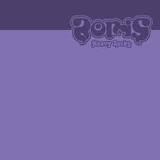
Heavy Rocks, also known as Heavy Rocks 2011, was released at the same time as Attention Please and New Album.   The album has the same name and cover style and font as their 2002 album Heavy Rocks, although this one is purple and the 2002 release was orange.

Heavy Rocks shares the tracks “Jackson Head” and “Tu, La La” with New Album.
Heavy Rocks
shares the tracks “Aileron” with Attention Please, although it is radically different.
New Album shares the songs “Hope,” “Party Boy” and “Spoon” with Attention Please. 

The vinyl edition features extended versions of “Missing Pieces” and “Czechoslovakia.”

Unlike the other two albums, this one is largely heavier, exploring their more metal urges.

“Riot Sugar” (“甘い暴動”, lit. “Sweet Riot”) 3:56  has a raw sound with a soaring solo and a chugging, heavy tone.  It abruptly ends mid guitar solo and segues into “Leak-Truth,yesnoyesnoyes-” (“Leak-本当の反対の反対の反対の反対-“, “Leak (The Opposite of the Opposite of the Opposite of a Real Opposition)”) 4:11  which opens with a quiet unprocessed guitar and then the song starts rocking out–a kind of grungy alt-rock sound.  The vocals are whispered with a kind of throbbing bass line throughout.

“Galaxians” 4:09 opens with pummeling drums and all kinds of (80s) arcade sounds–including a bomb dropping and Atsuo screaming and shouting.  It is heavy and raw and pure punk.

“Jackson Head” (“ジャクソンヘッド”) 3:00 The version of this song is less synthy than that on New Album.  It’s got those punky distorted vocals right up font a shouted chorus of Jackson Head repeated over and over.

“Missing Pieces” (14:27 on vinyl release) 12:22  starts slowly with a pretty guitar melody and muted vocals.  After 6 minutes the song rocks but doesn’t get too noisy.  But after two more minutes it turns into complete and utter noise for another 2 minutes.  Then it all drops away and goes back to the quiet intro guitars.  The last two minutes just rock out.

“Key” (“扉”, lit. “A Door”) 1:46 This is a quiet brief instrumental with twinkly keys and a soaring solo.  It segues into “Window Shopping” 3:57 which opens with a woman speaking Japanese and then some heavy riffage.  There’s a shoegaze echo on the whole thing, especially the doo doo/ doo doo chorus.

“Tu, la la” 4:21 Such a great riff they had to play it twice.  This is a heavier and more guitar based version than on New Album.  It’s my favorite Boris song.

“Aileron” (“エルロン”) 12:45  The version on Attention Please is 2 minutes of acoustic guitar.  This one is nearly 13 minutes, and it begins with a slow echoing guitar notes but it soon gets heavy.  It’s a long, slow, heavy piece with drones and echoed vocal for nearly the whole song, although after 12 minutes there is a delicate piano coda.

“Czechoslovakia” (“チェコスロバキア”, 5:46 on vinyl release) 1:35 Not sure what happens in the vinyl version, but this short rocker has loud guitars and thunderous drums.  Just as it’s about to take off it fades after 90 seconds and ends the album.  Always leave them wanting more.

[READ: February 8, 2016] “Package Tour”

This was the 2015 New Yorker fiction issue.  It featured several stories and several one-page essays from writers I like.  The subject this time was “Time Travel.”

For the final time travel essay Sam Lipsyte balks at a couple’s genuine desire to use a time machine to go back to Brooklyn a few decades to buy a cheaper brownstone.  People in Brooklyn apparently constantly bemoan who cheap places were in their youth, but this one, well:

I pictured the couple hunched in some rattling claptrap wormhole-traverser–because all time machines are built with scrap iron and held fast with duct tape and cut-rate rivets, even those designed for hunting down investment lofts.  Their lips would be peeled back by G-Forces as their ship shredded along the seam of the space-time continuum until they landed in Cobble Hill, 1974.  There they’d hop out, buy a building, and head back. (more…)

Read Full Post »

815SOUNDTRACK: BORIS-New Album (2011).

In 2011, Boris released three albums at roughly the same time.  The three albums are linked because they share tracks (usually very different versions, sometimes radically different).  And, of course, the CD and LP feature different versions of several tracks (but none seem to have a different cover).

New Album shares the songs “Hope,” “Party Boy” and “Spoon” with Attention Please. 
New Album shares the tracks “Jackson Head” and “Tu, La La” with Heavy Rocks.
Heavy Rocks
shares the tracks “Aileron” with Attention Please, although it is radically different.

Sargent House CD (Total length: 50:10).  Interestingly, this American release is longer than the other two.  It is quite poppy with some heavier elements.  There’s a lot of songs that could even be considered dancey (!).

“Flare” 5:04 opens with sirens blaring and a gentle electronic introduction a song bursts forth that feels like total J-pop.  A little heavy (in parts) but this is really dancey.  There’s a great Wata solo in the middle and a rather heavy ending.  The percussion throughout is very mechanical sounding like ea car engine sputtering.  It’s a remarkable sound for Boris.

“Hope” 3:43 is a poppy / shoegazey song sung by Wata. It’s synthy (with trippy synth sound effects  throughout).  It’s slick and catchy.  The version of Attention Please is a more organic, with strings instead of electronics.

“Party Boy” 3:48 opens with a synthy riff and thumping bass drums.  It is the catchiest thing they’re released with a really poppy chorus and interesting swirling synths around the vocals.  There’s even a harp in the middle of the song.  The version on Attention Please is much heavier with a buzzy bass guitar and almost no synths.

“Luna” 8:29 has fast electronic drums and processed Wata backing vocals.  It is super techno sounding.  The middle section is an instrumental with electronics that sound very Eastern (sped up, but that kind of scale).  It’s followed by some heavy guitars and pounding drums.  A ripping staccato guitar solo follows.  There’s even a few moments that sound like Sigur Rós.  Why the song “Black Original” didn’t make this album but is on the Japanese versions is a mystery to me.

“Spoon” 4:29 Opening with single keyboard notes over a pounding drums and distorted guitars, this song sung by Wata is fluid and catchy.  It’s the most shoegazey thing they’ve done so far.  There’s a total Stereolab vibe in this song.  The ending features a series of intense ascending chords.  The version on Attention Please has no synths, just shoegaze guitars.

“Pardon?” 6:00 The song opens with woozy electronic but soon changes to very gentle guitars and an almost jazzy bassline.  The whispered vocals are downright soothing.  There’s a trippy almost delicate guitar solo that runs through until the end.

“Jackson Head” 3:11 This is the most punk song on the record, but it’s electronic punk with very dark synths.  The lyrics are shouted with a repeated chant of “Jackson Head.”  The solo sounds like single, distorted snyth notes under the pulsing of the rhythm.  The version on Heavy Rocks is less synth menace, although it does sprinkle trippy synths throughout the song.

“Les Paul Custom ’86” 4:10 A whispered vocal over a thumping potential dance beat.  When Wata takes over vocals the song changes style, but only slightly.  Distant synths enter the song and try to install a melody on it, but it seems to be fighting everything else.  Wata’s spoken “echo” echos around your heads in a cool swirl (if you wear headphones).

“Tu, La La” 4:15 “Tu La La” has the best riff of any Boris song, It is fast and catchy and really interesting.  This version has strings that kind of overwhelm the greatness of the riff. (I prefer the version on Heavy Rocks)  The end of this version has an intense buildup of staccato strings.

“Looprider” 7:01 is a quiet song with a slow bassline and interesting guitar lines.   The last minute or so is fast synths, building and building with a siren effect that echoes the start of the album.

This is a pretty unexpected release from the band who created Heavy Rocks and Amplifier Worship, but I think it’s a great addition to their catalog.

For comparison sake:

Daymare LP Total length:       45:40

  1. “フレア (Vinyl Version)” (“Flare”; features introduction quoting the end of “Looprider”) 5:02
  2. “希望 -Hope-” 3:40
  3. “Party Boy (Vinyl Version)” 3:43
  4. “Black Original (Vinyl Version)” 4:33
  5. “Pardon?” 5:54
  6. “Spoon” 4:23
  7. “ジャクソンヘッド” (“Jackson Head”) 3:09
  8. “黒っぽいギター (Vinyl Version)” (“Dark Guitar”; English title “Les Paul Custom ’86”) 4:06
  9. “Tu, la la” 4:11
  10. “Looprider (Vinyl Version)” 6:59

Tearbridge CD Total length:       45:39

  1. “Party Boy” 3:49
  2. “希望 -Hope-” 3:43
  3. “フレア” (“Flare”) 4:21
  4. “Black Original” 4:27
  5. “Pardon?” 5:59
  6. “Spoon” 4:28
  7. “ジャクソンヘッド” (“Jackson Head”) 3:12
  8. “黒っぽいギター” (“Dark Guitar”; English title “Les Paul Custom ’86”) 4:09
  9. “Tu, la la” 4:15
  10. “Looprider” 7:13

[READ: February 5, 2016] “Fall River”

This was the 2015 New Yorker fiction issue.  It featured several stories and several one-page essays from writers I like.  The subject this time was “Time Travel.”

For this essay McGuane travels back to 1955 to his grandmother’s house in Fall River section of Boston.

He says there is little compassion between the duchies of this town.  The Irish Catholics dominate every neighborhood, with each having its own church.  But eventually Irish Catholic men like his uncles started showing interest in the Italian, French Canadian and Jewish girls–going so far as to marry some of them.

He wants to go back there to 1955 when there were half as many people and each town had its own personality.  The ragman is known as “the sheeny” and he imagines that the sheeny is a soon-to-be-famous sculptor.  He brings up a lot of other single incidents, like the “Portagee” boy who came to exact revenge on the author;s brother for breaking his arm.  Or how Emeril Lagasse comes from “up the Flint.”  There’s Cockney immigrants Down Almy Street who are known as “jicks” (a one-size-fits-all Irish insult). (more…)

Read Full Post »

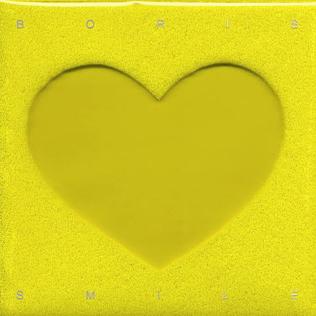
815SOUNDTRACK: BORIS -Smile (2008).

Boris followed Pink with a couple of limited edition albums of drone music, collaborations, seven inch singles, live albums and other things.  And then they released Smile.

As Wikipedia explians:

Shortly after [the Japanese] release, the album was released by American label Southern Lord with a slightly different track listing, different artwork (by Stephen O’Malley), and an almost entirely different sound.   The different versions of Smile contain different mixes: the English version was mixed by Souichiro Nakamura, while the Japanese version was handled by You Ishihara.

I have the Southern Lord CD, but I’ve put the listing for the Japanese release (and cover) below

“Flower Sun Rain” (with Michio Kurihara).  This is a cover of the song by Pyg.  There’s quiet guitar and singing with wailing solos.  The song is quite faithful to the catchy original, except that around 6 and a half minutes in Wata puts in a wailing guitar solo as the band gets even heavier.  The American version ends abruptly mid-solo, but is two minutes longer than the Japanese release.

“Buzz-In” opens with static an a baby crying/talking before the song turns into a big pile of catchy heavy metal–pounding drums, chanted lyrics and lots of heavy guitars.  “Laser Beam” (“Hanate!” on Japanese version) opens with wailing guitars and bass solos before the heavy thrash follows.  There’s even a catchy chorus.  There’s a noisy section of feedback in the end.  As the song fades out there a series of cymbal smashes which slowly fade out while a quiet acoustic guitar plays for about a minute.  Just as he starts to sing, the song is cut off by the raw power of  “Statement” (“Messeeji” on Japanese version).

“Statement” is the first song (and video) I’d heard by Boris.  I heard it and was hooked.  It opens with a simple riff, two cowbells and a scorching guitar solo.  The verses and chorus are really catchy (whoo-hoos).  The Japanese version sounds completely different and is about twice as long.  It eschews the guitars almost entirely, leaving just a distorted bass drum as the main musical component. The guitar solos are relegated to the background.  But the vocals are pretty much the same.

“My Neighbor Satan” (with Michio Kurihara) (“Tonari no Sataan” on Japanese version) changes the tempo completely.  The song is quiet and kind of pretty.  There’s some really distant looped clacking drums, but the song is a quiet guitar melody and gentle vocals.  There’s a quiet (but very distorted) guitar solo in one ear.  And then after 2 and half minutes really heavy guitars and drums come in and overpower the melody for about a minute before dropping out again.  The quiet part resumes until the big snare drum fill which leads to a moment of silence before the really heavy rocking one-minute ending.

“Ka Re Ha Te Ta Sa Ki—No Ones Grieve” (“Kare Hateta Saki” on Japanese version) opens with loud droning chords.  After about a minute, it takes off with a wailing solo and power from the whole band.  When the vocals come in, the heayy rocking band kind of fades but is still audible over the slow and fairly quiet vocals–it’s a dramatic juxtaposition until the whole song is taken over by the guitar solo.  There’s some whispering in each ear as well (no idea what they’re saying).

“You Were Holding an Umbrella” (with Michio Kurihara) (“Kimi wa Kasa o Sashiteita” on Japanese version).  This is a pretty song, quiet and understated.  It sounds like a fairly traditional melody. There’s a quiet click track and a pretty guitar with whispered vocals.  It lasts for about four minutes before the squealing guitar solo introduces the rest of the band as they crash into the song.  This makes the song heavier but no less pretty.

“[untitled]” (with Stephen O’Malley).   This is a full on epic.  And like a good epic it begins with backwards guitar swirling around and forward guitars playing a simple melody.  At 4 minutes a noisy guitar solo fades in and fades out for about thirty seconds before the quiet vocals begin.  Around 7 minutes in the loud guitars come in with a vengeance.  They play with the melody which makes the whole thing feel much bigger.   The last four minutes or so just play with the droning guitars as they work on harmonies with what sounds like an e-bow, harmonies coming in an out.  The Japanese version is 4 minutes longer.

I’ve been listening to the Japanese mix online and I can’t get over how different it sounds.  Sometimes whole chunks of sound are removed while other sounds come to the forefront.

Diwphalanx CD

  1. “Messeeji” (“メッセージ”, “Message”) 7:06
  2. “Buzz-In” 2:34
  3. “Hanate!” (“放て!”, “Shoot!” (“Laser Beam” on English version)) 5:02
  4. “Hana, Taiyou, Ame” (“花・太陽・雨”, “Flower, Sun, Rain”; cover of the song by Pyg) 5:35
  5. “Tonari No Sataan” (“となりのサターン”, “Next Saturn” (“My Neighbor Satan” on English version)) 5:20
  6. “Kare Hateta Saki” (“枯れ果てた先”, “Dead Destination” (“Ka Re Ha Te Ta Sa Ki -No Ones Grieve-” on English version)) 7:26
  7. “Kimi wa Kasa o Sashiteita” (“君は傘をさしていた”, “You Were Holding an Umbrella”) 9:19
  8. “untitled” 19 20

[READ: July 21, 2015] “Morlocks and Eloi”

This was the 2015 New Yorker fiction issue.  It featured several stories and several one-page essays from writers I like.  The subject this time was “Time Travel.”

I enjoyed the way Curtis started this essay with the amusing (but maybe not) “some months ago I briefly became pregnant with the child of a PhD in quantum physics and for a  few seconds I understood the nature of time.”

She says that time is a like a tennis ball full of rubber bands.  Each strand is a line of time–linear while you are on it but so easy to cross from one to the next with so many places touching. (more…)

Read Full Post »

815SOUNDTRACK: BORIS-Pink (2005/2016).

You never know exactly what you’re going to get with an experimental band like Boris.  Well, you sort of know what you’re going to get–it will be loud and heavy (mostly).

Boris is and pretty much always has been a trio from Japan: Takeshi on vocals, and double neck bass/ guitar;  Atsuo on drums and some vocals and Wata – with guitars effects and vocals.

.  Their first album came out in 1996 and was a 60 minute continuous piece of drone metal.  It is considered ground breaking (and ground shaking) and is completely influential.  It (along with half of their catalog) is currently out of print, at least in the U.S.  Boris is also nigh impossible to collect all of their music, if you like that sort of thing.  Their Japanese releases are inevitably different from any American release (and sometimes vinyl differs from CD).  Either by track order or length of song or even the mix of particular songs

A decade and eight (plus) releases later with names like Amplifier Worship and Heavy Rocks, they put out Pink.

Pink is a landmark album for Boris (two years ago they toured the album),  because even though it was still incredibly heavy, it also experimented.  Most notably with shoegaze.

.

Pink has a specific track listing on both American and Japanese releases, but the vinyl mixes things up.

The CD releases open with “決別” (“Farewell”) a beautiful soaring 7 minute slow song with a catchy chord sequence and lovely ringing guitars.  Although the beauty is interrupted by Wata’s wailing guitar solos.  She plays some wonderful soaring notes although at times they are rather piercing.  But it’s still kind of soothing and dreamy

Until track 2, when “Pink” scorches forth with a  super fast super heavy super guitar blast.  Four minutes of all out metal with soaring guitars, heavy drums and some appropriate screams from drummer/singer Atsuo.  And if you listen with headphones, there may be two or three guitars echoing in there (in addition to Wata, Tetsuo exclsuivly plays a doubleneck bass/guitar so you never really know what you’re going to get form him next.

The two and a half-minute “スクリーンの女” (“Woman on the Screen”) continues the thrash while the two-minute “別になんでもない” (“Nothing Special”) only increases it with a guitar so fuzzed out as to be almost recognizable.

“ブラックアウト” (“Blackout”) shows another side of the band.   Still loud, still heavy, but grindingly slow and sludgy (those shoegaze days are long gone).  The song ends with nearly a minute of ringing feedback before abruptly cutting off and switching to a more standard heavy metal sound in the 75 second instrumental “Electric.”

“偽ブレッド” (“Pseudo-Bread”) stomps along with fast drums and all kinds of distortion.  It’s even got a kind of mumbly sing-along chorus.  In the second half of these song there’s a great riff and even some “ooh oohs” to sing along to.  It’s really catchy until the ten seconds of noise tacked on at the end (the vinyl version extends this sheer brutal wall of noise to six minutes!).

“ぬるい炎” (“Afterburner”) changes tempo a lot.  It sounds like a big old 1970s rock song with chanted vocals and hand claps.  Wata’s solo is pure old school classic rock.  Prominent drums and highly distorted guitars split headphones as the vocals sit in the middle of the three-minute “6を3つ” (“Six, Three Times”).

“My Machine” is only two minutes on the CD, but it is eleven on the vinyl.  The Cd version taken from the middle of the song–where there’s more bass and echoed guitars underneath, while the eleven minute version has soaring guitars and washes of waves moving back and forth.  It’s dreamy and lovely until the ending feedback, of course.  But that fades out and then it’s just relaxing washes of waves until the main melody pokes it head back up briefly and then fades once more.  There’s a kind of rumble for the last minute or so of the extended version which leads into “Farewell” on the vinyl.  But the CD continues with “俺を捨てたところ” (“Just Abandoned Myself”).  On the American release, it’s eighteen minutes long, although it’s only ten minutes on the Japanese version.

The song is a favorite of many fans.  It’s got a totally catchy riff with distant vocals singing a catchy melody.  It’s like 7 minutes of a super catchy metal song with great vocals, a catchy melody and a terrific baseline riff.  There’s some very cool sounds that bounce around the song too.  Around eight minutes the heaviness goes away and soaring guitars take over, but with a low rumble to keep it grounded.  The next six or so minutes are pretty much classic metal drone–two chords repeated slowly while a feebacking guitar wails over the top.  The only difference is the kind of quieter guitar that;s sort of soloing throughout–almost plucking out notes amid the noise.

Pink was reissued in 2016 as a deluxe two disc package.  The second disc is called Forbidden Songs with nine well-produced and great-sounding tracks.

“Your Name Part 2” is dreamy and melodic.  It opens quietly almost like a spaghetti western with some bass notes, soaring guitar notes, and quietly echoed vocals.  “Heavy Rock Industry” starts with some loud droning chords and then about a minute an a half in there’s just drums and Atsuo whooping until the song takes off again.  “SOFUN” is four minutes of a heavy pummeling riff and scorching solos.

“non/sha/lant” is like a heavy short jam with bass riffage and soloing followed by some guitar work.  “Room Noise” is catchy with a cool bassline and soaring guitars.  “Talisman” is slow and heavy with loud distortion.  There’s a shouted chorus with heavy downtuned guitars that makes it almost singalongy.

“N.F. Sorrow” is nearly eight minutes long.  starts off slow with echoed vocals and a shaker.  It’s a quiet moody piece that builds to a heavy chorus with rumbling slow bass.  When the song really gets moving around 6 minutes there’s some great driving bass under Wata’s solo.

“Are You Ready?” is a simple two note riff on the guitar with a chorus of loudly whispered menace.  The song fades on a wild solo.  And the bonus disc ends with the 2 minute “Tiptoe” a quiet piece of gently plucked guitars and echoed notes that resolves into a really catchy melody.

Boris has dozens of records out but this is certainly the place to start–you get to experience pretty much all phases of the band.

[READ: July 21, 2015] “Lost Luggage”

This was the 2015 New Yorker fiction issue.  It featured several stories and several one-page essays from writers I like.  The subject this time was “Time Travel.”

Mueenudin imagines travelling back in time to the 1930s when India was still unified, to visit his father when he was young.

His father was a lawyer and when he studied at Oxford, the girls nicknamed him The Shiek. (more…)

Read Full Post »

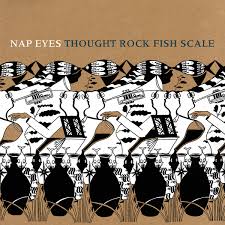
815SOUNDTRACK: NAP EYES-Thought Rock Fish Scale (2016).

Nap Eyes’ second full album doesn’t deviate too much from their first, although the songwriting has gotten stronger and the band branches out in small ways.

I love the simple but effective bass throb that runs though “Mixer.”  The lead guitar isn’t quite as noisy as on the previous, but the song doesn’t suffer from the lack.  Overall the song, and the album, feels more immediate, which is a good thing.

“Stargazer” is catchy right from the get go–a simple but cool guitar riff and some nice rumbling bass.  And after the first verse, the second guitar plays a nice harmony of that immediately catchy riff.  Plus, the lyrics feel even more pointed:

I have seen people go by me with such
Determination that it’s sick
I’d like to go the places they don’t know how to get to
But I can’t remember the trick
So I wait around and venomously crown myself
Serpent king of my sins
But if I go down I’m not taking you with me
It’s only myself in the end

“Lion in Chains” has a very Velvet Underground feel, in the best way–Nigel’s voice is closer and clearer and the it’s great the way deadpan chorus soars as he tries to keep it tethered.  I also love the interesting/mundane way he songs about things: “here at the arcade I spent about 45,000 dimes.”

“Don’t Be Right” changes the tone quite a bit–a loud plucked guitar and smooth bass push the song along quite briskly until the chorus slows things down with the wry observation: “Don’t be right – it isn’t good for you / You may not realize it, but it’s not / When you’re right, you barely know what to do / Just sit around thinking and cry a lot.”

“Click Clack” has a smooth opening which shifts after two verses into a loud jangling chord with a Lou Reed via Morrissey delivery:

Sometimes drinking I feel so happy / but then I can’t remember why / I feel sad all over again // sometimes drinking I don’t know my best friend for my best friend

and then it resumes with the most Lou Reed delivery yet

The longest song on the album is “Alaskan Shake.”  It has an almost country feel–a one-two bass line and a lead guitar played with a slide.  Around four minutes the song shifts directions briefly with some loud chords but then it shifts back with that loud slide guitar.

“Roll It” is a faster song, although the tempo slow down half way through is really striking.  It’s even more so when it seems to double down on that tempo change after another verse.  You almost don’t want the song to resume the fats tempo, but I like that way it wraps back up on itself to end.

The album (shorter than the first) ends with the two and a half-minute “Trust.”  Even though this album is shorter, it explores a lot more terrain and is a wonderful step from the first.

The band has a new album coming out next month.  I’m really curious to see what direction they go in especially since the new album cover looks very different from these first two.

[READ: July 21, 2015] “The Course of Happiness”

This was the 2015 New Yorker fiction issue.  It featured several stories and several one-page essays from writers I like.  The subject this time was “Time Travel.”

Erdrich takes time travel in an entirely unexpected way.  She says that being from the midwest she should probably  imagine all the good she could do if she could time travel–vaccinating people against old-world diseases or killing a young Hitler, but she says that all of that is too much to consider. (more…)

Read Full Post »

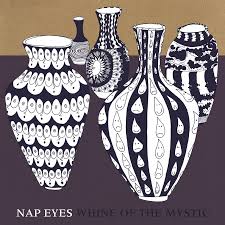
SOUNDTRACKNAP EYES-Whine of the Mystic (2015).

Nap Eyes opened for Alvvays and although we only caught half of their set, I really enjoyed it.  Lead singer Nigel Chapman, had a kind of deadpan Lou Reed spoken delivery (with an extra affectation–perhaps something to do with being from Halifax?).  The drums were thumping and spare and the guitar played a mixture of pretty melodies and squalling feedback.

The songs are pretty minimal musically.   Bassist Josh Salter and drummer Seamus Dalton keep the rhythm steady with occasional grace notes from Salter.  It’s really the work of guitarist Brad Loughead that stands out–in addition to Chapman’s lyrics of course.

A comment on the lyrics from the bandcamp site:

Throughout the record, workaday details punctuate (and puncture) cosmic concerns, as Nigel wrestles with air and angels, struggling (and often failing) to reconcile the Romantic rifts, both real and imagined, that define our lives: between chaos and order (or wilderness and paradise, as in “Tribal Thoughts”); solipsism and fellowship (“Dreaming Solo” vs. “Oh My Friends”); the anxiety of social (dis)orders both big and small (“The Night of the First Show”; “No Man Needs to Care”); and the various intersections and oppositions of religion, art, and science (“Dark Creedence” and “Make Something.”) 

This first album (after several EPs with great song titles) pretty much plays that template right out of the gate–the guitars do squall with feedback,but it is kind of low on the mix–disturbing the silence but not overwhelming it.

“Dark Credence” is pretty much the same thing repeated for four minutes but the way it builds with more intense drumming and ever noisier guitar feedback is great.  “Make Something” is a slower song that adds some interesting lead guitar notes as the song nears its end.

“Tribal Thoughts” is the first song that really stands out.  It’s faster paced, with a spirited, plucked melody.  Chapman is a bit more emotive and by the end the lead guitar has really taken off.  There’s some interesting lyrics in this song too, imagine singing slowly in deadpan: “I hear the beat against the slow lines / The lines i wrote / I never write them down anymore / fuck iiiiiiiiiiiiiiitttttttttt

“Delirium and Persecution Paranoia” is a 7 minute drone of a song that really doesn’t change much.  It makes you focus on the impenetrable words:

Round the inner core rocks / the outer core flows / but while the outer core cools / the inner core grows / the loaded sun sends out heat and light and deadly magnetic radiation  /  What you gonna do / the human race / when the solar wind through the magnetosphere is breaking  / Most of us down here lying down for years / sleeping the night away / some of us try but never survive /  stay up whole night and day  //  My friend once told me about a rare insomniac’s condition / sleeps not one minute a day but feels 20 minutes of pain and blurry vision.

And I just love the amusingly desperate end:

Oh baby, all I need is another second chance
Oh baby, all I need is another twenty-five second chance
Oh baby, all I need is another two-hundred and fifty-second chance
Oh baby, all I need is another two-hundred and fifty thousand second chance

“No Man Needs to Care” is a faster song with a nice circular guitar riff.  What does no man need to care about? “No man needs to care about another man’s hair.”

“Dreaming Solo” slows things down again, and then there’s two shorter somewhat poppier (but still angsty) songs.  “The Night of the First Show” is a delightful dark (lyrically) but perky (musically) take about what I gather was the first Nap Eyes show.  “Oh My Friends” is another slow, short song.  The short ones are so different from the droning quality of the longer ones.  Like the album closer “No Fear of Hellfire,” another 7-minute song.  It opens with ringing guitars and propulsive bass.  “Sunday morning only comes around once, these days.”  And the chorus: No feel of hellfire makes me feel good.”

[READ: November 15, 2017] “Chasing Waterfalls”

This is the second story I’ve read by Krasznahorkai (this Hungarian story was translated by John Batki).

Of his previous story I wrote:

This is the kind of story that makes me wonder why someone would write about the things they do.  Not because it’s bad or not worth writing about, I just can’t imagine where the idea came from.

This was a challenging story for me to read because there are no paragraph breaks (and I love my paragraph breaks).  It is just an endless stream of prose.

This one isn’t quite as out-of-thin-air, but it’s a pretty peculiar story nonetheless. (more…)

Read Full Post »

SOUNDTRACK: NICK HAKIM-Tiny Desk Concert #706 (February 14, 2018).

I thought the name Nick Hakim sounded familiar, but I had forgotten it was from an NPR SXSW Lullaby in which Hakim was draped in fairy lights.

In this Tiny Desk, his music seems much more jazzy.  He has an abundance of instruments, as well.  Two guitars (him and a lead guitarist) and a keyboardist who also has a piano at hand.  It lends itself to a lot of different sounds.

“Cuffed” has a slinky bass line and I like that the lead guitar makes a sound like rim shots almost.  I really enjoyed that the same guitar later plays a muted guitar solo.  Even the keyboard solo is a little trippy and wobbly.

As the blurb says, the music of Nick Hakim occupies a space and time that is faintly out of this world. The guitars and machinery that make up his music feel slightly askew, as though someone slowed down the tape machine every once in a while. His raspy voice feels drenched in a cavernous space.

Hakim’s songs seem very personal (“exploring the quietude of inner thoughts”), like this couplet:

she taught me to make love with patience not just thinking about myself/
to really feel the other person, oh my love, what would I do without you

“Needy Bees” slows things down to piano and a jazzy guitar with mellow lyrics like “let me live inside of your mind.”  And as the blurb notes, the music feels warm and spacious.  Again weird and wobbly guitar solo comes out of the middle of the song.

I find the way he sings “Roller Skates” to be comically restrained.  I imagine it could come across as really passionate but it seems odd the way he holds back some of his opening vocal sounds.   The sprinkling piano and cool bass breakdown in the middle of the song are terrific.

I didn’t like him at first but by the end I was getting into it.

[READ: November 15, 2017] “Bad Dog”

Not only does the dog die in this story, it is horrifically killed.

I gave away that ending, something I am loathe to do.  But you can probably  thank me for not having to read that particular piece of horror.

Having gotten that out of the way, I have to admit that this story was really compelling and craftily written.

At first I wasn’t so sure what was going on.  A lot of names are tossed out with little context.  But it soon becomes apparent that the narrator’s daughter Abby (now 31) and her husband Tim own a dog which they adopted from Tim’s friend who was moving.  They adopted it because they assumed they would not be having children.  But now they do.  A girl named Rose. (more…)

Read Full Post »

 SOUNDTRACK: MARLON WILLIAMS-Tiny Desk Concert #705 (February 12, 2018). 

Bob Boilen has such nice things to say about Marlon Williams, that I’m leaving most of the blurb.  I found his voice to be lovely but didn’t enjoy his music quite as much as Bob did.

Marlon Williams, the 27-year old, New Zealand-born, Melbourne-based singer is in love with a good, traditional blues or country tune and that’s just how he opens this Tiny Desk Concert, with a song called “When I Was A Young Girl” (also known traditionally as “One Morning In May” or “The Bad Girl’s Lament”). …  Williams’ rendition is more stunning than any version I’ve heard with its long, deep-throated incantations. The purity of Marlon Williams’ voice is rare and entrancing.

He reminded me a lot of Antony on this song–deep and resonating and slow.  The song is quite earthy (drinking in ale houses) for such a soaring delivery.

After that first tune, performed solo with just his acoustic guitar, he strapped on his electric guitar, brought out his band, snapped his fingers to set the beat and sang about being stoned and running around Los Angeles dressed as a vampire. At the time of our taping, back in October of last year, “Vampire Again” was the newest song since Marlon Williams’ 2016, self-titled release.

Marlon adds some weird and noisy guitar solos throughout the piece.  But I am mostly taken aback by these lyrics:

I am happy to reveal
I can smell you from 100 yards (SNIFF) fresh white linen
Felt like only  yesterday I was as weak as Woody Allen
Now I stand proud and tall as the home that you were born

The end of the song is a crazy cacophony of vibratos and buzzy synths, like a wild surf rock party.

He launched into a tune we’d not heard before. He calls “What’s Chasing You” a song about horror films, but it sounds like a 1950s tune about unrequited love.

This was a fun, simply fifties sounding tune with nice harmonies.

I can’t help but hear Steve Coogan in the way he introduces the next song.

The brilliant session ends as the band gathered around a single microphone for another new tune called “Make Way For Love.” We now know it’s the title track to Marlon Williams’ forthcoming album and it reveals an intimacy at the heart of what makes him such a magnetic artist.

This also sounds like it would fit n perfectly in a 1950s romantic movie–especially when the other guys (David Khan (electric guitar); Benjamin Woolley (bass); Angus Agars (drums)) sing gentle backing vocals.

[READ: June 26, 2017] “Irman”

I enjoyed a story from Schweblin a few months ago, but I did not like this one.  This one was also translated from the Spanish by one of my favorite translators Megan McDowell.

This is one of those stories that frustrates me with unreality in a real setting.

As the story begins, the narrator is very thirsty but her husband(?) Oliver is driving so they can’t stop (!).  They finally get to a truck stop but it is empty.  The restaurant was big and I “desperately needed to drink something.”  [So just go to the bathroom and get water, then].

A short man in an apron appeared and although he seemed to be the water he looked suspicious.  Oliver ordered drinks but the man didn’t say anything.  When Oliver asked if they could have something fresh and quick the man said yes as if “something fresh and quick were an option on the menu.”  I liked that line. (more…)

Read Full Post »

« Newer Posts - Older Posts »