Nickelodeon’s favorite dad has just released a new album. In the lead up to this song on NPR, Bob Boilen said that the live show that NPR streamed from Iggy and the Stooges was a matinée and there were kids as well as adults there. Who takes a kid to see Iggy Pop? Even if he was on The Adventures of Pete and Pete?
So this song is a dopey punk song and I love the guitars as the song starts–just classic punk sound and riffage. And then Iggy’s unmistakable voice “I gotta job…but it don’t pay shit. I gotta job… and I’m sick of it.” Is there any sentiment less authentic than Iggy Pop singing this? Probably not. And yet it’s a fun song for any working class guy to sing along to
And it’s frankly amazing that Iggy and the Stooges are still putting records out.
[READ: May 16, 2013] “Just Drive”
The five brief pieces in this week’s New Yorker are labeled as “Imagined Inventions.” And in each one, the author is tasked with inventing something.
Shteyngart’s is clearly the most practical and is based on something the he knows already exists. He explains that he is unabashedly a terrible driver: “My greatest failure in life has been my inability to drive a car safely between two locations.” This is despite the fact that he has always loved cars. Right from the day that his father bought their first car and he saved up to buy a similar matchbox car (more similar when they painted it the same color), he has loved t he freedom that cars represented. And I loved the idea that he and his family felt that although America was a large country, the road atlas made it seem like you could drive anywhere.
But Shteyngart’s driving problem seem to be more fundamental—an inability to tell left from right (the way his father tried to teach him is quite funny… if misguided). And now that Shteyngart lives in the country, he needs to drive more than ever. (more…)
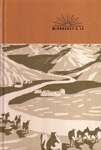
I learned about Trabant from the magazine pictured to the left. It came with McSweeney’s issue #15 and is completely in Icelandic. Trabant are apparently a pretty huge band in Iceland, and they have a lot of songs on YouTube. And many of their songs are very different sounding so I’m not entirely sure what kind of band they actually are.
This song begins with strange clicks and sound effects and then a big throbbing bass. There’s kind of a funky keyboard background and then a slightly off kilter riff.
Then the big guitars kick in and the vocals (which are “if you want a love song”) don’t start until about two minutes in. There’s a break in the middle where the band starts changing Ma Mo Ma Mo Maria and then the singer starts free associating over some wild guitar riffing and more sound effects. It’s a really weird song and I have no idea if this is representative of the band (they did make a video for it so it can’t just be a throwaway, right?).
I’m really intrigued by these guys, and I’m going to have to look for more.
[READ: May 18, 2013] McSweeeny’s bits.
Over the course of my reading the McSweeney’s issues, there were bits and pieces that I missed for one reason or another. I tried to be complete, but sometimes it wasn’t easy. So, with the publication of The Art of McSweeney’s I have now been able to read two things that I missed earlier. And the third is something I didn’t exactly read, although I tried.
Just as issue 1 had a short story by Dave Eggers on its spine! issue #4 (the box of books) had a brief piece by Ben Greenman ringing the contents list of said box. I never noticed it before (indeed I may not have ever read the back of the box before, shame on me). But anyhow, in very tiny print is “More Notes on Revising Last Night’s Dream” by Ben Greenman. And in this brief piece (which is several bullet pointed items–although arranged as a line rather than bullets) there are several ideas about last night’s dream which include “Egg on breakfast plate need not bloom into flowers” and “Cut out part in which Leslie Nielsen meets Trotsky–silly.” And, of course, “More Invisibility.” This is the kind of short silly thing that the first issues published which have more or less been relegated to the McSweeney’s website now. And while I feel the website is a better place for it (and I need to go read the website more), these silly things are certainly missed.
The second missed item is also found thanks to The Art of McSweeney’s. I mentioned in my review of Issue #20 that the story on the cover was completely covered by art. And I wondered why and I wondered if you could find the whole text anywhere. Well, in The Art of McSweeney’s they print the original cover!
I was delighted by this because it did two things–it explained how the cover was made (the 3D art was not “added on,” rather the white section under the art was “Compressed” which is how it came out 3D. Very cool. There’s also a brief breakdown of costs of the issue. But the bulk of the cover story is about how the author (Eggers, I assume) broke up a fight in New York City. A man and his family are walking down the street when a lady bumped into their little girl. The man freaks out because she didn’t apologize and he gets right up in the lady’s face (really, dude?). Eggers is on the phone arranging to meet someone when he says he has to get involved. So he tells the guy to chill out. Things quiet down a bit, but then the woman starts screaming “You got knocked up!” And that’s when Eggers takes a look at her and realizes that she is homeless and crazy and not ever going to apologize. But the screaming gets the mother involved in the fight which starts up again. Things finally settle down with the family acknowledging that the lady doesn’t understand anything. And they all depart. It’s probably the most exciting editor’s note of them all, and yet it was covered up.
My guess is, from what I know about Eggers, that story may have seemed too self-serving to include Or maybe it was just fun to cover up words with a picture.
The final item comes from Issue #15. It is a small magazine called Séð og Heyrt (Seen and Heard). It is a real weekly magazine, although I’m not sure if our version is complete (I assume it’s not since it’s only 16 pages, but who knows how much tabloid you can fill each week in Iceland). It is a pretty typical scandal magazine For some insight into this magazine, check out this post on I love Icelandic Music.
I can’t even begin to guess what half of the articles are about as the pictures are mostly crazy. There seems to be something about an Idol show, there’s a female body builder, something about some wholesome looking people who may be called Icelandic Pearls. And then the centerfold is called Rokkorgia, which should be easily translated. It features half naked pictures of the guys from Trabant. The next page has Love Guru in strange positions with his lady friend and a big headline Bingo I Beinni. The back page has an ad for Krit Paradis Eyjahafsins which appears to be a nice resort. What a fun, odd addition to the Icelandic Issue of McSweeney’s.
Then as I was glancing through I caught something that said That 70s Show. And sure enough, it was a preview of a new episode tonight (is it dubbed into Icelandic??). So even though I played around with translating bits and pieces of the magazine, this was the only one I did fully. So in Icelandic (excluding some accents)
I kvold hefjast syningar a nyrri syrpu um unglingana i Wisconsin. Jackie þarf ad velja a milli Hyde of Kelso. Red er að ba ser eftir hjartaafall og Eric er með samviskubit yfir þvi að vera að fara i burtu i haskola. þokkadísin Estella Warren leikur gestahlutverk i þaettinum
Which Google tells me means:
Tonight begins exhibiting a new series about a teenager in Wisconsin. Jackie has to choose between Hyde of Kelso. Red is ba after a heart function and Eric is guilty not be going away to college. charm diesel Estella Warren plays a role in the show.
Cool huh? What a strange thing to find in a magazine that was not meant for me. But I’m glad I read it because now I know all about Trabant!
For ease of searching, I include, well, I’m only including the magazine, because there’s way too much otherwise: Sed og Heyrt.
I loved that first Sugar album and even bought the single for “Helpless” (back then singles were ways for record labels to get more money out of fans of a band rather than for people to pay for one song). In addition to “Helpless,” the single contains three songs. “Needle Hits E” is a poppy song–very Mould, very Sugar. The song is a bright and vibrant addition and would fit nicely on Copper Blue.
The second track is an acoustic version of “If I Can’t Change Your Mind” which sounds wonderful. Mould really knows how to record a 12 string guitar to make it sound huge. “Try Again” is the final track. It reminds me of The Who, especially the bass line at the end of each verse. It’s a darker song (especially for his single which is so up). But I love the way the acoustic guitar seems to make it build and build. Then, some time around the two and a half minute mark, a feedback squall starts building. It’s way in the background (and actually sounds a bit like squealing balloons). It continues until the last thirty seconds just degenerate into full blown feedback noise–just so you know Sugar aren’t all pop sweetness. All three songs were later released on Sugar’s Besides collection.
[READ: May 10, 2013] The Art of McSweeney’s
Sarah got this book for me for my birthday and I devoured it. It answers every question I’ve had about McSweeney’s and many more that I didn’t. It provides behind the scenes information, previously unseen pieces and all kinds of interviews with the authors and creators of the issues as well as The Believer, Wholphin and some of the novels.
The real treasure troves come from the earliest issues, when there was very little information available about the journal. So there’s some great stories about how those early covers were designed (ostensibly the book is about the artwork, but it talks about a lot more), how the content was acquired and how the books were publicized (book parties where Arthur Bradford smashed his guitar after singing songs!).
The cover of the book has a very elaborate series of very short stories by Eggers (these same stories appeared on the inside cover of McSweeney’s 23). For reasons I’m unclear about, the rings of stories have been rotated somewhat so it is does not look exactly the same–although the stories are the same. The inside photo of the book also gives the origin of the phrase “Impossible, you say? Nothing is impossible when you work for the circus.”
The opening pages show the original letters that Dave Eggers sent out to various writers seeking stories and ideas that were rejected by other publications (and interesting idea for a journal). (more…)
This book is set in Kristiansands, and so naturally this song was ringing through my head the whole while I was reading it. I’ve known this song for ages, but had no idea that Chirstiansands was an actual place in Norway.
This song is dark and tense. Over a slinky beat, a spare guitar riff introduces Tricky’s voice as he rasps (his voice is slightly modified to give him a weird echo). And while he’s reciting his verses, the gorgeous voice of Martina Topley-Bird, repeats what he’s saying in a whispered voice until she sings out the chorus “I met a Christian in Christiansands.”
The verses repeat with Tricky emphasizing, “master your language and in the meantime I create my own. It means we’ll manage.”
I honestly don’t know what the song is about, and it feels like it never properly ends–that riff, at once menacing and gripping never seems to conclude. It’s a masterful track and hard to forget once you’ve heard it.
[READ: May 11, 2013] My Struggle Book One
I read an excerpt of Book Two from this series in Harper’s. And despite the fact that nothing really happened in it, I was drawn in by the writing style. This first novel is very similar in that not a lot happens but the voice is very captivating. The translation is by Don Bartlett and it is fantastic–I can only assume the original Norwegian is just as compelling. So, despite the fact that this autobiographical series contain six books (six!) and totals over 4,000 pages (how could this be if Book one is a mere 400? Books 4-6 are over 1,000 pages each), I decided to give it a try. (Incidentally, Book Two has just been translated into English this month).
This series has caused some controversy because it is given the same title as Hitler’s Mein Kampf (Min Kamp in Norwegian), and also because he says some pretty means stuff about people who are still alive (like his ex-wife). Although there isn’t much of that in Book One.
Indeed, Book One basically talks about two things–a New Year’s Eve party when Karl Ove was youngish and, as the bracketed title indicates, the death of his father. (The title A Death in the Family is the same book as My Struggle Book One–from a different publisher. It has a totally different cover but is the same translation. I don’t quite get that). But indeed, these two events take 430 pages to write about.
How is this possible? Because Karl Ove writes about every single detail. (I assume this why the books are considered novels, because there is no way he could remember so much detail about every event). I’m going to quote a lengthy section from a New Yorker review (by James Wood) because he really captures the feeling of reading the book:
There is a flatness and a prolixity to the prose; the long sentences have about them an almost careless avant-gardism, with their conversational additions and splayed run-ons. The writer seems not to be selecting or shaping anything, or even pausing to draw breath…. There is something ceaselessly compelling about Knausgaard’s book: even when I was bored, I was interested. This striking readability has something to do with the unconventionality of “My Struggle.” It looks, at first sight, familiar enough: one of those highly personal modern or postmodern works, narrated by a writer, usually having the form if not the veracity of memoir and thus plotted somewhat accidentally, concerned with the writing of a book that turns out to be the text we are reading. But there is also a simplicity, an openness, and an innocence in his relation to life, and thus in his relation to the reader. Where many contemporary writers would reflexively turn to irony, Knausgaard is intense and utterly honest, unafraid to voice universal anxieties, unafraid to appear naïve or awkward. Although his sentences are long and loose, they are not cutely or aimlessly digressive: truth is repeatedly being struck at, not chatted up.
That idea of being bored but interested is really right on–and it may sound like a bad thing, but it’s not. You can read along thinking that there’s no way he is going to give so much unimportant detail. But you get this description of drinking a cup of tea: (more…)
SOUNDTRACK: THE TRAGICALLY HIP-“Now for Plan A” (2012).
While I was enjoying the Hip’s new album, I recognized a voice in a couple of duets. That voice is Sarah Harmer’s! I love Harmer and realized that I haven’t heard much from her lately (her last album was three years ago). I looked up to see what she’s been up to and it appears she’s been on some human rights trips, which is quite cool. But it’s nice to hear her voice again.
This is the title track to the album. It starts slow with a wah wah’d guitar. The sounds slowly build as more layers are added and after a minute Gord starts singing. By the second verse Harmer sings along with Downie–their voices complement each other very nicely, although it’s funny that in this song neither one of them is really showing of his or her chops–their vocals are mostly quiet. Although I like when it seems like Harmer is taking over in the final verse.
I don’t love Hip ballads as a rule, but this is a good one.
[READ: May 9, 2013] “Fragments”
This story is indeed about fragments.
It opens with a conversation. And it’s a pretty interesting one–about flying a helicopter over midtown Manhattan. But then that conversation ends–the protagonist was just overhearing it. We see that he is at work. And then his phone rings. His wife has butt-dialed him and he is able to hear fragments of her conversation. Although we hear only snippets, it is enough for him (although not necessarily for me) to think that she is planning on having an affair with whomever she is talking to.
This fear is not helped by the fact that she is working extra late hours on a case. She is out until very late often until he is asleep. Although in one instance he only pretends to sleep to see what she will do. She goes to sleep without waking him, which he takes as a bad sign (although honestly, what is she supposed to do wake him up to say she is going to bed?) (more…)
I received the new Tragically Hip album Now for Plan A a while back. I’ve listened to it a few times, but it got lost in the shuffle. Then I put this song on and it really blew me away.
It’s a very typical Hip song–guitars that build but then retreat to let Gord Downie’s voice soar above the quiet verses. There’s something agonizingly beautiful about the way he sings the verses, which almost feel like they are a capella, the music is so minimal. Then for the second verse, the band kicks in and builds the song even more.
The chorus, which is very simple and is barely a chorus at all, punctuates the verses perfectly, with Downie’s voice being a great anchor. The song doesn’t rock as hard as some Hip songs, nor is it as ballady as others, but it’s a perfect example of what the Hip do so well–a middle tempo song that is both passionate and also rocks. (Although I could do without those weird little keyboard notes that dot the end).
[READ: May 8, 2013] “Marjorie Lemke”
At first I was unhappy about this story—it seemed like it would be another story of a young girl who gets pregnant and has a shitty life. Especially when I found out the father is a junkie who has run off and that she herself was a huffer of chemical fumes. Oh boy. And for some reason I thought the story was Irish (I guess there’s lots of down on your luck Irish girl stories out there–cheeky!)
But Braunstein transcends that story but giving Marjorie a support system. Her aunt, who is very helpful (but doesn’t remove her responsibilities), and a job as a maid at a nice (but not too nice) hotel. Her daughter, Della, is small for her age, but she seems mostly healthy. And the hotel allows Marjorie to bring Della along on her cleaning cart (tucked into the clean towels). Della pretty much sleeps all day (which is good for work, but not so good for nighttime), and no one has complained about her cooing or drinking a bottle when she does wake up.
Then Marjorie knocks on a door and a man is in there—he didn’t say anything when she knocked. At first Marjorie thinks he’s masturbating, but he’s not, he’s just absorbed in the newspaper on his lap. He tells her to just go about her work, don’t mind him. So she does. He’s not cold exactly just absorbed in what he’s doing.
The next time she goes to the room, he is there again, but this time his wife is there too. She is brusque and tells Marjorie that they will be in the room for about 4 weeks—she is an inspector and has several jobs in the area. She asks that Marjorie come every two days to clean and says there will be a large tip waiting for her.
The story then jumps forward a bit. In a way that is impressionistic more than telling, we learn that Marjorie and the man, Gabe, are getting close—talking, holding hands, comforting each other. (more…)
I always thought File Under: Easy Listening was a very funny title. But it’s possible that people took it too literally as it didn’t sell all that well. And in Mould’s autobiography he says he didn’t have much time to write songs for this disc and he thinks it suffered. Of the three Sugar discs, this is definitely the weakest, although there are some great moments on it.
The disc opens with “Gift” which has some ragged distorted guitars. It’s got some noises and grungy sounding solos showing that FU:EL was a joke. Although, the overall sound is kind of a cleaner version of the angry songs on Beaster. “Company Book” is kind of a pounder, until the voice comes in and you realize…it’s not Mould! It’s got a catchy chorus, but after the kind of underwhelming opener, it’s a strange place for a song that’s also not so dynamic. Especially when it’s followed by “Your Favorite Thing” another great pop song from Mould—not top tier but a really strong second tier (although that bright, simple guitar solo is a real winner). “What You Want It To Be” is a another decent song (the addition of that extra guitar playing the melody line really makes the song shine. “Gee Angel” is also a high point. A catchy song, but which never quite reaches the heights of the previous albums.
“Panama City Hotel” has the same feel as the opening of Beaster: bright acoustic guitars and a similar riff. But it never really goes anywhere, and the 4 minutes seem. The “do do do do’s” that open “Can’t Help You Anymore” are certainly the brightest spot on the album, and a big pop song as well. “Granny Cool” has a nicely abrasive riff although it seems kind of mean spirited. It’s funny that he tucked “Believe What You’re Saying” at the end of the album. It’s a minor song but it sounds so bright on this album after the other songs. It’s really quite pretty.
And the closer, “Explode and Make Up” is one of Mould’s great angry songs. Unlike Beaster, this one has a happy acoustic field—bnright guitars with that raging distorted guitar underneath. It’s a great slow burner of a song and at five minutes it ends a somewhat lackluster album in a great way.
[READ: March 31, 2013] McSweeney’s #20
McSweeney’s #20 is an issue that I have read before. At least I think I have. My recollection is that it was the last one I read before I started writing about them on this blog. I was hesitant to read it soon again, which is why I waited until now. And while I remember the issue itself (with all of the art), I didn’t remember the stories. So who knows if I actually read it six years ago.
Anyhow, this issue comes jam-packed with art. Every fourth page has full-color artwork on it–many of them are quite famous. It makes for a very beautiful book.
In between these artworks are a number of stories–ranging in size from 2 pages to 30-some pages. There are no letters, and the explanatory and copyright information is on the cover of the book–which would be fine, except that it is covered up by a kind of 3-D artwork. I wonder if the whole text is available anywhere?
The book also comes with a separate pamphlet–an excerpt from Chris Adrian’s Children’s Hospital. I intend to read the novel eventually so I didn’t read the excerpt–although maybe if I put off the novel for six years I should just read the excerpt now. (more…)
I found this song in heavy rotation on NPR. I had never heard of Savages before (this is from their debut album coming out this week), but they seemed interesting. And the description was intriguing–saying they sounded like Siouxsie and the Banshees. And that is right on, from the shimmery 80s punk guitars that open the song to that strange goth-y wail that Siouxsie possessed, to the rumbling basslines, this song hearkens back to a darker, wonderful era.
It’s a really great sound–evocative without mimicking. It’s certainly an uncool sound that Savages are pulling for (in the 2010s) and I like them all the more because of it. I’m curious to hear what else they do.
And that ending note is a killer. I want to hear this whole album.
[READ: April 30, 2013] “Oh, My Darling”
The “teaser” for this short story says “I am so close you could touch me.” And with this piece of information in mind, this story is dark and creepy right from the start.
The story begins as a letter: “Hello, Vanessa.” And the letter continues to compliment Vanessa on her name, those three satiny syllables (the letter writer won’t deign to use that silly “Nessa” that others do).
The narrator pushes back to some months ago when Vanessa’s husband says he believes that he has Aboriginal bloodlines (despite his blue eyes and Scandinavian features). Vanessa knew immediately it was because of the case he was working on—an Aboriginal case, obviously—with… Connie, a student of Haida birth. She replies to it with a funny (to me) comment: “What part do you think is Aboriginal? I hope it’s something simple, like your foot.” This comment from Vanessa’s husband, intimating infidelity is compounded by their daughter’s insolence: “You are a cruel fucking cow.” (Vanessa has weight issues which makes this hurt even more). Vanessa knows this is just how teenagers are, but it still hurts. (more…)
Mikal Cronin has a very pleasant middle range voice—conventionally good. Indeed, there’s nothing especially unique about this record. But it is a great summer pop album. Lots of great big choruses that are fun to sing along to. And, Cronin is a talented multi-instumentalist. I believe he plays everything on the record, although I’m not sure about that.
The album is 37 minutes. The first song, “Weight” has a simple melody and is incredibly catchy. There’s a nice falsetto before the big loud guitar chorus kicks in. “Shout It Out” is another great pop song—big fuzzy guitars and a wonderfully catchy melody. And I love how it gets mildly chaotic at the end. “Am I Wrong” is a straightforward rocker, with more big crunchy guitars. There’s a fun fiddly keyboard solo (with lots of flubs, which is kind of endearing). This song (and several others) remind me of Sloan.
“See It My Way” has a shambolic feel to it, I can do without the oddball sax solo, but there’s something so oddball about it that I think it works in the end. “Peace of Mind” has a nice harmony vocal on it that gives this simple song a fuller sound. There’s an unexpected violin solo in here. “Change” opens with a real grungy loud guitar which is quickly replaced by a speedy drum over a simple, catchy verse. And a speedy chorus. There’s an interesting middle section with another violin solo (and some unusual squeaky violin noises as well). “I’m Done Running From You” is a fun fast bit of pop with a rocking guitar solo. And “Don’t Let Me Go” is a slow ballady type song (as much as one can be on a rocking record like this). “Turn Away” brings the rock back, although “Piano Mantra” ends the disc with a solo piano intro. But the song builds and builds into a rollicking violin-fueled conclusion.
I’d never heard of Mikal Cronin before, and when i first started listening to the disc I thought it was an okay pop punk album. But the more I listened to it, the more I enjoyed it. It’s still as simple pop punk album but it’s done so very well. I’m going to have to check out his debut as well.
[READ: May 2, 2013] “Mexican Manifesto”
I love that stories from Roberto Bolaño keep popping up. I realize that most of these have been published in Spanish somewhere, but it seems like even if we know that his next book is going to be all poetry (Unknown University coming out in June), somehow there’s at least one short story in it (I assume it comes from here, where else would it have come from?). So, since it seems like there’s a new Bolaño book out every six months, I assume that barrage will come to an end now.
Unknown University is, as far as I can tell, the last thing that will be translated by Bolaño. Wikipedia suggests that there are four other titles that could be translated: A Lumpen Novella (which he completed but which has not been translated), Diorama, an unfinished novel, something being called Part 6 of 2666 (who knows what that means) and an early book that he cowrote Advice from a Morrison Disciple to a Joyce Fanatic which I would really like to read–the title is so intriguing–but who knows is it will ever find a translator.
But that’s got nothing to do with this short story. This short story is about a couple who frequent steam baths. The narrator is the man, and the woman, Laura, I the more adventurous of the two. She is the one who encourages them to go to the baths in the first place and, while he also thinks it is wonderful, it is she who wants them to explore as many different baths in the city as possible. (more…)
SOUNDTRACK: THE KNIFE-Shaking the Habitual (2013).
Since I reviewed the 19 minute song from this album yesterday I thought I’d check out the rest of the disc (still a handful). I kept bearing in mind that The Knife are pretty much a dance duo. So this departure is not only radical, it pretty much undercuts the kind of music they make. The progress is probably exciting but I imagine fans would turn away in droves. I wonder how this record will play out for them in the long run. Incidentally, I wasn’t a fan before, so I don’t really have a horse in this race.
“A Tooth for an Eye” opens the record with an interesting percussion sound an a pulsing keyboard melody. The keening vocals come in sounding weird and distant and more than a little eerie. “Full of Fire” is a 9-minute song with a weird skittery “melody” that seems to float above the battered mechanical “drum.” The whispered vocals are strained and also a little creepy. The middle section has the skittery music jump around while the vocals get even more processed—making it simultaneously more friendly and less so. It’s probably the coolest weird song on the disc, with parts that are catchy and interesting and parts that are just peculiar. This is the single, by the way.
“A Cherry on Top” is 8 minutes of reasonable quietude, with the second half introducing an autoharp. It’s certainly the most mellow thing on the disc. Although it’s not exactly relaxing. “Without You My Life Would Be Boring” seems like it should be the single—it is propulsive and while the vocals are certainly odd, they are the most conventional thing on the album. “Wrap Your Arms Around Me” has big electronic pulsing drums and whispered vocals. It’s a fairly normal sounding song (at least for this album), and could easily play in a goth club.
“Crake” is 55 second of squalling feedback. The album also has “Oryx” which is 37 second of wailing noise. In between is the 10 minute “Raging Lung” which is not available on Spotify. “Networking” a skittering beat with a second beat that may just be a sample of a person making noise in his or her throat. The “voices” get stranger throughout the song, keening, twisting and spinning, reminiscent of The Art of Noise.
“Stay Out Here” is a ten minute song. It starts with a fairly standard electronic drumbeat. Whispered vocals come in giving it a kind of Nine Inch Nails vibe, until the female vocals come in (and are quickly manipulated to sound kind of male). The switch from male and female vocals is interesting, giving it an almost modern sounding Dead Can Dance feel.
“Fracking Fluid Injection” has sounds like scraping, rusted gates as the beat with sampled voices overlaid. Again, this is nearly 10 minute long. The problem with things like this, aside from their relative tediousness, is that they aren’t all that original. Now originality is nothing to hold a band to, we all know, but if you’re going to do non-form sounds that are echoed with little else to it, it would be more interesting if there was something original to pin to it. “Ready to Lose” ends the album with a steady beat and a pretty standard vocal line (even if the voices are processed).
So this album us a pretty radical departure for the band and it’s a pretty radical departure for dance music as a whole. I’m curious to see if this will lead to a anything or if this will be their one weird album.
[READ: April 15, 2013] “The Furies”
The story opens with a rather creepy man stating at his wedding reception that he is in an exclusive club: “There are not too many men who can say that they’re older than their father-in-law.” Ew. He was fifty-eight, his new wife 31. His father-in-law is 56. The father-in-law seems okay with this, but really how could he be?
Ray is a dentist and his new wife, Shelly, had been his hygienist for years. When Shelly told him she was thinking of getting a new job, he professed his love for her, and informed his wife, Angie that he was in love with Shelly. Angie took it badly, but he was surprised when she seemed mad that he didn’t do this years earlier while she still had a chance to meet someone (rather than being distraught that he was leaving her). As a parting shot she says that she wishes him ill. And she hope he suffers with the woman who took him from her.
But they had no children, just assets, and things were divided evenly and cleanly. And he thanked his lucky starts to be with a new woman, someone who was fun and so different from his first wife. (more…)
 SOUNDTRACK: IGGY AND THE STOOGES-“Job” (2013).
 Nickelodeon’s favorite dad has just released a new album. In the lead up to this song on NPR, Bob Boilen said that the live show that NPR streamed from Iggy and the Stooges was a matinée and there were kids as well as adults there. Who takes a kid to see Iggy Pop? Even if he was on The Adventures of Pete and Pete?



 My guess is, from what I know about Eggers, that story may have seemed too self-serving to include Or maybe it was just fun to cover up words with a picture.