Feeds:
Posts
Comments

Archive for the ‘Magazines’ Category

june1SOUNDTRACKRHEOSTATICS–The Media Club, Vancouver, BC, (October 21, 2004).

media clubEvery year, the Rheostatics would perform what they called Green Sprouts Week in Toronto.  In 2004 they did a West Coast version. Five nights in a row at The Media Club (with each show being crazier than the last).  There aren’t always recording available for these shows, but on this leg there are recordings from the third, fourth and fifth nights.

This recording is about 90 minutes and I assume is edited (most of their GSMW shows are quite long and there’s no banter).  There’s also crazy static on a certain instrument, which mars the quality somewhat.

The band has added keyboards, although I’m not sure who is playing them.  Morgan from The Buttless Chaps guests on a nice rendition of “Claire.”  They play a great version of “Jesus Was Once a teenager Too” with a folky breakdown in the middle.  “Take Me in Your Hand” is slow but really good.

There’s goofing on “Song of Flight” with them ending the song quickly and booing and yelling “stinky” I wonder what happened).  “Marginalized” is blistering and “Record Body Count” is a little goofy.  Perhaps the highlight of the night is “Horses” which is an amazing rendition and ends with a few lines and acoustic guitars from “When Winter Comes”

The encore starts with “Pornography” a song later recorded by Bidiniband.  Then there’s some great harmonies on “Dope Fiends and Boozehounds.”

They do a rocking version of Talking Heads’ “Life During Wartime” which is musically spot on, even though no one really knows the words.  The last few songs are more covers.  A very fast version of Jane Siberry’s “One More Colour,” and then a perfect version of “Takin’ Care of Business” (the guitar and vocals sound right on) which segues into a sloppy/fun “My Generation.”

The Green Sprouts shows often allow the band to mess around a bit which is great for fans.

[READ: July 21, 2015] “The Duniazát”

I generally like Rushdie’s work.  This story is told in the style of a 1001 Arabian Nights tale and consequently I didn’t enjoy it that much.  Although I was interested to find out some details about those stories.  There was originally a Persian book called “One Thousand Stories” which had been translated into Arabic.  In the Arabic version there were fewer than a thousand stories but the action was spread over a thousand nights, or, because round numbers are considered ugly, a thousand nights and one night more.  Huh.

The stories featured a beautiful storyteller knows as Sheherazade, who told her tales to a murderous husband in order to keep him from executing her.

Anyone, in this story, Rushdie tells a similar type tale.

Set in the year 1195, the great philosopher Ibn Rushd (I enjoyed the play on his own name there) was a physician to the Caliph.  But when he started espousing liberal views, he was discredited (sound familiar?).  He wound up living in a village where Jews were forced to convert to Islam and could not speak of Judaism.  So he felt right at home as an outcast. (more…)

Read Full Post »

nymay156SOUNDTRACK: RHEOSTATICS-Evolve Festival Antigonish, NS (August 28, 2004).

evolveBestThe Rheostatics do a lot of festivals, and they always seem to have a good time.  But it also means a shorter set.  Unlike yesterday’s Nova Scotia show, this one doesn’t focus on new music too much (although they mention that 2067 is coming out Oct 5).

The sound quality isn’t great in this show either–there’s a lot of rumbling which sounds like winds, but who knows.

But they are even more charming in this setting.  Dave compliments someone one on their excellent sign and says that the sign demographic has let everyone down for this show–so her request will be honored.

The show starts with a cool jam from the Whale Music soundtrack (mostly “Song of Flight”).  When they play “Four Little Songs” one of the verses is a verse from Gordon Lightfoot’s “Early Morning Rain.”

Later they play a great version of “Saskatchewan” and perennial festival mates Chris Brown and Kate Fenner are there to help.  During “Stolen Car” they sing a few lines from “Another Brick in the Wall Pt 2.”

There’s great versions of “California Dreamline” and “Claire.”  The show ends with the new song “Power Ballad for Ozzy Osbourne” and there’s a breakdown during the song (no way to know what happened, but they have a laugh about it).

You can see photos from the day here (although none of the Rheostatics).

[READ: July 21, 2015] “The Freezer Chest”

I found Nors’ previous story to be a little odd.  And so I find this one.  There’s something about the way it was written (or translated) that I found it very stiff to read.  It is also told in a flashback which is later revealed to be a very-long-ago flashback.

What is particularly strange about the story is that the “action” of the freezer chest is all of about three paragraphs.  And while the story isn’t long overall, it takes a circuitous route to get to that part.

The narrator is a young girl, Mette.  She is on a boat with her classmates and their English teacher. Mark is also part of the group and he has made it clear that he does not like the narrator (that happened in a previous instance).  The crux is that Mark claimed to be an amazing guitarist.  And he is trying to get the narrator to respond to this information.  She genuinely does not care although she says she believes him. (more…)

Read Full Post »

ny15SOUNDTRACK: RHEOSTATICS-Halifax, NS (August 27, 2004).

haliRheostatics are reuniting for 3 shows at the Art Gallery of Ontario in a few weeks.  And I am going to see them!

So it’s time to listen to a few shows from eleven years ago.  This show doesn’t even mention a club, but that’s ok.  It’s a fun gig in Nova Scotia.  The quality of the recording is not great–it was recorded in the audience and you can hear a lot of audience chatter (and consequently the band is not as clear as could be).

Their final album 2067 is out in just a few months from this show, and they play a few songs from it: “Marginalized” and “The Tarleks.”  Later, Martin describes “Aliens” as “The Tarleks Part 1.” They also play “I Dig Music” a fun jazzy number.  There’s a drum break in the middle and drummer MPW says that he was trying to play the intro from Rush’s “Lakeside Park.”

There’s a wild middle section in “Satan is the Whistler.”

This show has lots of banter, and there’s a discussion about an audience member mocking The Headpins.  And later when a fan says his friend was kicked out, Dave gets mad at the bouncers and seems genuinely concerned for the friend and offers to go get him.

After they play “My First Rock Show” they ask MPW about his first rock show.  The discussion devolves into a discussion of John Cage’s smell (Old man vegan smell).

For “Take Me in Your hand” a fellow named Reid does guest vocals.

During the encore they play a version of happy birthday to someone whose birthday it is which is followed by a scorching version of “Rock Death America.”

As the encore winds down Dave says “dim the lights, chill the ham,” which I assume is a nod to fellow Canadians Shadowy Men on a Shadowy Planet and their 1991 album. Martin (I assume) also starts playing around with a voice modulator as the song ends.

If the audio was better this would be an amazing show.

[READ: July 20, 2015] “So You’re Just What, Gone?”

I’ve enjoyed most of Taylor’s stories, even though his protagonists tend to be unpleasant.  But this story felt entirely too insubstantial for me to get beyond the grossness of it.

Charity is a high school student.  She is flying with her mother to visit her grandmother.  She doesn’t want to go and doesn’t want to be with her mom.  She’s pleased when she and her mom are separated on the plane (five plus hours of freedom!).

She winds up sitting next to a guy who tries to be chatty with her.  She wants none of it, but when she wakes up mid-flight to find that she has been sleeping on the guy’s shoulder, she feels a little bad and actually talks to him.  When Mark asks her if she gets bored and then says she is pretty, you know things are creepy.

When Mark he grabs her inner thigh and squeezes it and then gives her his business card, well, you just know the guy is a shit. (more…)

Read Full Post »

mislaidSOUNDTRACK: AROUND THE WORLD IN 80 DAYS-Euphoria (2014).

euphoriaI found out about Around the World in 80 Days when they started following me on Instagram.  I’m not sure which photo it was that interested them, or if they just follow lots of people, but I was intrigued that they are a post-rock band from Yekaterinburg, Russia.  They formed in 2009 and have a few releases out (EPs, mostly).  You can hear all of them on their soundcloud page (and other places).  This was their first full length album.

Their bio says

Around the World in 80 Days is a three-piece band formed in 2009. It’s impossible to compare their music with anything. The guys just play whatever they want and don’t care about genres, styles and cliches.

I appreciate the sentiment, but it’s not impossible to compare them.  They have elements of Mogwai and Explosions in the Sky in their swirling post-rock instrumentals.  But they definitely add elements that those bands don’t.  There’s some heavy metal riffs in “Racing the Light” and some more poppy elements in “Inside Me.”

 I typically try to listen to an album a few more times before I post about it, but I was so interested in this band that i wanted to get the word out right away.  I’ll certainly be listening more intently to their output over the next few days.

[READ: May 24, 2015] “Mislaid”

I read an excerpt from this book in Harper’s a few months ago.  And then I found the full book at work.  Huzzah!

I had said that I didn’t know how long this novel could be because the excerpt seemed so complete.  And in a sense I was right.  Except that the book went so much further than the excerpt led me to imagine.

The excerpt was about Peggy Vaillancourt.  She was born in 1948 in Virginia.  A transformative event leads her to believe she must be a lesbian (something unspoken of at the time).

She winds up going to Stillwater College, a female-only school in the middle of nowhere Virginia.  She loves poetry and wants to be a writer.  She meets the poet-in-residence Lee Fleming.  Fleming was a local boy with wealthy parents.  His father believed himself to be as “queer as a three dollar bill.”  It was his father who put him in a cottage on the family’s property across the lake from Stillwater College.  Everyone in town also assumed he was gay, and there was much talk and consternation about it, although everyone assumed he was fine while he was by himself in that cottage.

The college asked Fleming to be a teacher (he canoed to work every day).  Instead of a salary he asked them to create a literary magazine called Stillwater Review, which became a success.  Many other famous New York poets came to Stillwater to be charmed by the idyllic Stillwater (and all the young girls). (more…)
Read Full Post »

[LISTENED TO: August 2015] The Organist Season 1

organistGiven my love of the McSweeney’s empire, it seems logical that I would have listened to The Organist sooner than this.  But I didn’t.  It has been on for a couple of years, so i assumed I’d never catch up.  But then I saw that there were only 50 episodes and most of them were quite short.  So it was time to see what it was all about.

And, since it is more or less in conjunction with The Believer, it should come as no surprise that it is sort of an aural equivalent to that magazine–longish pieces about esoteric subject, but geared specifically to “radio.”

The Organists first season was done as a monthly podcast starting on Feb 1.  Each episode was about 50 minutes long and covered a variety of subjects with fun guests and other ephemera.

Episode 1: (February 1, 2013)
The inaugural episode kicks off with Nick Offerman spouting some hilarious nonsense about podcasts.  The rest of the show includes an interview with George Saunders talking about the voices of his fiction; Greil Marcus discusses the impact of the first Bikini Kill EP now that it is reissued.  Perhaps the most unusual and interesting piece is when Amber Scorah tells the story of her defection from the Jehovah’s Witnesses while working as a missionary in Shanghai; In short pieces, Brandon Stosuy editor of Pitchfork, presents five five-word record reviews of interesting new guitar rock and then musicians Matmos take a song from their new album apart, piece by piece, revealing its brilliant, pulsating innards.  Basically they used thought control to get people to “create” a song for them.  It’s a really neat process even if the final result doesn’t really sound like the sum of its parts. (more…)

Read Full Post »

herecoverSOUNDTRACK: CHRISTOPHER PAUL STELLING-Tiny Desk Concert #453 (July 6, 2015).

cpsSomehow after 450 some Tiny Desk Concerts I feel like I’ll know anyone that comes along.  But here’s yet another performer who I’d never heard of.  Christopher Paul Stelling plays an old beat up guitar (it ha a hole in it from where it has been worn down.  According to the NPR site:  That guitar, bought in Asheville, looks like a well-worn friend, with its dark bruised wood and his initials hand-carved into its body. Stelling marked the instrument a year after he bought it, when he made New York City his home in 2007.

Stelling plays some amazing fingerpicking and he backs it up with some catchy songs and interesting lyrics.  His voice is rough and reminds me a but of The Tallest Man on Earth.

He plays four songs.  The first “Castle,” is a really enjoyably folky song. His guitar work is amazing and almost as interesting as his lyrics (there’s some nice little twists i the words he sings). I was also amazed at how good the guitar sounded with the holes and carvings and all.

“Scarecrow” is more mellow, a bit sadder.  And when he tunes it up you can hear the resistance in the tuning pegs–that guitar has been through a lot.

“Horse” is a much faster completely intense song.  As the NPR site describes it: “Watch him lean in as if he’s about to lunge, his eyes bugged out, sometimes rolled back in his head revealing just the whites, skin blood-red, voice like a preacher on fire.”  The song is majorly intense, althouhg he kind of reminds me a bit of Chris Pratt’s character on P&R (but not in a funny way).  After the song he he says you see why I didn’t play that first

“Warm Enemy” reminds me of the guitar style of RT. A wild picking song, with some great runs throughout the piece.

It’s always cool to hear of a new artist who is really impressive.

[READ: May 10, 2015] Here

I read about this book when Five Dials devoted an entire issue to it.  And I’m so glad they did, because I probably wouldn’t have heard it about it elsewhere.  And it is fantastic.

In the Five Dials issue they talked about how McGuire had first created a version of this book many years ago–it was 8 pages and ran in Raw Magazine.  Now in 2014, he has redesigned and thoroughly expanded the book, adding color and a ton more information.  And it is really astonishing.

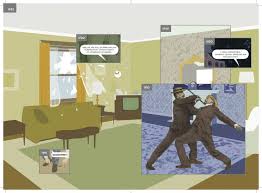
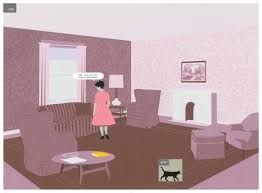
The book itself is quite simple.  We see a scene in a house.  It is a living room.  There is a window to the left, a fireplace to the right and various pieces of furniture.

The first page in the upper left corner says 2014.  There is a couch and little else.  Then there is a bookshelf.  And then the scene jumps back to 1957.  Same location, same angle, but (nearly) everything is different.  The furniture is chanced, there is wallpaper on the walls, there is a playpen in the center of the room.  Then the next page jumps back to 1942: the color scheme is maroon.

here3After a few pages it heads back to 1957 and we see our first person.  A woman saying “Now why did I come in here again?”  And then, the first break with the style–in the bottom right is a tiny box that says 1999 and there’s a cat in it.  And then the next page plays with things even more.  The woman from 1957 is still there as is the cat (who is licking her paw now), but the background is 1623 and the “house” is simply the woods.

The next page shows a scene from 1989 and in 1999 the cat leaves the room.

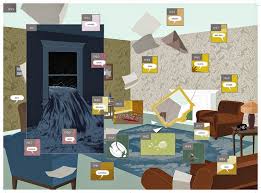
here2I’m not going to tell every page, obviously, but suffice to say that the next page goes all the way back to 8,000 BCE (while leaving the scene from 1989 in the book).

We see shots from 1763 (a lumberjack) and 1764 (a house being built).  And then in 1775 a colonial scene with, I believe, Ben Franklin.

here5Occasionally, there are a series of frames that show time passing in sequence like the children sitting on the couch in 1959, 1962, 1964, 1969, 1979 and 1983.  Or the one that shows Halloween parties from several years all on one page

The book also goes into the future with a small box showing 2017 and then 2050 with some interesting technology.  And then later forward to 10,175 with a strange creature in a wasteland,

The book is really amazing.  So much fun to look at and imagine the lives that were in this house.

For there is no plot. There is virtually no dialogue.  It is just snapshot after snapshot of a place and what people and creatures have done to it throughout history.  It is such an interesting idea (the original was quite revolutionary at least according to cartoonists) and while similar pieces have been made they don’t compare to the scope of this one.

Incidentally, the house is in Perth Amboy, New Jersey (and I believe is his childhood home).  It offers actual historical data as well as imagined information.  But he based many of his designs on photos from his family’s albums.

I’m so happy I got to look at the book.  And when I read it again, I’m going to try and read it in a vaguely sequential style just to see if there is a “story” to it.

Read Full Post »

reject2SOUNDTRACK: ODDISEE–Tiny Desk Concert #451 (June 26, 2015).

oddisee Oddisee is a positive rapper.  That photo of him smiling really conveys the tone of his songs–well, that and the fact that the first song is called “That’s Love.”  He raps really quickly.  He also gets a wonderful call and response going on “That’s Love” where he has the NPR staff sing along to his chorus.  (The opening scene shows him practicing with the audience).  And he really gets everyone going.

I don’t know what his recorded output sounds like, but in this Tiny Desk, he’s with only a keyboardist and a drummer.  The live drummer is a great addition.

“Contradiction’s Maze” has a few sung choruses (he has a good singing voice too).  They don’t really modify the keyboard sound for the songs, which isn’t all that interesting.  It sets a nice background for all the songs, but it does make things sound a little samey.  “Belong To The World” is similarly uplifting, but I honestly had a hard time distinguishing it from the previous song.

Despite that, his positive attitude and generally upbeat personality were quite infectious.

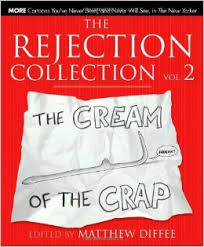
[READ: July 24, 2015] The Rejection Collection 2

The Rejection Collection is back!  Presumably the first collection was successful enough that Diffee was prepared to do another one.  He gathers many of the same cartoonists (although at least a half a dozen did not return) and he gathered some new folks as well (for a total of 38 this time).

Returning: Leo Cullum, Pat Byrnes, Sam Gross, Mike Twohy, C. Covert Darbyshire, Drew Dernavich, Christopher Weyant, Kim Warp, John O’Brien, Marisa Acocella Marchetto, Danny Shanahan, Mick Stevens, Mort Gerberg, Michael Crawford, P.C. Vey, Gahan Wilson, Glen LeLievre, Alex Gregory, J.C. Duffy, Carolita Johnson, Ariel Molvig, Michael Shaw, Eric Lewis, P.S. Mueller, David Sipress, Jack Ziegler.

New additions include:  Paul Noth, Roz Chast, Marshall Hopkins, Nick Downes, Robert Leighton, Julia Suits, Zachary Kanin, Harry Bliss, Jason Patterson, J.B. Handelsman, Sidney Harris, Jack Ziegler, Robert Weber. (more…)

Read Full Post »

reject1SOUNDTRACK: HOP ALONG–Tiny Desk Concert #450 (June 22, 2015).

hopNot too long ago a friend asked if there were bands that we wanted to like but didn’t.  Some people just said no, of course not, you either like a band or you don’t.  But I knew what he meant.  There are a lot of bands that I’d like to like.  And Hop Along is one of them.

Lead singer Frances Quinlan has the kind of raspy voice that is practically iconic (think Janis Joplin after a rough day).  And their music, which is kind of folky, also has a rawness that should combine with her voice to make me listen all the time.

And yet, for all of that, I really don’t like her voice.  It should be right up my alley but it, well, isn’t.  And that goes a long way to me not really liking the band.

They play three songs and although the blurb about the band talks about the music being more than her voice, I really can’t get past it.

None of the songs is bad, although they all sound a bit the same to me (her voice again).  “Horseshoe Crabs” has a folky feel and some soft/loud sections.

“Well_Dressed” has some unusual dissonant chords thrown into the mix. It’s especially interesting given the pleasant acoustic guitar that accompanies this song.

“Sister Cities” has some lyrics about shooting your dog which is a bit of a turn off.

So yes, I would like to like Hop Along more, but I just don’t.

[READ: July 20, 2015] The Rejection Collection

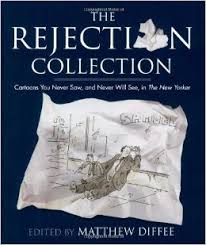
I heard about this book because it was listed under Matthew Diffee’s books in his bibliography.  I enjoyed his Hand Drawn Jokes for Smart Attractive People so much that I wanted to see what else he’d done.  Well, I didn’t quite understand the premise of the book.  Instead of it begin a collection of his rejected cartoons, he had edited a collection of cartoons that were rejected by thirty of the New Yorker’s regular contributors.

Which means there’s a lot more variety and a lot of funny stuff in here.

He gives us some context: each issue of the New Yorker has about 15-20 cartoons.  There are some 50 cartoonist vying for these spots.  Each of these 50 artists brings 10 cartoons each week and the editor pick the few that will make it (and those that are chosen are the only ones who get paid).

So that means that there are dozens of really good cartoons that just aren’t going to make it.  Many of those cartoons will be saved by their creators and submitted somewhere else or even back to the New Yorker in case the editors have a change of heart.

There are many reasons why cartoons are rejected.  Some aren’t very good, some aren’t appropriate for the magazine, and some just aren’t as funny as others this week (but may seem even funnier in two weeks’ time).

If you’ve read the new yorker (or ever been in a cubicle) you have seen the work from most of these people (even though you probably don’t know their names):

Leo Cullum, Pat Byrnes, Sam Gross, Mike Twohy, C. Covert Darbyshire, Drew Dernavich, Christopher Weyant, Kim Warp, William Haefeli, John O’Brien, Marisa Acocella Marchetto, Danny Shanahan, Tom Cheney, Mick Stevens, Mort Gerberg, Michael Crawford, P.C. Vey, Barbara Smaller, Arnie Levin, Gahan Wilson, Glen Le Lievre, Alex Gregory, J.C. Duffy, Carolita Johnson, Ariel Molvig, Michael Shaw, Eric Lewis, P.S. Mueller, David Sipress, Jack Ziegler.

(more…)

Read Full Post »

handdrawnSOUNDTRACK: STRAND OF OAKS–Tiny Desk Concert #449 (June 15, 2015).

soaI didn’t know anything about Strand of Oaks when I first heard them last year.  I assumed from the bio info that I’d heard that he, Timothy Showalter, had been in a a band and that this was his solo project.  But no.  His history is actually far more interesting.

The Wikipedia summary is pretty simple and shocking:

While Showalter was on tour, his wife had an affair. Escaping his detrimental relationship, he moved back to Wilkes-Barre, Pennsylvania in 2003. A couple of months later, he came home to find his house burned down.  [WHAT??].  Showalter spent his nights in hotels and on park benches with a borrowed guitar while working at an orthodox Jewish day school. Despite the turmoil, he was able to find inspiration to continue writing music that would later be released.

He released three self-produced albums and then made Heal.  Which ALSO has a shocking tale attached to it:  On Christmas Day in 2013, Showalter and Sue were driving back to Philadelphia from Indiana when they hit a patch of ice and crashed into two semi trucks. Showalter suffered a concussion and broke every rib on his right side. The near-death experience gave Showalter a boldness during mixing sessions while creating HEAL with John Congleton, just days after the crash.

Yipes.  I don’t know his earlier records, but I really like Heal.  It’s got an interesting sound, with some great guitar work.

For the Tiny Desk, he plays three songs.  The first is the single from his album, “Goshen ’97”.  This version is just him on his black electric guitar with lots of echo.  It’s very slow and kind of broody.  I prefer the original, but this is a very interesting version.  And his voice sounds really good in this stripped down style.

After the first song he says how nice it feels to play this gig–just what he imagined it would be like. He says he could play there a long time and when someone says “Ok” he say they’d get sick of him: “Oh that bearded guy is still here.”

“Plymouth” has even more echo on the guitar–this one a hollow bodied steel string guitar.  It sounds lovely and since I don’t know the original as well, I like this slower more meditative version.

“JM” is for Jason Molina and for this track, he switches its back to the black electric.  I love the album version of this song a lot, as the soloing is just fantastic.  This version is quite different.  Again, it’s slow and broody, and really good. I still like the album version (because of the solos) but this is good too.

I’m fascinated by Showalter now, and plan to see what his earlier albums sound like.

[READ: June 15, 2015] Hand Drawn Jokes for Smart Attractive People

Although I was unfamiliar with Diffee’s name, I was familiar with his cartoons from the New Yorker.  Diffee has three other books out (under the Rejection Collection moniker–he’s great with book titles).  I certainly loved the title of this book.

There are 16 chapters in the book–each is devoted to a particular topic and has a rather amusing introduction in which Diffee goes off on that subject: Medical Professionals, Lumberjacks, Relationships, Pet Owners, Old People, Utensils, Real Jobs, Indians and Eskimos, Food, Sex, Prison, Religion, Wealth, Children, Sports and Tattoos.

What I really enjoyed was that the cartoons that fill the introductory sections look very different from his more “official” style (which I recognized immediately from the magazine).  It’s cool that he has a distinctive style but is not pigeonholed into that style.

matthewOccasional cartoons have an accompanying silhouette (presumably himself) with an extra bonus joke tangentially related to the topic.  Sometimes these are funnier than the original cartoon.  (Does a polygamist refer to his wives as his “better eighths?”).

It’s hard to mention favorite cartoons without describing the cartoon, which is never funny, but there are few punchlines that work with out a visual, like:

“Therapist: “These feelings of inadequacy are common among the inadequate.”

Waitress: “Sorry, we don’t serve the Lumberjack breakfast to accountants.”

Drug sniffing dog: “I’m starting to really like the smell of cocaine.”

And this one which is not from the New Yorker: “Wade Greenberg, wearing his hemp blazer, inadvertently became the life of the party when he stood too close to the menorah.”

He also really loves to hate sporks: (50% spoon, 50% fork, 85% useless).

All of these are funnier with the accompanying cartoon of course, and I really like his drawing style.

By the way, the section on tattoos was capped off by “knuckle tats you’ll never see” like FLAU TIST or ALAN ALDA.

I enjoyed this book a lot and will certainly look for his previous collections.

Read Full Post »

ny13SOUNDTRACK: YES-Drama (1980).

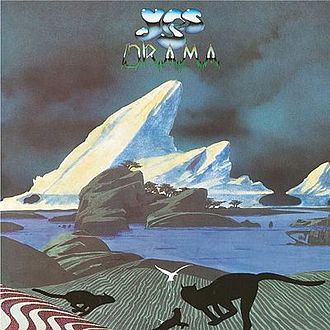
dramaAfter a few albums that seemed to lack the oomph of previous Yes outings, they stormed back with Drama.  And you know it’s proper yes because Roger Dean drew the cover!

It opens with a great dark riff and some big heavy bass—where has that been? And then the vocals come in—band harmonies like Yes has always done, but something is…different.  And around 3 minutes in, you realize what it is, so you check the liner notes (remember those?) and… woah Jon Anderson, the voice of Yes, has defected! And in his place is singer Trevor Horn from…The Buggles?  Trevor and Geoff Downes the creators of The Buggles were fans of Yes and when Anderson and Wakeman (yup, he’s gone too) left, the rest of the gang asked the Buggles to join in.  It seems that they had a few songs already written and the Buggles guys wrote a couple songs and there it is.

Horn’s voice is surprisingly close to Anderson’s (although he can’t reach the high notes.  But he has a lot more bass resonance so when he belts out notes he sounds really powerful.

And it turns out that Drama is very high on my list of Yes albums, even without Anderson  The band seems really interested in making big loud rock again, which I’d rather missed.

“Machine Messiah”  is over 10 minutes long.  There’s some great riffs and time changes and a big soaring guitar solo (Steve Howe is still on board).  There’s a slow middle section about 6 minutes in with acoustic guitar and simple vocals. The final solo repeats the same melody but it seems to swing more.  Near the end they revisit the slow section with new wave keyboard sounds that I imagine Wakeman would never have agreed to play (although he did play some weird sounds on Tormato).  Especially with the group vocals, it’s easy to imagine that this is indeed classic Yes.  A ten minute song with no wasted moments

“White Car” is a 90 second throwaway track.  It feels like they invited the new guys to fill some space. It’s not bad, it’s just a jingle with inscrutable words.  His voice soars similar to Anderson’s but not quite.

“Does it Really Happen?” has a big bass rumbling sound and bright keyboard chords. It goes through several sections before settling into a pretty typical Yes riff.  It really highlights the harmony vocals again. At the end of the song—a complete full stop, a new keyboard riff comes in with a repeat of the rumbling bass. It lasts only for a minute or so and then fades out. But it’s nice that Squire get a chance to wail

“Into the Lens” is a great song that opens side two.  The opening bass and counterpoint keys of is pure Yes, which is why it’s surprising to find out that the main section of the song is pure Buggles.  Indeed, the “I am a Camera” section of the song was written by Trevor and Geoff and they even recorded it with out all the complicated intro on the second Buggles album (it’s called “I am a Camera.”  There’s a cool bass section that may actually be piano? It’s got a cool end section with staccato riff repeated three times and an odd pause signature.  The opening and closing sections (the Yes parts) work really well with the catchy middle part (which really doesn’t sound like Yes at all, but still works and is super catchy).

“Run Through the Light” has fretless bass!  And that bass was played by…Trevor Horn.  What?  Chris Squire is either a total pushover or the most generous founding member of a band ever.  It says Squire played piano on this track, although for the life of me I can’t hear any piano at all.  It’s a decent song but probably the least interesting on the disc.

And them comes the best Yes riff since the early 70s–the wild bass line of “Tempus Fugit.” The song opens with some keyboard phrases that don’t at all suggest there’s going to be something spectacular coming next, but in true Yes fashion, the boppy opening mutates into a super fast bass line with appropriate synth blasts.  While not as great as say Roundabout, it soars over just about everything since then, and is an overlooked Yes gem.

I noticed on 9012live that Squire plays the “Tempus Fugit” riff riff in a bass solo—evidently, Anderson (who returned after this record) refused to sing any sings from Drama.  Which is shame because there’s some good stuff there.

Since almost every Yes album had different personnel, I’m going to keep a running tally here.  This is a biggie, look who has left!

Chris Squire-bass
Trevor Horn (#2, replaced Jon Anderson) vocals
Alan White (#2)-drums
Geoff Downes #4 (replaced Rick Wakeman #2)-keyboards
Steve Howe (#2)-guitar

[READ: April 12, 2015] “Apollo”

This story has two parts, a part set in the present and then a flashback which takes up most of the rest of the story.

As it opens, the narrator is visiting his parents in Enugu.  He says that his parents have changed since they retired.  They used to be critical thinkers (professors both of them).  They often challenged each other in intellectual ways–even seeing who could publish more papers.  But since they have retired, they have become almost comically gullible.  They would often call things “nonsense” but now they believed just about everything they read in the paper.

And on this occasion they are telling the narrator about a robbery that occurred in town.  This is nothing unusual.  But when they say that the leader of the gang was Raphael, it gives the narrator pause.

His parents don’t think he remembers Raphael, but he does.  Raphael was one of the house boys who worked for his parents.  There were a number of them, but this one made an impact. (more…)

Read Full Post »

« Newer Posts - Older Posts »