Feeds:
Posts
Comments

Archive for the ‘New Yorker’ Category

2013_05_13_p139SOUNDTRACK: ELEANOR FRIEDBERG-“Stare at the Sun” (2013).

efI don’t know Eleanor Friedberg, who is part of the Fiery Furnaces.  This song is fast and bright.  It’s a pretty standard rock song with bright guitars, and there is definitely folk feel to it.

The real selling point of the song is Friedberg’s voice.  She sounds a bit like a 60’s-era male with a high voice (indeed, she reminds me a little of Russel Mael from Sparks).  Maybe I’ll think of her as a mix of Kirsty MacColl and Sparks.

I like this song.  It’s not amazing, but it has a real bouncy summer feel.  An enjoyable romp that bears repeated listens.

[READ: May 21, 2013] “Art Appreciation”

I read this story in two parts.  And when I finished the first part (about four pages in–the paragraph that ended “and he kissed her there for the first time”), I thought it was a delightful story.  A sweet story of young romance.  True, the main character is a bit of a douche: “Henry Taylor had always known he would have money one day, and this confidence was vindicated when his mother won the lottery.”  But I thought that maybe Eleanor, Ellie, would somehow make him a better person.  And that sweet kiss seemed like a wonderful start.

The year is 1961, the place is Australia (it took me a little time to figure that out).  Henry is a gambler–but a mostly winning gambler–he goes to the dog tracks on Friday nights, the horses on Saturday.  But Henry, who is 28,  is also a working man–a mid-level employee at an insurance firm.  And even after his mother won the lottery he didn’t quit his job (it was of course douchey to assume that his mother would somehow give him the money but that’s what he thought).  Despite his confidence about the money, he also didn’t want to show off about it.

Ellie had recently started working in Henry’s office. She was very attractive and he thought that “now that he had money, he would marry her” (geez, he gets douchier by the minute).  Soon enough he has asked her out.  And she happily accepts.  Ellie is 20.

Finally one Sunday Henry’s mother says that she is moving to Victoria with her sister and giving him the house–she wants to see him settled.  He imagined selling the house and buying something closer to the city.

That night he visited Kath.  Kath is his un-serious girlfriend.  He tells her that their fun is over, that he is dating Ellie now so this will be their last fling.  He also has the douchiness to tell her that he has won the lottery.

Soon we learn what the title refers to, Ellie goes to art appreciation classes on Friday nights.  She asks Henry to walk her to class, which he does.  Henry stays for this one and doesn’t like it.  He sits with another bloke who asks if he was dragged there, too.  But she is so excited by the class, art is her passion.  They have a nice dinner together and they kiss for the first time.

And I thought that was nice.

But there’s more. (more…)

Read Full Post »

5.20SOUNDTRACK: RASHANIM-“Bahir” (2005).

Masada_RockSpeaking of John Zorn, there was a nother clip on NPR about the release of his album Masada Rock in 2005.  Clearly I stopped listening to Zorn’s new stuff around this time because I didn’t know this record.  It features the band Rashanim.

This is a wonderful little mashup of surf rock and noir played by a kind of stripped down rock trio.  The main riff is very noir, something Zorn specializes in.  It’s funny to me that this is a Masada album as it feels decidedly unJewish to me.  But it sounds very Zorn.  The band packs a ton of stuff into this 4 minute piece.  There’s a lengthy, fairly sloppy guitar solo that goes through much of the song.  And the end is a frantic workout.

I liked this song quite a bit and thought I’d see just what Zorn has been up to since I last watched his discography.  I’d say that in the last ten years he has released around 100 albums of various styles and genres.  I think my wallet is happy I stopped paying attention.

[READ: May 16, 2013] “Poker Face”

The five brief pieces in this week’s New Yorker are labeled as “Imagined Inventions.”  And in each one, the author is tasked with inventing something.

I didn’t know Nolan before reading this.  This was my least favorite of the five essays—kind of like a final skit from Saturday Night Live.  Essentially he raves about how useful emoticons are—very current, yes.  Well, he precedes this by saying how in texting it’s even harder to detect sarcasm than it was in emails.  He has a friend who uses exclamation points to show sincerity, so Thanks. Could be ironic but Thanks! is sincere.  I find I do the same thing, so I appreciated that. (more…)

Read Full Post »

5.20SOUNDTRACK: PAT METHENY-“Mastema” (2013).

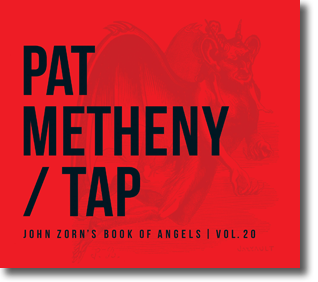
Itap-cd-cover don’t know all that much about pat Metehny.  I know he’s a jazz guitarist held in high regard by some and in less high regard by others.  This song is Metheny playing a John Zorn composition–indeed, it comes from an entire album of Zorn covers called Tap: John Zorn’s Book of Angels, Vol. 20.  I have been a huge fan of Zorn for decades, and yet some time ago I had to stop following him–his output is just too huge.  So this Book of Angels series by the Masada String Quartet is unfamiliar to me.

Knowing what I do about Zorn, this piece is quite an interesting statement–it’s got a lot of the wildness that Zorn throws into his music, but it’s also got the pretty melodies that Zorn writes as well as the Jewish melodies that saturate the Masada albums.

Strangely enough this song reminds me more of Frank Zappa than John Zorn.  That may have to do more wbecause it’s a guitar and not a sax, but it also has something to do with the bass guitar that is playing along–it’s got a very Zappa sound to it.

I feel like I’d rather just listen to Masada, but I’d have to really compare the two to see how this holds up.  It’s a pretty wild guitar workout though, if you like that sort of thing.

[READ: May 16, 2013] “Vision Quest”

The five brief pieces in this week’s New Yorker are labeled as “Imagined Inventions.”  And in each one, the author is tasked with inventing something.

Karen Russell is the first of the five authors whom I did not recognize (although I have read a few short pieces of hers in the New Yorker).  She describes her last invention, which was for the seventh grade science fair. It was called the Roller Solar Cream—she poured sunscreen on a roll-on deodorant stick.  It got a C+.  So she explains that she’s not much of an inventor, but she’s going to give it a try.  She also states that she doesn’t know how any of these inventions would work, nevertheless she proposes four.

Number 1 is a “Trapster” for social situations.  The original trapster is an app to alert you to speed traps and the like (I’ve never heard of that).   Her app would alert you when you are heading into a socially dangerous situation (be careful what you say around this person, her dad is famous).  Number 2 is called “Last Wishes Glasses” which upon wearing allow you to know what your dead relative would actually think of your plans/ideas (“she would have wanted it this way” is no longer needed).  I have to admit I find this invention to be pretty nonsensical.  Number 3 is the one I like most.  It’s called “Baby Roshambo” and it’s a program that allows you to see what a baby’s life will be like depending on what name you give him or her—see how Ashley, Bubbles, La’Dynasty and Gertrude would turn out differently just because of their names.

(more…)

Read Full Post »

5.20SOUNDTRACK: BLACK ANGELS-Evil Things (2013).

blackangelsThis song has a 70s era metal sound (with a heavy early Black Sabbath feel).  It opens with a big riff and surprisingly quiet vocals (the vocals are not really sung loudly, they’re almost whispered, and they are very clean–it’s a nice contrast to the big buzzy guitars).  But for al the buzzy guitars (and the wonderfully dated to 1967 keyboard sound), there are passages that are quiet and almost gentle.  Indeed, there’s a lot going on in this song.  It’s a nice marriage of heavy metal and psychedelia.

I love the way the end seems like it’s uncontained–like they couldn’t control the feedback.  It’s interesting that Bob and Robin on NPR relate this more to psychedelic bands of the late 60s and yet I hear more Black Sabbath–of course, Sabbath was a lot more psychedelia than we let on.

I’d like to hear more from these guys

[READ: May 16, 2013] “Cats Robo-Cradle”

The five brief pieces in this week’s New Yorker are labeled as “Imagined Inventions.”  And in each one, the author is tasked with inventing something.

Since Atwood wrote Cat’s Cradle, I wasn’t sure what to expect from this piece—the title of which was just kind of odd.  As with many magazine titles, I feel like perhaps she didn’t come up with the title because that’s not what she calls her invention–someone just tried to tie it into her famous novel.

Anyhow, she begins her piece by talking about the fascinating-sounding Museum of Failed Products in Ann Arbor, Michigan.  She says that there are so many interesting things there, some of which she feels must be better than her own invention, and must be better than Pop-Tarts.  She says she predicted the failure of Pop-Tarts because when her family first tried it, the jam exploded all over the toaster.  So she knows from good and bad ideas.

Her idea has to do with the death of so many birds and rodents from feral cats.  Recall that birds are predators of insects so their dwindling number is affecting forests and garden.  When cats kill the birds (and the rodents that larger birds eat), they are permanently impacting the climate.  Her idea is for a safe (to the cats) trap which she calls the Robo-Coyote. (more…)

Read Full Post »

5.20SOUNDTRACK: ELEKTRA-“I Don’t Do Boys” (2009).

elektraI found out about this band and video because of my recent reading of the Icelandic magazine Séð og Heyrt and this post on I Love Icelandic Music.

This song was listed as one of Iceland’s musical scandals because of the aggressively lesbian imagery.

The song is simple enough.  Piano chords play slowly until the tone changes for the bridge and the very simple chorus (which reminds me of Blur’s Boys and Girls in a way, although it doesn’t sound anything like them): “I don’t do Boys, I just do Girls, I just do girls with style and class. I don’t do boys I just do girls I just do girls with kissable ass”). It’s poppy but a little more aggressive than a typical pop song (and not as metal as a pop metal song).  There’s an interesting style to the backing vocals that seems to make it more than a pop song as well.  I’m not saying it’s good, but it’s more than typical.

As for the video, I can’t tell if this is male fantasy lesbianism or what, but since this story is all about kissing, here’s a video that’s all about kissing.  See if it’s as scandalous as Iceland thinks.

[READ: May 16, 2013] “Leaning In”

The five brief pieces in this week’s New Yorker are labeled as “Imagined Inventions.”  And in each one, the author is tasked with inventing something.

Mindy Kaling is always funny, especially when you’re not sure how serious she is.  As when she begins her essay, “One of the perks of my job is that I regularly get to kiss men—often married men—with zero repercussions for anyone involved.”  Of course she’s talking about acting, but as she says—who is to know if she slips out of character while kissing?

She explains that kissing new people is one of the great joys in life and, while being in a committed relationship is also wonderful, she feels that removing the joy of kissing new people is a terrible drag.  She agrees that marriage is a serious business but kissing is not.  “Kissing in and of itself can’t create offspring or cause life-threatening disease.”  She offers an example of how if you just kissed someone you would never be stuck having to listen to his post-coital ramblings afterwards. (more…)

Read Full Post »

5.20SOUNDTRACK: IGGY AND THE STOOGES-“Job” (2013).

iggyNickelodeon’s favorite dad has just released a new album.  In the lead up to this song on NPR, Bob Boilen said that the live show that NPR streamed from Iggy and the Stooges was a matinée and there were kids as  well as adults there.  Who takes a kid to see Iggy Pop? Even if he was on The Adventures of Pete and Pete?

So this song is a dopey punk song and I love the guitars as the song starts–just classic punk sound and riffage. And then Iggy’s unmistakable voice “I gotta job…but it don’t pay shit.  I gotta job… and I’m sick of it.”  Is there any sentiment less authentic than Iggy Pop singing this?  Probably not.  And yet it’s a fun song for any working class guy to sing along to

And it’s frankly amazing that Iggy and the Stooges are still putting records out.

[READ: May 16, 2013] “Just Drive”

The five brief pieces in this week’s New Yorker are labeled as “Imagined Inventions.”  And in each one, the author is tasked with inventing something.

Shteyngart’s is clearly the most practical and is based on something the he knows already exists. He explains that he is unabashedly a terrible driver: “My greatest failure in life has been my inability to drive a car safely between two locations.”  This is despite the fact that he has always loved cars.  Right from the day that his father bought their first car and he saved up to buy a similar matchbox car (more similar when they painted it the same color), he has loved t he freedom that cars represented.  And I loved the idea that he and his family felt that although America was a large country, the road atlas made it seem like you could drive anywhere.

But Shteyngart’s driving problem seem to be more fundamental—an inability to tell left from right (the way his father tried to teach him is quite funny… if misguided).  And now that Shteyngart lives in the country, he needs to drive more than ever. (more…)

Read Full Post »

mystrugglSOUNDTRACK: TRICKY-“Christiansands” (1996).

christiansandsThis book is set in Kristiansands, and so naturally this song was ringing through my head the whole while I was reading it.  I’ve known this song for ages, but had no idea that Chirstiansands was an actual place in Norway.

This song is dark and tense.  Over a slinky beat, a spare guitar riff introduces Tricky’s voice as he rasps (his voice is slightly modified to give him a weird echo).  And while he’s reciting his verses, the gorgeous voice of Martina Topley-Bird, repeats what he’s saying in a whispered voice until she sings out the chorus “I met a Christian in Christiansands.”

The verses repeat with Tricky emphasizing, “master your language and in the meantime I create my own.  It means we’ll manage.”

I honestly don’t know what the song is about, and it feels like it never properly ends–that riff, at once menacing and gripping never seems to conclude.  It’s a masterful track and hard to forget once you’ve heard it.

[READ: May 11, 2013] My Struggle Book One

I read an excerpt of Book Two from this series in Harper’s.  And despite the fact that nothing really happened in it, I was drawn in by the writing style.  This first novel is very similar in that not a lot happens but the voice is very captivating.  The translation is by Don Bartlett and it is fantastic–I can only assume the original Norwegian is just as compelling.  So, despite the fact that this autobiographical series contain six books (six!) and totals over 4,000 pages (how could this be if Book one is a mere 400?  Books 4-6 are over 1,000 pages each), I decided to give it a try.  (Incidentally, Book Two has just been translated into English this month).

This series has caused some controversy because it is given the same title as Hitler’s Mein Kampf (Min Kamp in Norwegian), and also because he says some pretty means stuff about people who are still alive (like his ex-wife).  Although there isn’t much of that in Book One.

death in the familyIndeed, Book One basically talks about two things–a New Year’s Eve party when Karl Ove was youngish and, as the bracketed title indicates, the death of his father.  (The title A Death in the Family is the same book as My Struggle Book One–from a different publisher.  It has a totally different cover but is the same translation.  I don’t quite get that).  But indeed, these two events take 430 pages to write about.

How is this possible?  Because Karl Ove writes about every single detail.  (I assume this why the books are considered novels, because there is no way he could remember so much detail about every event).  I’m going to quote a lengthy section from a New Yorker review (by James Wood) because he really captures the feeling of reading the book:

There is a flatness and a prolixity to the prose; the long sentences have about them an almost careless avant-gardism, with their conversational additions and splayed run-ons. The writer seems not to be selecting or shaping anything, or even pausing to draw breath….  There is something ceaselessly compelling about Knausgaard’s book: even when I was bored, I was interested. This striking readability has something to do with the unconventionality of “My Struggle.” It looks, at first sight, familiar enough: one of those highly personal modern or postmodern works, narrated by a writer, usually having the form if not the veracity of memoir and thus plotted somewhat accidentally, concerned with the writing of a book that turns out to be the text we are reading.  But there is also a simplicity, an openness, and an innocence in his relation to life, and thus in his relation to the reader. Where many contemporary writers would reflexively turn to irony, Knausgaard is intense and utterly honest, unafraid to voice universal anxieties, unafraid to appear naïve or awkward. Although his sentences are long and loose, they are not cutely or aimlessly digressive: truth is repeatedly being struck at, not chatted up.

That idea of being bored but interested is really right on–and it may sound like a bad thing, but it’s not.  You can read along thinking that there’s no way he is going to give so much unimportant detail.  But you get this description of drinking a cup of tea: (more…)

Read Full Post »

CV1_TNY_04_29_13Drooker.inddSOUNDTRACK: THE TRAGICALLY HIP-“Now for Plan A” (2012).

hip manWhile I was enjoying the Hip’s new album, I recognized a voice in a couple of duets.  That voice is Sarah Harmer’s!  I love Harmer and realized that I haven’t heard much from her lately (her last album was three years ago).  I looked up to see what she’s been up to and it appears she’s been on some human rights trips, which is quite cool.  But it’s nice to hear her voice again.

This is the title track to the album.  It starts slow with a wah wah’d guitar.  The sounds slowly build as more layers are added and after a minute Gord starts singing.  By the second verse Harmer sings along with Downie–their voices complement each other very nicely, although it’s funny that in this song neither one of them is really showing of his or her chops–their vocals are mostly quiet.  Although I like when it seems like Harmer is taking over in the final verse.

I don’t love Hip ballads as a rule, but this is a good one.

[READ: May 9, 2013] “Fragments”

This story is indeed about fragments.

It opens with a conversation. And it’s a pretty interesting one–about flying a helicopter over midtown Manhattan.  But then that conversation ends–the protagonist was just overhearing it.  We see that he is at work.  And then his phone rings.  His wife has butt-dialed him and he is able to hear fragments of her conversation.  Although we hear only snippets, it is enough for him (although not necessarily for me) to think that she is planning on having an affair with whomever she is talking to.

This fear is not helped by the fact that she is working extra late hours on a case.  She is out until very late often until he is asleep.  Although in one instance he only pretends to sleep to see what she will do.  She goes to sleep without waking him, which he takes as a bad sign (although honestly, what is she supposed to do wake him up to say she is going to bed?) (more…)

Read Full Post »

CV1_TNY_04_01_13Gutierez.inddSOUNDTRACK: TRAGICALLY HIP-“Man Machine Poem” (2012).

hip manI received the new Tragically Hip album Now for Plan A a while back. I’ve listened to it a few times, but it got lost in the shuffle.  Then I put this song on and it really blew me away.

It’s a very typical Hip song–guitars that build but then retreat to let Gord Downie’s voice soar above the quiet verses.  There’s something agonizingly beautiful about the way he sings the verses, which almost feel like they are a capella, the music is so minimal.  Then for the second verse, the band kicks in and builds the song even more.

The chorus, which is very simple and is barely a chorus at all, punctuates the verses perfectly, with Downie’s voice being a great anchor.  The song doesn’t rock as hard as some Hip songs, nor is it as ballady as others, but it’s a perfect example of what the Hip do so well–a middle tempo song that is both passionate and also rocks.  (Although I could do without those weird little keyboard notes that dot the end).

[READ: May 8, 2013] “Marjorie Lemke”

At first I was unhappy about this story—it seemed like it would be another story of a young girl who gets pregnant and has a shitty life.  Especially when I found out the father is a junkie who has run off and that she herself was a huffer of chemical fumes.  Oh boy. And for some reason I thought the story was Irish (I guess there’s lots of down on your luck Irish girl stories out there–cheeky!)

But Braunstein transcends that story but giving Marjorie a support system.  Her aunt, who is very helpful (but doesn’t remove her responsibilities), and a job as a maid at a nice (but not too nice) hotel.  Her daughter, Della, is small for her age, but she seems mostly healthy.  And the hotel allows Marjorie to bring Della along on her cleaning cart (tucked into the clean towels).  Della pretty much sleeps all day (which is good for work, but not so good for nighttime), and no one has complained about her cooing or drinking a bottle when she does wake up.

Then Marjorie knocks on a door and a man is in there—he didn’t say anything when she knocked.  At first Marjorie thinks he’s masturbating, but he’s not, he’s just absorbed in the newspaper on his lap.  He tells her to just go about her work, don’t mind him.  So she does.  He’s not cold exactly just absorbed in what he’s doing.

The next time she goes to the room, he is there again, but this time his wife is there too. She is brusque and tells Marjorie that they will be in the room for about 4 weeks—she is an inspector and has several jobs in the area.  She asks that Marjorie come every two days to clean and says there will be a large tip waiting for her.

The story then jumps forward a bit.  In a way that is impressionistic more than telling, we learn that Marjorie and the man, Gabe, are getting close—talking, holding hands, comforting each other.  (more…)

Read Full Post »

CV1_TNY_04_22_13Pearson.inddSOUNDTRACK: MIKAL CRONIN-MCII (2013).

mciiMikal Cronin has a very pleasant middle range voice—conventionally good.  Indeed, there’s nothing especially unique about this record.  But it is a great summer pop album.  Lots of great big choruses that are fun to sing along to.  And, Cronin is a talented multi-instumentalist.  I believe he plays everything on the record, although I’m not sure about that.

The album is 37 minutes.  The first song, “Weight” has a simple melody and is incredibly catchy. There’s a nice falsetto before the big loud guitar chorus kicks  in.  “Shout It Out” is another great pop song—big fuzzy guitars and a wonderfully catchy melody.   And I love how it gets mildly chaotic at the end.  “Am I Wrong” is a straightforward rocker, with more big crunchy guitars.  There’s a fun fiddly keyboard solo (with lots of flubs, which is kind of endearing).  This song (and several others) remind me of Sloan.

“See It My Way” has a shambolic feel to it, I can do without the oddball sax solo, but there’s something so oddball about it that I think it works in the end.  “Peace of Mind” has a nice harmony vocal on it that gives this simple song a fuller sound.    There’s an unexpected violin solo in here.  “Change” opens with a real grungy loud guitar which is quickly replaced by a  speedy drum over a simple, catchy verse.  And a speedy chorus.  There’s an interesting middle section with another violin solo (and some unusual squeaky violin noises as well).  “I’m Done Running From You” is a fun fast bit of pop with a rocking guitar solo.  And “Don’t Let Me Go” is a slow ballady type song (as much as one can be on a rocking record like this).  “Turn Away” brings the rock back, although “Piano Mantra” ends the disc with a solo piano intro.  But the song builds and builds into a rollicking violin-fueled conclusion.

I’d never heard of Mikal Cronin before, and when i first started listening to the disc I thought it was an okay pop punk album.  But the more I listened to it, the more I enjoyed it.  It’s still as simple pop punk album but it’s done so very well.  I’m going to have to check out his debut as well.

[READ: May 2, 2013] “Mexican Manifesto”

I love that stories from Roberto Bolaño keep popping up.  I realize that most of these have been published in Spanish somewhere, but it seems like even if we know that his next book is going to be all poetry (Unknown  University coming out in June), somehow there’s at least one short story in it (I assume it comes from here, where else would it have come from?).  So, since it seems like there’s a new Bolaño book out every six months, I assume that barrage will come to an end now.

Unknown University is, as far as I can tell, the last thing that will be translated by Bolaño.  Wikipedia suggests that there are four other titles that could be translated: A Lumpen Novella (which he completed but which has not been translated), Diorama, an unfinished novel, something being called Part 6 of 2666 (who knows what that means) and an early book that he cowrote Advice from a Morrison Disciple to a Joyce Fanatic which I would really like to read–the title is so intriguing–but who knows is it will ever find a translator.

But that’s got nothing to do with this short story.  This short story is about a couple who frequent steam baths. The narrator is the man, and the woman, Laura, I the more adventurous of the two.  She is the one who encourages them to go to the baths in the first place and, while he also thinks it is wonderful, it is she who wants them to explore as many different baths in the city as possible. (more…)

Read Full Post »

« Newer Posts - Older Posts »