Feeds:
Posts
Comments

Archive for the ‘Graphic Novel’ Category

silence THEE SILVER MT. ZION MEMORIAL ORCHESTRA & TRA-LA-LA BAND-13 Blues for Thirteen Moons [CST051] (2008).

330px-13_Blues_for_Thirteen_MoonsThis album opens with 12 tracks of a kind of feedbacking noise.  The total time for this is about a minute before track 13 begins.  And this album feels very different from the more acoustic Horses.  Whereas Horses felt acoustic and organic, this album is noisy and raucous and very electric.  After the 12 brief tracks there are four lengthy ones that comprise the album.

“1,000,000 Died to Make This Sound” starts with scratched notes and pizzicato strings.  The choir quietly begins singing the title “one million died to make this sound.”  Their voices grow louder and then at about 3 minutes in there’s a great bowed riff that introduces the more rocking section–a guitar “solo” and drums as that bass riff continues.  About mid way through the song it takes on a real rocking feel–the guitars rock out and the steady beat keeps up.  The song feels sloppy and intense–like they couldn’t wait to get this out.  I would describe the song as fun (except that it’s pretty bleak).  Efrim’s voice sounds a bit like Johnny Rotten or some other British punk) on this song and the punk style suits it well.  I really love the way the violin-swells make the riffs even bigger until about 9 minutes when the song shifts dramatically again and it feels like a Crazy Horse jam–big, sloppy, noisy guitars.  The song reaches a sort of natural stopping point as the music all fades away and the voices resume–I love the choir of voices at the end of the song (although perhaps Efrim’s voice could be a tad quieter?  Efrim’s voice seems to be a polarizing thing for fans of this band.  I’m even polarized about it on different songs–sometimes I think it’s too much, but other times I think it works well.

“13 Blues for Thirteen Moons” is 16 minutes long.  It begins with thumping drums and bass before Efrim’s voice comes chanting in.  The song is noisy and chaotic–lots of drums and cymbals and then the backing vocals start a call and response with the lead vocals.  The song continues in the same vein–with a refrain of “I Just Want Some Action” but then around 5 minutes a big distorted guitar plays a kind of concluding riff before a quieter guitar begins a new section with some quiet picking.  And its in this section that the album title is sung.  This quiet guitar section goes on for quite a while with Efrim shouting various parts–and then second voice joins him.  It’s unusual that the band will play the same riff through so much of a song, but it’s a good riff.  The whole band picks up the riff as it grows louder and more rocking.  The final two minutes are filled with feedback and quiet guitars with Efrim shouting syllable after syllable until it feedbacks to an end.  It’s a pretty intense song.

“Black Waters Blowed/Engine Broke Blues” opens in a much quieter way with slow revered guitars.  The vocals are also slow and accompanied by a lone cello.  But after a minute and a half chaos erupts in the song–feedback squalls and wild guitars accompanied by chaotic drumming make the song sound like it is tripping over itself , but it soon resolves to a quiet part like the intro–this time with two singers.  The song builds again, with the chaotic drums fighting for dominance over the string section.  But they both cede again to the quieter vocals once more.  The band then acts in concert building the song and allowing the vocals to continue.  And after a musical interlude, the vocals begin again over a quiet organ.  And this next section builds as strings accompany the louder vocals and the drum gets a pounding martial beat.  The final section, which appears to be the “Engine Broke Blues” is a repeated refrain of “Building Trainwrecks in the Setting Sun.”

The final song “BlindBlindBlind” also opens quietly, with a simple guitar motif.  As the vocals continue, a ringing guitar and a feedbacking guitar join the song (each in a different ear).  And then a violin adds to the melody.  About 4 minutes in, the melody shifts to an organ heavy section with the lead vocal followed by backing vocals.  A pizzicato section begins next.  What’s interesting is that the vocal melody hasn’t really changed this whole time (in this song Efrim again sounds a bit like a British punk rocker).  At around 7 minutes, the song turns towards the end, with strings and drums.  This end bit is my favorite part on the record, not only for the melody, but for the excellent backing chanting.  The backing vocal melody is very cool in itself–I love when they add the high notes–repeating the refrain “Some hearts are true” over and over.  A guitar solo interrupts the proceedings for a bit and then they resume singing all the way to the end.  It’s a very cathartic conclusion.

For this album, the lineup stayed the same although Eric Craven replaced Scott Levine Gilmore on drums.

Back in 2009, I wrote a post about this album.  It’s pretty brief and mostly talks about the singing.

[READ: March 1, 2016] The Silence of Our Friends

This was the final First Second book that I had in a huge stack that I took out from the library.  I had been putting this book off because I was nervous about reading it.  Nothing pretty is going to happen in a Civil Rights book and I had to prepare myself for it.  Obviously, the era is staggeringly important–even more so today with the kind of political rhetoric being shouted around.  That’s not why i didn’t want to read it.  I was afraid about how ugly this book might get.

But in fact, this book doesn’t go in that direction at all.  It is a factual story and while it looks at racism, it also shines a light of hope on race relations. It’s another excellent graphic novel from First Second [#10yearsof01].

What I did not know is that this story is based on actual events–the author’s father was a journalist in Texas during a serious Civil Rights confrontation.  And his father was able to help offset a travesty of justice.  He risked his career and even his own safety to do the right thing.

Set in Houston in 1968, we see some kids playing army in the yard.  This is also during Vietnam, so that’s probably not a very uncommon sight.  When the kids go inside, their mom is watching the Saigon execution on TV.  She is horrified and begins crying. The talk that night is of the atrocities of war. (more…)

Read Full Post »

alieeenSOUNDTRACK: THEE SILVER MT. ZION MEMORIAL ORCHESTRA-Hang On to Each Other EP [CST105] (2014).

Hang_on_to_each_otherI try to go in sequence with a band’s records.  But this release is, inexplicably, a dance remix Ep of a song from the album Horses in the Sky.  The original is basically an a capella song with a harmonium.  Efrim sings the main melody and the chorus sings the repeated refrains.

It’s pretty cool and the spareness of it really resonates.  About four minutes (of 6 and a half), the refrain switches to “any fucking thing you love.”  Then about 5 minutes in he switches to “birds toss precious flowers from the murky skies above” while the chorus starts singing, “Any fucking thing you love.”

This EP features vocals by Ariel Engle of AroarA, and virtually nothing of the original song except the words.

The first side “Any Fucking Thing You Love” is 11 minutes long and is as promised, a dance remix.  And it is a serious, get your butt on the dance floor remix.  No irony, no winking, just butt shaking.

It opens with roars and a boat (ocean liner) whistle and then some dance drums.   Then there’s what sounds like lions roars, a middle-eastern-sounding instrument and screams.  Then the female vocals come in singing “Hang On To Each Other.”   The majority of the song is an instrumental dance section with washes of keyboards and drums.  There’s roaring noises as the beat keeps up the pace.  About 9 minutes in she starts chanting “Any fucking thing you love” and the song continues to dance on until the feedback sounds at the end.

Side two is “Birds Toss Precious Flowers” which opens with that same boat whistle.   Some skittery keyboards come in and out and then a big bass drum starts keeping the beat.  It doesn’t start getting dancey until after about 90 seconds.  That’s when the vocals come in—echoey and very cool.  About four minutes in the music cuts away and it’s just the thudding bass drum and vocals, then the song picks up again  At around 7 minutes the “birds fly” part kicks in.  The song turns really dancey with a vocal solo   The last two minutes are more or less the keyboard winding going through a very slow reverb pedal.

Of the two, I like the second one better as there’s more interesting things going on, but I have to assume that the first is a better club song.

[READ: February 15, 2016] A.L.I.E.E.E.N.

Lewis Trondheim found this book while on vacation.  It is the first collection of extraterrestrial comic strips every discovered.  And Trondheim convinced First Second to publish it [#10yearsof01].

A.L.I.E.E.E.N. stands for Archives of Lost Issues and Earthly Editions of Extraterrestrial Novelties.  (The book was originally published in France with the title A.L.I.E.E.N.)

The book is adorable, with cute and cuddly aliens creatures on a fascinating world.  There’s a blue four-legged guy and a yellow two-legged guy with a long tail and they are frolicking amidst butterfly-looking creatures.  The aliens only speak in alien tongue (I wonder if the characters can be translated or if it is just gibberish).  Then on page two, the blue guy runs into a tree and has both his eyes poked out in pools of blood.

WHAT?! (more…)

Read Full Post »

leotardSOUNDTRACK: THEE SILVER MT. ZION MEMORIAL ORCHESTRA & TRA-LA-LA BAND-Horses in the Sky [CST033] (2005).

This album is described as 330px-Horses_in_the_Sky_album_cover “6 busted ‘waltzes’ for world wars 4 thru 6” … the “first song’s about war and drug addiction, fourth song’s about kanada, and the rest of it is all love songs.”

This album proves to be their folkiest and most organic sounding album.  The songs are mostly pretty mellow, including one that was recorded at a campfire.

“God Bless Our Dead Marines” opens the disc.  It’s 12 minutes long and begins “They put angels in the electric chair, the electric chair.”  The melody is pretty catchy and the accompanying minimal strings accentuate the song nicely.  About 90 seconds into the song, the drums come in and the song takes on a rumbling field.  The vocals are repeated a lot, and Efrim’s voice is placed nicely in the mix.  The middle of song takes on a kind of shanty quality with lots of clapping and a loud electric guitar.  Around 3:30 the song stops and a new melody comes in, primarily on bowed bass.  The sound of this section is spare but very cool.  The piano returns (this is one of the first songs in a while to rely so heavily on piano) and a new melody (including the title of the song) is sung (again, a very catchy folk-song kind of melody) with occasional guitar chords.   The lyrics are also pretty straightforward and poetic.  While in no way suggesting this song could have been popular, it is certainly approachable and fairly conventional (even at 11 minutes).  At 9 minutes the song is stripped of all music except piano.  And several rounds of voices begin singing “when the world is sick, can no one be well, but I dreamt we were all beautiful and strong.”  When the third set of voices (these are bass) come in, it really sounds great.

“Mountains Made of Steam” opens with guitar harmonics and a contrasting simple guitar melody.  The vocals come in about 90 seconds in.  The song is also surprisingly stripped down.  The voices and bass grow a little louder at around 3 minutes, but not in a building and building kind of way.  After a few rounds of “Ya di da di di’s,” the instrumental section swells.  It is loud and soaring but not big the way GYBE is.   The low resounding bowed bass in this song is really fantastic–it’s very big and round and really satisfying

“Horses in the Sky” opens with acoustic guitars and Efrim singing quietly.  It sounds like a very traditional folk song.  There’s a second voice singing harmony (just about everyone is listed as doing vocals).  The lyrics sum up the tone of the song, “Schools look like prisons and our prisons look like malls / Downtown just a sick parade where no one cares at all.”  This is one of the few songs from the band that doesn’t really change over the course of the whole song (some keyboards are added, but it is otherwise pretty much just guitar and voice).

“Teddy Roosevelt’s Guns” starts with echoed guitars and strings and the vocals: “Kanada oh Kanada I ain’t never been your son.”  Strings slowly fill out the melody as more voices start singing that above refrain and Efrim’s indictments mount.  This continues with some swirling strings until about 7 minutes when the drums start pounding out three note blast.  When the vocals come back in, they are the harshest on the album, both from the lead and backing vocals.

“Hang on to Each Other” was recorded “next to a campfire by the river” … “at Garfield’s fire pit.”  You can hear the fire crackling as the song begins.  There’s some simple “ba dum da da dum” vocals before a harmonium grows louder.  Aside from that instrument, it’s otherwise almost entirely a capella with various voices singing different parts, primarily “hang on to each other,” “any fucking thing you love” and “birds toss precious flowers from the murky skies above” in various rounds and harmonies.  It’s really quite a moving song.

“Ring Them Bells (Freedom Has Come and Gone)”  is 13 minutes long.  The song opens with slow strings.  A voice, which follows  a piano melody, sings the “freedom has come and gone” part.  The song feels fuller than the rest of the album with strings and bass filing the background.   The instrumental part is the biggest and most dramatic on the record with swelling strings and occasional guitars ringing out until 4 minutes in when everything drops out except for one violin and a bass and a new vocal melody.  But soon enough a buzzy electric guitar comes in to add more drama to this song.  And then it quiets down again, with staccato guitar and strings getting softer and softer until it fades out entirely for a few seconds.  And then a new guitar line begins.  It is replaced by single piano notes and wild (but quiet) feedback.  Efrim sings over as the feedback builds louder and louder until the screeching end.

This is definitely one of my favorite overall SMtZ albums.  Even if it is quieter and less diverse than other ones, the melodies and song structures are really solid.

The band is back up to seven people for this recording with all of the former players playing but with Scott Levine Gilmore on drums.

  • Thierry Amar – contrabass, glasses, harmonica, voice
  • Becky Foon – cello, voice
  • Ian Ilavsky – guitar, harmonium, voice
  • Scott Levine Gilmore – drums, percussion, guitar, mandolin, voice
  • Efrim Menuck – guitar, piano, voice
  • Jessica Moss – violin, piano, glasses, voice
  • Sophie Trudeau – violin, trumpet, glasses, voice

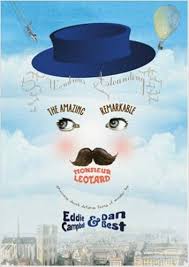
[READ: May 3, 2016] The Amazing Remarkable Monsieur Leotard

Eddie Campbell wrote The Black Diamond Detective Agency which I enjoyed, and The Fate of The Artist, which I enjoyed even more.  Both were pretty unusual–lots of different things going on.  Well, this book has even more stuff going on in it.

I genuinely didn’t know what to expect from this.  I assumed it would be a biography of Jules Léotard, the daredevil acrobat who developed the art of trapeze, popularized the one-piece item that bears his name and was the inspiration for the song “The Daring Young Man on the Flying Trapeze.”

But in this book that Jules Léotard dies on page 12.  Upon his deathbed, with no will written, his worldly possession (a fake mustache) is bequeathed to his nephew, Etienne.  So Etienne puts on the mustache and flies to Paris (in a hot air balloon, of course) to join Leotard’s troupe of circus performers.  When he finds out that they have eaten most of the animals because they were starving, his plans change somewhat.

And so this book is all about Etienne pretending to be the (possibly reincarnated) amazing Léotard and the fascinating adventures he gets up to. (more…)

Read Full Post »

spacedump SOUNDTRACK: YO-YO MA, EDGAR MEYER, CHRIS THILE AND STUART DUNCAN-Tiny Desk Concert #175 (November 17, 2011).

yoyoYo-Yo Ma might be the most well-known cellist in the world.  I suspect that everyone has heard of him.  But it’s likely that people don’t know just how diverse his musical range is.  As the NPR blurb says:

He’s reached out to a broad range of musicians (and Muppets) to play not just Bach and Beethoven, but also Brazilian samba, Argentine tango, jazz, songs from Sesame Street and a smorgasbord of Asian music with his Silk Road Ensemble. American roots music also figures into Ma’s melting pot: He teamed up with double-bass master Edgar Meyer and fiddler Mark O’Connor 15 years ago for the gentle new-grass album Appalachian Waltz.

For this 2011 venture called The Goat Rodeo Sessions, he has created another Americana album, this time with mandolin master (and multiple Tiny Desk Concert player) Chris Thile.  Meyer is back on double bass and they have added Stuart Duncan on fiddle.

I can honestly say I never expected to see Yo-Yo Ma on a song called “Quarter Chicken Dark” but there he is, playing along as Thile begins the song on the mandolin.  The cello, fiddle and bass are all bowed so, despite the mandolin, the song feels a bit more classical (Thile has also made classical music on the mandolin, so the pairing actually makes a lot of sense).  I think Thile comes off as the star of this song with a wild solo in the middle.

For “Attaboy,” the mandolin starts the song again, but pretty quickly the strings dominate.  There’s a beautiful opening by Ma and a great fiddle interplay in which Duncan hints at the big Irish section he’s going to play.  There’s some wonderful fast mini solos from all of the instruments, including the bass, and then the whole song switches to a jig with Duncan playing a very Irish riff while Duncan and Ma keep the low notes coming.   Incidentally, I believe that Thile and Duncan are playing the exact same solo by the end, which sounds great.  But it’s watching Yo-Yo Ma’s fingers and bow move so fast that is really amazing.

For the final song “Here and Heaven” Aoife O’Donovan joins them on vocals.  And for a chance of pace Duncan switches from fiddle to banjo.  (Although mid way through the song he switches back to fiddle).  Donovan and Thile sing the song together.  On the first verse they are a little too quiet.  But once they start belting out they are fine.  This song is catchy and fun and the vocals really do change the feel of their music.

It’s clear that these accomplished musician are having a lot of fun together.  Meyer and Ma actually wave to each other during the second song, and Thile makes lots of little jokes.  And when he introduces Aoife, it’s funny to hear Yo-Yo Ma cheer like a little kid.

While Yo-Yo Ma if probably the most famous musician here, I like them all, and I’ll honestly listen to Thile do anything.

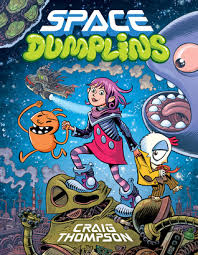
[READ: August 29, 2012] Space Dumplins

Craig Thompson has created a pretty diverse collection of books.  From the serious and beautiful Habibi, to the weird-looking and sad Goodbye Chunky Rice to this trippy sci-fi story.

The story is about Violet Marlocke, a young girl who lives out in a space trailer park.  Her father is a space lumberjack (whatever that means) and her mom is a seamstress.  They are poor but pretty happy, and that’s okay by Violet, since family is everything to her.

But as the book opens we learn that space whales (okay, I’ll stop putting “space” before everything, because he doesn’t) have just eaten her school.  The whales have been rampaging all of the planets in the area. At first Violet is happy to have no school but her parents have to do something with her.  So her mom brings her to work at Shell-tar where they try to see if she can enroll in the state of the art school there.  She can’t because her dad has a criminal record (and he’s opposed to the fancy school anyway).

While Violet is looking around, she meets Elliot Marcel Ophennorth, a small chicken who is incredibly smart (and has visions of the future).  We also meet Zacchaeus, the last Lumpkin in the world. He works at the dump.  Violet quickly befriends them both, although they don’t all get along very well at first.

Two things then happen pretty quickly back home.  Violet and her dad buy an old piece of junk space bike to fix up and Violet’s dad takes on a dangerous job to make some more money. (more…)

Read Full Post »

sleazeSOUNDTRACK: MARKETA IRGLOVA-Tiny Desk Concert #174 (November 10, 2011).

marketaMarketa Irglova came to the world’s attention in the film Once, where she duetted with Glen Hansard.  They formed The Swell Season and made some beautiful music together.  But he has another band and she has done some solo work, like in this Tiny Desk.  Incidentally, watch the video, but listen to the audio.  For some reason the sound in the video is all wonky and weird, but the audio is fine.

This concert is a little surprising because Irglova plays a synth, rather than a piano, and she is accompanied by Iranian singer-percussionist Aida Shahghasemi whom she met in New York.  And Shahghasemi and her drum (called a daf) are actually a bit more interesting than Irglova.

Irglova has a nice voice, and I have really enjoyed a lot of her music, but I found these songs to be a little long and a little undramatic.  However, once you accept that she’s not going for drama, these songs are mellow and lovely.

The opening song, “We Are Good,” has an interesting main riff on the keyboard and her voice blends nicely with the music.  The end section has a very nice melody as it builds and builds.  But as I mentioned, it the daf that is so fascinating.  The drum itself looks like an Irish bodhran (or any other hand-held drum, I suppose), except it has a much bigger diameter and is very thin.  It also has a series of dangling items on the inside, which bring about a lot more percussive qualities.

“Dokhtar Goochani” is a traditional Iranian song sung in Farsi.  Shahghasemi sings the song while Irglova plays.  With the keyboard, the song doesn’t really sound very Middle Eastern until Irglova joins in on harmony vocals in the chorus, when it takes on a very cool quality.  And the drum and percussive sounds in the middle are really enticing.

After this song, Shahghasemi talks a bit about her drum and says that it can be much louder than she’s playing it here.  It’s a traditional Kurdish drum with “jangles” which she explains is usually made of goatskin, but this one is synthetic because the humidity doesn’t affect it as much.

The final song, “Let Me Fall In Love” is about the idea of being in love, with lyrics that are a bit didactic, but whatever.  I really like the middle section where the two women harmonize quite beautifully.  But again the song is a little long.

[READ: October 25, 2015] Sleaze Castle

The cover of this book is crazy.  The full title appears to be:

Markosia/Gratuitous Bunny Comix
Sleaze Castle : The Director’s Cut
Part Zero: “Tales from Sleaze Castle”
Reprinting “Takes from Sleaze Castle” #1-#4
Screenplay by Terry Wiley & Dave McKinnon  Art Direction by Terry Wiley

And then a drawing of a woman with what looks like a magic wand and another woman standing by watching her.

And then there’s a whole list of “Starring” (these names are actually characters in the stories)
and then Film Sound Track Album by MWOWM available on Gratuitous Bunny Audio #GBA3

That’s a lot to take in and it made me wonder if the comic would be that busy.  And it is.  This book is a wonder to behold.  Self published in 1992, this book is just chock full of story, with an astonishing amount of detail included in the drawings–nods to other comics, musical appreciation and all kinds of fun things to look at.  It took me a pretty long time to read this because there was just so much to see and read.  It was a lot of fun.  Even if the plot was a little confusing.

This book collects the original books and adds material (which is not at the end of the story necessarily (so art quality varies).

The book opens on a planet far away.  A blonde woman is talking about the trip she will take which will last for ten minutes their time.

Then we jump to the Prologue set in Jo’s house.  Her sister Petra is giving her a hard time.  Jo wants to take her watchman to school (she is a film studies graduate student) but it was Petra’s new present.  So they are fighting of course.  The amazing detail starts here with books on Jo’s shelves and all manner of other things to look at. (more…)

Read Full Post »

witoy SOUNDTRACK: JUANES-Tiny Desk Concert #172 (November 3, 2011).

Juanes is a Colombian superstar (he’s really juanesquite hunky).  This performance consists of Juanes singing and playing electric guitar (mostly solos) and his accompanist playing acoustic guitar.

The blurb says that he usually plays arenas and large venues, so it’s a treat to see him up close like this.  He was in town to receive an award from the Hispanic Heritage Foundation.

His voice is great and powerful and while he is singing in Spanish, his phrasings don’t sound Spanish at all.  Perhaps its the blend of Colombian roots-folk and rock ‘n’ roll.

“Hoy Me Voy” begins with some acoustic guitar playing and Juanes singing.  It’s a bouncy and upbeat folk song.  And while I don’t understand the words, I feel like I can make sense of the song.

For “Yerbatero” he opens the song with a guitar riff while the other guy plays percussive chords.  The “yeaaaaaaaaaaaah” section is catchy in any language.  And the solo he plays is pretty fun.  There’s also a fairly wild guitar solo near the end of the song.

“La Camisa Negra” was requested by someone in the audience–it was one of his bigger hits.  Juanes plays a cool intro riff (and some complex chords) before launching into the song proper.  I love the middle section with the warm guitars and catchy vocals that counter the staccato verses.

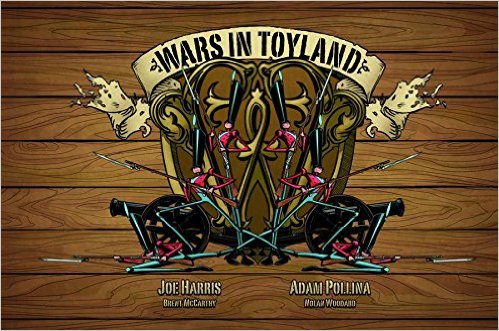
[READ: September 24, 2015] Wars in Toyland

There have been many books about toys coming to life, but I don’t think I’ve read anything quite like this before.

And the artwork is so good that it made the whole story even more compelling.

This book is geared towards YA readers and I can see why… although there’s no bad words (one “bastard”), the subject is very dark.  As it opens we see that young Matthew’s brother Adam is missing.  There’s even Missing posters on the fridge (it’s pretty dark).  Matthew and Adam used to play war with their toys all the time (I love the way the toy soldiers are drawn).

But now that Adam is missing Matthew doesn’t feel like playing war anymore.  And that’s when the toys drag Adam into the toy box and into Toyland, where things are very bad indeed. (more…)

Read Full Post »

stroppy SOUNDTRACK: LISA HANNIGAN-Tiny Desk Concert #171 (October 29, 2011).

lisahI thought that Lisa Hannigan’s name sounded familiar, but given this Tiny Desk Concert, I’m going to assume I had never heard her before.

Hannigan has a really interesting voice–kind of deep and raspy but with splashes of falsetto.  It’s really pretty.

And she plays a variety of instruments.

For “Knots” it is just her and her large ukulele (and she gets a remarkably full sound out of that tiny 4 stringed instrument).

It’s between songs that you notice her accent as she welcomes John Smith to accompany her.  Lisa switches to guitar as well.  It’s interesting that she plays a similar picking style on the guitar which of course just sounds bigger.  The two guitars play very nicely off of each other.  This song is a bit quieter, with her singing most of it in a whisper that makes you want to lean in to hear more.

Before the third song, “Passenger” Bob asks if she’d like to stay the whole day.  She says yes with all of the lovely tea. Bob says there’s plenty and she jokes “Not for long once I get going.”

John needs to tune his guitar, “it was in tune when I bought it,” and Lisa switches to a mandolin.  The high notes of the mandolin work perfectly with her deeper voice.  She shows off a powerful side with some of the sections of this song and the guitar adds some nice bass notes to the music.  For the middle section, Smith sings low harmonies and they both sing louder than before.  It’s a great transition in this song.  And she hits some lovely high notes as well.

Hannigan came to people’s attention while working with Damien Rice.  Then she put out two solo albums.  But she hasn’t put out anything since (except one-off songs).  That’s a shame, I’d love to hear more.

[READ: July 30, 2015] Stroppy

I don’t know anything about Marc Bell, although his art looks very familiar.  The telltale sign is that every character has white eyes which look a bit like capsules.  This book is put out by Drawn & Quarterly and while I thought his art looked familiar, it could just be a D&Q aesthetic.

This story is pretty bonkers.  Stroppy works for Monsieur Mustache at the remote villager processing plant.  In this plant, small villagers who look a bit like Minons (yellow capsules) have their brains removed an a new brain inserted, turning them into security guards and other roles. But then there’s a visitor.  A large shirtless man comes through the tiny opening clogging up the works.

His name is Sean and he has come to put up posters for The All-Star Schnauzer band Song Contest (meanwhile, the villagers are piling up in Stroppy’s work area.

Monsieur Mustache arrives, fires Stroppy and then, upon hearing about the song contest, he Hires Sean, in hopes of buying him off.  Turns out Monsieur is a pretty evil dude (and his songs are just as bad). (more…)

Read Full Post »

fableSOUNDTRACK: CALLmeKAT-Tiny Desk Concert #152 (August 29, 2011).

callmekatKatrine Ottosen is CALLmeKAT and she is from Copenhagen.  I’m unclear what her sound normally is–if it’s fuller than it is here–but for this show, it’s her on a couple of synths and a drummer.

I like the interesting synth sound she gets in the beginning of “Tigerhead,” but, despite the two synths, the whole song feels a little thin to me. Nevertheless, she hits some admirable high notes.

She wrote the second song, “Going Home” at Newark airport—she says always miserable there, it’s “so depressing” (no argument there).  She samples herself on a tiny keyboard (Bob asks her what she’s doing singing into the tiny Casio–this has to have been before everyone was looping everything).  The song is very pretty but feels very slight again–even more so because there is no percussion.

The third song, “Glass Walls” also has a sample of her voice–the sample is just an “ooooooh” note.  She says she wrote this one in the Copenhagen airport (which must be nicer than Newark)  This song is a bit more robust.

I liked her voice but the whole show I wanted a bit more oomph, which is not a typical reaction from a Tiny Desk where I know things are usually stripped down somewhat.

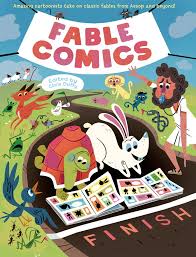
[READ: February 15, 2016] Fable Comics

Following up on First Second’s 2011 collection of Nursery Rhyme Comics, comes this new collection of Fable Comics, also edited by Chris Duffy.

Duffy says that for this collection they wanted to use mostly Aesop’s fables (because they are the most widely knows).  But the book also includes a sampling from other traditions.  He says that cartoonist were allowed to embellish the stories but we asked that the lesson remained.

And so there are 28 fables and the artists are pretty much a who’s who of contemporary comics.  I’ve broken down the Fables by their creators:

Aesop

The Fox and the Grapes-James Kochalka modernizes this a bit with a jet pack, which is hilarious.

The Town Mouse and the Country Mouse-Tom Gauld is back, and it’s great to see his work as he keeps the story fairly traditional

Hermes and the Man Who Was Bitten by an Ant ; Hermes and the Woodsman ; The Frogs Who Desired a King ; Hermes and the Sculptor. George O’Connor is responsible for the First Second Olympians series, so it’s no surprise that he tackles these stories about Hermes.  He remains faithful to the original and keeps up his very cool drawing style.

The Belly and the Body Members–Charise Harper has a wonderfully stylized look for this story about how the body parts need to work together or it can’t do anything.

Lion +Mouse–R. Sikoryak’s Mad Magazine style works very well for this familiar story about a mouse helping a lion (he has modified it somewhat of course).

Fox and Crow-Jennifer L. Meyer’s style is gorgeous.  This fable has a fantastic look to it with pale colors and circles of details.  I could look at it for hours.

The Old Man and Death–Eleanor Davis’s art is boxey and stark.  It works very well with this dark and Communist-looking story.

The Boy Who Cried Wolf–Jaime Hernandez.  I love when Hernandez does kids’ stoires because his characters are so perfectly cartoon and his colors are bright and fun.  His telling of this story is very good.

The Crow and the Pitcher–Simone Lia  I didn’t know this fable.  And I don’t really know how the beginning sets up the end. It shows crow as being very smart for others but the end has the crow being extremely smart for himself.   It’s a weird fable although it rings rather true.

The Dog and His Reflection–Graham Chafee does an awesome job of showing greed in others and leaving the dog’s story to be un-narrated.  He witnesses greed and acts accordingly.

The Dolphins, The Whales and the Sprat–Maris Wicks.  I was completely unfamiliar with this fable.  I’m also curious about how much Wicks has added.  I love that she adds some very funny factual details like that dolphins are actually a type of whale and that there are detailed asides about all of the animals throughout this story.  The moral is that they’d rather die than take advice from a sprat.  Still true today.

The Milkmaid and Her Pail–Israel Sanchez  This fable was also unfamiliar.  Sanchez’ drawings are stark and work well to tell this story of greed.

The Great Weasel War–Ulises Farinas.  This comes from a longer fable called The Mice and the Weasels.  I love Farinas’ art in this story.  The colors are spectacular and the creatures are great   And I love the moral is that they build these giant machines that cannot fight against nature.

The Sun and the Wind–R.O. Blechman. This fable was in Ava and Pip, so its funny to read it there and then see it here. Blechman’s simple drawings complement the story well.

The Hare and the Tortoise–Graham Annable’s art is great for this.  The tortoise is so crabby looking.  I’m unfamiliar with the deus ex machina that happens though.  It’s funny how many of these fables we may know without knowing them in total.

The Grasshopper and the Ants–John Kerschbaum’s art is so busy and full of detail, it’s really wonderful.  I’m unfamiliar with the ants asking the grasshopper to play for them at the end of the story tough.

The Thief and the Watchdog–Braden Lamb & Shelli Paroline. I really enjoyed the way these two created this fable.  The art is great–angular and simple but really powerful.  Having the dog explain why giving him meat won’t work is a great idea.

Demandes and His Fable–Roger Langridge.   I love Langridge’s clear lines and distinctive colors. He tries to get people’s attention and only succeeds by telling them a fable about Demandes.  I’m intrigued that his fable gets interrupted by himself.

The rest of the fables’ origins are mentions in parentheses after the title:

Leopard Drums Up Dinner (Angolan Fable)–Sophie Goldstein makes a fun visual of this story about animals trying to capture others with music.  I wonder how closely this aligns to the original, as its pretty crazy.

The Hare and the Pig (Indian Fable)–Vera Brosgol.  I didn’t know this fable at all.  Rabbit and Pig are arguing about who is best.  Leave it to fox to make the declaration.

The Demon, The Thief and the Hermit (Bidpai)–Keny Widjaja illustrates this amusing tale of a thief trying to join with a demon to rob a hermit

The Elephant in Favor (by Ivan Krilov)–Corinne Mucha.  I love that Corine modernizes the fable (the lion says Dude).  This is all about how everyone talks about the elephant.  He works slow but gets a raise. What makes him so great?  All the other animals speculate.  But it turns out that his ears are the real reason–for reasons other than the obvious.  This may be my favorite fable of all.

The Mouse Council (medieval European fable)–Liniers. This is the story of putting a bell on a cat and how no one wants to risk their life for the good of all.  Liniers’ art is spectacular.  I love the subtle shading of his drawings and then the rough drawings by the mice.

Man and Wart (Ambrose Bierce)–Mark Newgarden.  I love Ambrose Bierce but had no idea he wrote fables.  This one about people’s need for privacy and not belonging to a club is pretty strange.

The Hen and the Mountain Turtle (Chinese Fable)–Gregory Benton. I was unfamiliar with this story about a wise turtle saving a farm.

These collections of short pieces are quite wonderful. I wonder what genre First Second will tackle next.  #10yearsof01

Read Full Post »

glorkpieSOUNDTRACK: OTHER LIVES Tiny Desk Concert #150 (August 18, 2011).

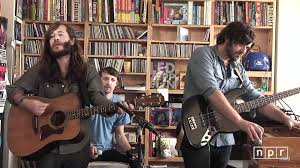
otherlivesI didn’t know Other Lives before this Tiny Desk, but I really liked this one a lot.  It’s a little hard to get past the lead singers incredible facial hair, but his voice is great and the backing vcoals are excellent too.  I loved the combination of instruments and, yeah, pretty much every thing else about this set.

I enjoyed that at the beginning of the first song, “For 12,” the drummer is playing his lap.  The female backing vocalist (whose voice is great) is playing the cello.  The chorus–when everyone sings high notes—is wonderful.  And I love that the drums, once they kick in, are predominately floor tom and rims.

After the song and the polite applause the singer comments, “It’s so somber in here, we need a dance party after this.  And a bunch of caffeine.”

For “Old Statues” the cellist switches to autoharp, which makes a wonderful harp-like sound.  Again the backing vocals are lovely.  I love that she does a series off perfect oooohs as a backing note for his singing on the first verse.  There’s also a harmonium on this track (I can’t believe how many bands use the harmonium).    I love the intensity of the middle section too.

It’s amusing to see them use an iPhone tuner before the final song

“Dust Bowl III” has a cool picked guitar riff (reminds me a little of Neil Young).  There’s more harmonium on this track.  The cellist plays the autoharp upright instead of flat for this song—I wonder why.  The rumbling floor toms are great for this song as well.  And when the full band does the haunting ooohs at the end, it’s really great.

I definitely need to check out more by them.

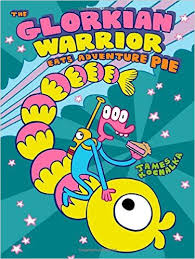
[READ: January 26, 2016] The Glorkian Warrior Eats Adventure Pie

This Glorkian Warrior story is similar to the previous one in that it is pretty crazy.  As it opens, the Glorkian Warrior and his backpack are riding a giant worm.  They are trying to destroy the worm, but while they are riding it, the tail pieces start popping–they are being shot by Buster Glark (who looks like the Glorkian Warrior but has only one eye).  He also a has a talking backpack (who says “they’re stupid, right boss”) to which the Glorkian Warrior’s backpack says “Don’t say stupid, it’s a swear”.

The head of the worm flies off to destroy another pie factory.

When the Glorkian Warrior gets home, baby alien (from the previous book) lands on his head and starts sucking his brains.  Backpack is concerned about this, but Glorkian Warrior says that all of his intelligence comes from his elbow anyhow.  And there is much fighting by the elbow. (more…)

Read Full Post »

glorkpizza SOUNDTRACK: NELLIE McKAY-Tiny Desk Concert #117 (April 4, 2011).

nellieNellie McKay is a singer I’d never heard of.  She is a blonde woman in a kind of yellow kimono and looks like she might be a funny folk singer as she plays a ukulele which is cut to look like an electric guitar.  But rather unexpectedly, she and her band burst into a reggae song.

McKay is, according to the blurb, an audacious artist who once devoted an entire album to Doris Day songs.  And now she writes a pretty authentic sounding Caribbean jam.  “Caribbean Time” has all the trappings of an island song–reggae guitars, bongos, and heavily wah-wahed guitars.

Between the songs, she makes some unexpected comments.  Like she says that she decided that a good sketch would be people sitting around a table asking for things and confessing at the same time, “Pass the syrup my father beat e as a child.”

When they start “Beneath the Underdog” the guitarist doesn’t start on time.  He says “Sorry, I forgot where we were for a second.”  She replies, “We’re in Washington D.C. fighting the man.”

“Beneath the Underdog” is a little less reggae influenced but still has a very tropical, light sound.  And her lyrics are wry and amusing, “beneath the underdog, that’s where I’m comfortable.”  It’s poppy and fun.  She even plays a keyboard solo with notes that sound kind of like steel drums.

“The Portal” is a ballad.  It’s much more traditional sounding, although with the same inflections that McKay has used on the other songs.  Her voice is quite distinctive without being unusual.  This is a somber song, but even while singing it she looks like she’s about to laugh.

And she caps off the set with an other weird  moment where she introduces her band and mispronounces her guitarists last name and seems to have a really hard time saying it.  She apologizes, “I was stoned when I met him.”  As the camera dims she says, “Thank you for fighting the good fight.  We are the silent majority but not so silent, we’re just quiet and tasteful.”

I found her to be quite engaging and charming.  I wonder if she’s still making music.

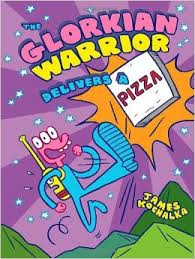
[READ: January 17, 2016] The Glorkian Warrior Delivers a Pizza

I have enjoyed everything I’ve read from John Kochalka.  His drawings are deceptively simple and his books are stupid but ultimately clever (and funny, either way).  His adult books are pretty over the top vulgar (don’t let your kids see them), but his kids books are very funny and perfectly juvenile.

This is his first book for First Second, and the first in a trilogy about the Glorkian Warrior.

Our copy also has an autograph for C.–our Vermont cousins sent it for his birthday (Kochalka is the artist laureate of Vermont, you know).

The premise of this book is painfully simple.  We meet the Glorkian Warrior who is, well, dumb.  His backpack talks to him and tries to get him to be less dumb.  And to be more heroic. (more…)

Read Full Post »

« Newer Posts - Older Posts »