Feeds:
Posts
Comments

Archive for the ‘Graphic Novel’ Category

squish-7SOUNDTRACK: CANTUS-Tiny Desk Concert #264 (February 4, 2013).

Cantus is an a capella cantusgroup of nine men with beautiful voices.

The blurb tells that there are many choral groups all over Minnesota (I had no idea):

Is there some kind of weird vocal vortex in Minnesota? The state turns out so many excellent choral groups — at the school, church and professional levels — that it can arguably be dubbed the choral center of the U.S.

Cantus went professional in 2000 and has cut 15 albums on its own label. Unlike some choral groups who specialize in one style of music, Cantus prides itself on diversity. Just take a look at the three songs its members chose for this concert.

“Wanting Memories” is a song steeped in African-American culture, written by Ysaye Barnwell from Sweet Honey in the Rock. “Zikr,” composed by A.R. Rahman — the same guy who scored the hit movie Slumdog Millionaire — has roots in the Sufi tradition, where deep chords and repeated phrases signal a slow burn toward religious ecstasy. And the group closes with German composer Franz Biebl’s gorgeous “Ave Maria,” a signature piece for the group that blends traditional plainsong (or chant) with delicate melody and voluptuous harmonies that ascend heavenward.

I was really impressed with this set.  “Wanting Memories”was very pretty all the way through.  From what I can tell there are two “bass’ singers who hum the melody while the others sing different parts with various harmonies.  (There’s also a shaker keeping rhythm, but that doesn’t count against the acapella in my opinion).  In the middle of the song, the basses stop the humming and sing along (in a fugue style).  The absence of those droning sounds is a dramatic change in the song. They resume the hums and end the song like it began–beautifully.

“Zikr” has incredibly low bass notes–they are genuinely impressive.   There is an occasional drum that adds some Sufi authenticity–but the sound like they have been singing in this style their whole lives.  It’s really impressive that they are doing something that seems so unlike the Minnesotans that they are.  The end of the song speeds things up a bit which is a very cool sound added to a very cool song.

In introducing “Ave Maria” they explain that they started in 1995 with four guys.  They expanded to 7 so they could perform this piece.  This turns out not to be the traditional Ave Maria.  It is very different indeed–with a traditional Latin (not Latin America, but Roman Latin) feel.  And here again there is the amazing deep voice of the bass and some amazing tenors.

It’s amazing how different they sound in each of these three songs–their range is tremendous.  There’s a comment in the blurb about the beauty of the human voice and that is really the case here–their voices are pristine and beautiful.  It’s a marvelous Tiny Desk.

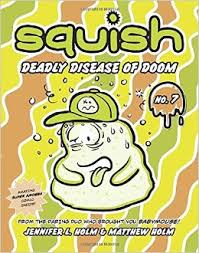
[READ: July 20, 2013] Squish #7

I love the Squish books.  They’re funny and quick and often teach you a thing or two.  I also love that most of the characters are named after real microbes.  And each issue also has a Super Amoeba comic book scattered throughout.

As this book opens, we see Small Pond, where Super Amoeba lives.  Something flies out of the sky and crashes into the pond.

As with every time Squish reads this book though, he is interrupted,  This time it’s to go to school.  His friend Pod is drowsy walking down the street.  He was up late working on his top-secret project.  Squish asks is he can help, and Pod says yes–give him Squish’s Twinkie.

At school the teacher is showing them about acids and bases. The kids are bored until he pours vinegar into baking soda and they all wake up.

The next day on the way to school, sneaky Squish takes a bite out of his Twinkie.  So that when he offers it to Pod, Pod refuses.

But when Squish gets to school, his stomach starts to gurgle and he turns green (literally). (more…)

Read Full Post »

squish-6SOUNDTRACK: ALLISON MILLER’S BOOM TIC BOOM-Tiny Desk Concert #223 (June 7, 2012).

boom I hadn’t heard of Miller–who is a drummer primarily in jazz circles.  Although the blurb says that she has also played live with Ani DiFranco so it’s very possible that I saw her play a decade or so ago.

But this band is all about the jazz.   The quartet has an upright bass, piano, sax and of course Miller’s drums and percussion.

And yet for a band which has her name in it, the drums and percussion are not very prominent.  This was a little disappointing as I wanted to hear some wild percussion, it also makes sense since she’s writing these tunes with melodies in mind.

They play three songs. “Big And Lovely” is primarily a sax song with a few moments of piano playing by itself.  The drums are certainly present but they don’t seem like the centerpiece of this song (and I gather they are not meant to).  It is fun to watch Miller play, though—jazz drummers really do seem to smile a lot more than rock drummers.  This was written for Miller’s friend, musician and activist Toshi Reagon.  During the end of the song—when it’s just bass and piano, Miller breaks out all kinds of bells and percussion which is neat.

“Spotswood Drive” is where a man named Walter Salb once lived; “he was a beloved and respected drummer, and by most accounts a larger-than-life character.  His 2006 Washington Post obituary ran with the headline ‘Drum Teacher Was Scurrilous, Rude — and Greatly Admired.'”  Salb was her drum teacher.  She says he was a “mentor and great guy… sometimes great guy.”  The blurb tells us that “Salb’s mentorship remains so important that Miller started a scholarship fund in his name, and recently dedicated a new tune to him — a searching, slow-burning meditation with lots of percussive coloring between the lines.”  It’s a slow song with lots of interesting percussion which sadly doesn’t really make it to the forefront in the song.  There are gongs and bells and other interesting things—its fun to see Miller scrambling around back there to grab different items.   A few minutes in, there’s a cool bass line (which I’d also like to be louder) that rides under the sax.

She introduces “The Itch” by saying “There’s a story behind this too, (laughter) it’s a little personal…”  Bob says you can stop there.  This was my favorite of the songs.  It opens with a Miller playing the floor tom—but the floor tom has all kinds of things on it—a cymbal, bells, a gong of some sort and she hits them all while keeping rhythm on the tom.  Then she gets to do some really snappy drumming—nice paradiddles and whatnot.  It was a little funny to watch the sax player just standing there watching her for the first minute and a half before joining in. After she gets a rhythm going the bass joins in.  The sax and keyboard lines are interesting and a little wonky sounding.  There’s some piano soloing and then a dissonant section with the sax and the keys playing off of each other.

Overall, this was an enjoyable set.

[READ: March 18, 2016] Squish #6

This book is about admitting to your fears.   Everybody in town wants to go see The Water Bear, a scary horror movie–with a great scary poster.  It’s all anyone can talk about.

When they finally get to the movie, I love that the first scare is a cat jumping out at you (classic horror movie trope).  But then everyone is terrified by the genuinely frightening Water Bear.  A footnote informs us that the Water Bear is entirely real.  Fortunately, it is also only 1 mm long (click if you dare)

The movie is super scary and Squish is terrified for days afterward. However, his friend Pod thought it was cool and Peggy thought the kitty was cute (Squish notes that it was cute until it got eaten). (more…)

Read Full Post »

dragonpunchis SOUNDTRACK: JOYCE EL KHOURY AND BRIAN JAGDE-Tiny Desk Concert #196 (February 20, 2012).

joyceI don’t listen to opera, although I don’t dislike it.  I’m amazed at the power of these singers’ voices.  It was interesting to watch this duo up close like this because you could really see them emote the story (especially in the duet).  So even if I had no idea what was going on lyrically (which I didn’t), I could get a sense of how they reacted to each other.

Here’s some background:

Soprano Joyce El-Khoury and tenor Brian Jagde are young, fresh-faced opera singers at the dawn of promising careers. El-Khoury has already appeared at New York’s Metropolitan Opera, while Jagde has sung roles in smaller houses here and in Europe.  Miloš Repickný joined the two singers at our trusty electric piano.

For this Tiny Desk performance, she reprises her role of Lauretta in Gianni Schicchi by singing the hit aria “O mio babbino caro,” in which she pleads with her father to let her marry her boyfriend. Listen for El-Khoury’s immaculate control of dynamics. Her soft, pianissimo notes are silvery and well-supported by the breath.

Jagde steps up next for a number from Puccini’s Tosca — the opening tenor aria, “Recondita armonia” — in which he muses about Tosca, his “dark-eyed mistress.” It takes a lot of work to sing it right, and Jagde produces the requisite drama and decibels.

The two hard-working singers end with the deliciously romantic duet which closes act one of Puccini’s La Bohème. “We’ve just fallen in love,” Jagde notes. “It happens really quickly in the opera.” As their two powerful, love-struck voices intertwine, the sounds of Puccini reverberate off the walls of the entire fifth floor — a good day in the office.

The first piece [Puccini: “O mio babbino caro” (from Gianni Schicchi)] is sung by Joyce and her voice is wonderful.  Its starts a little quiet but really soars by the end.  It is only 2 minutes (which is something of a surprise).  It’s amusing to hear her speak in such a plain American voice after wailing in Italian like that.  Brian then speaks.  He begins with a wonderful Italian pronunciation of the song they will sing and then reveals himself to have a standard American accent as well.  He tells us a bit of the plot of the song [Puccini:” Recondita armonia” (from Tosca)].  He is painting in a church–a beautiful blonde goddess.  And he compares her to Tosca, who is completely the opposite.  And then that quiet voiced guy opens his mouth to sing.  The power in his voice is incredible.  And just before the end, he wails an amazing note.  This piece also lasts only 2 minutes

The final piece [Puccini: “O soave fanciulla” (from La Bohème)] is a duet. He says that they are in love and about to go out together but they have to look at each other one more time. They sing beautifully together.  I can’t imagine his big powerful voice singing right next to her ear (and being romantic at the same time).  They act it out very well.  There’s even a moment where they look about to kiss but she pulls away to keep singing—it’s good convincing acting.

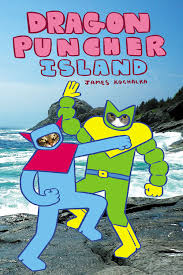
[READ: February 12, 2016] Dragon Puncher Island

This sequel to Dragon Puncher is just as funny as the first.  The Kochalkas got a new cat who takes a starring role.

The story opens up with Dragon Puncher and Spoony-E by the seaside (filmed in Maine).  Spoony-E is bragging about his spoon-wielding abilities (even though his spoon is broken).  Finally Dragon Puncher tells him to be quiet.  And also to stop calling him mister as she is a girl cat.

But when Spoony E stats saying “who’s my pretty little kitty,” Dragon Puncher gets mad and punches Spoony-E!  Spoony is caught by the new kitty, a green bubbly creature called Monster Slapper.  And Monster Slapper doesn’t take kindly to this small, furry and, frankly, smelly creature. (more…)

Read Full Post »

dragonpunch SOUNDTRACK: JOAN SORIANO-Tiny Desk Concert #195 (February 16, 2012).

joanJoan Soriano and his unnamed partners play bachata music (which I’d never heard of before).

Bachata is that sweet, syncopated, lovesick music full of guitar plucks, bongos and güiras that you hear blasting from cars and Latin clubs today. But as recently as the late 1980s, it was frowned upon in its native Dominican Republic for being rustic and vulgar. But it grew anyway, and was championed by Dominican artists like Anthony Santos (one of the first bachateros to go mainstream) and Juan Luis Guerra.

Joan Soriano is a reminder of that. “El Duque De La Bachata” (“The Duke Of Bachata”) is an example of the earthy, unpretentious, undiluted bachata that was forced into a corner so long ago in favor of more “sophisticated” sounds. Whether he’s talking about having his heart broken or about falling out of love, Soriano sounds honest and to the point, and so do his guitar licks. The seventh of 15 kids and an exceptionally talented musician whose music moved him from the countryside to Santo Domingo at 13, Soriano is an essential piece of bachata’s story.

Today, we consume pretty-boy bachata: It’s polished, calculated and, by mainstream standards, photogenic. But when you hear Soriano’s raw interpretation of bachata, you can’t help but wonder how such a beautiful sound was kept quiet for so long, and marvel at its resilience.

They play three songs:

“Me Decidí A Dejarte” Joan sings.  he has a beautiful voice and really interesting and enticing guitar picking style.  I get a kick out of the backing vocals with go “Pero no” “No!” in a rather high, almost girl-group sound.

“Aunque Sea A Escondidas” The woman with his sings lead on this.  She also has a pretty voice and this song is much more mellow than the other two.  Joan stands in the back and sings harmony vocals.

“Cuanto Lloré”  One more shift of locations as the second guitarist moves to the mic.  His voice is a little deeper but just as lovely.  Joan sits next to him.  This song is heavier than the other two.  It has a really catchy happy guitar riff.  The other guitar plays a kind of rapid chugging style.   When he and Joan duet on vocals near the end of the song it sounds really amazing–their voices are in perfect sync.

[READ: February 11, 2016] Dragon Puncher

I love James Kochalka.  I love his deceptively simple artwork. I love that he does his very cartoony style for both his kids books and his highly-inappropriate-for-kids adult books–DO NOT GRAB THE WRONG BOOKS BY MISTAKE!

But I think of all of the things he’s done, the Dragon Puncher series is my favorite.

For this series, he takes photos and integrates them into his story.  But in addition to drawing crazy cartoons on top of wonderful photorealistic backgrounds, he also integrates his family members as characters.

For instance the Dragon Puncher’s face is the face of Spandy, the family cat.  Meanwhile, the other main character, Spoony-E’s face belongs to Kochalka’s son Eli (he was 3 at the time).  And the dragon’s face is that of Kochalka himself.  They are hilarious.

tfaw_dragonpuncherp1Most of Kochalka’s stories veer to the absurd side, and this one is no exception.

Dragon Puncher struts through the landscape seeking the sneaky dragon.  Then he trips over a brown hairy thing whose name is Spoony-E. He carries a wooden spoon everyone (evidently Eli loved spoons at the time).  Dragon Puncher is angry and shouts everything “I WILL DESTROY YOU!” (evidently Spandy was a nasty cat and would hiss at kids, so this makes it even funnier).

Spoony-E is a sweet little creature and he wants to help.  He shows off what a good fighter he is with his spoon (and almost loses to a butterfly).

Dragon Puncher finds some dragon drool and then the ferocious dragon comes along (Kochalka is suitably hilarious as the dragon).  They fight (watch out for the tail).  And the fight only brings our two heroes closer (maybe).

I’ve read this book many times and it never fails to make me laugh.

Read Full Post »

melvin3-cover_SOUNDTRACKCREOLE CHOIR OF CUBA-Tiny Desk Concert #192 (February 6, 2012).

creoleThis concert was something of a surprise for me.  The blurb seems to think that it should be a surprise, especially if you are familiar with Cuban music.  I’m not, so I’m even more surprised.

Just when you think you know Cuban music, along comes the Creole Choir of Cuba. This group sprang from the ashes of Grupo Vocal Desandann, a small vocal outfit created in the late 1990s to celebrate traces of Haitian culture in eastern Cuba.  That history dates back to the late 18th century, when slaves from Haiti were delivered to Cuba to harvest sugarcane after successful slave revolts in Haiti. A long-lost culture was revitalized by the group through music performed largely a cappella and entirely in Haitian Creole.

As with other forms of music associated with the African diaspora, The Creole Choir of Cuba’s work resonates with songs of resistance and celebration of community life, which offered hope and relief from the bitter realities of slavery.

The choir sings three pieces.  And it’s cool the way it is a choir for certain, but that they throw elements into it that are not normally associated with choirs.  For “Marasa Elu” their voices are beautiful, with a great bass voice underpinning the soaring lead voice.  It’s fairly astonishing that she starts to cry at the end of the song (whether fake or not it’s hard to tell).

“Ayiti Krye” has a different lead singer with a very different voice.–although the rest of the choir still sounds great with her.  It comes as quite a surprise about half way through the song when the drums and percussion come in–it really changes the feel of the song and of this choir.  Suddenly the piece is a more dancey song, especially as the percussion picks up speed.  A guy with a wonderfully raspy voice takes over lead.  And the rest of the group really starts to get into it–dancing and singing a beautiful backing vocal that sounds much less like a choir and more like a Cuban dance song.

For “Lumane Casimir” the first singer is back.  There are quiet congas keeping the beat.  While the backing vocals sound a lot like a choir, the lead singer sounds more like a conventional singer.  By the end, they are having a ton of fun and she invites two of the audience members to dance with her (including Felix, the host).  And as any music like this should, the end of the song introduces a whistle keeping a beat.

This is a very different kind of choir–at once sacred and fun.

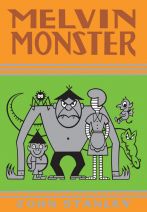
[READ: January 22, 2016] Melvin Monster Volume 3

Last year I really enjoyed the Moomin books which Drawn & Quarterly reprinted.  Another artist that D+Q has reprinted is John Stanley.  And they have made the appropriately titled The John Stanley Collection.  This collection is somewhat confusingly labelled because there are collections of different characters (Nancy, Tubby, Melvin) each with multiple volumes, and it seems like maybe they are supposed to go in a certain order.  And really it’s not that hard to figure out once you know the way it works, but it’s a but of puzzle if you see only a few books on the shelf at the library.

These books were originally printed as comic books.  This book contains the final Melvin Monster comics.  The title page says “Collected from the issues seven to nine of the Dell comic book series”  And D+Q has retained that look perfectly.  Even the paper that they have used for this beautiful book looks like comic book paper (although it is very heavy stock).

In the first issue of the book, Baddy tries to get Melvin a job as a babysitter.  The baby is actually a huge giant which leads to all kinds of amusing scenes of Melvin fleeing from the giant.  Although Stanley was never concerned about being PC, the fact that he set his strip in Monsterville certainly allowed him to get a way with a lot of rather un-PC dialogue.

I’m not sure why Stanley only made nine issues (if it was Dell’s decision or his), but there’s a lot of repetition in the premises.  Melvin trying to go to the school and Ms McGargoyle not allowing him in is a very common joke.  Although in fairness, she does think up many new ways to keep Melvin away.

Little Horror is always a fun character.  In this one she does a spell which turns Melvin into a half frog.

There’s a joke about Cleopatra, the family’s alligator, trying to eat him. And the one with Damon constantly giving him bad advice would be funny whether they were monsters or not.

“Blackout” is an interesting strip as it shows Baddy getting ready to watch wrestling –“the first four rows of human bean lady fans armed with cement filled handbags an shish kabob skewers.”

Book 8 opens with “Supermonster” in which a huge monster living nearby is getting ready to destroy Monsterville.  And it’s up to Melvin to help out.

I enjoyed seeing him integrating snow into a few of these strips (although not sequentially in any way).  There’s a good one that involves digging to the school.  There’s a short one that involves Little Horror breaking ice with her high-pitched shriek and another short one with a giant snowball (that I don’t quite get).

Speaking of un-PC, there’s an entire story that involves a Native American totem pole monster–I guess since it’s a monster its okay, although the way it talks is pretty awful.

Book 9 starts with a monster that frightens Baddy.  I enjoy that Baddy is actually quite a coward despite his size and demeanor).

Little Horror returns with a broken magic wand which is pretty fun.  The punchline where a tiny Baddy is afraid of Mummy is outstanding .

I also really enjoyed the way that McGargoyle got rid of Melvin in the final schoolhouse joke–by having him learn C-A-T and B-A-T and then telling him he graduated.  Of course Melvin redefines high school for us all.

The final strip in the book is the one I knew from the D&Q 25th anniversary book.  In it, Melvin drinks a potion that turns him into a normal-looking boy. Which would of course freak out the whole family.

I also like that the final pages of this book include all of the original covers from the Dell comics (12 cents each!)

I’m fascinated at the publishing schedule of these issues

  • Apr-Jun
  • Jul-Sept
  • October
  • December
  • July
  • October
  • January
  • Apr
  • May
  • August

Perhaps the most interesting thing of all though is his biography which states that John Stanley “bitterly left comics sometime in the late 1960s never to return.”  Woah, I want to hear more about that!

Maybe when I read the Nancy books.

Read Full Post »

melvin2-cover_SOUNDTRACK: GLENN JONES-Tiny Desk Concert #188 (January 23, 2012).

glennI’d never heard of Glenn Jones.  The blurb says that he only recently took up the banjo (which I assume means he has played the guitar for a long time?).  Also, how funny is it  that there are two banjo players in a row.

Jones plays 3 instrumental pieces  “Tinka Marie” is a very pretty banjo instrumental (although I can’t help but feel that his high string is slightly out of tune—I find it a little jarring throughout the song).  The banjo also sounds very compressed or tight or something.  It’s unusual especially when compared to the expansive sound of the guitar in the other two songs.

Before “The Great Pacific Northwest,” he says that if he plays it right, “Mt. Rainier should burst right through the floor of this room.” He has a very interesting playing style.  He has capoed the three bass strings, but not the higher strings.  He then plays chords up and down the fretboard (leaving the capo where it is).  The beginning of this song is a series of slowly played chords, which allow each individual string to sound.  Then it picks up as he begins playing fast finger-picked (with a  thumb pick for the bass strings) melodies.

“Of Its Own Kind” continue with that half capo style and finger picking.  It has a really lovely melody, as do all three.

[READ: January 17, 2016] Melvin Monster Volume 2

Last year I really enjoyed the Moomin books which Drawn & Quarterly reprinted.  Another artist that D+Q has reprinted is John Stanley.  And they have made the appropriately titled The John Stanley Collection.  This collection is somewhat confusingly labelled because there are collections of different characters (Nancy, Tubby, Melvin) each with multiple volumes, and it seems like maybe they are supposed to go in a certain order.  And really it’s not that hard to figure out once you know the way it works, but it’s a but of puzzle if you see only a few books on the shelf at the library.

These books were originally printed as comic books.  The title page says “Collected from the issues four to six of the Dell comic book series”  And D+Q has retained that look perfectly.  Even the paper that they have used for this beautiful book looks like comic book paper (although it is very heavy stock).   (more…)

Read Full Post »

melvin1-cover_SOUNDTRACK: DEBASHISH BHATTACHARYA-Tiny Desk Concert #319 (November 12, 2013).

I like how the blurb for this Concert begins:

You’ve probably never seen or heard an instrument like this. The Hindustani slide guitar is the creation of Debashish Bhattacharya, whose creation pairs his first love — a Hawaiian lap steel guitar, a gift from his father when he was only 3 — and the sounds of India. You can see the similarities to a lap steel guitar, as Bhattacharya lays the guitar across his legs, sliding a metal bar to create the fluid, almost vocal melodies. The additional strings (and lack of frets) allow him to slide easily between notes, in the process creating a sound that resonates and drones while remaining attuned to his Calcutta home.

It’s a pretty cool instrument and does evoke Indian sounds without necessarily sounding entirely Indian.

His music incorporates a good deal of North Indian (Hindustani) classical music, but you can also hear the blues pouring out from this stunning creation. I first met Bhattacharya 17 years ago when he was touring with other great slide guitarists, Bob Brozman and Martin Simpson. In those 17 years, his music has become even more astonishing, and his instrument refined even further. This trio includes his daughter (Anandi Bhattacharya) on vocals and his brother (Subhasis Bhattacharjee) on tabla.

He plays two lengthy pieces.  It’s clear that the three of them are totally in synch with each other.  He often plays off of his daughter as she sings and he follows her (or vice versa).  He is constantly kepimg an eye om her to see what will happen next.  It’s cool watching him play the drones throughout as well.

“Raaga Khamaj” She sings beautifully.  I love the way the little finger taps can create such a great expressive sound on the tabla, but then he really wails later.  Two thirds of the way through the song almost stops entirely and then he switches to a really funky riff–its a great transition.  At times he’s almost scratching the strings making even more interesting sounds.

There is some tuning between songs and then “O My Beloved!/Pillusion” begins.  It’s more mellow overall, goalmouth the middle has an absolutely wild guitar solo which has him sliding his slide all over the place.  It’s pretty wild

The current album and some of what’s played here today can be found on two different records, the first with guitarist John McLaughlin and Dobro master Jerry Douglas (titled Beyond the Ragasphere) and the second with his brother and daughter (titled Madeira: If Music Could Intoxicate). These are brilliant recordings — and a good place to start exploring more from this unique artist after his intoxicating Tiny Desk Concert is done causing your jaw to drop.

I really enjoyed this set a lot and would love to check out his studio records to see what those sound like.

[READ: January 19, 2016] Melvin Monster Volume 1

February starts children’s month here.  Partially it’s because we can all use the good messages and kindness that children’s books offer.  But also because some of the books that I’m going to post about have been sitting in queue for over a year.  So let them see the light of day.

Last year I really enjoyed the Moomin books which Drawn & Quarterly reprinted.  Another artist that D+Q has reprinted is John Stanley.  And they have made the appropriately titled The John Stanley Collection.  This collection is somewhat confusingly labelled because there are collections of different characters (Nancy, Tubby, Melvin) each with multiple volumes, and it seems like maybe they are supposed to go in a certain order.  And really it’s not that hard to figure out once you know the way it works, but it’s a but of puzzle if you see only a few books on the shelf at the library.

These books were originally printed as comic books.  The title page says “Collected from the first three issues of the Dell comic book series”  And D+Q has retained that look perfectly.  Even the paper that they have used for this beautiful book looks like comic book paper (although it is very heavy stock).

So the premise of this strip is that Melvin Monster is a nice, good boy.  But he is raised by literal monsters.  Melvin wants to do what normal human kids do, but his parents Baddy and Mummy want him to be more disrespectful and monstrous.

The characters are Melvin Monster, Baddy (his father), Mummy (his mom) and Cleopatra their pet crocodile who wants to eat Melvin.  There are a few other recurring characters as well, like the witch and

Even though these books were first, I read them second.  And I have to say I enjoyed the long form of these stories a bit more than the short stories of the later issues.  Although interestingly the very first strips are short and don’t establish the character at all. They are just thrown right on to the page.  Well, it does actually establish that Melvin is a disappointment to his Baddy because he wants to go to school (his father played hooky for 8 years straight).

The next strip sees him going to school and other monsters trying to beat him up for wanting to go.  That’s when his demon guardian Damon shows up, although he calls him Medwick rather than Melvin–this mixed up identity results in some good jokes later on.  Ultimately Melvin winds up accidentally blowing up the school which makes his parents very proud.

The next strip continues right where the previous one left off, with Melvin sailing through the air after the explosion.  He winds up in Human Being Land where everybody treats him very badly–and he thinks it’s so nice that they want him to feel at home.

The next book focuses on the door in the cellar. His parents get mad at him and send him to the cellar.  They never go there, but milkmen and mailmen love it so much they have never come out.   When Melvin is down there he opens a secret door.  The path leads him to the subway which is pretty funny.  Incidentally in this book it is called Humanbeansville.  Through his good intentions, he breaks up a crime ring and flies home

I enjoyed that the following story introduces us to Little Horror but also continues with Baddy’s adventures in the basement hole.

Some funny scenes include him being captured by a zoo, where a specialist on monsters comes to investigate him.

In the third book Melvin gets in more trouble and Damon is there to rescue him (with a little pain as of course) from a quicksand trap.

He also manages to not die from the witch’s apples–one good one spoils the bad ones.  And then there is short strip about him breaking a window, which is deemed a good bad deed.

The final long story is a weird one about the giant rat who lives in their walls and has opened up a 4 star French restaurant (I kid you not).

There’s a few more short ones and then the final strip is about a rock that has been teetering in place for centuries.  Of course, Melvin bumps into it and then has to think fast.

I’m not sure how people reacted to these strips when they first came out–if they were considered “bad” or whatever, but it’s funny how sweet and innocent the bad behavior ultimately is.

For ease of searching, I include: Bela Bartok

Read Full Post »

compassSOUNDTRACK: CAROLINE ROSE-Tiny Desk Concert #465 (August 24, 2015).

carolineCaroline Rose is a rocking country gal.  Rose’s music is inspired by rockabilly, fast country and traveling from town to town in a van.  She plays electric guitar and the rest of her band includes a bass drum and slide guitar.  The slide guitar kind of dominates the songs though, so they all sound kind of samey to me.

“Yip Yip Yow” is a fast rockabilly type of song with some silly lyrics.  It’s a fun song.  “I’ve Got Soul” This song is bouncy and rocking although I can’t help thinking of the old adage that if you have to say it you probably don’t have it

“I Will Not Be Afraid” is a more inspirational song with a real honky-tonk feel.  The guys ware wearing T-shirts that say “fuck fear” but they had to cover them up for broadcast (which is why they are wearing jackets).

Of all of the recent rocking country gals I’ve been hearing, I like her best.

[READ: March 15, 2016] The Golden Compass Graphic Novel

I loved The Golden Compass when I read it about a decade ago.  I thought it was really smart, really subversive and really engaging.

What you might notice about this graphic novel is that it was translated.  The Golden Compass was written in English.  This graphic novel was written in French (as Les Royaumes du Nord #1) by Stephanie Melchoir and then translated back in to English by Annie Eaton, which is a weird process.  The art was done by Clément Oubrerie.

The original book was quite large (about 400 pages).  This graphic novel is about 8o pages.  And, as you might guess, quite a large chunk of it is pictures.  So it has been reduced pretty drastically.

One of the great things about the book was the subtlety and evocative descriptions.  You can see where I’m going next–this condensed version is…lacking. (more…)

Read Full Post »

giants-days-2 SOUNDTRACK: THE OH HELLOS-Tiny Desk Concert #493 (December 8, 2015).

ohhelloThe Oh Hellos are technically a duo of Tyler and Maggie Heath.  But live (and here) they play chamber pop with nine members in the band.  They have an accordion, a violin, a banjo, guitars and great harmonies.

“Hello My Old Heart” starts with a quiet acoustic feel–slow and mellow.  But it picks up after a verse and grows in intensity.  The song has a few different parts that keep returning to the “ba dum ba, ba dum bah” melody.  I love the way the song builds to a rousing (and abrupt) end.  There’s so much going on in the song its hard to believe its only 4 minutes long.

The band members are all rather sick–they all have colds and there’s much talk of how bad they feel and how much they are coughing and sneezing (with a revolting/hilarious image of confetti).

“Like the Dawn” also opens with some lovely acoustic guitar.  This time Maggie is on lead vocals and Tyler’s harmonies sound really good with her.  Maggie’s lead soars (even while sick) and I love the way the song builds to a big folk rock explosion by the end.

Before the final song they joke about everyone being sick and how they are ready to be done with the tour.  They start talking about laundry and underwear and get very silly.  It’s pretty impressive the way Tyler can go from chastising them for being gross and then singing the first delicate falsetto note of “Exeunt” so perfectly.  Its fun watching the band (especially the guitarist and violinist) really get into the big chords in the middle of the song (jumping up and down as they rock out.  The song has an amazing ending as it builds and everybody sings “I have set my mind and my will” before all voices drop out and he gently sings, “I am leaving.”

It’s a pretty great ending although he notes that “The end of that one is a little more impressive with the full set up but you get the idea.”

The Oh Hellos are a great addition to the chamber pop world, and I look forward to hearing more from them.

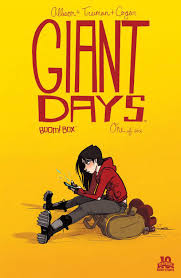
[READ: June 16, 2016] Giant Days 2

What’s interesting but a little disappointing about his series is that continuity doesn’t seem to be a high priority between the stories.  The characters never change their behavior, which is good, but it feels like these stories are episodic rather than continual, and yet there is certainly meant to be a building upon previous stories.

Except for Chapter 5 which picks up right after the previous book with the men and women shopping for formal attire for the Hall Ball.   Esther convinces the women to buy secondhand dresses and then says that her brother can fix them–an excellent joke at the end of the page.

Meanwhile Ed and McGraw are trying on suits.  Ed says he hopes that Esther will be into him someday and McGraw looks to the heavens and saying “The maintenance, Ed.”

The dance proves to be successful for some (well, Esther) until one of the men says that there’s a bet a the dance to see who can hook up with her.  Well, that ends Esther’s fun.

And then some unexpected (or maybe not) pairings occur.  Each person is a bit ashamed (at least in front of the others).  And in classic “friend” scenario, Esther tells Ed that anyone who would not go out with him is an idiot.

And then everyone heads home for Christmas holidays.

Chapter six shows an emergency visit to Northampton and Susan’s home. We all know that Susan is prone to aggressive outbursts.  Well that was true in her past as well.  The girls show up to rescue Susan, but she doesn’t appear at the train stations.  How will they find her?  (There’s a very funny joke about all smokers knowing each other).  I also love the continuity of the amusing joke that McGraw really loves keys.

The crux of this chapter is that some time ago, Susan greatly upset the daughter of the richest family in Northampton.  And now that she is back, revenge is to be served.  This chapter is very funny but mostly centered on its own plot rather than advancing the college story.  As it ends, Esther realizes that exams are common up and she hasn’t been to a lecture since November.

Chapter Seven opens and things are…different. There is a new illustrator (Max Sarin) for the next two books and I have to say I really don’t like the new style.   Even though Cogar still does the colors, everything in this book feels much brighter–in part it’s because Max’s lines are thinner, but also because almost everything he draws is softer and rounder.  It take a lot of the edge off of the book and make s the whole thing a lot “cuter.” Which is disappointing.

The story is pretty solid though.  Esther is freaking out about exams-she thought her exam about the New Testament would be really easy.  To prepare for this exam she decides to go out dressed in whiteface to see Necrotising Swamp–a band that is satanic in a fun way.  On the way out of the show, while protesters are trying to make her feel guilty for being there, she decides to go to “the source” and in a joke that I love, she decides to ask a priest for help in her theology class.

In an act of desperation, Esther finds one more person who might be able to help her…which turns into something more.  At the same time Daisy discovers that Susan and McGraw have been “sexing.”

As Chapter 8 opens all of the couples are together.  Susan and McGraw, Esther and her new guy and Ed and Daisy (although not as a couple).  And this meeting is for Esther to introduce her new man to her friends. And conversely for him to introduce her to his friends (which could go better) and his parents (which could definitely go better–until she decides to really be herself).

When pressed she admits that she has a weakness for milquetoast handsome.  And while their backs were turned, Daisy became addicted to Friday Night Lights.  And while Ed has been trying to figure out how he could take his mind off of Esther and her new guy, he wound up joining the newspaper–what will that produce?

Read Full Post »

giant-daysSOUNDTRACK: NATHANIEL RATELIFF & THE NIGHT SWEATS-Tiny Desk Concert #488 (November 17, 2015).

nateNathaniel Rateliff & The Night Sweats get a ton of airplay on WXPN–perhaps a bit too much airplay.  And yet I can’t deny the supreme catchiness of his music which owes a lot to Van Morrison’s brand of soul music.

Rateliff was (and perhaps still is) a folk singer.  But in 2015, he released this album with the band The Night Sweats and has had huge success with this more rocking soulfulness.

“I Need Never Get Old” sounds so much like a Van Morrison song that it’s hard to deny how catchy it is (especially the chorus).  “Look It Here” has a similar vibe with the kind of loudly mumbled vocals that sit nicely with backing vocals and horns.  The middle of the song picks up in intensity and changes the overall tone in a good way that segues nicely back into the main melody.

“I’ve Been Failing You” features more piano up front.  It’s a little more bluesy than soulful so I like it a bit less.  Although the backing vocals in the quiet section (Don’t you weep and don’t you worry) are very cool.

Typically a band does three songs, but Bob walks up and shakes his hand and asks if he wants to do another.  Nathaniel asks, do another or do that one over?  But Bob says, no another song if they want to.

The band agrees they can’t really do “Shake,” so instead they play “Mellow Out.”  Rateliff says, “Same key different song.”  And everyone laughs until he realized, “wait it’s actually a different key.  What do I know?”

“Mellow Out” which opens with some very Van Morrison “do do do dos.”   It sounds very much like the other songs–catchy and swinging with horns in all the right places.  When the song ends Bob says it sounded great and someone comments that they had an extra late night last night before the audio turns off.

I am genuinely surprised that they didn’t play “S.O.B.,” their first single (a song used in a Lipton commercial–although not any part that sings “son of a bitch, I might add).  But since I don’t really like that song, I’m glad they played the other ones.

[READ: June 15, 2016] Giant Days Vol. 1

Giant Days was excerpted in the back of a Lumberjanes book and I loved the excerpt–very funny with a great drawing style. Then as I am wont to do, I forgot all about it.  But in the library the other day, the librarian recommended the book and I was delighted to be reminded about it.

This series is set in a British college.  Susan, Esther, and Daisy are roommates.  Susan is the sensible one–a little angry at men and unwilling to take crap from anyone.  Esther is a goth hottie.  She dresses outlandishly and has a (literal?) forcefield of bad luck around her.  And Daisy was home schooled–she is very sweet and rather naive.

I loved right from the start when the three girls head out to campus.  Susan bets Esther that she can’t go three days without some kind of drama happening around her.  But as soon as they get outside, Susan see McGraw.  And she is furious.  McGraw has floppy hair and a big ol’ mustache.  And they launch into each other with cold pleasantries.

When the girls  force Susan to tell the story, there’s a very funny moment when the other two start chanting Flash-Back Flash-Back but we get a brief, intentionally unsatisfying one. (more…)

Read Full Post »

« Newer Posts - Older Posts »