Feeds:
Posts
Comments

Archive for the ‘Funny (ha ha)’ Category

harpers maySOUNDTRACK: LAURA VEIRS-“Sun Song” (2013).

lauraI know of Laura Veirs from her work with The Decemberists, but as she’s mostly a backup singer (and occasional lead), I couldn’t really say I knew her very well.  So I was delighted to hear this song that she had written and to see just how great it is,.

The song begins with a simple folk guitar and pizzicato pluckings. Veirs’ voice has an innocence that I really love—gentle but clean.  The chorus brings an unexpected harmony vocals and vibrato but nothing prepares you for the feedback squalls that the new electric guitars bring in.

The song doesn’t get faster, just a little noisier—it reminds me of the best Sarah Harmer tracks.   Then the electric guitar goes away and the song feels fuller somehow.  The end of the song introduces a  kind of call and response which adds a cool new element until it all relaxes back into its original mellow style.

I really like this song and need to hear more from Veirs.  And I see that she has released a whole bunch of albums, so there’s a lot to choose from.

[READ: May 30, 2013] “Loyalty”

This story begins with a pretty straightforward sentiment: “As much as I love her, I blame Astrid.  Astrid told my wife, Corinne, that she could achieve happiness if only she’d leave me.”  Indeed, Astrid made a regular suggestion out of it–leave him, be free.  And so finally Corinne did–she left him alone with their son, Jeremy.  Initially Jeremy wrote to Corinne but eventually the replies were fewer and further between and he gave up.

Wes was crushed, but soon after he fell in love with Astrid and they got married.  I love the way it is presented:

The minute Corinne was gone, Astrid showed up. I don’t recall that, prior to that day, we had so much as exchanged a moody, sparking glance. She took me into her expert arms. It was consolation and sympathy at first, I guess. I didn’t question it. In about the time it takes to change the painted background in a photographer’s studio from a woodland scene to a brick wall, she had left her boyfriend and was presenting me with casseroles and opened bottles of cold beer.

We never really learn if Astrid had planned this all along.  It seems like it, but it’s not like Wes is a huge catch.  Corinne’s divorce request went though with no trouble or custody problems.  And soon he and Astrid had a new child, a daughter, Lucy.  Then they saw Corinne on TV, on a show about runaway moms–Wes asks, what would make her do such a thing–and no reasonable answer is given. (more…)

Read Full Post »

5.20SOUNDTRACK: ELEKTRA-“I Don’t Do Boys” (2009).

elektraI found out about this band and video because of my recent reading of the Icelandic magazine Séð og Heyrt and this post on I Love Icelandic Music.

This song was listed as one of Iceland’s musical scandals because of the aggressively lesbian imagery.

The song is simple enough.  Piano chords play slowly until the tone changes for the bridge and the very simple chorus (which reminds me of Blur’s Boys and Girls in a way, although it doesn’t sound anything like them): “I don’t do Boys, I just do Girls, I just do girls with style and class. I don’t do boys I just do girls I just do girls with kissable ass”). It’s poppy but a little more aggressive than a typical pop song (and not as metal as a pop metal song).  There’s an interesting style to the backing vocals that seems to make it more than a pop song as well.  I’m not saying it’s good, but it’s more than typical.

As for the video, I can’t tell if this is male fantasy lesbianism or what, but since this story is all about kissing, here’s a video that’s all about kissing.  See if it’s as scandalous as Iceland thinks.

[READ: May 16, 2013] “Leaning In”

The five brief pieces in this week’s New Yorker are labeled as “Imagined Inventions.”  And in each one, the author is tasked with inventing something.

Mindy Kaling is always funny, especially when you’re not sure how serious she is.  As when she begins her essay, “One of the perks of my job is that I regularly get to kiss men—often married men—with zero repercussions for anyone involved.”  Of course she’s talking about acting, but as she says—who is to know if she slips out of character while kissing?

She explains that kissing new people is one of the great joys in life and, while being in a committed relationship is also wonderful, she feels that removing the joy of kissing new people is a terrible drag.  She agrees that marriage is a serious business but kissing is not.  “Kissing in and of itself can’t create offspring or cause life-threatening disease.”  She offers an example of how if you just kissed someone you would never be stuck having to listen to his post-coital ramblings afterwards. (more…)

Read Full Post »

artofmcSOUNDTRACK: SUGAR-“Helpless” single (1992).

helplessI loved that first Sugar album and even bought the single for “Helpless” (back then singles were ways for record labels to get more money out of fans of a band rather than for people to pay for one song).  In addition to “Helpless,” the single contains three songs.  “Needle Hits E” is a poppy song–very Mould, very Sugar.  The song is a bright and vibrant addition and would fit nicely on Copper Blue.

The second track is an acoustic version of “If I Can’t Change Your Mind” which sounds wonderful.  Mould really knows how to record a 12 string guitar to make it sound huge.  “Try Again” is the final track.  It reminds me of The Who, especially the bass line at the end of each verse.  It’s a darker song (especially for his single which is so up).  But I love the way the acoustic guitar seems to make it build and build.  Then, some time around the two and a half minute mark, a feedback squall starts building.  It’s way in the background (and actually sounds a bit like squealing balloons).  It continues until the last thirty seconds just degenerate into full blown feedback noise–just so you know Sugar aren’t all pop sweetness.  All three songs were later released on Sugar’s Besides collection.

[READ: May 10, 2013] The Art of McSweeney’s

Sarah got this book for me for my birthday and I devoured it.  It answers every question I’ve had about McSweeney’s and many more that I didn’t.  It provides behind the scenes information, previously unseen pieces and all kinds of interviews with the authors and creators of the issues as well as The Believer, Wholphin and some of the novels.

The real treasure troves come from the earliest issues, when there was very little information available about the journal.  So there’s some great stories about how those early covers were designed (ostensibly the book is about the artwork, but it talks about a lot more), how the content was acquired and how the books were publicized (book parties where Arthur Bradford smashed his guitar after singing songs!).

The cover of the book has a very elaborate series of very short stories by Eggers (these same stories appeared on the inside cover of McSweeney’s 23).  For reasons I’m unclear about, the rings of stories have been rotated somewhat so it is does not look exactly the same–although the stories are the same.  The inside photo of the book also gives the origin of the phrase “Impossible, you say? Nothing is impossible when you work for the circus.”

The opening pages show the original letters that Dave Eggers sent out to various writers seeking stories and ideas that were rejected by other publications (and interesting idea for a journal). (more…)

Read Full Post »

dreadSOUNDTRACK: PIÑATA PROTEST-El Valiente (2013).

elvaliente-frontrgbOn the Pogues album If I Should Fall from Grace with God, they sing a song called “Fiesta” that is more or less a punk Spanish song which, while very Spanish sounding, still retains a feeling of Irishness.  Piñata Protest, a band from San Antonio who sing in Spanish and English, sounds like a similar mix of Mexico, Ireland and punk (especially on the second track, “Vato Perron”).  I feel like the Ireland comes from the accordion (one of the primary instruments on the disc), while the punk lasts throughout (the whole album is 9 songs in 20 minutes).

The band plays loud guitars at a fast pace.  And it’s amazing how well the accordion brings it all together.

The band sings a few really fast songs and a couple slower ones.  Interestingly, the slower songs (“Tomorrow Today” and “Guadalupe”) are probably the most conventional and, consequentially, of the least interesting songs on the album.  They sound like pretty typical punk pop, albeit with touches of accordion.  It’s the more fast songs like “Vato Perron” and “Life on the Border” (with the great lead accordion and the fun “Hey!” refrain) which really stand out.

“Volver Volver” is a traditional song which starts out slowly (with big guitars) and after a few verses and a very long held note, the punk can’t be contained any longer and the song ends in a blur.  The title track is a great rocker with some interesting guitar sounds an a cool accordion solo.  Then there;s the rocking (and amusing) cover of “La Cucaracha.”  It starts out as a blistering punk song with no real connection to the original until about mid way through when a lone trumpet begins laying the familiar melody.  It’s only a minute long and so is the final cut “Que Pedo” which is just a blistering punk song with lots of screaming.

And with that album is done.  It’s a fun an unexpected treat of an album, and if you like your punk musically diverse, it’s worth checking out (NPR is streaming it this week).

[READ: May 11, 2013] Dread & Superficiality

Sarah got me this book for my birthday.  If you have ever seen Annie Hall (and if you haven’t, go watch it now), you’ve seen Woody-as-cartoon.  Hample is the person who created the cartoon for the movie.  Around the time that that happened, Hample was pushing Woody to have a comic strip based around him (Hample had a moderately successful strip at the time already) and also convincing newspapers that this was a good idea.  All parties agreed and Inside Woody Allen ran from 1976 to 1984.  1984!  I can’t believe I never saw this in a newspaper.  My parents were daily subscribers to two newspapers and I know I read the comics.  Of course, I didn’t care about Woody Allen until I went to college, so maybe I did see it but ignored it.

Anyhow, this book collects a bunch of those strips (I have no idea how many but I would venture around 200–which is a far cry from the nearly 3,000 that would have been produced over those years.  But hey since there’s no other place to see these strips (there were three books published but they are all long out of print), this is a good place to start and a nice collection.  But more than just the strips, most of the book collects the original proofs of the strips, so you can see Hample’s lines and notes (there are several pieces that deal with his color choices and notes on the same).

The book is broken down into subjects and is in no way chronological.  This makes sense as it’s good to see him dealing with the same topic in different ways, but it makes for weird continuity issues (something that will obviously occur when you only select random strips).  Woody is with various women over the strip and it’s hard to know if he was after Laura for a few months or the duration of the strip.  Of course, the sections aren’t really all that different–they all deal with Allen’s philosophical attitude, his attempts to woo women, his therapist and his parents.  However, the breakdowns, while somewhat arbitrary are enjoyable. (more…)

Read Full Post »

CV1_TNY_04_01_13Gutierez.inddSOUNDTRACK: TRAGICALLY HIP-“Man Machine Poem” (2012).

hip manI received the new Tragically Hip album Now for Plan A a while back. I’ve listened to it a few times, but it got lost in the shuffle.  Then I put this song on and it really blew me away.

It’s a very typical Hip song–guitars that build but then retreat to let Gord Downie’s voice soar above the quiet verses.  There’s something agonizingly beautiful about the way he sings the verses, which almost feel like they are a capella, the music is so minimal.  Then for the second verse, the band kicks in and builds the song even more.

The chorus, which is very simple and is barely a chorus at all, punctuates the verses perfectly, with Downie’s voice being a great anchor.  The song doesn’t rock as hard as some Hip songs, nor is it as ballady as others, but it’s a perfect example of what the Hip do so well–a middle tempo song that is both passionate and also rocks.  (Although I could do without those weird little keyboard notes that dot the end).

[READ: May 8, 2013] “Marjorie Lemke”

At first I was unhappy about this story—it seemed like it would be another story of a young girl who gets pregnant and has a shitty life.  Especially when I found out the father is a junkie who has run off and that she herself was a huffer of chemical fumes.  Oh boy. And for some reason I thought the story was Irish (I guess there’s lots of down on your luck Irish girl stories out there–cheeky!)

But Braunstein transcends that story but giving Marjorie a support system.  Her aunt, who is very helpful (but doesn’t remove her responsibilities), and a job as a maid at a nice (but not too nice) hotel.  Her daughter, Della, is small for her age, but she seems mostly healthy.  And the hotel allows Marjorie to bring Della along on her cleaning cart (tucked into the clean towels).  Della pretty much sleeps all day (which is good for work, but not so good for nighttime), and no one has complained about her cooing or drinking a bottle when she does wake up.

Then Marjorie knocks on a door and a man is in there—he didn’t say anything when she knocked.  At first Marjorie thinks he’s masturbating, but he’s not, he’s just absorbed in the newspaper on his lap.  He tells her to just go about her work, don’t mind him.  So she does.  He’s not cold exactly just absorbed in what he’s doing.

The next time she goes to the room, he is there again, but this time his wife is there too. She is brusque and tells Marjorie that they will be in the room for about 4 weeks—she is an inspector and has several jobs in the area.  She asks that Marjorie come every two days to clean and says there will be a large tip waiting for her.

The story then jumps forward a bit.  In a way that is impressionistic more than telling, we learn that Marjorie and the man, Gabe, are getting close—talking, holding hands, comforting each other.  (more…)

Read Full Post »

#20SOUNDTRACK: SUGAR-File Under: Easy Listening (1994).

fuelI  always thought File Under: Easy Listening was a very funny title.  But it’s possible that people took it too literally as it didn’t sell all that well. And in Mould’s autobiography he says he didn’t have much time to write songs for this disc and he thinks it suffered.  Of the three Sugar discs, this is definitely the weakest, although there are some great moments on it.

The disc opens with “Gift” which has some ragged distorted guitars. It’s got some noises and grungy sounding solos showing that FU:EL was a joke.  Although, the overall sound is kind of a cleaner version of the angry songs on Beaster.  “Company Book” is kind of a pounder, until the voice comes in and you realize…it’s not Mould!  It’s got a catchy chorus, but after the kind of underwhelming opener, it’s a strange place for a song that’s also not so dynamic.  Especially when it’s followed by “Your Favorite Thing” another great pop song from Mould—not top tier but a really strong second tier (although that bright, simple guitar solo is a real winner).  “What You Want It To Be” is a another decent song (the addition of that extra guitar playing the melody line really makes the song shine.  “Gee Angel” is also a high point.  A catchy song, but which never quite reaches the heights of the previous albums.

“Panama City Hotel” has the same feel as the opening of Beaster: bright acoustic guitars and a similar riff.  But it never really goes anywhere, and the 4 minutes seem.  The “do do do do’s” that open “Can’t Help You Anymore” are certainly the brightest spot on the album, and a big pop song as well.  “Granny Cool” has a nicely abrasive riff although it seems kind of mean spirited.  It’s funny that he tucked “Believe What You’re Saying” at the end of the album.  It’s a minor song but it sounds so bright on this album after the other songs. It’s really quite pretty.

And the closer, “Explode and Make Up” is one of Mould’s great angry songs.  Unlike Beaster, this one has a happy acoustic field—bnright guitars with that raging distorted guitar underneath.  It’s a great slow burner of a song and at five minutes it ends a somewhat lackluster album in a great way.

[READ: March 31, 2013] McSweeney’s #20

McSweeney’s #20 is an issue that I have read before.  At least I think I have.  My recollection is that it was the last one I read before I started writing about them on this blog.  I was hesitant to read it soon again, which is why I waited until now.  And while I remember the issue itself (with all of the art), I didn’t remember the stories.  So who knows if I actually read it six years ago.

Anyhow, this issue comes jam-packed with art.  Every fourth page has full-color artwork on it–many of them are quite famous.  It makes for a very beautiful book.

In between these artworks are a number of stories–ranging in size from 2 pages to 30-some pages.  There are no letters, and the explanatory and copyright information is on the cover of the book–which would be fine, except that it is covered up by a kind of 3-D artwork.  I wonder if the whole text is available anywhere?

The book also comes with a separate pamphlet–an excerpt from Chris Adrian’s Children’s Hospital.  I intend to read the novel eventually so I didn’t read the excerpt–although maybe if I put off the novel for six years I should just read the excerpt now. (more…)

Read Full Post »

#16SOUNDTRACK: SUGAR-Beaster EP (1993).

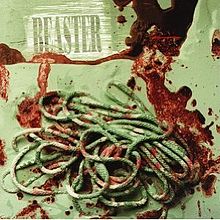
beasterI didn’t know that Beaster, the Sugar EP was recorded at the same time as Copper Blue.  Mould’s biography was very helpful in explaining all the details of the timing and styling behind these two recording.  As well as how the super pop of Copper Blue could be followed right on the heels with the very very dark EP of Beaster.

I have often thought of this disc as being really dark and insular and Mould confirmed as much—he was really airing out some demons with this disc.  But they thought it would be better to put them all in one place rather having them bounce around the poppier full length.  What must fans (like myself) have thought to hear this dark album after the pop of Copper Blue.  I mean just look at the cover!

I hadn’t listened to this in a long time, so I was surprised by how cool “Come Around” sounds—Mould’s acoustic guitar high in the mix with some appropriately grungey guitars in the background.  There are lyrics but for the most part I think of it as just Mould making sounds with his mouth.

It’s followed by the blistering “Tilting.”  It’s got superfast drumming with aggressive guitars, it’s like we’re back to the early Hüsker Dü punk sound (with a little more clarity).  The drumming is great in this track.  The song ends with a preacher being interrupted by dissonance and what sounds like electronic interference. And this song morphs into “Judas Cradle” one of Mould’s darkest songs.  It’s very claustrophobic-feeling with echoed vocals, lots of feedback and lots of compression on the overall sound—quite different from the big open sound of Copper Blue.  And yet for all of that, the chorus, “Have you seen the Judas Cradle, ah”is really quite catchy.

“JC Auto” has some buzzsaw guitars which make it seem like it’s going to be quite an angry song and yet the bridge is quite welcoming (all this talk of holidays) and then the chorus is amazingly fun to sing along to (Mould always finds pop in anger): “Passing judgment on my life you never really got it right/I can’t believe in anything / I don’t believe in / Do you believe in anything / Do you believe me now…  Look like Jesus Christ / act like Jesus Christ I Know I Know I Know Here’s Your Jesus Christ I’m Your Jesus Christ I Know I Know I Know.”  And, as always, I love when Mould repeats his lyrics in the background (the “I Know I Know” surfaces throughout the end of the song).

“Feeling Better” has weird synth blasts that kind of works in the song but sounds out of place on this record.  This song flips between really aggressive guitars and a very bright poppy chorus.   At 6 minutes this song is a little long (because it’s primarily repeating itself by the end), whereas Judas Cradle and JC Autos’ 6 minutes are well justified.

The final song “Walking Away” is a strange one. It is comprised entirely of organs (church organ it sounds like) with Mould delicately singing “I’m walking away back to you”  The end starts to wobble giving a bit of a nauseous feeling but then it’s over.  So even in his most downtrodden and questioning, Mould still has the chops to write some great music.  Down be put off by the cover, Beaster is a great album.

[READ: March 28, 2013] McSweeney’s #16

After the fairly straightforward Issue 15, McSweeney’s was back to fun with Issue #16.  The issue opens up into a kind of quad gatefold which has , in order–a comb, a book, another book and a deck of cards.

The main book contains nine stories, by the typical McSweeney’s roster at the time.  The other booklet contains a lengthy story by Ann Beattie.  The deck of cards is for Robert Coover’s “Heart Suite” and the comb is a comb.  It’s a nice one, although it has never touched my hair.

The MAIN BOOKLET (more…)

Read Full Post »

#15SOUNDTRACK: SUGAR-Copper Blue (1992).

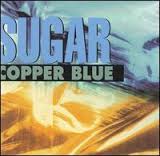
copperblueAfter Bob Mould made some solo albums, he created another band.  Another trio, this one called Sugar.  Sugar seems to take Mould’s poppiest elements and wrap them in a big 90s grunge sound–a sound that Mould pretty much invented in Hüsker Dü.  And in many ways Sugar is not all that different from Hüsker Dü–maybe a bit less experimental and a little more commercial.

One thing I noticed about this album that, once I noticed it I couldn’t avoid it, was that when the drummer plays the cymbal (it might even be a hi hat with a tambourine on it), which he plays a lot, the tinny shimmer of that sound is so pervasive, I find it rather distracting.  Or should I say it adds an almost minute level of static over the proceedings.

The disc opens with “The Act We Act,” where big grungy guitars and a simple chugga chugga riff burst out of the speakers. I love the Pixies feeling of “A Good Idea” both that up front bass and the buggy sounding guitars provide an almost false introduction to the catchy verse and chorus that’s to come.  I also enjoy the unexpected break after the chorus.

It’s followed by the ringing guitars that introduce “Changes” a classic poppy rock song that is unmistakably Mould.  The uneasy almost nauseating sounds at the end of the song are again like a feint in the wrong direction as “Helpless” easily the most pop song Mould has ever written comes out.  Of course, as with Mould, this outrageously poppy song is all about feeling helpless.

Keyboards open the next song, “Hoover Dam” (something of a surprise for this album), which proves to be yet another big Mould single.  The song is so open with multiple acoustic guitars (and that cool synth solo) and a really wild reverse guitar solo.  It’s one of my favorite Mould  songs and yet another example of why this album was such a huge hit.

“The Slim” brings back the darker songs that Mould is also known for.  And just when you think that Mould can’t pull out another huge big single, he gives us “If I Can’t Change Your Mind,” one of his great big bouncy acoustic guitar songs.  It is almost obscene how catchy this song is, right down to the simple scale solo at the end.  Mould has this little technique that I find irresistible where he plays a song normally and then plays two fast chord changes segueing into another section.  It’s so cool.

“Fortune Teller” is a fast rocker with Mould’s trebly guitar taking the lead.  “Slick” is the only song I’m not crazy about. There’s something about it that kind of slows the momentum down, which is odd for a song about a car.  It’s got a real middle-period-Who feel to it, which I do like (and I really like the bridge) it just feels odd in this place in the disc.  The end of the song has some snippets of chatter that could have been edited out but lend an amusing air to the final track, “Man on the Moon” which ends the disc with that same air that the rest of the album has—big guitars and Mould’s slightly distorted vocals.  The solo is weirdly processed and kind of fun.  The end of the track with its repeated half step has a very Beatles feel to it. And the very end of the disc has the sound of tape rewinding, an amusing nod to the digital era.

Copper Blue was Mould’s first huge success and in his book he talks about not realizing quite how huge it was until he was in the middle of it.

[READ: March 20, 2013] McSweeney’s #15

I was a little disappointed with McSweeney’s #14, but #15 was once again fantastic.  This issue is a smallish hardcover (I like when their books are this size).  The bottom half of the cover features a cool 2 color painting by Leif Parsons.  The issue is known as the Icelandic Issue because of a few things.  The first half of the book features stories by the usual suspects.  Each of these stories is accompanied by an illustration of a Scandinavian rune that dates to the Viking era.  The stories in the second half of the book have illustrations that are taken from Icelandic grimoires–magician’s handbooks.  It is these second half stories that are all from Scandinavian authors.  It’s a fascinating peek into a culture few of us probably get to read.

There’s no letters in this book, which removes some of the levity, but that’s okay.  The front page has a brief story that it was being written on November 2, 2004 in New Mexico, hoping to bring some voting power to “the good guys “in this “completely fucking terrifying election.”  (The bad guy eked out a victory 49.8 to 49.1).  They went canvassing door to door with an Iraqi veteran named Joey (who was 21).  He was very pro-Kerry and may have even convinced a young girl to vote (she thought her vote didn’t count because she was poor (!)).  It really evokes the feeling on that dark night in 2004 when the iota of hope was snuffed out. (more…)

Read Full Post »

CV1_TNY_04_01_13Gutierez.inddSOUNDTRACK: THE KNIFE-“Old Dreams Waiting to be Realized” (2013).

theknife With the release of The Knife’s new album, the New Yorker review that I mentioned yesterday pointed out just how radically different this new disc is from the synth pop of yore.  Sasha Frere-Jones talked about the weird instrumentation that they use (and made themselves) and the processed vocals that often defy gender.  But he mostly focused on this, a 19 minute song.

What’s so radically different for The Knife is that the song isn’t really a song so much as a series of slow washes of keyboards which rise and fall.  There’s no melody at all and no singing either.  It’s basically an uneasy ambient song–quite a departure from the three-minute pop of “Heartbeats.”  There’s also a bunch of percussion, also seemingly random.  It sounds like a bleak landscape–the moon perhaps.

At around 10 minutes, the washes of sound (which have been pretty constant and low volume) are eclipsed by a processed steel drum sound which play a little melody and just as quickly goes away.  Helicopter-ish sounds come to the fore around 13 minutes.  And that louder noise stays with us for a couple of minutes until it is replaced by a very mechanical-sounding moaning.

After 19 minutes of this, it simply vanishes leaving a minute or so of silence at the end of the track.  You’re not going to get too many fans playing music like that.

 [READ: April 28, 2013] “Long Way Home”

In this piece, Sedaris revisits a moment that has got to be a major fear for a lot of people—the theft of a passport.  Sedaris has a British passport with an Indefinite Leave to Remain sticker on it.  This basically allows him (and partner Hugh) freedom to come and go as they please in the UK—a handy thing for a traveling author.  When the passport is stolen, it means that rather than waltzing back home, he has to go through the same old scrutiny (a writer, eh?) and very real threats that they could simply not allow him back in.

Evidently receiving this sticker is a laborious process not for the faint of heart (and not for those whose grasp of English is not perfect).  Which is why David let Hugh do all the prep work for it (although David did ace the test).  There’s a very funny sequence in which he wonders how non Westerners might deal with the question, “How might you stop young people playing tricks on you at Halloween?”  Needless to say, not having that sticker was a major hassle, but reapplying for it meant surrendering the new passport for several months while bureaucracy got its sticker together.  Which is what he eventually had to do. (more…)

Read Full Post »

[LISTENED TO: April 2013] Frindle

frindleI went to the Princeton Public Library looking for audio books for the kids (we’ve exhausted most of our town library’s books).  There was a nice new selection of audio books at PPL, and this was one of them.  I wasn’t familiar with the story but Sarah knew it already.

So in Frindle, (which was Clements’ first chapter book after several picture books), Nick Allen is upset to find out that he has Mrs Granger as his English teacher this year.  You see, Nick is beloved by his classmates for his ability to ask the perfect and perfectly timed question that will distract the teacher so he or she forgets to give homework.  He has even sidetracked teachers so that they barely taught any lessons at all.  But Mrs Granger has been around and has a reputation as being a really really tough teacher.

One the first day, Nick comes up with the perfect question.  He learns that Mrs Granger loves dictionaries–she has one propped up on a lectern in the front of the class–so he waits until there’s about six minutes left and he asks her how all those words got in the dictionary.  It was genius, it was brilliant.  It didn’t work.  She turned it around on him and asked him to give do research and give a report about the question.  Tomorrow.  Ack!

Nick is distraught.  But then he decides to get really into it.  And the next day he gives a presentation that lasts over thirty minutes. Mrs Granger knows what he’s up to but she is impressed by his tenacity.  They have a kind of friendly stand off.  But she makes a small comment that sets the rest of the book in motion.  She tells Nick that it is him, and really everyone, who decides what words mean.  If everyone agrees that a word means something, then it does.

And a light goes off in Nick’s head. (more…)

Read Full Post »

« Newer Posts - Older Posts »