 SOUNDTRACK: JULIETA VENEGAS-Tiny Desk Concert #126 (May 9, 2011).
 Julieta Venegas has a sweet voice. She plays accordion and guitar and, for this show, is accompanied by a clarinet and flute. The whole concert is delicate and lovely.
She sings threes songs in Spanish but describes them in English.
“Si Tú No Estas” features her on the accordion. She plays a delightfully simple riff that sounds jaunty on the little accordion. The clarinet is a fitting accompaniment to her on this quiet song. I love that it feels vaguely French, even though it is sung in Spanish. This is about the people you leave at home when you travel.
“Debajo De Mi Lengual” (Under My Tongue) is a bit more folk sounding because she plays the song on guitar and is accompanied by a flute. The song is about being insecure to talk to others. The melody is simple, but the flute adds some lovely notes.
For “Bien O Mal” she stays on guitar but this time is accompanied by the accordion. This song is the most rollicking (not very rollicking at all, of course, but the tempo is much faster. The accordion mostly plays chords to flesh out the song. The song sounds lovely, which is why it’s especially funny that at the end she seems unsure of just how good it was.
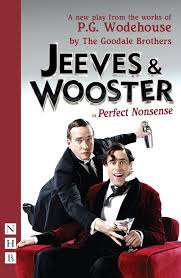
[READ: December 14, 2015] Jeeves & Wooster in Perfect Nonsense
I have never read any of P.G. Wodehouse’s Jeeves and Wooster stories, although I have seen most of the series starring Stephen Fry and Hugh Laurie (incomparably played).
This play is a “new” story written by the Goodale Brothers. It is based on a bunch of Wodehouse’s pieces, particularly The Code of the Woosters (1938). Robert and David Goodale were asked to put the above story on the stage. So they worked on it and modified it and came up with this version.
They came up with the idea of Wooster telling one of his tales and Jeeves “helping” as only Jeeves can. So in this production, there are only three actors. But they play multiple parts each trying to flesh out Bertie’s story. Wooster is Wooster, Jeeves is Jeeves and several others, and their friend Seppings plays many many roles, including some women and a nine foot tall man.
The story itself is intentionally convoluted and hilarious. It involves an expensive creamer, a police officer, Bertie’s aunt and the ghastly woman Bertie might jut have to marry. (more…)


 I Just Read About That...