Feeds:
Posts
Comments

Archive for the ‘Decadence’ Category

SOUNDTRACK: MASTODON-Crack the Skye (2009).

I’ve really enjoyed Mastodon’s previous records, and this one ranks way up there in intensity and songsmanship. There are 7 songs on the disc, with two over ten minutes long.  “Oblivion” opens with a great minor key chord plucked with single notes and a dropped E.  And when the vocals come in, they highlight the different vocals styles in the band–from a more screamy, almost punk voice to the more melodic/echoey voice of the chorus (kinda like Alice in Chains).  At about 4 minutes the solos play off each other wonderfully, both blistering and then melodic (with almost a Pink Floyd feel at one point).  “Divination” has some amazing guitar play both in the intro and the way the bridge soars with great guitar lines underneath the vocals.  “Quintessence” opens with furious drums and a great prog rock kind of guitar opener.  I love the way the bridge is a gentle (albeit fast) almost trippy section before the chorus bursts in with heavy, heavy chords and chants of “let it go let it go let it go”  It’s the kind of song where the parts work so perfectly together but which wouldn’t seem to.

“The Czar” is a four-part, ten-minute epic.  It opens with a creepy keyboard melody.  The first section is slow and heavy, and when part two comes in the guitars are loud and fast.  Part three has a great riff.  And the end has some gorgeous solos.  It amazes me that ten minutes can pass so quickly. It’s followed by the very heavy (lots of double bass drums) “Ghost of Karelia” the pretty much heaviest song on the record (with a nod to Voivod in the descending guitar solo about three minutes in).  “Crack the Skye” opens dark, but throws in some contradictory keyboard notes that lead to another cool extended guitar riff before jumping into a super heavy death metal verse.  This gives way to some more soaring vocals–the juxtaposition of these two vocalists is amazing.  Imagine the surprise then when the last third of the record has the vocals sounding completely robotic and phased–followed by a mess of guitar solos and concluding with some pretty guitars.

They fade into the final epic, the 13-minute “The Last Baron,” which is one of my favorite metal songs.  It opens with some great guitars and some really cool singing.  The vocals soar, the bass plays a great melody.  There’s a great heavy instrumental section but it keeps returning to the wonderful rising vocal melody line that will get stuck in your head for days.  It’s an amazing end to a great album.

The disc also comes with a DVD that’s all about the recording of the album.   I watched a few minutes and it seemed kind of fun, so I hope to watch it more soon.

[READ: June 17, 2012] The Architect

In the past, Connell’s books have explored all manner of depravity. His books were violent, often sexual and dealt with an otherworldliness that may or may not be internalized. Despite all of this transgressive material, his work was never schlocky, especially his later pieces which show an amazing growth in topics, word choices and imagination.

Connell’s previous books The Life of Polycrates and Metrophilias featured short stories that dealt with all manner of topics.   In Metrophilias, the stories were very short, and it allowed Connell to really explore an idea to its fullest without having to make a “book” about of each one. The short length also allowed him to make the words choices and descriptions more effective.

All of the benefits are reaped in this book, a novella.

Although I enjoyed Connell’s previous longer works, I really loved the way this story started with one idea and stayed with it. Some of his other books are a bit more episodic, which worked for those stories, but in this one, we’re in one place and we are pretty much going to stay there.  And that focus makes this story all the more powerful.

The one thing that hasn’t changed is Connell’s scholarship (both real and fake). For this book is a celebration of Dr Peter Körn (1849-1924), visionary and spiritual scientist. As the story opens, four members of the Körn Society are discussing plans for the new Meeting Place, a central location where all members of the Körn society can gather. They are disgusted by the pedestrian, commercial and rather offensive submissions that they have received for their building—a building that should reflect the spiritual visions of Körn.

Dismayed at the architects who have submitted, one of the members of the Society, Maria Venezuela tells the other three that her nephew Peter De la Tour will soon be arriving with something special.  Peter brings them a book of architecture designs by Herr Nachtmann.  These designs are bizarre and wonderful–organic, amoebic, gravity-defying gorgeous monstrosities–exactly the kind of thing the Society is looking for.  Although one member feels that they are impossible to build, the others are firmly on board.

The challenge then is to find the man. There is some history about the man himself–his genius in and out of school followed by his utter inability to have his work taken seriously by the establishment.  He even had one of his more ingenious ideas stolen by the very teacher who said it was terrible.  And so, when Peter finds him, he is little more than a drunk at the end of the bar.

Yet his ego has never been diminished, and when he is presented to the Society he dismisses their concerns and even tells them that he will not wait for their decision–they have 30 minutes to say yes or he walks.  They agree and he begins working on his masterpiece.

The Society loves the sketch–they know it will be expensive, but Nachtmann promises fast work, effective designs and world-wide acclaim.  Amazingly, he delivers.  He works his men hard.  All through the spring and summer and into the fall, the men work carelessness and the building rises at a phenomenal rate.  Even if it seems to be growing larger than designed. (more…)

Read Full Post »

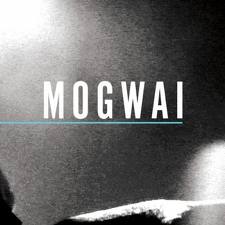
SOUNDTRACK: MOGWAI-Special Moves (2010).

This is Mogwai’s first live album and it really captures the band in all of its intense glory.  This is a good year for a Mogwai live recording because they play some of their newer song which are a bit more melodic (and sometime have words) but they also revisit their older songs–which still sound intense.  It’s a great overview of their career so far and it’s a great testament to how different their music sounds over the course of so many years–even though they still sound like Mogwai

We get two songs from Their (then) latest The Hawk is Howling –“I’m Jim Morrison I’m Dead” and “I Love You I’m Going to Blow up Your School.” Two songs from Mr Beast “Friend of the Night” and the stunning set closer “Glasgow Mega Snake.” Two from Happy Music “Hunted by a Freak” and “I Know You Are But What am I.” Two from Rock Action “You Dont Know Jesus” and “2 Rights Make 1 Wrong.”  From Come On Die Young we get “Cody” and from their debut, two classics: “Like Herod” (which is amazing live) and “Mogwai Fear Satan” (also amazing)–each one over 10 minutes long and full of the emotional release that we’ve come to expect from Mogwai.

This is a great place to start if you want to hear what Mogwai is all about.

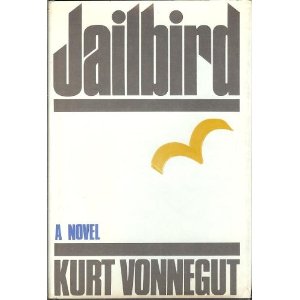
[READ: June 4, 2012] Jailbird

First off I want to say how neat it is that I took this book out of the library and that it’s from 1979.  Thirty-three years old!  Books are cool.

Anyhow, I have a stack of dozens of books I want to read, and yet somehow Vonnegut said, no, read me now.  In addition to Vonnegut books being relatively short, they are also very quick to read.  I read this in a couple of days, which is very satisfying.

My old boss at the library told me that she thought Vonnegut more or less stopped writing good books after Breakfast of Champions.  I disagree, but that has certainly colored the way I look at his later books before I read them–which one had she read that turned her off?  I kind of suspect it was this one.

In some ways this is a minor novel.  It’s fairly brief (240 pages, although there’s  30 page Prologue which I gather is from Vonnegut himself (you never know, he has so many layers going on)).  He explains some of the details that are in the book and several other interesting preface-type things.  I enjoyed the bit about the fan who wrote to Vonnegut and (Vonnegut claims) summed up all of his works in just seven words: “Love may fail, but courtesy will prevail.”  And that is the basic plot of this book. (more…)

Read Full Post »

SOUNDTRACK: HELLBENDER-Con Limón (1997).

Con Limón was Hellbender’s final CD.  It shows a lot more depth and variation than one would have expected from the debut.  “Fake I.D.” opens really really quietly for two verses so that you have to turn it up loud.  And then the song kicks in and explodes your speakers.  There are more such dynamics on this song, including the verse ending on a high guitar note and pause that adds a bit of quiet punch to the otherwise fast song.  “You Gutted Me with a Switchblade Shaped Like a Telephone” opens with some quietly spoken words (which I have not as yet been able to understand), but the verses and chorus have quite an emo feel.   “Long Distance Phone Bill Runner” has a catchy chugging riff with some screamy vocals.  “Untrusted You” introduces acoustic guitar (and a cool off-key note).  The vocals sound like Bob Mould.  Indeed the whole thing has a kind of Hüsker Dü feel to it.  “I-95 is Tattooed on My Brain” also opens slowly, with dark, quiet lyrics and a cool riff once the guitar kicks in.  The guys clearly have a way with song titles.

“Song About Some Girls” is perhaps one of the cheesiest songs I’ve heard in a long time (although as one reviewer points out, it does anticipate radio friendly emo by about a decade).  Coming from Hellbender it is super-cheese.  I’m surprised they allowed it to be released (and I’m surprised it wasn’t a huge hit).  Check out the lyrics (and this coming from a band with two lyricists who are currently published authors): “This is a song that I wrote about some girls/That I met at the beach back when I had the Jeep.”  Really.  And the chorus is a series of staggered “Right” “Right” “Right” “Right.”  It is so insanely catchy–I hate myself for liking it so much.  (The lyrics to their other songs are much better).

“Graveyarded” returns to the more angry type of song, dark with interesting riffs.  It’s a fitting ending to the last release by this under appreciated (they don’t even have an entry in allmusic?) band.  Oh wait, there’s a bonus song on the disc.  After a few seconds of silence, there’s a strange bass-heavy riff (and kind of dancey drums).  The lyrics are all spoken (I won’t say rapped).  It sounds nothing like them, but I’ll bet they had fun making it.

[READ: May 21, 2012] “Fun Won”

Sometimes a title confounds you until you see it in the context of the story.  I couldn’t even figure out how to say the title (which isn’t hard, but looks so peculiar) until I read it from one of the characters.  I also had no way of anticipating what this story might be about.

Imagine my surprise that it was about the 90s, and about a woman who worked for Conde Nast, when money and drugs were plentiful and the fun never stopped.

It’s funny how context is everything.  If I had read this story in the 90s, I would have hated everyone in it for their glamorous life, their quarter pound of weed, their expense accounted fancy dinner and even the fact that they work for a fashion magazine (Gaultier and Naomi Campbell are name-checked).  And yet now that the bubble has burst and the fun has stopped and I never got to be a part of it (not that I would have…but still), I read this story almost wistfully.

This story is set up in a tricky way.   Meaning that it starts out by talking about marriage but then shifts gears.  The marriage discussion is all about how her friends married such squares in the 90s (while now women marry interesting men who have job but are defined by their hobbies).  And it is a nostalgia piece for the 90s (“when you could still dream of being a writer, when writing for magazines and then writing books and all of that added up to a good life.”) [Sigh].

For background we learn that the narrator, her brother and their father were big dopers (their mother abstained–from the dope and the family).  Her brother Ed is visiting from California with a quarter pound of awesome pop (this was before everyone had access to awesome pot).  The bulk of the story concerns this visit.  Ed and the narrator get high, then they share the pot with Marni (who is famous, although whose actual title is unstated–she’s the one who calls Gaultier).  They end up all going for dinner at a fancy restaurant (with shaved truffles).

They also meet the narrator’s boyfriend who is a real estate mogul–he sells building for tons of money (and yes, is likely the reason the bubble burst).  And then they go to a record studio to hear a famous singer make her album and watch it get mixed. (more…)

Read Full Post »

SOUNDTRACK:SUPER MORRISSEY BROS (2012).

This is, as the title implies, a Smiths song done in the musical style of Super Mario Bros.  And, why yes, it certainly is.

This song is especially amusing to me as we just got a Wii for Christmas so I am now far more familiar with the Super Mario Brothers musical style than I ever expected I’d be.  The opening notes are spot on and while it is a bit long for something of a joke, at under 3 minutes it never wears out its joyousness..

The little sound effect of scoring points at about the 2 minute mark is as wonderful of a surprise as when you get the unexpected point in the game and it easily sustains the song until the end.

It doesn’t honestly warrant repeated listens, but two or three will certainly make you smile.

Check it out

[READ: March 6, 2012] The Great Gatsby

I knew I’d be reading Gravity’s Rainbow for a while so I wanted some shorter, easier works that I could use as occasional diversions.  I’d read The Great Gatsby in college and really enjoyed it, but clearly, as I learned by reading it again, I didn’t remember anything about it and what I remembered, I’d remembered wrong.

The other thing I was thinking about is that I didn’t read this in high school.  In fact, I didn’t read many books that I know people are supposed to read in high school.  I don’t think it’s because I didn’t feel like reading it (that;s possible), I think it wasn’t assigned to us.  My high school, as I recall, has a weird selection of texts that we read.  For instance, I recall reading Táin bó Cúailnge (and hating it).  Who is reading The Tain (which is an Irish epic) and not Gatsby?  Kids in Ireland, that’s who!

Anyhow, this book is considered number 2 in The Modern Library’s 100 Best Novels of the 20th Century (Ulysses is #1–that’s a 1 and 2 that couldn’t be much more different!) and, as I said it’s on virtually every high school curriculum.

As I was reading it I wondered how well high school students could relate to this story.  There are two cases of infidelity, there’s murder and suicide, there’s bootlegging alcohol and false identities.  I mean, sure they should love it, but how well can they relate to it?

The novel opens with Nick Carraway reciting advice that his father gave him: “Whenever you feel like criticizing anyone, just remember that all the people in this world haven’t had the advantage that you’ve had.”  This is an interesting quote to open with since the quote both applies and does not apply to the great Gatsby who is Nick’s neighbor. (more…)

Read Full Post »

[WATCHED: March 5, 2012] Midnight in Paris

I took a course on Woody Allen’s films in college and, as a result, I had seen everything he had done (and a lot of what had inspired him).  After college, I made a point of seeing everything he released.  Often on opening day.  (My double feature of Deconstructing Harry and Good Will Hunting on Christmas Day is still a highlight).

But after The Curse of the Jade Scorpion, which was okay, but just barely, I basically gave up on him.  I watched Match Point in three parts (no time at the time) and really enjoyed it, but I never really got back on track with Woody.  And then came Paris.

Despite its huge popularity, I knew nothing about this Woody Allen film.  I knew Owen Wilson was playing the Woody Allen character in this one and it was getting amazing reviews.  Now, it’s very true that critics don’t always get Woody Allen, but when they unanimously get his film it’s pretty safe that it’s a good one.

And boy was it ever. (more…)

Read Full Post »

SOUNDTRACK: LOS CAMPESINOS!-Romance is Boring (2009).

Even though I had heard good things about Los Campesinos! before I got this album, this was the first one I bought.  I see that it gets less high marks than previous discs but I think it is fantastic.  It is frantic and catchy, it is intense and mellow, it is loud and soft and most of the time that’s in the same song.  And, as you’ll see below, lyrically I think it’s fantastic.

The disc begins slowly.  Then the vocals come in and you can tell that Gareth Campesinos!’ voice is somewhat abrasive, but well enunciated. When at the 2 minute mark the song more or less stops and turns into little twinkling bells you’re not prepared for the next bit–the guitars are noisy and the drums are loud and the lyrics are even stranger (sung in a slightly off-key style): “I’m leaving my body to science, not medical but physics.”  By the end, the song has mellowed almost completely and we have an almost a capella ending, “Would this interest you at all?”  But before you have a chance to answer that, the next song, “There are Listed Building” ratchets forth in both speakers with loud and quiet sections, group vocals and the lead singer’s more shouting style.

“Romance is Boring” has some super catchy shouted vocals as well as the first real exposure to the co-vocalist Aleksandra Campesinos!’ beautiful gentle female voice. “We’ve Got Your Back” is primarily sung by the female vocalist until the male voice come back with “and so fucking on and so fucking forth” and my favorite shouted chorus: “What would you do?  I do not know.”  “(PLAN A)” is a screaming punk blast of discord.  Until, of course, the much more palatable group sung chorus kicks in.

One of the best songs they do is “Straight in at 101” a wonderful song about breakups that is catchy and funny. It opens with, “I think we need more post-coital and less post rock.”  And then after some great alt rock, the song comes to an end with an a capella section that is quietly sung:

I phone my friends and family to gather round the television;
The talking heads count down the most heart-wrenching break ups of all time
Imagine the great sense of waste, the indignity, the embarrassment
When not a single one of that whole century was… mine

“I Warned You: Do Not Make an Enemy of Me”  has frenetic guitar and the wonderful line, “if this changed your life, did you have one before?”  And the wonderfully titled “A Heat Rash in the Shape of the Show-Me State” opens with this lyrical stanza:

She’d a bruise so black they watched it fade through the full spectrum of colours.
They kept it like a pet; a private joke they told no others.
And how the tissue repaired, and how it turned to yellow
And she found it disgusting, ’cause it didn’t match her clothing.
He said “that’s not yellow, it’s golden”.

Also lyrically interesting is “The Sea Is A Good Place To Think Of The Future,” because how can you make this couplet work in a rhythmic way.  But he does! “At fourteen her mother died in a routine operation from allergic reaction to a general anesthetic.”

There are fast songs and slow songs and pretty sections and harsh sections.  I think they meld it all together wonderfully.

[READ: February 6, 2012] “Los Gigantes”

I think I begin every T. Coraghessan Boyle story with some trepidation.  I liked Boyle because of The Road to Wellville, but I find that most of his other stories are very Southwestern, a region I really don’t know very well.  And yet for all my trepidation, I find I do enjoy his stories.

This one has a very simple premise.  All of the largest men in the area have been offered jobs by the President (I’m not sure where this is set but I assume, if it’s not entirely fictional, that it’s meant to be in Central America).  Although the men have some freedom during the day, at night they are locked into cages.  But their job is a simple one–eat, sleep and have sex with very large women.  That’s all.  It’s kind of boring, but  they are provided entertainments.  And it could certainly be worse (wait until you see what conditions the women love in!).

Discontentment begins to settle in as they realize that they are little more than stud animals (the President is breeding them for their size for a secret army in several generations).  And so one night two of los gigantes escape (it’s fairly easy, they are very strong men).  But they basically get as far as town where the pleasures of the  town’s bar keep them from returning home.  They are caught and punished, but the punishment is not that bad because the President really wants their offspring.

The men issue demands–a nicer living situation mostly–which are met, and they are contented once more. (more…)

Read Full Post »

SOUNDTRACK: LE BUTCHERETTES-Tiny Desk Concert #185 (January 9, 2012).

The write up for this Tiny Desk show implies that I should know who Le Butcherettes, and leader Teri Gender Bender, are.  I don’t.  But that doesn’t matter.

In this set, it’s just Teri Gender Bender and her acoustic guitar.  And she is channeling early PJ Harvey like nobody’s business.  If you like PJ’s new album but miss the less than subtle aspects of her earlier  records (and who doesn’t, honestly), this is a very enjoyable set.  Teri is angry and it shows.  But it’s all done on an acoustic guitar, so the anger is modified by the music.  It’s a neat trick.  But it’s also a little disconcerting.  Not least because she seems so nakedly honest when she sings (when she coughs aggressively during “Henry Don’t Got No Love” it’s not entirely clear if that’s part of the song or not.  But also because Teri is not afraid to look right at the camera (or, indeed, the audience) when she sings the songs.  Teri is very pretty but there is something haunting about her, which makes these songs of loss and love all the more effective.

See for yourself here.

[READ: January 22, 2012] “Notes on The Chelsea Girls”

I’m not going to start reviewing films, or, worse yet, reviewing reviews of films.  But since I like to try to read all of the academic articles that get recommended to me, I wanted to mention this one too (I admit I will not be subjecting myself or readers to a thirty plus page article about Charles Darwin and pigeon fanciers (which seemed interesting, especially the pictures, until I saw that it was over thirty dense pages).

It’s childish to laugh that a reviewer of Warhol’s The Chelsea Girls is named Battcock, but I’m not above that sort of joke.  What is amazing, to me, is how intellectual this review is.  I’m used to reading reviews in Entertainment Weekly or even The New Yorker, which talk about the plot of the film and the quality of the direction and what not.  And The New Yorker often trashes mainstream film on highfalutin grounds.  But even that doesn’t come anywhere close to:

Warhol still questions the very nature of the medium and its relationship with the cultural matrix and the contemporary value structure–for which he clearly holds no brief.  He is determined to prove that only vital institutions can provide vital art statements; his challenges to the medium serve ultimately to assure its legitimacy.  If in his earlier movies he attempted to redefine the nature of film and to clarify its limitations, the new works may be said to check out the remaining restrictions of the art form.  These include such physical aspects as the two distinct types of images (the retinal-visual and the cerebro-visual), as well as the nature of the auditorium, projection and screen.

Battcock is kind of hash on the film–which is actually several short films–two of which are projected side by side at the same time.  He says the individual shorts, which run about 30 minutes each, are “a little bland.”  Although, as he points out above, the actual films themselves are kind of beside the point.

Indeed, he criticizes other critics for missing the “point” of these films, which is that Warhol is “stripping the cinematic medium of its pretension and decorations.”  Rather, he complains, “Nearly all the other critics writing in the popular press dwelt with the lugubrious insistence on the squalidness, sordidness, perversion, etc of the lives depicted in the film” (more…)

Read Full Post »

[LISTENED TO: January 12, 2012] Girl with Curious Hair

I saw a placeholder on Amazon for this audio book in early 2011.  And then I promptly forgot all about it.  My friend George just asked if anyone had heard it yet, so I decided to check it out.  I downloaded it through Audible.com.

And here’s my two cents about Audible.  Although it was free (for a 30 day trial), it was a lot of work.  The entire book (14 hours) downloaded in two files.  Each was about 7 hours with no breaks or chapters of any kind–just two huge 7 hour files.  Okay, I often download stuff and bring it into Audacity to make my own chapter breaks.  But you can’t import this file into Audacity because it is its own proprietary format and doesn’t want you to put it in MP3 format.  So, I had to burn it to CD (but not in MP3, only in WAV) and then put the CDs back in to iTunes to import them as MP3.  From there I could import them into Audacity and put tracks where I wanted.  That’s a lot of work to save $29.

I’m also going to say that I didn’t want a membership to Audacity because it costs $15/mo and the savings aren’t really that good anyhow.  Even kids books are about $10 each.  Oh, and just see how many hoops they have you go through to try and cancel.   Heavens to Betsy.

And but so on to the actual audiobook.

The book was read by Robert Petkoff (who is Reader A below) and Joshua Swanson (who is reader B below).  I don’t know anything about them, but their websites will give you more info about them.

I found the readings to be simply wonderful.  They were impassioned and articulate and dealt with some of DFW’s tongue twisting word choices with ease.  They also handle DFW’s dialect and accents with ease.  And while Swanson has a much much broader range of voices to play around with (his women voices are far superior to Petkoff’s), Petkoff also pulls of some amazing voices, especially in “John Billy.”  I never questioned what was happening.

Some of these stories are challenging and I admit I found them difficult to read.  But the audio versions seemed to really clarify things.  (There are all kinds of reasons why this could be so, but I’m not going to delve into that, for there lies madness).  Nevertheless, this was a great way to hear these stories.  Especially the ones that had heavy dialect.

“Little Expressionless Animals” [Petkoff] (90 minutes)
Petkoff sounds uncannily like Kyle McLachlan–no bad thing.  Although Petkoff doesn’t work too hard trying to do different voices, he puts in enough distinction to make the characters distinguishable.  (We have been listening to a lot of kid’s audio books, and the narrators of those are amazing with the kind of vocal acrobatics they can do!).  Petkoff is more subtle, but it is also effective–it’s not just a straight voice, which I think might get confusing especially in the dialogue scenes.

There is a hint of Alex Trebek’s voice when doing Alex Trebek, but he’s definitely not trying to mimic the voices of the celebrities.  For the most part, the voices are slight variations of the main narrator.  Indeed, during the later Faye and Julie dialogue section, he does slight differences between their voices to help distinguish the characters.  Which is quite helpful in the story.

This story works very well in audio book format.

One of the things that I loved about this story this time was really piecing together all of the various compnents.  Inclduing things like the revealtion of why Julie does poorly on the subject of animals.  It’s quite obvious when the story ends, but through the whole story you keep wondering, what is it about the animals?  I’m aslo intrigued at the number of gay characters in the book.

And, of course, this story has a major obsession with pop culture, especially TV.  And knowing (from interviews) that DFW sais he would just get sucked in to watching TV all day if it wa svailable, his tone (as is Petkoff’s) is perfect when dealing with the TV issues.

“Luckily the Account Representative Knew CPR” [Petkoff] (18 minutes)
Petkoff sounds slightly differnt than in “LEA.”  Since thist story has no dialogue, there’s not a lot of differentiation in the story.  His deadpan delivery is perfect for all of the details in the story. Although at the end, his “Help”s are quite empassioned, letting you know there’s a little bit more going on.

“Girl with Curious Hair” [Swanson] (50 minutes)
Swanson’s voice is of a much higher timbre, and it’s kind of fun to have two different voices in this book.  This story benefits quite well from an audio format.

The story is deliebrately flat and, I have to admit, is not terribly easy to read.  Swanson handles the flatness very well, he reads it incredibly deadpan and yet he puts enough inflection in it to keep it from being monotone.  I have to assume it wasn’t easy to read this.  I think that he has really made this disturbing character quite real.

Obsevrations about the story.  Hearing this story out loud was more shocking than reading it.  The explicit sex is pretty shocking for DFW and the revelation about what happened to Sick Puppy when he was a kid is prodoundly distrubing, especially when it is read in this non-inflected voice.  It was uncomforatble and very effetcive.

There were times when I wondered about the believability of the charcter.  The use of the word negro, the utter flatness of him. I realize that he is quite damaged, but at times it seemed like maybe this story was too much.  Which is a bit of a surprise, as I find DFW’s charcatersto be very real.

“Lyndon”  [Swanson] [1 hr 45 min]
I didn’t really enjoy “Lyndon” when I read the story.  It’s a little long and had many different things going on.  I kept wondering about Lyndon himself.  About what made DFW write a story based around Lyndon Johnson, around jhis life and politics.

But hearing this story read aloud, with the Swanson’s various voices and accents and newspaper stories all differentiated really brought this to life.  I felt like it was so much more vibrant and alive and passionate in this audio version.  I read in my post that i found the ending quite moving when I read the story, but it felt even more so, with Lady Bird’s quiet, dignified delivery, here.

Observations on the story.  How odd that he chose to make this story that is about a real, and quite famous and well studied person.  I don’t know a thing about Lyndon, so I have no idea how much of this is true (the few LBJ quiotes I looked up seem faked).  I don’t think I spent enough time thinking about the main character when I read the story.  Boyd is so fully realized and amazing that Lyndon is really superflous.  This is awonderfully emotive story.  And Swanson really does an amazing job.

“John Billy” [Petkoff] (1hr 10 min)
I thought “John Billy” was a real challenge to read.  The dialect is pretty crazy.  And the story is not exactly easy to begin with.  But much like Swanson in “Lyndon,” Petkoff’s voices are outstanding here.  The main voice of John Billy is great–he handles the accent and the crazy word choices that John Billy has with ease.  The story flows perfectly.  It’s really impressive.

And while the voice of Glory Joy isn’t wonderful (Petkoff’s women are just softer versions of his voice), he more than makes up for it with the amazing transformation of Simple Ranger.  In the reading, it is clear that Simple Ranger “grows younger” from a quiet, hard to hear older to a youthful loud charcater.  And Petkoff takes that literally so you can really hear him change into a man with a “curious plus haunting voice that was not…of his gravelly, gray-lunged voice somehow, his own, somehow.”  And then, later in the story Ranger’s voice changes again when he “whispered, the big sharp clear new Ranger in a smooth new clear young voice.”   But nothing prepared me for the voice of T Rex Minogue. It is stunning.  It’s an amazingly processed voice that is as malevolent as it is “mechanical.”  It’ s masterful.

As for the story itself, the whole saga of C.Nunn Jr is bizarre and wonderful, a crazy hyperbole of a story.  It also seems crazily over the top hearing it aloud (like in “GwCH”).  The whole story’s end with C Nunn’s eyes is preposterous (what is it with people’s eyes in this book?).  And yet it feels like the nonsense is there as a balance for the heaviness.

The story is funny and silly but by the end it gets incredibly dark and thoughtful.  It’s a challenge to listen to, especially the end, but I think it benefits from an audio version.

“Here and There” [Swanson] (55 min)
I found this story somehow more confusing while listening than when reading.  There’s so much back and forth with voices and the whole conceit that this is some kind of fiction therpay doesn’t really translate easily here.  I also found some of the more academic sections to be kind of dull in his reading.  It’s a challenge to read aloud and keep interesting, I’m sure, but I found this story to be the least successful of the collection.

“My Appearnce” [Petkoff] (58 minutes)
This is written in frist person from a woman.  Petkoff, who has quite a deep voice conveys a woman very well.  This is a great reading for this story.  He does “versions” of David Letterman and Paul Schaffer.  They are not impersonantions by any means, but he has the tone down perfectly.   The male voices whispering in her ear are done in a very simple whisepred voice.  Very effective.

This is a great story and the audio is also wonderful.

“Say Never” [Petkoff and Swanson] (42 minutes)
Petkoff does a very good job with the accents in this story.  Labov’s heavy Jewish accent is very impressive.  And although Mrs Tebof is not very different from Labov, it is different enough to convey the accent and the tone.   He also does Lenny’s voice, which is the bulk of the story.

Swanson also comes in this story as well, doing the voices of Mikey and Louis (two very distinct voices, even if they are both a little Hollywood Gangster from the 40s).  I would have been interesting to hear them interact more in the book somehow.

I was struck by this story more in the listening than the reading.  There’s something about hearing people say these things that makes them more shocking.  Especially the note that he sends to his family (talking about his wife’s lack of sex drive–gasp!).  This is another one of DFW’s stories that ends before something big happens.  It’s funny how many of his stories seem like preludes.

“Everything is Green” [Petkoff] (3 minutes)
It’s also amazing that this whole story is only 3 minutes and thirty seconds long.  Petkoff reads this story in a perfect DFW deadpan style.  He even does May Flys voice with a (slight) accent.

“Westward the Course of Empire Takes it Way”  [Swanson] (6 hours)
Swanson does an amazing job with this difficult story.  There are nearly a dozen charaters in here and he manages to keep them all separate and distinct.  It’s really great.  This is especially true late in the story, when they are in the car on the way to Collison.  He has six people in the car and he manages to make sthem all unique:  J.D. is dark and gravelly while DeHaven has a kind of Midwestern Stoner tone.  Tom Sternberg is neurotic and aggressive at the same time.  D.L. is snotty and presumptuous (although it may be Swanson’s weakest voice, it really conveys the character well).  Magda is exhausted.  And Mark is a solid late teenager.

Let’s not froget the pissed off Fertilizer salesman, the Avis clerk and the bartender.  And the narrator of course.

This story is also fairly complex and hard to follow (when reading).  There so much going on what with the narrator’s interruptions and the metafiction.

What I really noticed this time is how the parts that are not metafictional, the actual narrative of the story is really good, really strong and emotional.  Not to say that the more meta- sections of it are bad, they just don’t have the same kind of impact.  Of course, the whole point of the story is to play around with meta-fiction, so I’m not entirely sure how successful it is in that regard.

Nevertheless, it’s a fascinting look at youth in America.  And I have to say that it really works as a foreshdaowing of issues that he would explore more in his later stories and IJ.

Some things I notice din this listen.  DFW uses the word “plus” instead of “and” a lot.  It’s a fascinating word choice, and one that I think virtually no one uses.  Sometimes it’s effective and other times it’s very clunky.  I never noticed it while reading but it’s very obvious when listening.

I just read my review of the short story collection, which I think was kind of brief.  I feel like I got a lot more out of the book this time around. Of course this is my second reading so that makes sense as well.  It’s also interesting how I enjoyed some stories more and other stories less.

Overall though, this is an excellent audio book.

Read Full Post »

SOUNDTRACK: GRINDERMAN-Grinderman 2 (2010).

The first Grinderman album was a sleazy delight.  And this Grinderman is much of the same sleazy heavy rock, although it’s slightly different.  It opens with “Mickey Mouse and the Goodbye Man” which lets you know that Grinderman are still dirty and sleazy.  The song just rocks.  Screaming blistering rock.

Now, fans of old Nick Cave and The Birthday Party know that Nick is no stranger to noise and dissonance.  Some of these songs harken back to those days–the music (on”Worm Tamer” is crazy–feedback squalls and trippy organ) and yet they never veer into chaos.  They are tightly controlled but with wonderfully loose edges.   It also features the wonderful lyrics: “My baby calls me the Loch Ness Monster–two big humps and then I’m gone”).  “Heathen Child” is a loud, raucous, blasphemous treat, one of the best on the disc.

“When My Baby Comes” slows things down a bit and actually veers terribly close to Bad Seeds territory (which isn’t a bad thing by any means, but Grinderman is supposed to be an escape from that, right?).  The song loudens up, though and a really cool slippery bass propels it for the rest of its 7 minute length.  “What I Know” is like a slow prose poem, but it is followed up by the blast that is “Evil!” a wonderfully brash 3-minute blast of noise rock.  The chanting backing vocals are wonderfully evil.  “Kitchenette” ups the sleaze factor nicely.

“Palaces of Montezuma” is another mellow song–also very Bad Seeds like.  It seems like it would be long (like it would keep building), but it’s only 3:30.   “Bellringer Blues” ends the disc with some cool backwards guitar and more chanted vocals (definitely the signature sound of Grinderman).  It ends this awesome disc on a very high note.

[READ: November 18, 2011] “The Climber Room”

I really enjoyed Lipsyte’s The Ask, so I ‘m delighted to see him with a new short story.   This one concerns a young (but no longer that young) woman named Tovah.  She has taken a job at a daycare center called Sweet Apple.  As the story opens, Tovah meets the other main character of the story, a man whose name she (hilariously) mishears as Randy Goat.  It turns out that Randy Gauthier is a rich man whose children have all gone to Sweet Apple and his new girl Dezzy is now enrolling.

Tovah isn’t trained for this job–she’s just there part time–and either despite or because of this, Dezzy takes to her immediately.  On a day that Tovah is not there and Dezzy fell off the Climbing Room (a jungle gym) she cried and cried for Tovah.   Mr Gauthier spies Tovah the next day and informs her that he has switched her schedule so that she will only be there when Dezzy is there.  Tovah is (understandably) freaked and a little pissed.  But when he tells her to Google him, she learns why he can have such sway over things.  (more…)

Read Full Post »

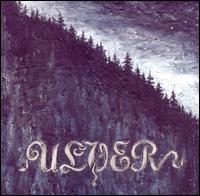
SOUNDTRACK: ULVER-Bergtatt (1994).

Ulver has some music in the soundtrack to Until the Light Takes Us and my friend Lar pointed me to a location where you could download a bunch of their music (this was before Spotify of course). 

So I grabbed a few of their albums expecting to hear some brutal death metal.  And I kind of did, but I also heard classical guitar, flute solos and chanting.   So this album’s full title is Bergtatt – Et eeventyr i 5 capitler (“Taken into the Mountain – An Adventure in 5 Chapters”) and it comes in at a whopping 35 minutes–not bad for an epic.

The opening track (“I Troldskog faren vild” (“Lost in the Forest of Trolls”)) is fascinating–a kind of chanting vocals over a quietly-mixed-in-the-background black metal.  The music is so quiet (and yet clearly black metal) that it almost comes across as ambient noise, especially over the multilayered chanting (I have no idea what language they are singing in).  It ends with a pretty acoustic guitar passage that segues into a very traditional sounding heavy metal section–with a catchy solo that takes us to the end.

“Soelen gaaer bag Aase need” (“The Sun Sets Behind Hills”) opens with, of course, a flute solo.  It’s a minute long and quite melancholy before blasting into the fastest of heavy black metal complete with growling vocals and nonstop pummeling.  But after a minute of that it’s back to the layered chanting like in the first song.  The song ends with a conflation of the two–the chanting metal with the growling black metal underneath.  It’s quite a sound.

Track three “Graablick blev hun vaer” (“Graablick Watches Her Closely”)opens with a lengthy acoustic guitar intro–not complicated, but quite pretty and unlike the poor recording quality of the metal, it seems to be recorded with high quality equipment.  After about 45 seconds that gives way to more black metal.  In a strange twist, the black metal section just fades out, replaced by more acoustic guitar and what seems like the end of the song.  But instead, there is a strange quiet section–not music, but sounds–like someone walking around in the cold forest with crunchy noises and little else.  For almost two minutes.  Until the black metal comes back with a vengeance.

Slow guitar with slow chanting opens track 4 “Een Stemme locker” (“A Voice Beckons”) (the shortest at only 4 minutes).  And the amazing thing is that it doesn’t change into something else.  It is a nice folk song.

The final song “Bergtatt – Ind i Fjeldkamrene” (“Bergtatt – Into the Mountain Chambers”) has a blistering opening followed by some of the most intricate acoustic guitars on the record.  It morphs into a very urgent-sounding black metal section which lasts about 5 minutes.   But just to keep us on our toes, the song (and the disc) end with more classic acoustic guitar.

There is a story here (allmusic says it is a Norse legend about maidens being abducted by denizens of the underworld) and that might help explain the music madness.  But as a musical composition it works quite well.  The chanting over the black metal is really effective and the acoustic instruments bring a nice sonic change from the pounding metal. 

This is not for everyone obviously, but the diversity makes this an interesting introduction into the black metal scene.  Baby steps. 

[READ: November 4, 2011] “Apocalypse”

This is the final non-fiction essay of Junot Díaz that I could find online.  The other one comes from GQ and is called “Summer Love”, but there’s no access to it online. 

In this essay, Díaz looks at the impact of the earthquake that devastated Haiti now that it has been over a year.  Díaz was born in the Dominican Republic which has a long and very brutal history with the people of Haiti–they share a land mass after all.  But rather than looking only at Haiti and how it was devastated, Díaz takes this as an opportunity to see what the earthquake reveals about our country and the state of the world.

The essay is broken down into eight parts.  The first revisits what happened.  The second discusses the meanings of apocalypse, which sets up the “theme” of this essay.  The First: the actual end of the world (which for the thousands of people who died, the earthquake was); Second: the catastrophes that resemble the end of the world (given the destruction of Haiti and the devastation that still lingers, this is certainly applicable); Third: a disruptive event that provokes revelation.

Díaz is going to explore this third option to see what this earthquake reveals. 

What Díaz uncovers is that the earthquake was not so much a natural disaster as a social disaster–a disaster of our creating.  The tsunami that hit Asia in 2004 was a social disaster because the coral reefs that might have protected the coasts were decimated to encourage shipping.  Hurricane Katrina was also a social disaster–years of neglect, the Bush administration’s selling of the wetlands to developers and the decimation of the New Orleans Corp of Engineers budget by 80 percent all contributed to a situation where Katrina could be so devastating.

Then he talks looks at the history of Haiti.  I had known some of this story, but not as much as he provides here–the constant abuse of the citizens, the constant abuse of their finances (both from simple theft and from French and American planning that changed their economy).  There’s also the story of “Papa Doc” Duvalier.  Basically Haiti was a disaster waiting to happen. 

Díaz goes into great detail about the global economy and how it impacted the poor in Haiti and he shows that it doesn’t take a lot of extrapolation to see it reflected in the rest of the world as well.  With the constant rise in standards for the wealthy and the constant abuse that the poor take, it’s not hard to see that Haiti could easily happen here.  If not in our lifetime, then certainly in our childrens’.

But Díaz has hope.  (more…)

Read Full Post »

« Newer Posts - Older Posts »