Feeds:
Posts
Comments

Archive for the ‘Death’ Category

SOUNDTRACK: A-Hi-Fi Serious (2002).

Many bands are hard to search for online.  A may have topped the roster of most unsearchable bands (they were named in 1993 way before Google was even a thought and when they would be at the front of record store racks).  A are also the alphabetically first CD I own.  So my collection literally goes from A to Z

A are a band from Suffolk England.   They formed in 1993, broke up in 2005 and have been sort of reuniting off and on every since.

Their second album A vs. Monkey Kong was well received and this, their third album had a solid single in “Nothing.”  I’m not sure how I heard of them (probably well reviewed in Q magazine back in 2002) so I grabbed this album.  This album comes with a Quicktime video!  When I learned about this band back in 2002, scads of information were not available about them.  So as I was looking them up I learned all kinds of things about them (like that they cite Rush as an influence).  And that this album name comes from the name of the hi-fi electronics store Alan Partridge buys a stereo from in the last episode of I’m Alan Partridge series 1.

This album is pretty punky/grungy.  Lead singer Jason Perry has a distinctive voice with some good power.

There are all kinds of hit-making elements in here.  Big crunching guitars coupled with soaring vocals dominate most of the songs, like “Nothing” and “Pacific Ocean.”   “The Distance” also revels in the grunge punk guitar sound with a totally metal guitar solo

Songs like “Something’s Going On” have a distinctly pop-punk bratty sound.  So does “Starbucks” with the line: “don’t wanna get a job at Starbucks”  The title track also works in this snarky, funny, catchy vein.

“Six O’Clock” mixes some cool electronics in the verses while the chorus is, once again, big and catchy.  “Going Down” has a much smoother sound with anything distinctive coming from his vocal delivery.

“Took It Away” does the quiet/loud verse thing very well.  Some deliberate glitching is a fun surprise too.  While “The Springs” introduces acoustic guitar and lots of oohs–a real flick-your-lighters kind of song.  “W.D.Y.C.A.I.” is also catchy with a sing along (woah oh) bridge and a super poppy chorus.

“Shut Yer Face” sounds like the quintessential grunge song–snarky lyrics, big grungy guitars, and a soaring chorus.  It even has vulgarish lyrics, record scratching and other samples!  And man is it catchy.  If this didn’t crack the States for them, nothing would.

[READ: April 15, 2019] “Djinn”

I was shocked to see that Esquire had published a story by Russell Banks in both March and June of 2000.  I was also shocked to see that a man gets shot in this one as well (that’s four of the first five stories in Esquire in 2000 in which someone is shot).

This is a story of a man who works in Hopewell, New Jersey.  They manufacture and sell women’s and children’s high end rubberized sandals.  The sandals were manufactured in Gbandeh, the second-largest city in the Democratic Republic of Katonga, a recently desocialized West African nation.

One of his jobs was to travel to Gbandeh and make the acquaintance of the local managers with hopes of facilitating communication.  And of course to make sure the Katongans could adapt the the fast paced technology in place. (more…)

Read Full Post »

SOUNDTRACK: THEODORE-Tiny Desk Concert #842 (April 17, 2019).

I recall NPR’s SXSW coverage last year in which they raved about Theodore (and then ran into him walking the street while they were recording their nightly dispatch) and his beguiling music.

Theodore is a Greek composer/performer who is fairly difficult to search for online.  I was really surprised but quite intrigued to see that he now had a Tiny Desk Concert.  And what a Concert!

He plays three songs that last nearly 19 minutes and they are full of twists and turns with great instrumental passages and incredible sounds from all of the instruments.  Whether it is thanks to Theodore’s own set up or the Tiny Desk crew, the sound quality is amazing.

He began with “Disorientation” which

explores the complete loss of inner direction as Theodore examines his inner dualities in search of clarity and, perhaps, new ways to look at the world.

“Disorientation” begins with a terrific throbbing bass from Nikolas Papachronopoulos and occasional guitar notes from Emmanouil Kourkoulis or Ioannis Lefas (not sure who is who).  Theodore starts singing in his husky voice.  After a verse he adds some keys and then just as suddenly the whole band kicks in–drums and soaring guitars which all drop away just as suddenly.

A minor shift occurs at around 1:20 and then at 1:45 the whole song slows down into gentle washes and piano trills with (again) some gorgeous bass notes (the bass sound is phenomenal).  The song feels like it’s going to end but it sound jumps back with the dramatic entry of a pick slid along guitar strings and then back it’s to the delicate moments.  Bob Boilen says the songs have the “spare elegance you can hear in Sigur Rós or Pink Floyd,” and you can clearly hear echoes of mid 70s Pink Floyd with splashes of Sigur Rós for drama.  At 3:45 it jumps again, with some great drumming and more cool basswork.  Then at 4:46 Theodore starts “oohing” in the microphone, his voice is processed and echoing and the whole thing feels like it is drifting off into space

It is spectacular.

“For a While” starts quietly with two notes repeated quietly on the guitar  Theodore adds piano as washes of guitar follow shortly.  The guitar and piano resolve into intertwining pretty melodies.  After the bass and drums come in Theodore starts singing.  He has a very European kind of croon, a bit like latter Morrissey or Guy Garvey from Elbow.  The song builds to a cool moody and then settles down delicately to washes of guitar and single piano notes.

“Naive” ends the set with another great bass sound and intense guitars .  Theodore sings while Ashley Hallinan adds some nifty rim hitting on the snare.  Midway through the song some instrument gets all kinds of processed adding a kind of fat synth sound as the rest of the band builds the song.   Great guitar effects from both guitarists flesh out the moody wild middle section.

This Concert was spectacular and I would love to see him in person.  He only comes to the US for SXSW, so maybe this Tiny Desk will bring him to a wider audience.

[READ: April 15, 2019] “Lobster Night”

Russell Banks is the kind of author I have known about for a long time and am incredibly familiar with the covers of many of his books and whom I’ve considered reading again and again and yet I never seem to.

He is also one of the reasons why I chose to read Esquire fiction in general.  There are many excellent writers who write for Esquire and not all of them write stories about men killing other men.

Well, maybe all the stories don’t have someone or something killed, but this one does.

Stacy is a former potential Olympian.  She used to ski until a bad fall left her with a broken thigh bone.  She can still ski but she has lost her edge so she teaches in the winter.  But during the warmer months she has to waitress or bartend.  She has recently gotten a job at Noonan’s Family Restaurant. (more…)

Read Full Post »

SOUNDTRACK: GARY CLARK JR.-Tiny Desk Concert #841 (April 16, 2019).

WXPN has been playing “Pearl Cadillac” by Gary Clark Jr. and I quite liked it.  I knew of Gary as a blues guitarist.  But I didn’t really listen to too much by him–I don’t love blues music, generally.  But Gary adds a rocking and Prince-like atmosphere to his blues which elevates his music for me.

But “Pink Cadillac” is unlike the other two songs because he sings in a delicate falsetto (like Prince) whereas the other songs he sings quite gruffly.

The first song, “What About Us” surprised me.  First because he sang with such a deep voice (with a wonderful falsetto at the end) but also because I knew that Gary was supposed to be a great guitar player, but it was Eric Zapata who was playing all the slide guitar parts. The whole band builds the song nicely for the chorus.  They keys flesh things out nicely.

The middle has a cool funky part with great washes of keys and a funky bass sound from Johnny Bradley.

When the song ends, he says, “It’s a little bit warmer than I thought it would be.  But I feel sexy in this jacket so I’m gonna sweat thought it.  This is my life, people.”

Gary Clark Jr. had good reason to sweat. The blues-rock singer and guitarist opted to play his first-ever Tiny Desk concert — in front of a huge crowd that warmed the room considerably — while clad in a thick knit cap and heavy jacket.

I had heard that this new album, This Land, was quite political but he left the albums

more politically incendiary material for louder live shows.  Clark’s set leaned toward some of This Land‘s softer sentiments — “When I’m Gone” is about missing his family on the road, while “Pearl Cadillac” exudes gratitude for his mother’s sacrifices —

He dedicates “When I’m Gone” to his son.

He’d brought his young son on tour with him and had to contend with a traditional parenting dilemma: How do you bring your kid to the office and still get work done?

He says I’m trying to do the dad thing and brig them out here.  I’m tired, people.

“When I’m Gone” sounds like a traditional love song from the fifties with that simple bass line and stabs of guitar.  And it is a love song, only to his son, not a woman.  Clark’s gruff voice works perfectly.  Zapata plays the guitar licks between the first two verses.

He says “Pearl Cadillac” was written for his mother… who I’m gonna ask to babysit for me next time…  damn…”

Jon Deas starts on keys with simple snare and hi-hat from Johnny Radelat.  Gary gets to show off his guitar chops here.  I love the slightly distorted, slightly retro sound of his guitar as he plays all the licks throughout the song.  This song has a total Prince vibe and it works perfectly.

He sings the whole song in his gorgeous falsetto

I remember when I left home in that pearl Cadillac
I was searching for some kinda way to pay you back
For your love, your love, your love

He even handles a guitar solo flub with the ease of a parent who is overworked–a little grunt and then start again.

[READ: April 11, 2019] “The Wish”

One of the reasons I didn’t want to consider reading a lot of Esquire-published short stories is because I assumed they’d all be something like this one.

Full of death and misery and whatnot.  I mean the story starts “Kamon Gilbert woke up on the morning of the last day of his life at 6:19.”

Now, in fairness, this story isn’t about a manly man shot down in a blaze of glory.  Rather, it is a look at racism and violence and how a man’s life can change in an instant (a couple of times).  And as such it is a powerful and affecting story.  It’s still really dark though.

Kamon Gilbert is a black boy in high school school.  He is very smart and very successful.  He does well in his classes and has been selected as the lead in many of the school plays.

But none of the other kids like him: (more…)

Read Full Post »

SOUNDTRACK: &More (Chill Moody & Donn T)-Tiny Desk Concert #835 (March 25, 2019).

&More is a fun, warm, sweet band.  And when the Concert opened, they totally rocked.  The guitarist had a great distraction-filled sound and the opening riff was terrific–rocking and heavy.  Then singer Donn T begin singing and all of the rock left and the song became a gentle R&B song.

That song was “My Own Light.”  I found it odd that Chill Moody started rapping midway through, making this a rock, R&B and rap.  And indeed, “&More’s music is often about the experience of being black in America, blending hip-hop and R&B with a motivational message and a Philadelphia flair.”

&More is Philadelphia Rapper Chill Moody and singer Donn T, along with their crew.

After the first song he asks hows she’s doing and he tells a story saying big challenges are for people with big destinies.  We are all sorely challenged and we need to keep that in mind to improve our future.

She asks how he is, He says it is his birthday.  Bob then brought out  a concealed strawberry shortcake (his favorite) for his 34th birthday.  Its strawberry shortcake.  He says, “that’s my favorite jawn right there.”  He continues,

Some of you may have a beer. I handed them out I bought them I can guilt you into drinking on my birthday.

His toast: May all things be nice things.

The second song is “Future Come Around’ features Donn T. singing in a deep voice in between fast impressive rapping from Chill.  Ty Lemar adds some nice backing vocals.  There’s some subtle drumming (Marlon Lewis)

I first discovered &More while sifting through hundreds of Tiny Desk Contest video entries last year. Their standout video was for a song called “WHOA,” which is also the third song they played during their visit to the Tiny Desk. It’s a song that expresses exasperation at current events, when words just can’t be found, and when all one can say is, “whoa!” But despite the intensity of the subject matter, much of what &More, Donn T and Chill Moody play stays positive. You can hear it in the refrain of the song: “The hate you give, won’t stop and let you think; the love you save keeps you on the brink.” The positivity is infectious.

Chill starts the song, “This jawn right here is called, ‘WHOA.'” The guitar (Jake Morelli) is great with some funky bass (Norwood Long III) as well.  Dan Rouse: keys

My favorite part was that keyboardist Dan Rouse is wearing a Wawa-inspired logo that says “Jawn.”

Learn about Jawn at Atlas Obscura

It is an all-purpose noun, a stand-in for inanimate objects, abstract concepts, events, places, individual people, and groups of people. It is a completely acceptable statement in Philadelphia to ask someone to “remember to bring that jawn to the jawn.”

I was more taken with jawn than the music, but it is a fun Tiny Desk.

[READ: April 2017] An Unkindness of Magicians

I picked up this book pretty much explicitly because of the title.  I have always enjoyed collective nouns, and I love when people come up with new ones.  An “unkindness” just seems like a perfect collective noun, especially for a bunch of magicians.

Howard creates an amazing world, one that adjacent to our own.  It’s set in New York City, but there is an underworld called The Shadows where magic resides.  That magic lives in our world as well.  The Magicians are secretive, of course.  They walk among us and there are penalties if you reveal magic to the mundane world.  But they have bars and social events and, like nearly any secret society, there are Houses.

The Houses are ruled by (most often) a patriarch.  Some Houses are very powerful, others less so.  But every generation or so, there is a Turning, when the wheels of Magic rotate and someone else may have a chance to rule the Magical world.

Each Turning is usually every generation.  But this year a turning has been called unexpectedly early and there has been a lot going on in the magical world recently. (more…)

Read Full Post »

SOUNDTRACK: RHEOSTATICS-Memorial Stadium, St John’s, NL (December 04, 1996).

This is the 18th night of the 24 date Canadian Tour opening for The Tragically Hip on their Trouble At The Henhouse Tour. Only recording of “Record Body Count” from the tour.

The opening music for this show is “Good Times” by Chic.  And they jump right in with the opening of “Fan Letter.”  Dave says, “Nice to see you again, we’re the Rheostatics and we want to be your friend.”  It’s a terrific version and the end segues beautifully into Martin playing the intro to “California Dreamline.”  He gets lost in the lyrics for the first verse and then comes out of it just fine.

Washes of guitar end the song which segues in a wonderfully weird way into “Claire.”  It’s like a minute of whale songs before the guitar for “Claire” starts.   The solo is an almost synth chorus sound from martin before going into a more typically wild Martin solo.

While chatting, Martin says, “scruncheons.”  He continues: “they’re not small people, are they?  I mean the scruncheons.”  Whatever he’s talking about I have no idea.  Then he says, It’s great to be in St Johns.  This is a song about death.  “Feed Yourself” has some whispering in the middle but nothing too intense.   But the crashing chords near the end totally rock out.  The noisy feedback segues into “Sweet Rich Beautiful Mine.”

Dave says “we played in a place called Boomers last time we were in St John’s–an Australian themed bar on Water Street.  Unusual place.  Some people wanted us to play there again and we’re not.  We’re sorry we’re not.   Those who emailed us… those people waving their arms, I’m guessing.  Good arm waving.  The best in Canada.”

A solid “Bad Time” is followed by that solitary “Record Body Count,” which the crowd loves.  It goes out to “our new friend Darren, good luck in PEI.”

After hearing this RBC, it sends home just how long most of the songs are that they are playing–many of them running six and seven minutes.  Not exactly pop radio friendly.  Like the set-ending “Fat,” which sound great and stretched out comfortably.  There’s some great bass lines at the end of this song, too.  Tim is n his heyday.

[READ: April 3, 2019] Idle Days

This story started really dark and I wasn’t sure I was going to like it.  But the combination of the stunning art from Simon LeClerc and the fascinatingly intriguing story from Desaulniers-Brousseau proved to be fantastic.

World War II is crashing to its end.  This story is set in Canada and we hear about the final weeks on radio broadcasts.  Jerome Beauvais is a Quebecois deserter from the Canadian Forces.  It’s a strange setup.  Because his desertion doesn’t exactly have anything to do with the story of the plot.

He is back home but he is not living at home.  His mother has sent him to live with his moody grandfather in the woods to avoid any detection.  In fact, as the book opens, his mother is very unhappy to see him in town.  She knows (and he knows) that if he is spotted he will be arrested for desertion.  Signs say, “See someone hiding? Help your country.  Get Cash.”

His grandfather is rebuilding an old house that he bought.  The house has a history–rumored and real–of death (the woman commuted suicide) and a possible haunting.  So Jerome is there to help.  He’s kind of useless, but is becoming more practical and useful to his snarky grandfather. (more…)

Read Full Post »

SOUNDTRACK: ANDREA CRUZ-Tiny Desk Concert #836 (March 27, 2019).

I was really surprised by the music that Andrea Cruz played, especially when I learned she is from Puerto Rico.  It felt very folk-music, in the way she strummed and the trombone (Jomar Santana) was used more as a solo instrument rather than a dance-accompaniment.  That’s certainly reductive, and yet the blurb backs me up:

It’s important to note that the instrumentation of the band that traveled with her (keyboard, two percussionists and trombone) hardly fits what you’d expect music from the island to sound like these days. But Cruz is part of a movement in Puerto Rico that emphasizes largely acoustic instruments and a folk-based approach to interpreting life before and after the hurricane of 2017. It’s a bold creative statement in a land of reggaeton and salsa.

I was very pleased to see that Cruz’s live performance is very much like the stripped-down sound on her album and the handful of singles she’s released. In fact, I would say her music is a perfect soundtrack to a growing, back-to-nature movement in Puerto Rico that encourages local farming and a careful stewardship of the environment.

Cruz sings three songs, all from her first album, 2017’s Tejido de Laurel.

“No Toquemos Tierra,” opens with a lone trombone and Cruz’ guitar.  I love the delicate keyboard accents from Antony Granados. It looks funny that there are two of them playing the tiny percussion kit, but that changes later.  The way Cruz plays her guitar here I almost expected her to bust out into something like Laura Marling a few times.  The coda at the end is really pretty, too.

The emotion of the lyrics of the first song, “No Toquemos Tierra,” is evident in her angelic voice as she makes a declaration of love for the earth as a metaphor for a lover. The beauty of the song is in her poetic lyrics set to a melody that defies language.

“Santas Flores” is a prayer to the flowers.  I love in the middle that everything drops away except for the percussion and her voice.  I’m very curious how that trombone is so quiet.

“Canción de Amargura” begins with a martial beat from Francisco Marrero but when Ángel Rafael Rivera plays the cuatro venezolano, the mood lightens.  Despite the fact that this is an intense song

there was no mistaking the intense feeling behind her song about femicide on the island in the song, “Canción de Amargura.”

Their voices raised in harmony at the end are really powerful and the way her own voice just soars in the last few seconds is really lovely.

“Contigo” is listed as a fourth song but she doesn’t play it, I don’t think.

[READ: March 31, 2019] “The Match”

This is an excerpt from Whitehead’s not-yet-released book The Nickel Boys, which is set around 1964.

This part is about a boxing match at The Nickel Academy, a reform school for boys.  The main competitor is a black boy named Griff.   He is a miserable bully most of the time and the other boys really hate him.  But if he has the chance to defeat a white boy, they are all for him.

The “colored boys” had held the boxing title for fifteen years.  “Old hands on the staff still remembered the last white champion [Terry (Doc) Burns] and talked him up.”

Griff arrived at Nickel just after the last champ turned eighteen and was released back in to the free world.  Griff pulverized his opponents.  At the end of the school year, they would pit the dorm’s best fighters against each other and then in the finale, the best black fighter fought “whatever chump the white guys put up.”

Obviously, racism is inherent in this system.  Indeed, Trevor Nickel who opened the Academy was a member of the Klan.  During one of the brief asides, Turner, brought Elwood to the two trees in the back.  There were rings embedded in the trees, part of the trunk now: “Human bones would break before it came loose.”  This was where the black boys who disobeyed were brought.  The official word was that they escaped, obviously they did not. (more…)

Read Full Post »

SOUNDTRACK: ALEJANDRO ESCOVEDO-Tiny Desk Concert #834 (March 20, 2019).

I feel like I’ve been hearing Alejandro Escovedo’s name for years, and yet I know very little about him.

I assumed he was a kind of folkie guy.  So I was pretty surprised by the loud sound he brought to the Tiny Desk.  And even more surprised to read

The musician, who once opened for the Sex Pistols … seemed to appreciate the difference between being pelted with spit and debris by punk rock fans and being showered with loving appreciation in the NPR Music office.

Escovedo came  in a leather jacket and a large band.  And even though I thought they were loud, apparently they intended to be louder.  They even started the show with “one for the money, two for the show, three to get ready and four Go Alejandro!”

Escovedo and his backing band known as Don Antonio set up behind the Tiny Desk, their first sounds were blistering loud. That’s when we broke the news: We wouldn’t amplify Alejandro’s voice. We got a slightly sullen look from the band; but despite the toned-down volume, they were all still amped up.

A little research into Escovedo, though shows that he has, indeed, played folkie/alt-country music.  But that his sound has evolved over the years.

Escovedo pulled the three-song set from The Crossing, the most recent chapter in his ongoing odyssey and a typically hard-rocking, literate saga about two teenagers looking for their American Dream of rock and roll and beat poetry.

“Teenage Luggage” opens kind of quiet with one guitar and quiet drums, but soon enough a sax and keyboards are added, then comes some bass and the second saxophone and the roaring lead guitar.  As Escovedo sing/speaks his story.  Then comes the catchy chorus:

You think you know me, you’ll never know me you’re just a bigot with a bad guitar.

By the end, everyone is rocking out with mini solos from Perinelli on saxophone and a raucous guitar solo from Gramentieri

The close quarters of the Tiny Desk allows for a kind of backstage insight into the musical and visual interplay between Escovedo and the veteran Italian band Don Antonio [Antonio Gramentieri: vocals, guitar; Denis Valentini: bass; Matteo Monti: drums; Nicola Peruch: keyboard; Gianni Perinelli: tenor sax; Franz Valtieri: baritone sax]. Lead guitarist Antonio Gramentieri is the perfect foil for Escovedo, who adds a heavy dose of edginess to the sound with his power strumming.

“Something Blue” is slow with a dominant organ sound (reminiscent of Bob Dylan).  It sounds like an old-school rock song and his delivery sounds more than a little like Warren Zevon.

He says that “Sonica USA” goes out to Don since Wayne Kramer from the MC5 played on this.  It has a great raw rock feel with Escovedo’s punky vocals and the chanted chorus of “Sonica USA.”  The soloing section is great with the two saxophones playing on top of Gramentier’s wailing solo.

It’s a really fun garage rocking set.

[READ: Summer 2018] The Long War

I found the first book in this series rather compelling–almost surprisingly so given that it’s not a fast-paced book and, to be honest, not a lot happens.

But it was really well written and the things that do happen are compelling and fascinating.  And I couldn’t wait to read more.

In the first book:

A man creates an invention (The Stepper) which allows one to step into a parallel world that is next to ours.  There are a possibly infinite numbers of parallel worlds in each direction (East or West).  The worlds that are closer to ours are almost identical to our Earth (known as Datum Earth).  The further you go, the greater the differences.  But none of them have experienced humanity before Step Day (aside from earlier hominids).

The main character is Joshua Valienté.  Joshua is a natural “Stepper.”  He doesn’t need the device to Step from one word to the next, nor does he feel the nausea and other side effects that most people feel as they travel.  Most of the book follows his exploits.

The Black corporate has a ship with an entity known as Lobsang who claims that he was a human reincarnated as artificial intelligence.  Joshua is sure that Lobsang is a computer, but Lobsang’s human skills are uncanny.  This ship has managed to Step as an entity, meaning everything in the ship can go with them.  Normally you can only bring what you can carry (aside from metal).

The novel more or less is an exploratory one with Joshua and Lobsang Stepping through millions of Earths.  Not a lot happens, but the novel never grows boring.  The interactions between Joshua and Lobsang are often funny.  And the writers have infused the Earths that they stop in with just enough differences to make each stop strangely compelling (this must be Baxter’s hard science leanings).

At the end of the book, the anti-steppers attempt a massive, deadly protest.

(more…)

Read Full Post »

SOUNDTRACK: GRUFF RHYS–American Interior (2013).
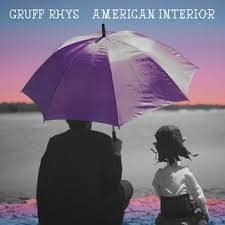
Gruff Rhys was (is?) the singer and composer in Super Furry Animals, a fantastic indie-pop band from Wales.   After several years with SFA and several solo albums, Gruff decided to do something a little different.  Actually, everything he does is a little different, as this quote from The Guardian explains:

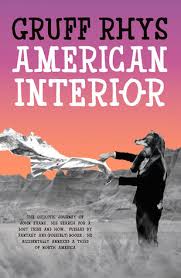
“The touring musician can feel like the puppet of consumer forces,” he writes, bemoaning the way that “cities have now been renamed ‘markets’ and entire countries downgraded to ‘territories'”. So, over the last five or so years, he has come up with the idea of “investigative touring”: combining the standard one-show-a‑night ritual with creative fieldwork. In 2009, he went to Patagonia to trace the roots of a disgraced relative called Dafydd Jones, and the Welsh diaspora in South America more generally, and played a series of solo concerts, as well as making a film titled Separado!. Now, Rhys has reprised the same approach to tell another story, and poured the results into four creations: an album, another film, an ambitious app, and this book – all titled American Interior, and based on the brief life of John Evans: another far-flung relative of the singer, who left Wales to travel to North America in the early 1790s.

So yes, there’s a film and a book and this CD.  This album is a delightful blend of acoustic and electronic pop and folk.  Rhys’ voice is wonderfully subdued and with his Welsh accent coming in from time to time, it makes everything he sings somehow feel warm and safe (even when it’s not).   Rhys creates songs that sound like they came from the 1970s (but better), but he also explores all kinds of sonic textures–folk songs, rocking songs, dancing song, even songs in Welsh.

“American Exterior” is a 30 second intro with 8-bit sounds and the repeated “American Interior” until the piano and drum-based (from Kliph Scurlock) “American Interior” begins.  It’s a catchy song with the repeated (and harmonized) titular refrain after each line and it’s a great introduction to the vibe of the record.  It’s followed by the super catchy stomping “100 Unread Messages” which just rocks along with a great chorus.  You can see Gruff “composing” the lyrics to this in the book.

“The Whether (Or Not)” introduces some electronic elements to this song.  It’s basically a great pop song with splashes of keys and some cool stabs of acoustic guitar.  “The Last Conquistador” and “The Lost Tribes” are gentler synthy songs, as many of these are.  “Liberty (Is Where We’ll Be)” returns to the acoustic sound with some really beautiful piano.

“Allweddellau Allweddol” (English translation: Key Keyboards) is the only all-Welsh song on the record and it romps and stomps and is as much fun as that title suggests it would be.  There’s even a children’s choir singing on it (maybe?).

“The Swamp” is a simple electronics and drumming pattern which leaps right into “Iolo” one of the most fun songs on the record.  It’s a nod to the Welsh poet who inspired but backed out of Evans’ expedition at the last-minute but also a rollicking good time with the chanted “yoloyoloyoloyolo” and great tribal drums from Kliph.

The end of the album slows things down with “Walk Into the Wilderness” a slow aching ballad and the final two animal-related songs.  “Year of the Dog” is kind of a mellow opus when it is joined by the instrumental coda “Tiger’s Tale.”  Both songs feature goregous pedal steel guitar from Maggie Bjorklund.

Gruff Rhys is an amazing songwriter.  He could write the history of an obscure Welshman and still get great catchy songs out of it.  And that’s exactly what he’s done here.

[READ: December 2018] American Interior

How to explain this book?

I’ll start by saying that I loved it.  I was delighted by Rhys’ experiences and, by the end, I was genuinely disappointed to read that Evans’ trip didn’t pan out (even though I knew it didn’t).  The only compliant I have about the book is that I wish he had given a pronunciation guide for all of the welsh words in there, because I can’t even imagine how you say things like Ieuan Ab Ifan or Gwredog Uchaf or Dafydd Ddu Eryri (which is helpfully translated as Black David of Snowdonia, but not given a pronunciation guide).  But what about the contents?

The subtitle gives a pretty good explanation but barely covers the half of it.

Here’s a summary from The Guardian to whet one’s appetite for Rhys himself and for what he’s on about here:

[John] Evans was a farmhand and weaver from Waunfawr on the edge of Snowdonia, who was in pursuit of something fantastical: a supposed tribe of Welsh-speaking Native Americans said to live at the top of the Missouri river, who were reckoned to owe their existence to the mythical Prince Madog, a native of Gwynedd who folklore claimed had successfully sailed to the New World in 1170. In 1580, this story was hyped up by Elizabeth I’s court mathematician and occultist John Dee (born of Welsh parents), in an attempt to contest the Spanish claim to American territory. Two centuries later, with the opening of new frontiers, talk of a tribe called the Madogwys and “forts deemed to be of Welsh origin” began to swirl anew around Wales and North America, and became tangled up in the revolutionary fervour of the time, along with a radical Welsh spirit partly founded in nonconformist Christianity.

All this was moulded into a proposal made by a self-styled druid named Iolo Morganwg (“a genius”, but “also a fraud of the highest order”, says Rhys), who “called for the Americans, in the light of Madog’s legacy, to present the Welsh with their own tract of land in the new country of the free, so that the Welsh could leave their condemned royalist homeland”. Morganwg stayed put in Cowbridge, near Cardiff (the site of his “radical grocery” shop is now occupied by a branch of Costa Coffee), but Evans was inspired by his visions, and eventually set sail.

Rhys goes on a “journey of verification”, following Evans’s route from Baltimore, through such cities as Pittsburgh and Cincinnati, and then up the Missouri river to the ancestral home of the Mandan tribe of Native Americans, who had been rumoured to be the Welsh-speakers of myth, and among whom Evans lived, in territory argued over by the British and Spanish. Along the way, he does solo performances built around music and a PowerPoint-assisted talk about Evans’s story, keeps appointments with historians, and also tries to glimpse the America that Evans found through the cracks in a landscape of diners, what some people call “campgrounds”, and Native American reservations.

The Guardian’s review also talks about why the book works: (more…)

Read Full Post »

SOUNDTRACKRHEOSTATICS-Corel Centre, Ottawa, ON (November 28, 1996).

This is the 14th night of the 24 date Canadian Tour opening for The Tragically Hip on their Trouble At The Henhouse Tour.  The site has recently added a DAT version of the show in conjunction with the existing fan-recorded version.

The band had played a show earlier in the day at Record Runner.  They sound great and fresh at this show as well–playing 45 minutes instead of 2 and a half hours must be a much more relaxing gig.

After the intro music of “Popcorn” (I wonder if the intro music has any bearing on the rest of the show–setlist, mood of the band, anything), they play “Self-Serve Gas Station.”  Not too many shows open with an older song like this.  Martin sings “What went wrong with Nimrod, is he dumb?”  It sorta segues into Martin playing “California Dreamline.”

“Claire” sounds really nice with a great solo from Martin.

Dave introduces “Fan Letter to Michael Jackson” by saying, this song is about a writing a letter to Alanis Morissette asking to be on her team.  In the middle he whispers “write me back… write me back, in blood!”

A plug for the new record with “Bad Time to be Poor” which is followed by “Motorino.”  I love when thy play this song.  It’s quite peculiar with a cool riff and Martin speaking Italian.

They run through a sweet instrumental jaunt through “Artenings Made of Gold” for 40 seconds before seguing into “All the Same Eyes.”

They end the show with a shout out to “Tim Mech [who] is in the home” as they play a rocking “Horses.”  As the song ends, Dave chants “Fuck the Tories.”

It’s another great opening set.

[READ: March 2018] Motherest

This was a really touching story about Agnes, an 18 year-old going off to college who has lost her mother.  Not that she died… she is just gone, left one day without saying anything.

Set in 1994, Agnes gets through the tribulations of college by writing to her absent mother (a letter at the end of each chapter).

Despite the premise, there’s a lot of funny stuff in this book.  Agnes has a sarcastic outlook on life and her parents, even though she clearly misses her mother.   The humor is evident in her letters to her mother (who will probably never read them) and in the main body of each chapter.  Like that her roommate’s given name is Surprise (which makes for some challenging sentences: “Surprise asked me”).  Also a little challenging is that the boy she fancies is delicate and sensitive so she calls him (and refers to him as) Tea Rose.

Also missing from Agnes’ life is her brother Simon who died three years ago–the three longest shortest years.

So while she is going through her daily life–handing in papers and willing Tea Rose to look at her, she is also writing to her mother: “is ‘leaving” a verb or a personality trait.  Like do you do it because you are it, or are you it because you do it?”

The book does not have her pining for Tea Rose for too long, which is nice.  They speak pretty early in the book–he asks her is she knows Nirvana–not “Smells Like Teen Spirit,” their early stuff.   “How could he know I had an older brother once who knew everything there was to know about music?”  And by the end of the semester they are firmly together. (more…)

Read Full Post »

SOUNDTRACK: NAO-Tiny Desk Concert #833 (March 18, 2019).

This was possibly my least favorite Tiny Desk Concert I have seen.  And it was endless.  It kills me when bands I like play short sets (often only three short songs) while shows like this push nearly 20 minutes.

Nao’s voice is a comic book character–underneath that comic book voice there’s a powerful voice, but it’s all wrapped up in this goofy–how can you take it seriously–nasally nonsense–and when she goes deep, it’s even more amusing.  Worse yet, her backing singers sound like bleating goats and sheep in the first two songs–single note: “baaa.”

And yet , clearly I know nothing because the blurb describes “Nao’s sophomore effort and one of 2018’s best albums.”

Just to top it off, the album is about astrology.

In astrology, your Saturn return is the time in life when Saturn goes back to the same spot it was at the time of your birth. As Nao explained during her appearance at NPR’s Tiny Desk, “It’s about leaving adolescence and going into adulthood.” This crossing of the threshold that happens around your late 20s to early 30s is the inspiration for Saturn

Maybe I would like the album more if her voice was drowned out in synths.

While Nao usually performs with synthy, electronic twinkles, her day at the Tiny Desk was stripped down by comparison. At times, her lyrics ring out with just a sparse guitar to carry them. Like a roller coaster of unexpected upheaval, Nao’s distinctive vocal range on this four-song set goes from bellowing and husky to soft and coy, often within the same verse. Be it the breezy, Brazilian funk of “If You Ever,” the hallowed harmony of “Orbit” (complete with prayer hands) or the valiant soul-searching of “Make It Out Alive,” it’s almost as if Nao duets with herself, answering her own questions, settling into her own quirks.

I listened to the show twice to see if I was wrong.  The first song is a bit catchy–I like the guitar lick from Ariel O’Neal.  In fact, focusing on her throughout the show is a highlight.

I also really like the part between the songs when she introduces the band, because she’s not singing–it’s a nice light jam.  I admit that it amuses me that she says “that’s my cousin Samson Jatto on drums–he’s not really my cousin I just wanted to say that.”

If she didn’t do the R&B warble, the opening of “Bad Blood” would be okay.  But the comical vocals just undermine anything serious.  And then the bleating starts.  I’m not sure if only Troi Lauren and Taylor Samuels are making the goat sounds, but it sounds like it’s coming from all around the room.

“Orbit is similarly okay to start with.   “Make It Out Alive” is the fastest song in the show, with some uptempo keys and bass from Joe Price and Henry Guy.

If it were one song on a mixtape, I’d skip it, but 20 minutes was a lot to take.

[READ: March 26, 2019] “Setting the World to Rights”

A powerful opening from this story: “All his life he lived on hatred.  He was a solitary man who hoarded gloom.”

And how about this: “Good people are afraid of hatred, and even tend not to believe in it.  If it appears before their eyes, they generally call it dedication or some such name.”

Those in the kibbutz believed the subject of the story (unnamed) was full of faith and dealt severely with the world–“We invested him with a halo of self-sufficient reticence.”  This halo afforded protection against gossip although the children called him ‘wicked Haman” and pointed fingers at him.

He works with machines and is efficient and hates waste. (more…)

Read Full Post »

« Newer Posts - Older Posts »