Feeds:
Posts
Comments

Archive for the ‘Comic Strips’ Category

lioSOUNDTRACK: RHEOSTATICS-El Mocambo, Toronto ON (November 1987).

ElMo-Nov1987After re-listening to some of the Rheostatics most recent shows, I checked the Rheostatics Live site and found out that he has added some really old shows.  This show is the oldest show on the site, dating back to 1987.  A brief Rheos history shows that in the earlier incarnation, it was Dave Bidini, Tim Vesely and Dave Clark.  They were joined by the Trans Canada Soul Patrol and played mostly R&B and funk.  Around 1985 the Soul Patrol left and Martin Tielli joined.  Around the time of this show, they had released Greatest Hits.  And then they broke up (circa 1988).  Then they reformed in 1991 with an entirely different sound.

So this is from what I guess you’d call he Mach II era: no Soul Patrol but before the breakup.  Interestingly, only two songs from this how appeared on their debut album, although many appeared on earlier demos.

They play 11 songs, including what I assume is an improvised rap from Dave Clark (the really silly one of the band).  And the songs are dominated by a smooth guitar sound and often times a funky bass.  Perhaps the most amazing thing about this set is the prominence of Tim.  He sings many of the songs and Dave includes him in many jokes.  Martin is almost non-existent.

“National Pride” dates back to 1983 and starts as a kind of goofy rap song but then turns into the funky version from the demo.  Martin Tielli also released a solo song called “National Pride” which is nothing like this.  They follow this with the “Greensprouts Theme Song” (which they played at the AGO almost 30 years after this show).  Dave Clark calls it the “silliest song ever written,” although in the years hence they have made a few challenges to that claim.

“Good on the Uptake” is a song I’ve heard in a few places before.  Tim sings lead and there’s a kind of funky bass line with lots of guitar harmonics.  I think Martin is singing backup (and probably playing the harmonics).

Tim breaks a string and Dave Clark shouts, “This song is called Rheostatics learn how to string their guitar.”  With a broken string they play an impromptu version of “Red Dog Ray” taught to them by Reverend Ken and the Lost Followers “about the beer strike in 1983.  We were all pissed off because we had to drink Old Milwaukee and Rolling Rock and all that shit.”  This song has come up in their sets in the early 2000s.

It segues right into “Ditch Pigs” from Greatest Hits and sung by Martin.  The middle section devolves into a chant of “I want an egg salad sandwich and a glass of Coke.”

For “Four Upright Walls” Bidini introduces David Clark as the Poet Laureate of Etobicoke.  This is a rap of sorts in which the band does response to Dave’s rap (with all kinds of crazy sound effects and even some beatboxing (!)).

“Crystal Soup” is very much a Tim song–it sounds a lot like a song he would write now–there’s a surprise guitar riff in the middle of the verses that sounds a bit like Rush.  At the end of the song Dave introduces “Mr. Nigel Tufnel,” although I’m not sure to whom he is referring.  “Sue’s Mining Song” (also sung by Tim) has a kind Rush feel although the lyrics are very un-Rush (“woman,” “girl” and a line about “buzzards on your Steely Dan”).  It also features Tim screaming a high note!  It’s a pretty heavy song (especially at the end).

It’s funny that they follow-up with “a nice song,” Martin’s sung “Crescent Moon” a very, very new wavey song that Bidini wrote, and which leads of Greatest Hits.  They follow with a fun and fast rocking “People’s Republic of Dave” in which Dave encourages Tim to make silly faces.  And Tim growls that he wishes his name was Dave.  This seems like a great show ender, but they’ve got one more song.

“Chemical World,” has a kind of discoey guitar opening and lots of slap bass.

[READ: January 5, 2016] Zombies Need Love Too

I prefer to read series like this in order, but sometimes you can only get the books that you can get (and you don’t get upset).  For reasons I don’t understand, my library only had the first two books (which were also collected in Liō’s Astonishing Tales which they also have) and the two most recent books.  There’s maybe two books in between, as far as I can tell.

The good thing is that there’s not a lot of forward narrative in these stories–except perhaps for the new pets that Liō acquires.

So after four years what is Tatulli writing about?  Well, largely the same stuff, which is fine with me. (more…)

Read Full Post »

moomin9SOUNDTRACK: LILY & MADELEINE-Tiny Desk Concert #330 (January 7, 2014).

lilmadLily & Madeleine are a duo (surprise!).  But for a real surprise, they are sisters and at the time of the recording Lily was 16 and Madeleine was 18.  They sing beautiful folkie rock with fantastic harmonies.

That’s Lily on guitar and Madeleine on keys (and higher harmonies).

They play threes songs.  The first one, “Devil We Know” is amazing.  Their harmonies start off the song and it’s a beauty.  It’s an uptempo song that has a gorgeous verse.

“Paradise” features each sister singing an individual verse before the other chimes in with a harmony.  And while their individual voices are nice, when they harmonize it’s really something.

“You Got Out” sounds like a folk song from long ago–with the chord structure and harmony “ooohs.”

The duo is really great and they have just released a new record this year.

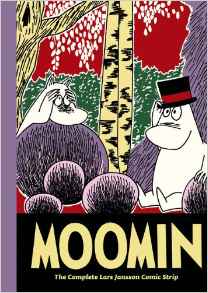
[READ: March 19, 2016] Moomin Volume 9

Moomin Book 9 and every subsequent book is made entirely of strips written and drawn by Lars Jansson.  These stories originally ran in the Evening News, London 1960-1975.  I have more or less caught up with the Moomin series at this point.  Book Ten has been released but my library does not have it yet.

This book tends to veer away from the Moomin family a little bit.  Of course they are still present, they just aren’t always the focus, as you might be able to tell by the chapter titles:  “Damsel in Distress” “Fuddle and Married Life” “Sniff’s Sports Shop” “Mymble’s Diamonds.”

(more…)

Read Full Post »

moomin8SOUNDTRACK: VAN-ANH VANESSA VO-Tiny Desk Concert #329 (January 4, 2014).

voOne of the things I love about the Tiny Desk Concerts is that they expose listeners to artists that we’d never encounter anywhere else.  As a person who loves rock, there’s no way I’d encounter this artist who plays traditional Vietnamese music.  Even though I think she;s amazing, I’d have no exposure to her otherwise.  So this is a wonderful treat–even more so to see her play in such a small space.

Van-Anh Vanessa Vo is a Vietnamese born musician living in America.  Typically the field of Vietnamese traditional music is dominated by men, but she fought to learn and here she demonstrates her skill on three very different instruments.

The first song “Three-Mountain Pass” is played on the Hang.  The Hang is like a steel drum with different sounds at all of the flattened indentations.  There’s also a tone in the middle which resonates nicely.   It is played with the fingers rather than mallets.  It’s a cool instrument to be sure.  For this song she also sings a Vietnamese song that is very breathy.

For the second song, she has taken Erik Satie’s Gnossienne No. 3 and arranged it for dan Bau, the traditional 9th century Vietnamese monocord. The instrument (“invented by beggers on the street”) has a single string, but by bending it with a kind of whammy bar made from a water buffalo horn.  Despite having one string the bar allows her to go 5 steps up and 1 and a n half octaves down.  She plays a backing track of a while playing the main melody line on the dan Bau.  Watching her play this one string and get ting so many interesting sounds out of it is very cool.

“Go Hunting” is an original composition played on the dan T’rung, a bamboo xylophone from Vietnam’s south highlands. This instrument, which looks a bit like a skeleton, is struck with double-headed mallets.  She says on the album she has a taiko drum, but there is no drum here.  But she doesn’t need it as the song begins slowly but grows faster and faster with the crowd offering some extra percussion.  She plays some amazingly fast melodies as the song reaches its climax.

[READ: March 19, 2016] Moomin Volume 8

Moomin Book 8 and every subsequent book is made entirely of strips written and drawn by Lars Jansson.  These stories originally ran in the Evening News, London 1960-1975.

The story is much more reflective of Lars now.  His art is slightly different is subtle ways, but you can see him using his sown style rather than trying to exactly mimic Tove’s.

The chapters are “Moomin Family Robinson,” “Artists in Moominvalley,” “Sniff’s Holiday Camp” and “The Inspector Nephew” (more…)

Read Full Post »

fateart SOUNDTRACK: THEE SILVER MT. ZION MEMORIAL ORCHESTRA-Kollaps Tradixionales [CST063] (2010).

kollaspThis album was released as a CD and as double 10″ vinyl.  Each “side” is about 15 minutes long.  And, interestingly, each side has a kind of theme, I guess.  It also includes the shortest song the band has recorded.

“There Is a Light” is one of my favorite songs they’ve done.  The guitar and strings play off each other perfectly and the song ebbs and flows very nicely.  Efrim sounds pretty drunk in his vocals, which gives the whole thing a shambolic quality that contrasts nicely with the elegance of the music.  Of all of their songs, I think this one really captures the intensity that these band can generate with the swelling strings and pounding drums.  At 6 minutes, the whole thing slows to a halt but is then resumed with a new, even more interesting section.  Over reverbed guitars, a series of horns and backing vocals singing “la las” flesh out the lead vocals.  I really enjoy the way the strings swirl around the vocals only pausing to let the words “One Step Two step” come out in staccato vocals.  But the main strings riff that follows these verses is so pretty, I could listen too just that.  This all ends around 9 minutes, when the final part begins with slow guitar and horns.  The vocals come in singing the title “there is a light.”  It starts quiet but soon enough the full choir of voices joins in as the music swells.  After a few round of verses, the song ends with the female choir singing, “Tell me there is a light.”

The second “side” is the “metal bird” side.  It stars with “I Built Myself a Metal Bird” which opens with rocking guitar chords and fast drums–the most overtly rock song they’ve done so far.  The vocals are screamed and staccato.  Things never really let up for the whole six minutes–there’s a concurrent violin solo while the lyrics are sung.  The second half of the song changes things a bit–with more dramatic strings playing.  In the last thirty seconds the tone changes a bit and things do mellow out for the conclusion.  That leads into the second bird song

“I Fed My Metal Bird the Wings of Other Metal Birds” is quite different from the first.  It opens with slow electric guitars and quiet strings.  There’s noisy guitars and other strange atmospheric sounds for the first three and a half minutes when it finally settles into an uptempo string song with more great violin riffs.  At fiver minutes (of 6) the bowed bass takes over the main line and the accompanying strings help to move things along.  There’s only about 30 seconds left when the vocals come in and they are nearly drowned out by the music.

The third side is the “Kollpas” side with three songs.

For “Kollapz Tradixional (Thee Olde Dirty Flag)” the piano comes back with quiet chords and gentle strings accompanying quiet vocals. .  The song stays quiet as different instruments come to the fore.  At around 5 minutes (of 6 in total) a guitar solo winds its way to the end of the song.

After this there is a 1 and half-minute song “Collapse Traditional (For Darling).”  It’s a gentle ballad played on strings with layered vocals.

“Kollaps Tradicional (Bury 3 Dynamos)” opens with pizzicato strings and a fuzzy meandering guitar.  About 2 minutes in, the loud chords strike and the drums kick in with a fairly complex rhythm.  About half way in, one guitars start playing in each speaker and the vocals begin.  Two voices begin singing against each other keeping an interesting rhythm with their staccato phrasing and the thumping drums,.  The last two minutes feature a guitar solo and vocals following a similar pattern as the guitar.

The final side has one 14 minute song “‘Piphany Rambler.”  The song begins with distant guitars and plucked strings.  The vocals are quiet, nearly whispered.  A refrain of “don’t sleep” surfaces from the quiet.  At around 5 minutes the guitars and strings grow louder and the song properly starts.  But even this section is fairly slow, as if preparing to build up to something else.   It’s the strings and their insistent three note melody that really unites the song.  About midway through things slow down even further (with some cool retro organs sounds amidst the strings).  And the song turns into a very catchy string filled section with the vocals working very nicely with the melody.  This section grows louder and more raucous as it heads to the conclusion.

SMtZ has made many diverse styles of albums over the years, and this combination of rocking songs and delicate strings is probably my favorite.  For this one, the lineup has shrunk to a five piece of

Thierry Amar: Upright bass, electric bass, plucked piano, vocals
Efrim Menuck: Electric guitar, acoustic guitar, mellotron, vocals
Jessica Moss: Violin, plucked piano, vocals
Sophie Trudeau: Violin, plucked piano, vocals
and David Payant has taken over for Eric Craven on drums, organ, piano and vocals

[READ: March 15, 2016] The Fate of the Artist

I didn’t love Eddie Campbell’s Black Diamond Detective Agency, and that was manly been because of the art.  That didn’t really bode well for this story.

But Campbell does an incredible thing with this book.  He mixes text and many different kinds of pictures–including comic strips and photographs, to create a fascinating story of his own disappearance.

The story begins “One day the artist wakes up with the disquieting feeling that it has all gone wrong….  It is difficult to obtain sympathy for this condition.”

And then the Artist disappears and all that is left is a picture.  “Most people would leave a note.” “Yes, well he left a picture.” (more…)

Read Full Post »

silentSOUNDTRACK: HOSPITAL SHIPS-Tiny Desk Concert #177 (November 23, 2011).

hospital shipsHospital Ships is a band created by Jordan Geiger, who was in the band Shearwater, among others. In 2011 he released his second album as Hospital Ships.  The blurb describes the album as “packed with poppy folk songs and brash rockers enhanced with instrumental flourishes and bursts of guitar feedback,” but for this recording, they strip everything down to the basics: a guitar, banjo, ukulele and a drum with a towel over it to muffle the sound.

Geiger has a rather high-pitched, delicate, almost talking-singing voice and his songs are rather pretty.  The band plays 3 songs in just over ten minutes.  The first one, “Phantom Limb,” (once my lover, now my friend, you are my phantom limb) has a recurring motif of them saying/singing “ha ha” which is rather catchy.

“Carry On,” features a four-letter word (technically a seven letter word), which might be one of the first times on a Tiny Desk Concert that such a word is uttered.  It’s especially funny given how sweet the band sounds.  The sentiment of the song is nice though: “To all the women I’ve loved, When I was with you I would say I was better off….  And when I’m gone, carry on, carry on.”  There were harmonies in the first song, but they are more prominent in this one (three part) and are quite nice.  The banjo player also does a whistling solo.

“Let Me In” made me laugh because he uses the word baby a lot (which Ben Folds said in his Tiny Desk that he has never said in real life, so why would he put in it a song?).  But this song is very gentle and sweet–just Geiger on his guitar singing “baby, let me in.”

Geiger’s voice reminds me of a few different people–Ben Gibbard from Death Cab for Cutie especially on the final track; perhaps the Mountain Goats or the Weakerthans.  And his songwriting is very good.

[READ: December 26, 2015] Silent But Deadly

I really enjoyed the first Liō collection, and was pretty excited that I could find the second collection so quickly (my library doesn’t have any more collections for some reason, so I’ll have to track the rest down elsewhere).  This book collects the strips from February 25, 2007 – December 2, 2007.

Not much has changed from that book to this one, but I think Tatulli’s comic chops have gotten even better.

The strip won me over immediately with the first one in the book. Lio draws a monster and it comes to life.  He looks at the marker and it says “magic marker” and he gets a big grin and goes back to work.  So simple yet so funny.

It is that big grin–wide open-mouthed just unfettered mischievous delight that occurs in nearly every strip. (more…)

Read Full Post »

lio1 SOUNDTRACK: JOE HENRY-Tiny Desk Concert #176 (November 21, 2011).

joe henryI had never heard of Joe Henry, so imagine my surprise to find out that he was releasing his 12th album in 2011.  For this Tiny Desk, it’s just him at a stool playing his guitar.  He has a very easy vibe, telling stories between songs and playing them with very little fuss.

He opens the show by saying this is, “not exactly like Woody Guthrie playing for the union members but you are working people.”

He plays four songs, “Sticks and Stones,” After the War,” “Odetta” and “Piano Furnace.”

Between the first two songs, he says he first became aware of Tiny Desk Concerts when his friend Vic Chesnutt was on the show (amusingly, he was the second person on the show).  He says he has a song on his new record about Chesnutt (Chesnutt had recently died).  He doesn’t play it though.  At first it seems like he might not be allowed to play it, but then it seems like maybe he just doesn’t get to it.

Rather he plays “After the War” where his guitar sounds like it has an incredible echo on it.  That echo is also present on the third song.  After which Bob asks him about his guitar.

Joe says he’s had the guitar for 6 years.  But the guitar dates back to 1932.  He says that he heard things differently with this guitar.  It’s got a smaller body and was actually sold as a budget guitar by Gibson (for $19 in 1932).  He also jokes that it’s black and looks a bit like a World Wrestling Federation belt.

Then someone asks him about Sam Phillips.  Joe says he sold her husband a guitar about 20 years ago.  She and her husband have split and Sam got the guitar and has been playing only that guitar for the last 20 years.  He says that he loves that she doesn’t plug in her guitar.  She plays into a microphone where you can hear the whole guitar and which makes the other players lean in to hear her.

I love the chords he plays in the final song, “Piano Furnace,” even if I don’t know what the song is about.  Henry’s voice is familiar.  I think he sounds a bit like a number of different singers.  And overall, nothing really stands out in his performance, except that everything sounds great and hiss songwriting is really solid.  That’s not a bad thing.

[READ: December 20, 2015] Happiness is a Squishy Cephalopod

Mark Tatulli is the author of the Desmond books.  I liked the stories, but I didn’t love the drawing style so much.  Imagine my surprise to find out that Tatulli has been drawing comics featuring this little boy Liō since 2006 (going forward, I’m leaving off that line over the o, because it’s a real pain).

And even more surprising is that I like the drawing style in the comic quite a bit–it is slightly refined over the Desmond books and is all the better for it.

I am also really surprised to find out that this strip appeared in newspapers across the country.  I’ve certainly never heard of it (but then I don’t read newspapers anymore, either).

So Lio is strip about a boy named Lio.  Lio is a dark, dark kid.  He has a pet squid, he loves monsters and he’s delighted by chaos. (more…)

Read Full Post »

cst053webmoomin7SOUNDTRACK: THE DEAD SCIENCE-“Throne of Blood (The Jump Off) 7” single [CST053] (2008).

This was a tour only 7″ that Constellation picked up before releasing The Dead Science’s Villianaire album.  There are two songs, “Throne of Blood (The Jump Off),” which is the lead song from the Villainaire and “The Duel of Iron Mike” which is unavailable elsewhere.

“Throne of Blood (The Jump Off)” opens with some lovely harp playing before the eccentric vocal styles of The Dead Science take over.  Everything about this song is unexpected–the weird staccato guitars, the crazy falsetto, wavery vocals.  The song seems totally random until you hear all of the intention in it all where it all gels at the chorus. I love the part where the backing vocal comes in and sings “Villainiare Ice Grillianiare” (or whatever the heck it says).

“The Duel Of Iron Mike” (not to be confused with the Wu Tang Clan track which is what you’ll find if you look up the song n YouTube), opens with an interesting riff.  There’s that low bass and that falsetto vocal that you either love or hate.

The chorus is almost catchy–it’s a little too minor key to be catchy but it’s very intriguing because it’s not quite what you expect and after one or two listens, you can’t stop playing it.  The end section with the two layers of falsetto vocals is weird and very cool, too.  The Dead Science are a unique band.  I wish they’d put out more music.

[READ: February 12, 2015] Moomin Volume 7

Moomin Book 7 and every subsequent book is made entirely of strips written and drawn by Lars Jansson.  These stories originally ran in the Evening News, London 1960-1975.

These four stories continue with the themes that Tove wrote about.  And Lars’ drawings look very much like Tove’s as well.  I have noticed a few things that look different–sometimes he does the eyes differently, and certain angles don’t look quite right.  But otherwise, it’s a pretty seamless transition.  Oh I aslo noticed that in this book, he has begun signing his name much bigger in each strip.

The chapters are “Moomin the Colonist” “Moomin and the Scouts” “Moomin and the Farm” “Moomin and the Goldfields”

(more…)

Read Full Post »

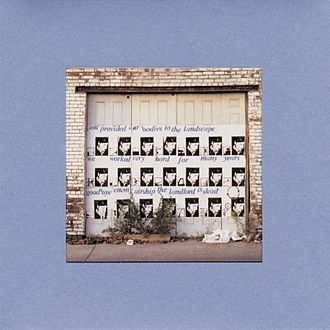
6SOUNDTRACK: DO MAKE SAY THINK-Goodbye Enemy Airship the Landlord Is Dead [CST010] (2000).

330px-DmstgoodbyeenemyAfter their debut album, Do Make Say Think made this second album which sonically fits together perfectly and really explores instrumental post-rock.  Most of the songs were recorded in a barn giving it a very big sound (complete with insects chirping).  While there were horns in the debut, they seem to be punched up a bit more on this record, and they really seem to help the record rock more.

“When Day Chokes the Night” song is 6 minutes long and I love the way the opening is a simple guitar melody slowly picked and strummed for 3 or so minutes. Then at 3:30 there’s a noisy “drum solo” that sets you up for the second half of the song which introduces wailing saxophone and it all really rocks out.

“Minmin” is 8 minutes long.  It opens slower but adds a steadily propulsive bass and drum pattern. Around 5 minutes the drums become martial and a new rhythm and bass pattern enters as the song gets bigger.  The riff is a solid rock riff and there’s some interesting feedback behind it.  It’s some of a classic construct of a slow building song that shifts gears midway through.

“The Landlord is Dead” (at a brief 5 and a half minutes). opens with a similar echoing riff, this one is more catchy than the others. Some horns fill out the background.  The song builds properly to a screaming guitar soloing wild ending.  It’s easily my favorite song on the record.

“The Apartment Song” is slower, with echoing guitars and a more trippy feel.  I love the way the really noisy guitars blast out for 8 notes and then recede again.  It’s the first of two songs under four minutes

“All of This is True” starts out with a noisy drum beat, open chords and a distant horn.   This song slowly builds for about two minutes before pausing entirely and then resuming as something else—more slow horns layering on each other the horns drift away and guitars take over again.  There’s something of a dancey beat on the drums all along.  The song ends with crowd noises and someone shouting “Merry Christmas Everybody” before seguing into “Bruce E Kinesis.”  “Kinesis” opens with a heavy bass line and insistent drum beat before the interesting guitar counterpoint plays over the riff.  For the first time, really, a keyboard riff takes over  It feels slightly sinister.  This song has a kind of claustrophobic feel, but with a kind of funky drum all the way through.  At only 3:40 this song feels compact and efficient, and as something of a lead in to the 12 minute album closer “Goodbye Enemy Airship”

The final takes a while to get where it’s going.  After some introductory drumming there’s plenty of one-note guitar and horns which keep growing louder and more insistent for the first 4 minutes.  It turns into a very bright guitar melody–bouncy and fun.  (This is one of the two songs not recorded in the barn).  It develops a distinctly jazzy feel.   The song gets bigger with some great bass chords alongside the repeating riff on the guitar.  At around 9 minutes the song morphs into the third part of this exploration of similar riffs and textures. This one is a bit trippier. The disc ends with some mildly dissonant keyboard notes as the guitar echoes to halt.

While I do enjoy their debut, this album feel like a giant stride forward in terms of composition and cohesion.

[READ: February 3, 2015] Moomin Volume 6

Moomin Book 6 is composed entirely of strips written and drawn by Lars Jansson.  Lars was 12 years younger than Tove.  He was a writer, translator and gold-miner (!).  He wrote his first novel at fifteen and then proceeded to write 8 more.  Lars translated the earlier strips into English as Tove wrote them in Swedish.  Tove’s contract was to expire in 1959, so he began teaching himself how to draw Moomins (Tove didn’t know).  Tove’s creative fatigue set in and so Lars wrote his first comic in 1956 and by 1960, he was ready to take over.  The newspaper syndicate approved the switch and so these final strips all belong to him.  He created Moomin for fifteen years–twice as long as Tove worked on it.  These stories originally ran in the Evening News, London 1960-1975.

I love that they must have agreed that each strip would open with a big Moomin behind as well.

The chapters are “Moomin’s Lamp” “Moomin and the Railway and “Moominpappa and the Spies” “Moomin and the Circus”

(more…)

Read Full Post »

moomin5  SOUNDTRACK: JAMES VINCENT McMORROW-Tiny Desk Concert #151 (August 25, 2011).

mcmorrowI don’t know McMorrow. He is an Irish singer who plays acoustic guitar.  His singing voice switches between a kind of raspy voice and a keening falsetto.

He plays four songs and his style and voice reminds me a lot of Bon Iver.

I don’t find any of his song especially compelling. They’re all nice–the humming part of “This Old Dark Machine” is pretty memorable.  As the part in the middle where he seems to get pretty intense.

“Sparrow And The Wolf” has some nice chord changes.  I think my favorite song is “Follow You Down To The Red Oak Tree,” which opens a little differently.

I have to say it’s a little awkward watching him up close as he does some pretty unusual things with his face when he sings.

The final song, “Red Dust” really shows off his falsetto.  I found his songs to be entirely pleasant and think they would sound great in a coffeeshop on a Sunday afternoon.

[READ: February 3, 2015] Moomin Volume 5

Moomin Book 5 is composed entirely of strips written by Lars and drawn by Tove.  These are the final strips that she contributed to.  And, as such, there are only three chapters in the book.  As with the others these stories originally ran in the Evening News, London 1953-1959.

The chapters are called “Moomin Winter” “Moomin Under Sail” and “Fuddler’s Courtship”

(more…)

Read Full Post »

moomin3  SOUNDTRACK: THE BLIND BOYS OF ALABAMA-Tiny Desk Concert #139 (July 5, 2011).

bboaI have of course heard of The Blind Boys of Alabama, but they only came on my radar maybe a decade or two ago.  And I never knew these things about them:

  • They formed under a different name in 1939.
  • The band has understandably experienced many lineup changes in the 72 years since.
  • Singer Jimmy Carter is the only participant in this lineup billed as a founding member, and even that term is up for debate.
  • They have released 60-plus albums and received a Grammy Lifetime Achievement Award
  • And that wherein these Blind Boys are young and old, blind and sighted.

There are six players for this Tiny Desk–a guitarist, a bassist and a barely visible drummer as well as three singers.

It makes me laugh that the guy on the far left sings much less than the others and seems to be less happy about being there.

They play four songs and, no surprise, they sound fantastic.  Their harmonies are outstanding and the music is quiet and subtle–a mellow accompaniment for this soulful music.

But their rendition of “Amazing Grace” is indeed amazing–they do it to the tune of “House of the Rising Sun” and it must be heard to be believed.  I happen to really like the original of “Amazing Grace” and I hate when it is done poorly.  But I love this interpretation–it’s original and still moving.

  • “Take The High Road”
  • “I Know A Place”
  • “Jesus Built A Bridge To Heaven”
  • “Amazing Grace”

[READ: January 23, 2015] Moomin Volume 4

Moomin Book 4 changes things pretty dramatically.  Because starting with this book, the stories were written by Tove’s brother Lars!

The colophon explains “[Chapters 14-17 were written by Lars [Jansson] and drawn by Tove.  Chapter 18 was to be run before Chapter 14 and be Tove’s farewell strip but she stayed on to draw 7 more chapters].”

So that means that the first four chapters in this book were written by Tove’s brother but she drew the art.  How fascinating.

This book contains the stories: “Moomin Goes Wild West,” “Snorkmaiden Goes Rococo,” “The Conscientious Moomins,” “Moomin and the Comet,” and “Moomin and the Golden Tail.”  As with the others these stories originally ran in the Evening News, London 1953-1959. (more…)

Read Full Post »

« Newer Posts - Older Posts »