Feeds:
Posts
Comments

Archive for the ‘Boredom’ Category

nov 17SOUNDTRACK: THE LES CLAYPOOL FROG BRIGADE-Purple Onion (2002).

onionThis is the first and so far only studio album from the Les Claypool Frog Brigade (line up slightly different from the live albums).  I think it’s one of his best solo releases in terms of overall musical complexity.  The addition of Skerik on sax makes a world of difference to Les’ songs and even better is percussionist Mike “Tree Frog” Dillon on vibraphone–which adds a new level of depth to these songs.  Also having a backing vocalist seems to add even more to them.

Psychotic circus music opens the saga of “David Makalster.”  It’s a riff on the news (where everything’s exactly as it seems).  The chorus is a fun vibraphone filled section–cheerful and fake.  It’s a decent song.   In true Les fashion, he follows it up with a Part II later in the disc in which the truth of the unhappiness is revealed.  Between the two songs it’s 11 minutes long which is too much for this one conceit, although I do like the way the part II revisits the first song in a different way.

But there’s so much else that’s so good on the record.  Like “The Buzzards of Green Hill” which opens with a jaw harp and some cool bass.  It’s a simple up and down riff that is incredibly catchy.  Later it’s got some great guitar and horn solos.  “Long in the Tooth” sounds like a Primus song, but the crazy sax noises turn this into something else entirely.  “Whamola” is a cool song that features Les’ work with the whamola, a one string instrument that features prominently on the song–it’s like a viola that you can do bends on.  It’s a great jam with Fish from Fishbone on drums and Skerik’s crazy sax as well.

“Ding Dang” sounds like it would be a silly song but it actually attacks all forms of prejudice–racist, homophobic ignorance all gets taken to task and then put to a rather cheerful-sounding chorus.  There’s some wild solos on this in song too.   Tolerance is a good thing.

“Barrington Hall” is an interesting creeping sounding song with vibes and bowed bass.  It feels like a kind of silly horror movie song.

“D’s Diner” opens with some backward percussion.  It has a creepy sinister bass line and some crazy vocal all about a yummy dinner.  It features Gabby La La on sitar and Norwood Fisher from Fishbone on bass.  “Lights in the Sky is an atmospheric song which is a bit too long.  “Up on the Roof” has a great slapping bass thing going on and the vibes solo is wonderful.

“Cosmic Highway” ends the disc with a pretty lengthy jam.  It has some great solos from the various instruments–I actually would have preferred this as an instrumental–I think it would have removed the slower parts.  But it’s a fun, trippy album closer.

And after this, Primus would (briefly) reunite.

[READ: January 19, 2015] “The Alaska of Giants and Gods”

In this story (which I imagine is the beginning of a new novel from Eggers), Josie has packed her kids into a (cheap rented) R.V. and has taken them to Alaska.

Josie used to be a dentist.  She was sued by a woman who claimed that Josie should have seen the cancer in her mouth.  Josie was so disgusted, she threw up her hands and said to take everything.  Which the woman did.  She felt the lower forty-eight states were full of cowards and thieves so it was time to get out.

And yet when they crossed the border, the Alaska she imagined was nowhere to be seen–no magic, no pure air, just a regular old city. (more…)

Read Full Post »

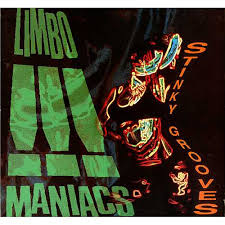
 oct6SOUNDTRACK: LIMBOMANIACS-Stinky Grooves (1990).

limboSo this album was a favorite of mine in college (amazingly you can’t find very much about it online–I kind of assumed it was huge, but apparently only in my head).  Why does it fit here?  Because the drummer, Brian “Brain” Mantia is who replaced Tim Alexander on Primus’ next few albums.

The Limbomaniacs album is a big stupid funk rock album that is absolutely college age appropriate (if not terribly sexist).  It’s about sex, butts, porn, poop and getting funky.  You can’t play any of the songs on the radio: “Butt Funkin’,” “Porno” (which has a good riff) “That’s the Way” (which is much more vulgar than I realized) or “The Toilet’s Flooded” (with a great big ….).

The biggest surprise about this album , which is clearly kinda dumb fun, is that it attracted such big names to it. It was produced by Bill Laswell and has vocals from Bootsy Collins and sax from Maceo Parker.  This record must have come out before you had to pay for samples, because they seem to be sampling everything, most of it to good use–2001, Blade Runner, William S. Burroughs and Public Enemy.

Probably the best songs on the disc are the ones that are a bit cleaner (like they emphasized the music over the lyrics) “Maniac” with some good horn samples and quotes from Network, is fun and funky–catchy as anything and still sounds good.  “Free Style” is a fun dancey song (with a sax solo from Parker).  “Shake It” is also a fun song (to me it sounds like a college party–although I guess kids these days don’t listen to funk rock).

“Pavlov’s Frothing Dogs” has extensive samples from a William S. Burroughs story, which works interestingly well.

The little you can find out about them online suggests that the band was well-respected musically (but quickly disbanded after a lot of local success).  I find these songs to be rather simple in structure and performance so it seems hard to imagine them inspiring anyone.  And yet, Laswell is involved and immediately started using Brain on drums in his “supergroup” Praxis.  (The Limbomaniacs also introduced Laswell to Buckethead who was a friend) and Buckethead is in Praxis as well.

I more or less know what happened to everyone in the band.  Mirv, the guitarist went on to form M.I.R.V., but I’m not sure what happened to Butthouse the singer.  This album is a totally time capsule for me.  And the little voice at the end of “The Toilet’s Flooded” made me laugh like I was 20 years old again.

[READ: January 9, 2014] “Story, with Bird”

It’s fun to read a two-page story from time to time.  This story felt quite elliptical–a lot happened, but all in a rather quick way.

As the story begins, we know the couple’s relationship is about to end.  As a last ditch effort at staying together, they decided to give up drinking–but it didn’t really work (obviously).

The bird in the title is a bird which flew into their house.  She tried to attack it to get it out, but he used the more pacifist approach of turning off the lights and leaving the windows opened so the bird could leave on its own.  They fought about who was right, but his way did work. (more…)

Read Full Post »

dumbSOUNDTRACK: WALT DISNEY-Chilling, Thrilling Sounds Of The Haunted House (1964).

hauntedJust in time for Halloween, I link to Disney’s 1964 LP Chilling, Thrilling Sounds Of The Haunted House.

I was unfamiliar with this record, but I gather a lot of people grew up being frightened by this.  The premise is simple–the narrator talks to you, yes you, as you are prepared to be scared by, well, everything you can imagine.  For 26 minutes, various sound effects are designed to scare you.

You go into a haunted house…and never come back.  Although despite the title, that’s all there is of a haunted house.  For there are more things to scare you….

There’s screams and creaks.  Gunpowder and dogs barking. A trip to Mars.

Tree limbs falling, cats going crazy.  A racist Chinese segment.

The back half of the disc is sound effects–I have no idea what that’s supposed to be around 20:49, though.

Basically every fear a kid could have (Disney was quite the sadist, huh?)

I imagine that if you were a kid (in 1964) this could be pretty darn scary.  Enjoy the whole thing…if you dare!

[READ: October 25, 2014] The Dumbest Idea Ever

I was pretty excited to see this book from Jimmy Gownley, creator of Amelia Rules, one of my favorite kids comic books.  I see that the books have been reissued, and that some new ones have been published since I last checked, so I’ll have to look for those.  He also has a new comic strip called Gracieland.

Anyhow, this book is a memoir about Jimmy growing up as a kid obsessed with comic books in a world where comic books were not appreciated (specifically: Catholic School).

It opens with young Jimmy being interviewed on TV–a seeming fantasy for any writer.  But this happens to be true (it’s local TV coverage of this young boy who has self published a comic book).  But before we get ahead of ourselves, we jump back two years earlier.

Jimmy lives in Girardville, PA.  He’s a great basketball player, an excellent student and a budding artist.  Sadly Girardville, PA is not the place for an artist–there’s not even a half way decent art store.  So, Jimmy relies on the few stores that carry comic books as his sole outlet for creative fun.  Even a good student can’t convince his teachers that a comic books is appropriate in school.  He even volunteers to do an oral report on the value of comic books.  He gets an A on the report but is still forbidden from having them in school. (more…)

Read Full Post »

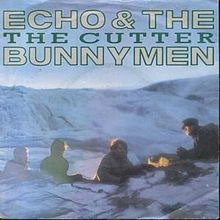
reySOUNDTRACK: ECHO & THE BUNNYMEN-“The Cutter” (1983).

echoI’ve never been a huge Echo & The Bunnymen fan, but I do like their greatest hits.  This is one of them, and it’s a song I’ve liked from pretty much the minute I heard it.  Ian McCullough has a Jim Morrison vibe in his vocals, and there are interesting Eastern melodies and pieces thrown into the song (like in the intro).  These give it an unconventional feel, even though the main melody is pretty straightforward.

I have no idea what the song is about–I sing along without really thinking about it.  And the “spare us the cutter” chorus, complete with screechy guitar chord is pretty dynamic.  As is the loud drum change during the “drop in the ocean” part.

By the end of the song the drums seem to sound bigger, and the fills really propel the song to the end.  It’s a fine song by a band that I’m not sure I need to hear more of.

[READ: August 25, 2014] Pale Summer Week 7 (§46-§47)

After the pile of small chapters that last week gave us, this week offers just two.  One is a very lengthy discussion between two characters.  The other is another piece of the Toni Ware puzzle.  I enjoy the way the first of these sections balances the medical, the emotional and the supernatural.  And it makes me laugh that Drinion’s supernatural bit is never addressed directly in any way–it just is–as assuredly as Rand’s psychological problems just are.  But I do find it interesting that more people have talked about Rand’s problems than Drinion’s (even though his is as fascinating as he himself is dull).
(more…)

Read Full Post »

tpk5SOUNDTRACK: INTERIOR DISPOSITION-“Fornix” (2008).

Critical Injuries Five Years of RehabilitationIt was challenging to find a related song for this week’s reading, although frankly a band called Interior Disposition would fit with just about any DFW passage.  But having a song called “Fornix” paired nicely with the computer problems that the author faced this week.

From the online information, it seems like Interior Disposition is a metal band.  And yet when I tracked down their full album and listened to a bit it’s largely trippy outer space noodling, or as one of the sites labels them: dark ambient.  There’s bubbling sounds and sounds of what I think of as deep space.  It is strangely relaxing and yet with a hint of tension all the way through (so yes, dark ambient is a pretty good sum).

Okay a little more digging tells me that the band is actually a guy, Oleg Hurvatov, who is Russian and also records under several other aliases: the wonderfully named Exploplasmatic Coagulation, and the puzzling Lanceolaria Im Licht Der Laterne

“Fornix” is only 1:46 and is probably a good introduction to the band/album.  If you like the 2 minute sound, the rest is pretty darn similar, just much longer.

[READ: August 18, 2014] Pale Summer Week 6 (§35-§45)

This weeks read was mostly a series of smallish sections.  some of them are entertaining, some of them provide interesting insights into the organization of the Service and of some of the characters.  And some of the sections are just downright funny.  The more I read of this book this time, the more bummed I am that it was never finished.  I even just wish I knew how much more he had planned.  There’s potential for this book to have spiraled out to 800-900 pages, there just seems to be so many things he could have followed up on–the Sylvanshine transformation to mastering RFI; the whole business with the infant, I love it; learning more about Mr. X (although likely there wouldn’t be much more about him); and of course what led to David Wallace leaving the Service and what compelled him now to write about it (which I don’t think is really addressed).
(more…)

Read Full Post »

tpk6SOUNDTRACK: BOREDOMS (various).

borepageBoredoms are an experimental noisy band from Japan.  I am completely unqualified to talk about them as I only know snippets of their output.  But I have always been intrigued by them.  Lead dude Yamataka Eye has been the main impetus behind the band.  And it seems like exactly the kind of noise/music one might play if one were horribly bored.

Yoshimi P-We is the longest serving drummer with the Boredoms.  She is the “Yoshimi” in the title of The Flaming Lips’ album Yoshimi Battles the Pink Robots.

Over the years they have gone from outright nose (listen to the track “Bubblebop Shot” from Soul Discharge or “We Never Sleep” from Onanie Bomb Meets the Sex Pistols which is mostly screams and drums) to a more ambient (but still noisy) style. They performed a live show with 77 drummers  on 7/7/07.

They’ve even changed their name to V∞redoms.

Here’s an interesting clip of the band from All Tomorrow’s Parties in 2012, being a lot less noisy but still pretty weird.

[READ: August 11, 2014] Pale Summer Week 5 (§27-§34)

There were a few things in this week’s reading that seemed to contradict other things in the reading.  This is not surprising as Pietsch says that there were things that he knew DFW would eventually change.  The notes at the back of the book (yes, I peeked, bit no spoiler here) say that there were different possible plotlines for some of the characters and even a duplication of a weird character trait.   But it’s funny to see it evolving in front of you.

In §27, Sylvanshine seems to be able to control his Random Fact Inference somewhat–and he seems to be using it rather than being inflicted by it.  This is either a big change or a cool development in Claude’s life.

There is also what I think is an actual mistake: two people have the same number: 907313433 (see §30).

In another “unfinished” issue, the surveillance in §29 is one of those situations that would certainly have been explained in greater detail (or had another scene about it).  I initially assumed they were doing surveillance for deadbeat companies (maybe for new vehicles), but there are indications (in later sections) that perhaps something else is going on, maybe to do with the Glendenning/Lehrl issue that Reynolds and Sylvanshine are talking about in §30.

One thing that I hadn’t explicitly noticed earlier, but which comes out in Cusk’s section below is the idea that “more information is not better.”  While this seems to be very true for their job, it can certainly be a debilitating world view and I wonder if that is at play as well. (more…)

Read Full Post »

tpk4SOUNDTRACK: NEGATIVLAND-“Nesbitt’s Lime Soda Song” (1987).

limeThere are multiple references to Nesbitt’s soda in this book.  I am unfamiliar with Nesbitt’s except in this funny little song from Negativland (on their album Escape from Noise).  I have always liked this song, perhaps because it is so simple (and is an actual song) amidst the chaos of the album.

A simple strummed guitar introduces this quaint song about everyday frustrations:

We spent a lovely summer, my wife Elaine and me,
We bought us a great big motor home, with a shower and TV,
We was camping and having a great time, watching Brokaw on Today,
Till a bee flew into the Nesbitt’s Lime Soda, and we had to throw it away.

Now most of the time I’m a peaceful man, but I lost my temper that day,
Just one last bottle of Nesbitt’s Lime Soda, and we had to throw it away.

I’m including the second verse not only because of the sodas listed, which I find endearing, but also because of the phrase “good old Mountain Dew” which reminds me of something DFW would say:

I brought a case of Nehi, and Double Cola, too,
A half a dozen Upper 10’s, and good old Mountain Dew,
I bought a quart of cola-a, to get me through the day,
But just one bottle of Nesbitt’s Lime Soda, and we had to throw it away.

I think most of the Nesbitt’s in the story is orange (that was their big seller) but Nesbitt’s did actually did have a Lime (or I guess Lemon-Lime) soda as well

[READ: August 4, 2014] Pale Summer Week 4 (§23-§26)

After last week’s massive 100 page section inside of one person’s head, it’s nice to get back to some of these smaller sections.  I’m particularly pleased to have another David Wallace section, as I find his the most entertaining.

§23

This is a brief First person section that begins: “Dream:”  Rows of foreshortened faces, many blank doing endless small tasks. It was his psyche teaching him about boredom.  He was often bored as a child, but that boredom was not actual boredom.  Back then he worried and fretted a lot, feeling the “sort of soaring, ceilingless tedium that transcends tedium and becomes worry” (253).  It was anxiety with no object.

He was the nervous delicate son, as opposed to his brother, the gifted driven son whose nightly piano practice coincided with their father’s return from work.  I section that says “after the incident with my own son” (254) reminded me that someone suggested that “Incarnations of Burned Children” may actually fit into this book and it seems like that could be applicable here, although I shudder to think it.  In psychotherapy he realized that his family was Achilles.  His brother was the shield and he was the heel. His father was a warrior, but his mother’s role was unclear. (more…)

Read Full Post »

tpk3SOUNDTRACK: OBETROL-“The Sound Machine” and “Chopped an Dropped”(2011).

obetrrolObetrol is a band that I can find out very little about. They seem to have 5 songs out and each one is quite different. My favorite is “The Sound Machine” which has a lush sound with twinkly guitars and a wispy female vocalist singing over the top of it.  It has a very trippy slow motion quality to it.  The singer sings a bit like a delicate Kim Gordon (in that shes not always exactly on key).

It’s hard to get more out of this song since it’s only 2:25, but I think it would make a cool intro to any record.

“Chopped and Dropped” on the other hand opens with buzzy guitars (and a “Kick Out the Jams” sample).  The vocals are sung (screamed) by a man. It is a fast-moving tinny punk song with trippy female echoed vocals in the background.

Hard to pin them down, but you can check them out here.

[READ: July 28, 2014] Pale Summer Week 3 (§22)

This week’s read is only one section because it is almost 100 pages of one person’s testimony.  Presumably, this is also part of the testimony on videotape which was broken down into smaller sections.  But there is no “context” for this section;  no ID number.  Although it does address very similar issues and questions.  I was on the fence about how much to include here.  So much of it is “irrelevant,” that I hate to get bogged down in details.  So I think it will be a basic outline of ideas until the more “important” pieces of information surface.

§22

For the most part, this is all inside one man’s head as he talks about his life in college, after college, and into the Service.  In terms of advancing the “plot,” there’s not much (until the end).  Mostly this is simply a wonderful character study, full of neuroses and problems that many people face at some point (to one degree or another).  We don’t know who this author is (very minor spoiler: we will learn who it is in §24 [highlight to read]).

The interviewee states that “A good bit of it I don’t remember… from what I understand, I’m supposed to explain how I arrived at this career.”

Initially he was something of a nihilist, whose response to everything was “whatever.”  A common name for this kind of nihilist at the time was wastoid.  He drifted in and out of several colleges over the years, taking abstract psychology classes.  He says that his drifting was typical of family dramas in the 1970s–son is feckless, mother sticks up for son, father squeezes sons shoes, etc. They lived in Chicago, his father was a cost systems supervisor for the City of Chicago. (more…)

Read Full Post »

tpk2SOUNDTRACK: SYLVANSHINE (2014).

sylvanOne of the fun things about doing these summer posts is finding appropriate music to each week’s write up. I like to find something related to what’s down below.  Last week it was an artist named Pale King.  This week it’s a band called Sylvanshine.

Sylvanshine is a cover band from Texas.  According to their web site, they play covers of Collective Soul, Van Halen, The Black Crowes and Stevie Ray Vaughn. I didn’t listen to any of their live tracks, but the excerpt of their version of The Toadies’ “Possum  Kingdom” is pretty spot on.

Learn all about them (or book them) at their website.

[READ: July 21, 2014] Pale Summer Week 2 (§10-§21)

Week two continues some of the characters’ lives and introduces us to them at the Service.  It also has a couple of very lengthy passages in which people spout their opinions about aspects of the country and the Service which are thoughtful and, frankly, very interesting and would work as good meme quotes, if you liked that sort of thing.

§10

This is a two-paragraph chapter about bureaucracy “the only known parasite larger than the organism on which is subsists.”

§11

A list of syndromes/symptoms associated with Examination Postings in excess of 36 months (ending with “unexplained bleeding”).

§12

Leonard Stecyk is back in this short chapter.  He is an adult now. He is walking door to door to introduce himself to his presumably new neighbors, and to offer to the neighbors the Post Office’s 1979 National Zip Code Directory–“his smile so wide it almost looked like it hurt.”

§13

An unnamed character is inflicted with nervous profuse sweating.  (This character will be identified later).  This chapter also has footnotes (as did the Author’s Foreword), although these footnotes are in the third person (as is the chapter).  Does this mean it is written by Dave Wallace too?  It is another thoroughly detailed chapter that I find very enjoyable to read even if it doesn’t advance the “story” much. (more…)

Read Full Post »

tpk1SOUNDTRACK: PALE KING-“An Airing” (2013).

paleNope, I never heard of the musician Pale King until I searched for a song to put here.

This song begins as a piano instrumental (with some keyboards layered over).  It swells and lifts through some simple chord changes.  A martial beat comes in from time to time to give it some urgency.

This might actually work as a the opening credits to the never-to-be made movie of The Pale King, or perhaps a soundtrack to §1 (which is a short prose poem type of thing).

At about 1:45, some guitars burst through (adding some drama), and the drums grow louder.  It builds slowly until it starts to taper off and ends much like it began

I don’t know much or anything about the artist except that he’s from Toronto and he has a bandcamp site where you can hear this track.

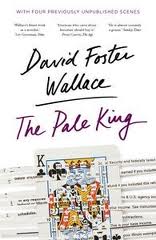
[READ: July 14, 2014] Pale Summer Week 1 (§1-§9)

In other Summer Reading Group posts, I have tried to summarize chapters, make connections between characters that I may have missed in earlier readings of the book and, just tried to be more microscopic about my reading.  I don’t usually philosophize too much about the stories, but I do wax poetic from time to time.  Having said all that, The Pale King presents its own unique challenges because the book is unfinished.  So it’s not always clear if any connections can be made from chapters that are elliptical. DFW in particular likes to write scenes without naming characters, giving the reader something to discover later on, perhaps.  So you may have a scene that has no named people in it, but their speech patterns or details are referenced later, allowing you to piece things together.

There is definitely some of that piecing going on here, but as I said, when a book is unfinished, and this one was largely pieced together by editor Michael Pietsch, it’s not clear if you are missing something or if it simply isn’t there.  So there will be some speculation, and some omissions for sure, but we press on.

A further complication is the collection of Notes and Asides at the end of the book.  Some reveal information about characters that is not necessarily evident in the book, some talk about things that might have happened or even might have been removed if DFW had played around with the text more.  In general I am not going to read these now, so as to avoid spoilers.  But I may insert them later (with spoiler warnings) to make it easier to make sense of the book later.

The primary setting for the book is the IRS Regional Examination Center in Peoria, IL set in 1985.  Editor Michael Pietsch (in his thoughtful and helpful Editor’s note which is mandatory reading if you are going to read the novel) says that DFW described the book as “torandic,” with elements coming in and going out over and over.

The other key question is just how unfinished is this?  We have no idea.  It feels like it could go on for a ton longer, and yet it no doubt would have been edited down to a more manageable size afterwards.  There are sections that seem like they could have more and others that seems like they would have been trimmed a lot.  And then of course, there could be other things that never even saw the light of day.  None of that should keep anyone from reading the book though. (more…)

Read Full Post »

« Newer Posts - Older Posts »