 SOUNDTRACK: RHEOSTATICS-The Cabana Room, Spadina Hotel, Toronto, ON (December 23 1983).
 This is “Rheostatics and Trans Canada Soul Patrol 1983 at The Cabana Room – Spadina Hotel Christmas Party show. Amazing sounding recording considering it is from 1983.”
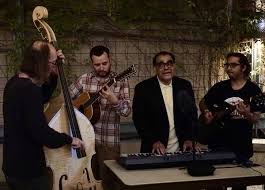
As far as I can see it is the only recording of the band with the Trans-Canada Soul Patrol. And that basically means that it’s a lot of these early songs only with saxophone–lots of saxophone (it seems like only one member sof The TCSP is there). According to a cassette recorded in 1984, the band was:
- Drums – Dave Clark
- Guitar – Dave Bidini
- Tenor Saxophone – Charlie Huntley, Dave Rodenburg
- Trumpet, Flugelhorn – Ray Podhornik
- Voice, Bass – Tim Vesely
So it seems likely that it was a similar e lineup in Dec 1983. I only hear guitar bass and drums, but I can only hear one sax. And does that mean that Tim was the main singer back then?
This show is loose, dare I say sloppy. There’s a total drunken party vibe going on, as befits a Christmas Party. But the most notable thing is that sax–soloing all over the place. Dave Clark gets a lot of shout outs during the set–trying to get him to do a solo or “lay the groove.” Before “Thank You” (the Sly and the Family Stone song), Dave tunes his guitar with harmonics and someone “sings” Rush’s “Xanadu” briefly. The band puts a massive echo on the first chorus–it’s pretty obnoxious. And in the middle of the song Dace Clark starts chanting songs: “Fly Robin Fly,” “You Should Be Dancin'” and “Convoy.”
During “Chemical World” someone asks “What do you think Ronald, am I better off dead?” and then there’s a shout out: “show us your teeth, Paul.” (None of these guys are in the band, right?). Someone jokes that Clark is still playing drums even though his mom said that playing drums is not a career.
It’s unclear what’s happening or how serious the band is but they tell people “watch out, guys, you broke a fuckin’ beer bottle, okay.” They introduce “The Midnight Hour” by saying it’s a song written by Wilson Pickett called, “Go Fuckin’ Nuts, no I don’t know what it’s called.”
This is the only recording I know of with “Big in Business,” which they describe as “something marketable.” And after two shows where “Man of Action” gets cut off, we finally get to hear it to the end.
By the time they do “Louie Louie” the whole thing is a drunken mess. There’s shouts of Merry Christmas, comments about it being the last time they’ll play in 1983, calling people up on stage. It sounds like Clark is looking for his girlfriend. “Louie” is a massive party jam with all kinds of people singing along, including a woman with a very high singing voice, and someone going “shock” like Peter Gabriel’s “Shock the Monkey” after each “Louie Louie” line.
The set seems to be over but then some one encourages them to sing “Shake Yer Body Thang,” which they do with lots of screaming and shouting and letting it all hang out.
It’s nice seeing a relatively young band acting so cool and comfortable and fun on stage, even if I’m really glad they got rid of the horns (and their whole sound).
[READ: August 28, 2016] In Short
Manguso’s book review of four books of aphorisms is fun because she (an aphoristic writer herself) breaks it down into 36 paragraph-sized chunks. Including that “Hippocrates coined the word aphorism to describe his brief medical teachings.”
A few interesting things: She says that she doesn’t so much read prose as “root through it for sentences in need of rescue.”
John Gross, in his introduction to the Oxford Book of Aphorisms, says the word aphorism took on a moral sand philosophical tone after the Renaissance. By the 17th century the definition included witticisms.
James Geary wrote The World in a Phrase: A History of Aphorisms and offered a five part definition of aphorisms: it must be brief, it must be personal, it must be philosophical and it must have twist. But the best thing that Geary has said is: (more…)













 I Just Read About That...