[ATTENDED: May 2, 2014] The Figaro Plays: The Marriage of Figaro
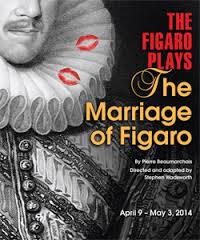 After last night’s unexpectedly hilarious Barber of Seville, my expectations were much higher for The Marriage of Figaro.
For a brief explanation of these plays, see yesterday’s post.
The Marriage of Figaro is set three years after The Barber of Seville. [It must be said that the promotional material said they could be seen in any order, but a lot from Barber is referenced in Marriage and since it is set three years later, it really does behoove you to see Barber first]. The situation is interesting: Count Almaviva and Rosine are still married, although the Count is sleeping around and the Countess is despondent (so much for that rush of first love). But the main plot concerns Figaro.
Figaro is living with them (as Almaviva’s right hand man) and is set to marry the Countess’ Lady in Waiting, Suzanne. Figaro is gloriously happy, as is Suzanne. And they cannot wait to get married. So, unlike the previous play, there are no shenanigans trying to get them together behind the back of someone else. The shenanigans are of a slightly different sort.
For Suzanne reveals to Figaro that the reason the Count has given them this glorious space in the chateau–which is but mere feet away from the Count’s private room–is that he plans to deflower Suzanne on the night of her wedding to Figaro. This was, apparently, the Count’s privilege at the time. Although Count Almaviva ended that policy when he married Rosine. But he seems ready to reinstate it now.
Figaro doesn’t believe it at first, but is soon convinced. The Count wants to meet Rosine in the garden on her wedding night. And so she and Figaro (with the help of Rosine) decide to hatch a plot. And that’s just one of many plots in this sequel which is much more complicated, has a much bigger cast and pushes three hours in length. (more…)


 I Just Read About That...