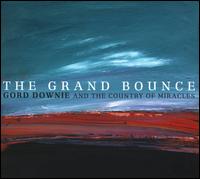
 SOUNDTRACK: GORD DOWNIE AND THE COUNTRY OF MIRACLES-The Grand Bounce (2010).
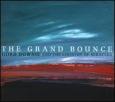 I knew I was going to write about Canadian musicians for this series of Extraordinary Canadians, but I wasn’t sure who would get matched to whom. I figured I’d match Gord Downie to Mordecai Richler, but when I saw this in the liner notes to this disc, I knew I’d made the right choice:
Thank you to the Richler Family for the font you are presently reading. The Richler font, not publicly available, was created and named for the great Mordecai Richler. It was commissioned by Louise Dennys, designed by Nick Shinn and graciously made available by Florence Richler. I am grateful for this honour.
So Gord Downie is the driving force behind The Tragically Hip. I’m always curious when a guy who pretty much runs a band needs to do a solo album (or three). And in this case, since the last Hip album was much more mellow and almost country, it seemed like he got some of his less rocky side out on that disc, so what’s the need? Unless, of course, it’s just the need to play with some other folks once in a while.
Well, whatever the reason, this disc finds Downie in incredible form. In fact, I think I like this disc better than the last Hip disc (which I did like, but which was a little too mellow overall). The songs are all great, from the simple folk tracks to the more elaborate rockers. And, yes, while the disc never rocks as hard as some Hip songs tend to, this is not a simple acoustic guitars and solo vocals record.
“The East Wind” is a wonderful starter. It’s fairly simple with awesomely catchy lyrics. I learned that the lyrics are from a quote by Todd Burley. And they are an awesome way to describe a hostile and violent wind: it’s lazy, because “it doesn’t go around you, it goes right through you.” Fantastic.
“Moon Over Glenora” sounds a lot like a Hip song. Downie’s lyrics are almost mumbled and understated until he gets to the end of each verse when he raises his voice an octave for maximum effect. The stops and starts in the bridge are also great. “As a Mover” is also smoothly catchy with a wonderful rising chorus.
“The Dance and the Disappearance” is another great conceit. This song is inspired by a quote from Crystal Pite: “Dance disappears almost at the moment of its manifestation.” It is suitably dramatic with some great verses. “The Hard Canadian” is a gentle acoustic number that would not be out of place on the more recent Hip records. “Gone” feels like a continuation of “Heart,” almost like the slightly more rocking second half of it.
My favorite track is “The Drowning Machine” (I seem to like anything that Downie writes that’s about the sea). It’s a minor chord wonder, dark and mysterious and wonderfully catchy. The rock comes back on the rather simple “Night is For Getting.” It’s probably the least essential track on the disc except that once again the chorus/bridge is really great and memorable.
The last three tracks bring on the mellow, which is a fitting ending for the disc, although since the three t racks take up about 12 minutes, it makes the end drag a bit. “Retrace” is a country-tinged (steel guitar) mellow track (again, Downie’s voice brings out the excitement) . “Broadcast” has an extended outro of gentle guitars and piano that for all the world sounds like the end of a disc, so I’m always surprised that there’s a final track after it. And so the final track “Pinned” feels like filler. It has a movie projector clicking sound and gentle piano with almost inaudible vocals. It’s actually a pretty song, but it feels almost discarded here.
One of things I’ve always liked about Downie’s lyrics is that they are atypical of rock songs. They’re not “about” sex or rock or drugs or swagger or anything like that. In this case they are about locations and events. And it really paints a picture. And speaking of painting, Downie painted the cover art. The beautiful simplicity of the painting is not unlike the beautiful simplicity of the music on the disc.
Oh and my copy is autographed too! (although I wasn’t there when he autographed it, so it could have been anyone who scribbled on the cover).
[READ: November 15, 2010] Mordecai Richler
I don’t know a lot about Mordecai Richler, although I feel like whenever I read about him it’s in hushed tones (a neat trick, that). Nevertheless, for a number of reasons I have wanted to read him for many years but have just never done it. Now, the stars are aligning with me for Richler.
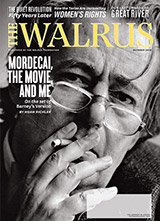 There’s this book, there’s the cover of the October 2010 issue of The Walrus and the recent filming of his book Barney’s Version (the filming of which is discussed in the same issue). And then a patron asked for the film of The Apprenticeship of Duddy Kravitz. So, it’ about time to read one of his books. But here’s the rub…do I start with the great books or do I start at the beginning and work my way through his career? And, there’s also a huge new biography coming out (the review of which mentions a wonderfully offensive event in which Richler absolutely dismisses his Jewish audience).
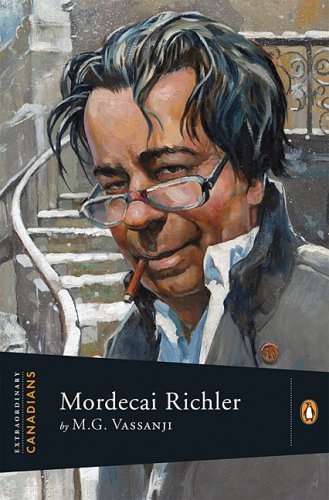
This book was written by M.G. Vassanji. I feel that I’ve heard of him but I’ve never read him. And yet listen to this incredible biography:
M.G. Vassanji was born in Kenya and raised in Tanzania. He attended University in the United States, where he trained as a nuclear physicist, before coming to Canada in 1978. Vassanji is the author is six novels and two collections of short stories…and he has twice won the Giller Prize.
Damn.
Since I read this right after Coupland’s McLuhan it’s tempting to compare them. And yet, as I said in that review, it seems quite apparent than Coupland’s book will be like no one else’s, so I won’t say much about that. Instead, Vassanji opens the book by talking about the similarities between himself and Richler and their few awkward but pleasant meetings. (In this respect yes, it is sort of like Coupland’s book in that the author puts himself into the text). (more…)
Read Full Post »
 SOUNDTRACK: BEST COAST-Live at the 9:30 Club, Washington DC (2010).
 Best Coast made Carrie Brownstein’s best album of the year accolades, but when I listened to the track she selected for the post, I wasn’t all that impressed.


 I Just Read About That...