 SOUNDTRACK: KISHI BASHI-Tiny Desk Concert #215 (May 10, 2012).
 A few days after the concert at the 9:30 Club, K Ishibashi stopped in at the NPR offices to record a Tiny Desk concert. The Tiny Desk concerts are always fun–incredibly intimate and always well recorded. He plays three of the five songs that he played at the 9:30 Club, and while they sound quite the same, there are little differences.
I find it very cool how similar they sound–since most of the sounds he makes are with his voice, it’s quite cool that he has that much control. But I also like that he varies things a bit (although it sounds like a slightly flat note that plagues “Atticus in the Desert”).
What’s interesting is that although he doesn’t play things very differently, the feel of “I am the Antichrist to You” is quite different in the Tiny Desk setting. I don’t really understand why, but it sounds very different, and equally wonderful.
Watching the Tiny Desk show is also neat–I’ve never seen anyone strum chords on a violin before. And watching all of the technical adjustments is very cool too. I’ve definitely become a fan of Kishi Bashi.
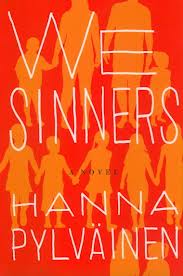
[READ: August 28, 2012] We Sinners
This has got to be the fastest turnover I’ve ever had where I read a short story and then read the author’s novel. Well, it turns out that “Jonas Chan” was not a short story, but an excerpt from this novel.
The novel is a series of short stories about the same family. I’m reluctant to brand it one of those connected-short story novels, but I think it really is. Each chapter has a title and a specific focus and, as the excerpt showed, each chapter can work independently–although having all of the information certainly fills out the story. (Unless I am mistaken, a few things that really depend upon the rest of the book were left out of the excerpt).
The novel is about the Rovaniemi family. They are a very traditional Finnish family living in the midwest United States. More than just Finnish, they practice Laestadianism, a very conservative kind of Lutheranism that is unique to the Finns. There are nine children in the family (and 11 chapters in the book), and the novel follows them through about 18 years (the youngest, Uppu, is born in the first chapter and the second to last chapter is about her leaving for college.
There’s even a handy family tree:
WARREN – PIRJO (parents)
BRITA TIINA NELS PAULA SIMON JULIA LEENA ANNI UPPU
There isn’t an overall plot so much as an evaluation of this traditional family and how modern life impacts them. And wisely, the book opens with the oldest daughter. This (as opposed to first looking at the parents) allows us to see what kind of difficulties the kids will have with their religion. We see Brita in school facing a tough decision. The Laestadian religion doesn’t permit dancing (or TV, or much of anything). And Brita has to inform her “boyfriend” that she can’t go to the dance because she isn’t allowed. When Tiina finds out that Brita revealed their religious secret she freaks out that people will know about her too. (more…)




 I Just Read About That...