 SOUNDTRACK: RODRIGUEZ-“Sugar Man” (1971).
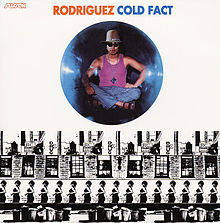 This song was played a lot on WXPN, and when I first heard it I couldn’t imagine what new artist was talking about “sweet Mary Jane.” So it turned out that this song was over 40 years old but it had been resurrected for a movie called Searching for Sugar Man, which is a documentary about Sixto Rodriguez and how he released two albums and then disappeared.
There’s something extremely catchy about this song–the loud down strums that stand out over the quieter strumming, the crazy high frequency sound that sails throughout the song and that hint of horns that gives more depth to this simple folk song. All of these elements make this song more complex than it might have been. In fact, the song seems like it’s going to end after about two minutes but there’s the instrumental section full of crazy sounds and electronics.
And even though it seems over after that there’s one more verse and chorus to go. And then the song just drifts away echoing into nothingness. It’s quite a catchy little number.
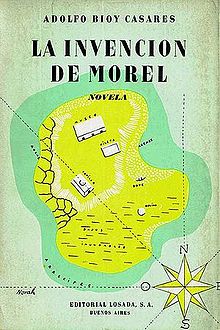
[READ: June 4, 2013] The Invention of Morel and Other Stories
Roberto Bolaño recommended this main story (the other ones as well, I assume). He’s a big fan of Bioy Casaraes. But also, Jorge Luis Borges has a prologue to the story in which he states of “The Invention of Morel”
“I have discussed with the author the details of his plot. I have reread it. To classify it as perfect is neither an imprecision nor a hyperbole.”
Holy crap.
I can’t say exactly that it I perfect although it is quite fine. It deals with all kinds of interesting issues and is inspired by (maybe that’s not exactly the right word) The Island of Dr Moreau. The funny thing is that Morel is neither the main character, nor even a major character for half the book.
The story starts on an island with the narrator writing this book down to leave a record of “the adverse miracle.” We learn that the narrator is a fugitive and he was told by an Italian rug seller in Calcutta that the only possible place for a fugitive like him is an uninhabited island. And on this particular island in 1924 a group of white men built a museum, a chapel and a swimming pool. But no one dares to go there—not Chinese pirates, not even the Rockefeller Institute because there is a fatal disease located on the island—anyone who has visited there has been found later dessicated. (more…)

 I Just Read About That...