 SOUNDTRACK: MAGANA-Teeth (2024)
 I saw Lady Lamb back in 2019 when they opened for New Pornographers. In my post I had singled out her bassist Jeni Magaña
fantastic bass from Jeni Magana. Magana is also the bassist for Mitski and she has such a dynamite sound. I could have listened to Magana play all night long.
I recently got a DM from Audio Antihero saying that since I seemed to be a fan, would I like to hear the new Magana solo record? I initially assumed that it was a new album by the singer of Lady Lamb (Aly Splatro), it had been five years, I can’t be expected to remember everything.
The record didn’t sound anything like Lady Lamb, and that’s when I read the liner notes and saw my mistake.
Teeth is available next month, and you can hear a few songs now. The bandcamp page says Magana describes the album
as “Witchy Rock,” … unlike any of her past works. An album about “regrowth and a new view on the world,” its sound touches on Acid Folk, Alternative Pop, and even Krautrock as she tackles the bleakest and most brutally honest subjects of her songwriting career.
I liked the album a lot and although I haven’t had time to write about albums so much anymore, I wanted to give this indie label a shout.
All other instruments: Jeni Magaña
The album opens with strummed guitar that sounds slightly-off–in an intriguingly (minorly) dissonant way that I found really intriguing. Then “Garden” introduces Magana’s lovely full voice. Keys float in to flesh out the sound as it builds somewhat. It’s not really an indication of what will come next, but it does hint a little at the unusual music within.
“Beside You” introduces a starkly fuzzy guitar line and what sounds like electronic toy piano. But most of the music fades back for the verses as an electronic drum (the snare is close to a clap sound) keeps the music going. It’s like eccentric bedroom pop, but it sounds really clean. The song is about 3 minutes long and half way through it’s like a full band joins in and the song explodes into fullness–with some terrific harmony vocals.
More unusual instrumentation follows on “Matter” which features not one but two (I think) clarinet melodies to introduce the song. Then comes in a cool electronic bass sound to propel the song. Incidentally, Jeni Magaña plays everything on the record except for drums (Jonathan Smith) and strings: Violin: Jenna Moynihan and Cello: Marie Kim. The mixing of the clarinets and the big synth sounds works wonderfully together–in one of those moments where when the bass notes return after the middle part it’s like an old friend returning.
“Paul” strips the music back to a quiet, prepared-sounding guitar and her beautiful voice. Magana’s voice sounds familiar in a way that I find very comforting (although I can’t place who I think she sounds like). After a verse the song builds up with a few flutes and strings. The melody is lovely. And I love the return of the clarinets.
“Break Free” returns some of that mild distance to the opening melody as fuzzy keys introduce the song until the drums and bass kick in (along with more of those flute melodies). It’s got a dance feel, but is too slow to dance to. The solo is more fuzzy guitars almost overwhelming the rest of the song but never quite doing so. It’s a neat mix of folk sounds and dance sounds.
“I Feel Like Ice” is 3 minutes of pulsing synths and washes of sounds. It’s a weird interlude (and just the kind of weird song that I love). There’s a delightful flute floating along the top, but when the voices come in they are distorted and manipulated–not in an unpleasant way but as if trying to hide what’s being said/sung. It makes you want to lean in to hear what’s going on, especially since the song’s melody is so pleasing. It resolves into the clean and pretty “To My Love.” This four minute song is clean acoustic guitars and soft keys all supporting Magana’s voice. Which I can’t say often enough is really pretty. About half way through, the song unexpectedly gets briefly huge with drums, more keys, strings and electronic flute, turning this delicate acoustic ballad into a minor epic.
I know Magana as a bass player so I’m a little surprised there isn’t more bass on this record. But it really comes to prominence on the striking “In My Body.” Playing just two notes on an upright bass (which is recorded like its right in your ears), she sings in a delicate wavering whisper also right in your ears. There are a few other quieter sounds floating around and yet despite the sparseness of the song, it never feels insubstantial. After three minutes of this, a manipulated clarinet solo picks up the story
“Bones” and I Cannot Breathe” both follow and each are under 2 minutes long. The first follows a descending musical pattern of distorted clarinets. Her voice is similarly distorted blending many of the sounds together. The second is still distorted but in a sharper way, making all the edges harsh. This is a catchier melody. And when the drums kick in it feels even more like a dance song. But it being so short means it’s hard to start dancing to it.
“Afraid of Everybody” continues the dance feel with the sharp drums, and synths, but the bass line is kind of a stuttering line that is once again engaging without being easy. Her voice holds the song together, and then it builds with more and more sounds: catchy synths and pianos changing the tone of the song. The end feels huge with ascending and descending melodies playing over her voice (and harmonies).
The disc feels like its going to end with “Mary Anne.” Jeni walks to the mic and sighs as she picks up the acoustic guitar and sings right to Mary Anne (us) in another gorgeous, sad acoustic ballad. The end is like the beginning with a big sigh as she turns off the recorder.
The 75 second “Clarinet Jam” feels like a throwaway track, although it is very cool. It is two clarinets (or synths or whatever) playing over each other, with other synths going on. I really rather like it and hope it gets used as an instrumental song in a show or between shows or something. I do wonder if it would have been better off earlier in the disc, but that doesn’t matter much.
The disc ends with a rocking song, “Girl in Chains”–big drums and a catchy guitar melody. It has the potential to be the single from the record especially as it soars in the middle. I love the way Magana sings softly even in this bigger, rocking song.
I’ve listened to this record a bunch of times and really like it a lot. It is catchy but also very indie. I hope it get some recognition. I feel like WXPN would love promoting Magana, especially since she’s played with Lady Lamb and Mitski.
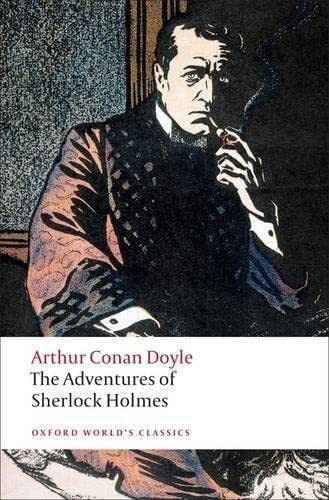
[READ: February 4, 2024] “The Boscombe Valley Mystery”
The fourth story in this collection is a rather slight mystery compared to some of the others.
An older landowner, Charles McCarthy is killed. He was supposed to meet someone by the Boscombe Pond, but the only person anyway saw near him was his son James who was carrying a rifle.
Charles was not shot, but people suspect that John hit him with the butt of his gun. James swears he didn’t do it, but acknowledges that he looks very guilty.
However, there is a girl, Alice, who swears that John is innocent. They have been friends for a very long time and there is much talk of them getting married. James’ father desperately wants them to get married, but James has a (valid) reason for not getting married to her. Alice’s father also doesn’t want them to get married (for different reasons).
The way that James gets out of his valid reason for not marrying Alice is hilariously tossed off as almost an aside and doesn’t impact the story all that much.
Lestrade makes an appearance in this story, mostly as a sounding board for Holmes’ theories (which Lestrade dismisses). Holmes crawls around in the grass, looks at footprints and rocks and determines they are looking for a tall left-handed man with a limp (which James is not).
Soon after, the guilty man confesses to Holmes and tells his story. This part was far more fascinating than the rest of the story.
The man explains that he knew Charles from when they were both in Australia. The killer says that he was a member of the Ballarat Gang, a group of bushrangers in Australia who robbed stage coaches and killed people. I was stunned that he simply admits this to Holmes and… nothing happens. So the killer continues that Charles was delivering a gold shipment that his gang stole. He kept Charles alive , which he realized was a mistake, especially since from that day, Charles has made his life miserable by blackmailing him to take care of him and James.
The killer says that since he moved to England, he has been a model citizen and only killed Charles out of a last resort for himself and his family. He really hopes that Holmes doesn’t have to reveal to his family that he killed Charles (or his Gangland past). Plus he’s expected to die shortly from a terminal illness.
This story shows that Holmes is in no way indebted to the police–he wants to solve the murder and he wants justice, but has his own feelings of what justice actually is.
~~~~~~~~~~~~~~~~
The four novels of the canon:
- A Study in Scarlet (1887)
- The Sign of the Four (1890)
- The Hound of the Baskervilles (1902)
- The Valley of Fear (1915)
The 56 short stories are collected in five books:
- The Adventures of Sherlock Holmes (1892)
- The Memoirs of Sherlock Holmes (1894)
- The Return of Sherlock Holmes (1905)
- His Last Bow (1917)
- The Case-Book of Sherlock Holmes (1927)
The Adventures of Sherlock Holmes (1892) contains 12 stories published in The Strand between July 1891 and June 1892
- “A Scandal in Bohemia” (June 1891)
- “The Red-Headed League” (August 1891)
- “A Case of Identity” (September 1891)
- “The Boscombe Valley Mystery” (October 1891)
- “The Five Orange Pips” (November 1891)
- “The Man with the Twisted Lip” (December 1891)
- “The Adventure of the Blue Carbuncle” (January 1892)
- “The Adventure of the Speckled Band” (February 1892)
- “The Adventure of the Engineer’s Thumb” (March 1892)
- “The Adventure of the Noble Bachelor” (April 1892)
- “The Adventure of the Beryl Coronet” (May 1892)
- “The Adventure of the Copper Beeches” (June 1892)

 I Just Read About That...
Leave a comment