 SOUNDTRACK: hiatus
[READ: February 4, 2024] “A Case of Identity”
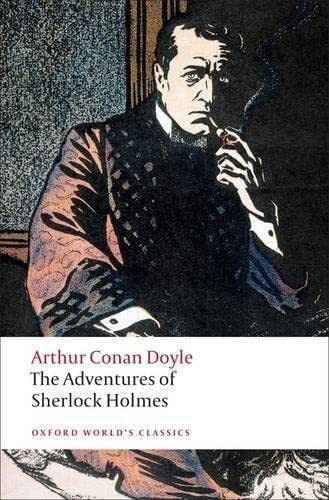
Many years ago I was on a bit of a Sherlock Holmes kick. I read the first two novels and then couldn’t get a copy of this collection, so I guess I forgot about the detective. Since i have recently listened to a couple of Sherlock Holmesian books I decided to track down the next book to read.
And I was quite surprised to realize that while Arthur Conan Doyle did write a lot of Sherlock stories, most of them were short stories, not novels (See the list below).
So since these were short stories I decided to give a crack at them.
This second story in the book is remarkably… inconsequential? Holmes has a habit of saying that big mysteries often disguise simple crimes–if it’s a huge deal, then the plotting must be simple. He also likes that life is far ore bizarre than fiction (amusing in a short story). But even by those standards, this is a pretty small story. It also feels not very hard to figure out–I have also realized that much of Holmes’ success comes from not letting on some things that he has figured out (thereby not letting the readers in on it either).
So Mary Sutherland has come to see Holmes about a personal matter. There is some excellent moments of Holmes reading the woman from outside and telling what her concern is just by the way she is standing. I also realized that so many of the story really do depend on British mannerisms and behaviors–things that wouldn’t come across as well today. Like cuffs being mended and ink stains on fingers.
At any rate, Holmes figures she has a story of woe about a romance. And so she does.
Her backstory is that her mother recent remarried. And the man is just a few years older than Mary. When her father died, he left her a monthly stipend which she supplements with work as a typist.
Her stepfather doesn’t want her to be going out and about, meeting some new man. He forbids her any fun. So, when an even t comes up and her stepfather goes away on business, she goes to the event and meets a lovely man. They are quickly engaged. And on the way to the church for the wedding, the man gets into a cab behind her, but when they arrive at the church he is gone.
I mean, it’s pretty clear that the stepfather has something to do with it. It turns out that he was pretty psyched by the fact that his stepdaughter was receiving 100 pounds a month and didn’t want to lose the gravy train. So we figure he must have set up the whole thing with this dude that she likes.
But it’s even creepier:
Spoiler: I’m not going to spoil all the stories, but this one is kind of inconsequential. So, skip the next paragraph if you don’t want to know.
Holmes figures out that the man that Mary fell in love with was actually her stepfather. My daughter, upon hearing this said, didn’t she know what he looked like? So it turns out she’s near sighted and the stepfather put on a wig and mutton chops and dark glasses and spoke in a funny voice. But still. I hope they never kissed (well, he is a stepfather, but STILL) Shudder. The euphemism back then of “make love” is especially disturbing in these older stories.
Again, it seems like the rigidness and formality of British society really allows for things to happen in these stories that they couldn’t today.
Also, the euphemism “make love” dates back to the 1570s and meant “pay amorous attention to” it didn’t mean “have sex” until the 1950s.
~~~~~~~~~~~~~~~~
The four novels of the canon:
- A Study in Scarlet (1887)
- The Sign of the Four (1890)
- The Hound of the Baskervilles (1902)
- The Valley of Fear (1915)
The 56 short stories are collected in five books:
- The Adventures of Sherlock Holmes (1892)
- The Memoirs of Sherlock Holmes (1894)
- The Return of Sherlock Holmes (1905)
- His Last Bow (1917)
- The Case-Book of Sherlock Holmes (1927)
The Adventures of Sherlock Holmes (1892) contains 12 stories published in The Strand between July 1891 and June 1892
- “A Scandal in Bohemia” (June 1891)
- “The Red-Headed League” (August 1891)
- “A Case of Identity” (September 1891)
- “The Boscombe Valley Mystery” (October 1891)
- “The Five Orange Pips” (November 1891)
- “The Man with the Twisted Lip” (December 1891)
- “The Adventure of the Blue Carbuncle” (January 1892)
- “The Adventure of the Speckled Band” (February 1892)
- “The Adventure of the Engineer’s Thumb” (March 1892)
- “The Adventure of the Noble Bachelor” (April 1892)
- “The Adventure of the Beryl Coronet” (May 1892)
- “The Adventure of the Copper Beeches” (June 1892)

 I Just Read About That...
Leave a comment