 SOUNDTRACK: RADIOHEAD-Drill EP (1992).
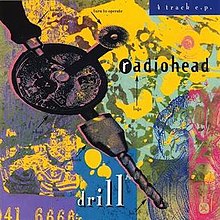 Radiohead recently released a bunch of their stuff to streaming platforms. One of those releases was Drill, their debut EP that came out a year or so before Pablo Honey. Most of the tracks appear to be demos. And yet, they are very well recorded demos.–they sound quite good.
Three of the four songs were rerecorded for Pablo Honey. The only one not on the album is “Stupid Car” a quiet ballad.
“Prove Yourself” and “You” sound a lot like the album versions. The biggest difference is the sound quality and the “Prove Yourself” guitar solo which is much louder and more piercing on Pablo Honey. “You” sounds pretty identical, right down to Thom Yorke’s powerful scream mid song
The biggest difference comes with ‘Thinking About You” On Pablo Honey it is a slow acoustic ballad. But here it is a fast-paced almost punk rocker. It’s got racing guitars and fast drums. Honestly I prefer this to the album version.
The impressive thing is just how good these songs sound. Not only because they were basically demos. But because this was their first release and while Radiohead has changed drastically over the years, these original songs are still really good.
Fans tend to disregard Pablo Honey, but the compositions, while nothing like the newer work, are solid, well-crafted alt rock songs. Don’t dismiss this EP, this band is going somewhere.
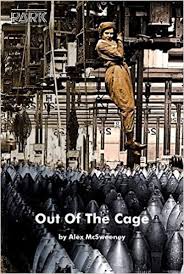
[READ December 29, 2019] Out of the Cage
Every now and then I get a short play at my desk. This one looked pretty interesting.
Inspired by the munition women of Silvertown, London during the First World War, this tells the story of women’s courage, dignity and hope, fired in the crucible of war.
During the War, women worked in munition plants (munitionettes, they were called). Despite their hard work in dangerous places, they were given far less credit and pay than their male counterparts. (Sound familiar?). Could they possibly stand up for themselves or would they forever be seen as second class citizens.
There are eight major characters in the play
- Jane Byass: 40’s 4 kids, hard but fair
- Nancy LongdonL Late 20s upper-class, committed to the cause
- Dee Jessop: 40s, sick and dying, vengeful
- Nelly Jonson: 30s forceful and sharp, the only Irishwoman there
- Annie Castledine: early 20a vibrant and funny
- Carrie Sefton: Early 20s, tough and engaging
- Ol’ Mim: 50’s nurturing, tough
- Lil’ Ginny: early teens, naive
The play opens in Jane’s apartment. The women are meeting there to discuss what to do about he unfair working conditions. The first to arrive is Nancy. The others are mistrustful of her because she is upper class, but she is dedicated to women’s rights.
Dee arrives next, she is bitter and sarcastic, she has been breathing in the toxic fumes in the furnace room. Her breath is a short as her temper and she is not doing well at all. Nelly arrives next. She is the most cynical about Nancy because of the Irish vs. English class wars. The women descend into bickering but Jane settles them down.
Annie and Carrie are the last to arrive. They are boisterous and possibly drunk. Jane tells them to keep the noise down as her landlady doesn’t want them meeting like this–she wants quiet, or she will kick Jane out.
They complain and discuss. Their jobs are dangerous and difficult. They are exposed to dangerous substances which are a health risk and potentially explosive. Each woman gets a brief soliloquy. The spotlight on Nancy shows us what’s what. When she first
walked in through the gates of the factory she thought all the women were vulgar little hussies, rough shrill overbearing… shabbily dressed but with aims at finery. But it was the men, them men that were the real problem. Little cared they for the war effort. The foreman, like many of them, refused to enlist. Their insolence was frightful.
After pages of bickering with individual moments to highlights each worker’s fears and feelings, they get to the crux of the matter. Jane states their list of demands. If they are not met, all departments at the factory agree to strike. They agree to talk to the head of each department and signal that a whistle will blow and each woman will stand next to her machine and refuse to work. They must all do it together or it will not be taken seriously.
Act two is set at he factory the next day at 7AM. All of the women congregate under the watchful eye of Ol’ Mum. They worry that the other departments won’t agree. They don’t even know if the two younger girls did their jobs and talked to the heads of their departments. They are filled with doubt–they risk much needed money if the strike doesn’t work. And maybe even if it does.
Tensions mount and the dialogue is fast and furious.
As the time for the shut down approaches the women start sniping at each other. Finally Nancy snaps at Nelly for all of the nasty comments Nelly has been saying under her breath. Nancy reaches into her racist playbook and calls her an Irish guttersnipe, an insolent paddy, Fenian bile.
Nelly retorts “no more pretending no more horse shit equality and we’re all one for the effort liberal do-gooders … we’ll meet in the streets.
But before things go any further between these two, the time of the strike arrives.
Jane blows the whistle three times and everyone stops working. Then they wait to see if anyone else will do the same. And they wait. And wait.
The ending is astonishing–a shocking roller coaster that whiplashes through our emotions. It seems over the top, but the afterword says that the events are true.
The afterword also gives a lot of statistics about women working in these conditions–the dangers, the deaths, the horrors of war that hit home as well. For instance, at the Silvertown disaster upon which this play is based, January 19, 1917, 50 tons of TNT exploded killing 73 people and injuring another 400.
I don’t think I’d enjoy seeing this play, but it does shine a light on something I was not aware of and how little some things have changed.

 I Just Read About That...
Leave a comment