 SOUNDTRACK: FREDDIE JACKSON-“You Are My Lady” (1985).
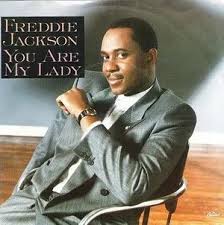 I listened to this song after reading this story.
Somehow I assumed that this song was going to be a big old 60’s or 70’s powerful soul song.
So when I started the video on YouTube and the super cheesy 80s synths began, I thought it was accidentally playing “Endless Love” (1981) instead.
Interesting how this I created an entirely incorrect imagine of Jackson based on this story.
Reading the comments on the video, this song is hugely important to a lot of people. I honestly can’t get past the production.
But his voice is pretty fine (well, except for that middle part which is the kind of singing I do not care for).
[READ: November 21, 2019] “Arizona”
I really haven’t enjoyed much by Wideman. I just don’t like his style. I think in everything I’ve read, I’ve enjoyed what the stories were about, but I didn’t like the way he wrote them. This story was probably the one I’ve liked best by him, but it felt way too long and digressive.
It opens as a letter to “Mr. Jackson” which begins “Thank you for your music…”
I assumed it was to Michael Jackson. But it turned out to be to Freddie Jackson, a soul singer who I don’t know. Jackson is still alive which makes this story an actual letter to him (even if it as never “sent”) which is kind of weird.
The story is (as far as I can tell) largely autobiographical. The crux of the story concerns Wideman’s son [one of his three children] who was convicted of a murder that he committed while he was a minor and was sentenced to life in prison in Arizona. This is an unbelievably heartbreaking thing to have read and of course it fully colors the story (and makes me feel bad for saying I didn’t like parts of it).
The letter begins as an appreciation for Jackson’s voice. The writer admits’s he’s not a devoted fan or student of his music. But Jackson’s song “You Are My Lady” is part of a story he is trying to compose (he titles it “URML” in the story). He’s not asking permission to use the song. He says he has no choice but to use it.
He explains to Jackson about his son being in prison. Frankly, the conviction sounds like a travesty of justice and I can’t imagine what the author’s life has been like (well, I can somewhat because he has written about it a lot). What the writer wants to know, from an artist like Mr. Jackson, is “if I should try a story about my son once more. And if I try to write it, for whose benefit whose sake, on whose behalf, for what purpose would I be performing.”
What a gut punch of a story.
But this letter goes on for a pretty long time and often feels like rambling.
But having said that, he also writes beautiful passages like
Didn’t that voice, that snatch of music just remind me that there’s more in any moment, more to the life I think I’m caught up in, than I can ever know, ever understand, ever come to terms with, make peace with, survive, so much more and more and different and other than it had seemed an instant before the music.
Beautiful. Although, clearly brevity is not the author’s style.
He asks how Jackson makes the music special to him. Does he sing to ease himself?
The story then shifts to a “friend once killed his lady.” He talks about his friend–long-haired, scraggly–bearded, a kind of sloppy, happy-go lucky, sinister phony… Charlie Manson before anyone had heard of Charles Manson.” This former friend killed his lady friend in 1979 but still maintains his innocence.
And the story slowly becomes about this former friend and his delusions of pursuit by the CIA and his reasons for killing his lady friend.
The writer is quick to tell Mr Jackson that he is not trying to equate his friend with what must guide Jackson’s singing.
Then he flashes back to his son being taken to prison. He tells some of the horrifying details of his son being a fugitive for days and him not knowing where his son was. He imagines the lawyers in the car with him as they drove across the desert.
I found this to be a powerful thought as well. He says they were probably not in a hurry,
being in a hurry doesn’t necessarily get you any quicker to where you wish to go.
It’s in this car ride that his son heard “URML.” (I can’t tell if that is fictionalized or real).
And then an example of the kind of writing that Wideman does that bugs me.
‘URML’ a beautiful song. Worth a story at least. Many. One of my all-time favorites so perhaps one day I could be tempted to try.
The way he leaves words out of sentences just drives me nuts.
Like when he starts a sentence like “Point of this story is not…” or “Story I’m attempting to put together…” or in the middle of a sentence: “when he and his victim both fifteen years old.” I find it clunky and really disorienting. I always assume I missed a word and have to go back and read it again. I get that it’s kind of conversational, but the whole story is not written in that way. It seems to come and go.
He moves back to music and talks bout his need, everyone’s need to revisit songs, even, especially sad songs. He drifts into a stream of consciousness about singing. Plenty of people sing to themselves. Even in the shower, or especially in the shower. He offers some (not revelatory) explanations for why he thinks this is that is. Then he moves on to The Sopranos in which he says the therapist hears “URML” (I can’t tell if this actually happened or not).
He transitions to rumors and innuendos about Jackson’s sex life. He says he didn’t know anything about that until he started searching for clips of his voice and he found an interview in which
you didn’t–as I’m pretty sure I would have–tell the interviewer to go fuck himself, yet still your dignified and uncompromising fashion let him know in no uncertain terms that your business none of his business.
Gah, there’s that lack of a word again.
But the writer says he too wants to learn Jackson’s secret–not about his sex life but about how that song might have the power to free his son.
The story then jumps to mummification. As a way of hiding the evidence, the hippie murderer tried to mummify his lady friend–but failed (rather disgustingly). The writer researched mummification and learned the traditions and how the practice was based in the innocence of believing in a trip to the afterlife. He found the process to be quite beautiful.
Same way people depend upon mummy-makers to insure the dead are ready and able to enjoy, to survive whatever pleasures and perils a journey that never ends might bring, people rely on artists and works of art (with equally scant, problematic, or no evidence at all, that such reliance achieves desirable results) to act as guides.
Mummies intended to serve the dead. Just as songs you sing (story I compose) intended to serve the living.
The story then shifts again to parasites. Specifically about trees in Brittany which are covered in Gui, parasites that infest the host trees. But he tries to rethink what a parasite is.
And one more quote that I like the idea but hate the sentences:
What was not a parasite? Who is parasiting whom? From what privileged point of view we decide parasite or host.
This story is all over the place and you can see how a man’s mind jumps from one thought to another when his mind is really on a subject that he can’t adequately express. The secrets, the mummification, the parasites, it all ties together. But to paraphrase his idea, I could have used a guide on the journey.

 I Just Read About That...
Leave a comment