[LISTENED TO: March 2017] The Organist
 After really enjoying The Organist in 2015, the season ended and I hadn’t heard that there were going to be anymore. So I stopped looking for them. And then the other day I got an email reminding me about recent episodes. Well, sure enough there had been an entire season last year and they were already part way through this year’s season.
So I’m playing some catch up here. But they are timeless, so it’s okay.
Each cast has a section in brackets–this text comes from the Organist’s own site. The rest is my own commentary.
The Organist is a free podcast from KCRW & McSweeney’s. As of this writing, they are up to episode 82.
Episode 51: Orson on Wonderland (September 25, 2015)
 [Orson Welles’s final years appear dark: earning money by making the rounds on talk shows and starring in wine commercials. But his assistant at the time, Bob Kensinger, has brighter memories]. This was a really interesting interview with the Kensinger who was an unknown kid when he started working for Welles–Welles told him to call him Mr Welles instead of Orson. But over the years, as they grew closer, Orson started speaking fondly to him–even referring to him as “my son.” There’s some amusing stories, most of which show that Welles was always working, even when he was making crummy commercials. I recall those commercials, and simply can’t believe that was the guy who made Citizen Kane! There is a moment when Kensinger says that the Sex Pistols were on the radio and he played it for Welles (who hated it, naturally). I have a really hard time believing that the Sex Pistols were on any radio station in America in the 1970s. I’m very curious as to which station it was. But aside from that there was a lot of humor and some serious pathos in this story.
Episode 52: The Firestarter (October 9, 2015)
 [Scott McClanahan, the West Virginian author of Crapalachia, thinks he’d be better off if he’d pursued accounting instead of writing. Plus: a radio-play adaptation of one of McClanahan’s stories]. This was an amusing interview with McClanahan, who I didn’t know. I do love the title of his book, although I found the re-enacted story to be okay but nothing that made me want to read the rest of his work. Which is a shame because his interview was very funny and I did consider looking him up.
Episode 53: This is Chris His (October 23, 2015)
 [Christopher Knowles, a poet and artist who suffered brain damage in the womb, has written and performed in some of the most influential avant-garde operas of the twentieth century]. Normally I am very supportive of artists, especially avant-garde artists. And I am usually willing to give people the benefit of the doubt. But this whole interview made me question everyone involved. Why on earth did anyone think that Knowles’ “poems ” were any good? I can’t find text of his poems anywhere, but poems like Chilly Billy (which is just a repetition of Chilly Billy / Chilly Billy / Is Billy Chilly” over and over or “This is Chris His / This is Chris Is / Is this Chris / Is this Chris / Chris His Is / This Chris Is” And then there’s his poem “Mandy” based on the song. Below I have printed the song lyrics and then in bold is his poem:
Mandy
I remember all my life
Raining down as cold as ice.
Shadows of a man,
A face through a window cryin’ in the night,
The night goes into
Morning just another day;
Happy people pass my way.
Looking in their eyes,
I see a memory I never realized how happy you made me.
I remember all my life
Raining down as cold I am
Shadows on a hills
Faces through a windows cryin’ in the night / It was just another / It was a fa / It was a foo / It could be alright now, perhaps
Oh Mandy well,
You came and you gave without taking,
But I sent you away.
Oh, Mandy well,
Kissed me and stopped me from shaking,
And I need you today.
Oh, Mandy!
Oh Mandy well,
You gave me and you gave that keeps shaking
I need it.
It just doesn’t seem like anything anyone would think is special–certainly not special enough to make an opera with Philip Glass (!) [Einstein on the Beach]. Now I understand this was presented initially as spoken pieces and the appeal was aural (and visual when typed up). So maybe I’ll go with that. He is a visual artist as well. But come one, if anyone wrote “Chilly Billy” anywhere, it would never be given the time of day.
Episode 54: Hey Jonathan (November 6, 2015)
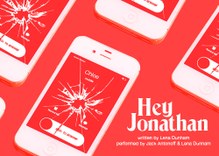 [An original radio drama written by Lena Dunham and performed by Lena Dunham and Jack Antonoff]. This was a very funny, pointed story about a girlfriend and her rude and dismissive boyfriend
Episode 55: The Love Song of Frank Serpico (November 20, 2015)
 [Jenny Slate reads Lena Dunham’s Erotic Male Jewish Comedian Fan Fiction; plus Frank Serpico and Sarah Vowell]. Jenny Slate reading Dunham’s erotic fan fiction is hilarious (Dunham imagines sex with Larry David, Jerry Seinfeld, Mel Brooks and Garry Shandling). Sarah Vowell reads a very short (like a paragraph) from her book about Lafayette and the fog of war. The main piece is an interview with Frank Serpico–the cop who was the inspiration for the film Serpico. But he doesn’t want to talk about the police, he wants to read his love poetry.
Episode 56: Pop Philosophy (December 11, 2015)
 [Philosopher Simon Critchley argues that when it comes to the narrative of our lives, we are nothing more than our record collections]. This is an amusing piece in which he argues, convincingly that music is really autobiographical–we can remember a lot about ourselves from certain songs. This episode features music that Critchley likes including Leftfield, David Bowie, Can, Kite and Poltergeist. He also explains The Old Grey Whistle Test (a strange title which I never knew had a meaning before: they would play music to an old man (an old grey) and if he could whistle it after hearing it once, it was a good song). He also dismisses Rush out of hand and says they were popular once (despite the fact that they had had a pretty huge resurgence around this time).
The Organist Holiday Special 2015
 A holiday broadcast presentation of The Organist, featuring some of the show’s best stories.
I always find it odd that a podcast that is freely available has year end episodes–I guess its meant to be the best of the year? Since I had just listened to a bunch of these episodes it wasn’t all that exiting to hear them again. However, it did include a couple of pieces that I had not listened to since 2015, so it was fun to hear them again and to realize how much I hadn’t remembered about them. This greatest hits includes: Orson on Wonderland [Episode 51] (which was surprisingly good even listening again pretty close to the first time); The Drywall [episode 27] (which I did enjoy); The Brown Dog Chronicles [episode 35] (which I did not enjoy); The Love Song of Frank Serpico [episode 55] which was less interesting listening again so close to the first time.
Episode 57: Growing Up Zorthian (January 8, 2016)
 [A story about the uncertain future of a family business that sells nothing]. Since this episode was somewhat peculiar, I’m just going to let the blurb speak for itself:
Alan Zorthian and his daughter, Caroline, are the owners and operators of Zorthian Ranch. Alan’s father, the artist Jirayr Zorthian, built the ranch more than seventy years ago. It resembles a sprawling village built of out of driftwood and washing machines, perched on the northeastern edge of L.A., beyond Pasadena and Altadena, over a wobbly bridge and up a dirt path. Jirayr Zorthian’s most famous work of art was this ranch – the homemade buildings and sculptures as much as the legendary parties he threw there: parties where Charlie Parker performed to an increasingly naked audience; parties where Andy Warhol and Richard Feynman rubbed shoulders with Buckminster Fuller, and they all wandered around amid the goats and the bees and the artful piles of junk.
Jirayr Zorthian had this giant place and there were squatters everywhere. It was full of naked women. And amazingly, someone recorded Charlie Parker playing there (while in the background you can hear people cheering on a strip tease in the room). The crux now is that in 21st century America, a place like this simply can’t exist.
Episode 58: The Six-Foot-Square Museum (January 22, 2016)
 [The Metropolitan Museum may have Queen Victoria’s bedroom and the Temple of Dendur, but Alex Kalman’s Mmuseumm in Lower Manhattan has Obama soap, Trump chocolate, and the curator’s grandmother’s closet. And it’s open 24 hours.] This was a brief but fascinating interview with the creator of Mmuseumm, a museum dedicated to the ordinary (or maybe not exactly ordinary): homemade gas masks, KFC corsages, and a delicately detailed taxonomy of cornflakes (seriously, someone has created and individualized cornflakes). You can see pictures of it here.
Episode 59: Wish You Were Here (February 12, 2016)
 [An interview with a thoughtful android who lives with her caretaker in a cabin in rural Vermont. Bina Rothblatt sat down at a computer and typed in her memories and thoughts and likes and dislikes for several days. Scientists at Hanson Robotics then took this “mind-file” she’d made and used it to create Bina48: a head-and-shoulders cyborg that appears to have many of the same memories and preferences as the “real” Bina, along with some unique fears and ideas of her own. The Organist sent Lois Parshley to the stifling garage in rural Vermont where Bina48 sits perched on a desk to talk with her and her full-time caretaker, Bruce Duncan, about the promise and the peril at the cutting edge of Artificial Intelligence.] There’s a picture attached to this episode which I found creepy. And now I realize it’s because it is actually uncanny–a robot created to look just like the woman (who I believe is still alive). What is most staggering about this android is that she appears to respond to questions in a thoughtful and articulate way. I don’t exactly understand how it works, and I can’t imagine being the man who lives with her.
Episode 60: Listening History: Graham Lambkin (February 26, 2016)
 [A guided tour through the musical development of Graham Lambkin, from early experiments in postpunk to the subtle art of moving cookware around in the rain.] I had never heard of Lambkin before. So their blurb says: “Since the early ‘90s, Graham Lambkin has created music that pushes the song form to its limits, using noise, samples, spoken word, and any sound that has the good fortune of finding its way into his field recorder. In this “Listening History” episode of The Organist, Lambkin discusses some of the songs that formed his sensibility, from experimental UK postpunk to the a recording of his family listening to Italian prog rock on a road trip through Britain.” What was strange was that there wasn’t much about Lambkin’s work that I found interesting. It seemed to be conceptually interesting but not actually fun to listen to. He made a composition that was the sound of rain falling on different objects–and proceeded to “conduct” the music by rearranging the objects. Interesting in theory, but not so much in practice. Although I did appreciate learning about all of the strange music that inspired him.
Episode 61: The Meaning of Various News Photos to David Shields (March 11, 2016)
 [Can combat photography be beautiful without making a case for war?] This was perhaps the most interesting Organist of this season. David Shields, a teacher (not the guy from My Bloody Valentine) made a book called War is Beautiful. In this book he took all of the New York Times front pages that had full color photos of war scenery. He took only the photos, printed them in what looks like an art table book and let the images speak for themselves. His argument is that contemporary photographers are more interested in presenting an artfully beautiful photo than the grim realities of war. And, subsequently, this presentation of imagery justifies war in the minds of the reader, manufacturing consent. By making war beautiful it becomes less horrifying. The interviewer says that one of the photos (in a section called Pietas) with a man holding his dead son is indeed horrifying, and yet (without having seen the photo) I can imagining it being done artfully and beautifully instead of in a horrifying way (I know it’s unfair without seeing it but I can imagine how it could be done beautifully). The interesting postscript on this is that the New York Times sued the publisher. They had granted Shields permission to use the images, but then Shields put thumbnail images of the front pages on the front and back pages of the book. They had not given permission for this and they sued. Shields believed it was far use and as a consequence of all of this, Shields’ publisher sued him! (The Times case was settled in court with no verdict given–I can’t find the terms of the settlement).
Episode 62: Language Is Speech: An Interview with Joshua Beckman (March 25, 2016)
 [A conversation with poet Joshua Beckman about the aural delights of reading, writing, and listening to poetry.] I really enjoyed this story in which Beckman talks about how poetry is never properly consumed unless it is heard and that no poets write their poetry, they all speak it aloud. He says he recites his aloud as he is working on it wherever he goes–modern technology has made it easier for his to talk out loud in public.
Episode 63: Radio Free (April 8, 2016)
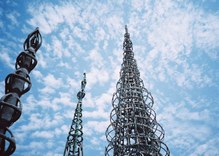 [Toni Morrison once said that good writing shouldn’t be “harangue passing off as art”—but she hadn’t heard Free Black Press Radio.] A history of rebellion through underground radio–the podcasts of their time–up to and including the podcast Free Black Press Radio, a podcast by the avant-garde rapper Busdriver, that is “half lecture on the history of black resistance, and half freewheeling entropic swirl.”
Episode 64: Christopher Owens Live (April 29, 2016)
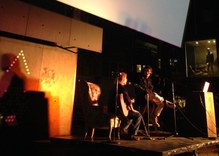 [This week’s episode is a cut from our first live podcast event at PROXY in San Francisco: a conversation with the great songwriter Christopher Owens (also of the band GIRLS), who illustrates his talk with a set of live solo acoustic songs.] This episode was recorded live (with the caveat that if it was good, it would become a podcast and if it was bad it would not–so maybe the audience should hope it was bad and it could be a once in a lifetime experience–FOMO FOMO! While many things happened at this live event, this episode is devoted to Christopher Owens. I hadn’t heard of him, but I was familiar with his band GIRLS. So: “Christopher Owens is an American singer/songwriter best-known as the frontman for the recently disbanded San-Francisco indie-rock band Girls—and for his curious backstory, which features both a fundamentalist cult and an eccentric Texan multimillionaire. Since his departure from Girls, Owens has been recording music independently, attempting through his more recent writing to confront in reflection the realities of his childhood.” Owens talks about his life (which is indeed fascinating, and sings some acoustic songs. The other mentioned but not expounded upon pieces that the event included: live version of David Weinberg’s Another Planet from Episode 11, Namwali Serpell on black art in Oakland, Jorge Just from the app Detour talked about the Hayes Valley neighborhood, Katrina Dodson about translation (she translated Clarice Lispector) the excerpt focuses on translating idiom–is there an idiom about wheat? That sounds a lot more interesting than anything else, and I hope they publish that some day.
Episode 65: Happy Golden Baby: A Conversation with Lil B and Steve Roggenbuck (May 18, 2016)
 [A conversation between the hyper-earnest and deeply irreverent rapper Lil B and the hyper- earnest and deeply irreverent poet Steve Roggenbuck.] I had never heard of Lil B (or Steve Roggenbuck), but it sounds like Lil B is a fascinating character, really trying to question the standard styles of rap:
Lil B also embraces the absurd, but his work is darker and more ambiguous. One the one hand, he can be overwhelmingly earnest and positive: the video for his track “I Love You” ends with Lil B weeping in a pet store, surrounded by aquariums, giving thanks for everyone in his life.
He distributes his music mostly through hours-long mixtapes, some with nearly fifty tracks. His fans delight in discovering nuggets of lyrical genius buried within hours of first-take freestyles that range from brilliantly rough-edged to difficult-to- listen-to.
Lil B inhabits a wide range of personae: he’s a self-described feminist urging his listeners to “stand up against rape” in one track, and then talks about “bitches” as currency in another. He recently posted a transphobic tweet that read, “I might start saying I’m trans and I’m a woman so I can be in the girls locker room with the ladies!!!!!!” He later apologized, saying, “I am transphobic and I need help to learn to accept.”
Steve Roggenbuck asked Lil B about this incident and others, including the importance of his musical partnership with his adopted tabby cat, Keke.
And while I appreciate everything that Lil B does, he is very hard to listen to in an interview (know what I’m sayin’?) and I must admit I don’t really care for his music very much.
Episode 66: Toward an Architectural Theory of Hugs (June 3, 2016)
 [A conversation with Craig Dykers, of the Norwegian architecture firm Snøhetta, on the invisible (but noisy) demands of building design. Snøhetta’s projects include the expansion of San Francisco’s Modern Art Museum, the Bibliotheca Alexandrina in Egypt, and the redesign of Times Square. In these projects and others, Dykers and his team contend with an invisible challenge all architects must face: acoustics. In his conversation with the Organist, Dykers argues that proper acoustics can lower your blood pressure, speed up or slow down your movement through a space, and even encourage gentle smooching.] I loved this piece. It is certainly one of my favorites. Dykers is so knowledgeable about sound and I loved hearing him describe the various ways that buildings conduct sound to either our or the building’s benefit. Dykers is very funny and knowledgeable. This was great.
Episode 67: The Scientific Method of the Ramones (June 17, 2016)
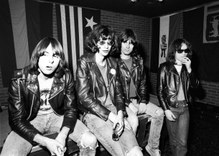 [On Joey Ramone, Sigmund Freud, and our head-bangingly repetitive drive into the unknown. Plus: live music and conversation with Sonny Smith. Adam Colman examines the brutalist yearning of legendary punk band the Ramones and uncovers the rigorous curiosity that serves as the guiding principle for the scientific method. Then, Ross Simonini talks to musician and writer Sonny Smith (Sonny and the Sunsets) about his new album, “Moods Baby Moods.” Smith performs two songs from the album, describes how he is able to use drawings and comics to write songs (and vice versa), and laments the modern age.] This was a far less successful podcast for me. I find the fundamental argument to be unlikely. The argument is that the repetitive nature of the Ramones’ music is perfect because they are constantly asking “why” questions in their music. And that both of these are signals of the scientific method–asking why over and over and over. Mmmmmaybe. And then Sonny Smith is a guy who writes two chord songs.
Episode 68: The Metaphysics of Dub (July 8, 2016)
 [The Nigerian-Jamaican- American writer Louis Chude-Sokei on black cyborgs, black blackface, and the intersections of race, technology, and robotics.] This one is more like it again. Chude-Sokei (author of The Last Darky: Bert Williams, Black-on- Black Minstrelsy, and the African Diaspora) is a fascinating speaker. And, unlike the previous podcast where the assertion seemed questionable from the start, this assertion seems outlandish and somehow utterly believable. What was so great about the podcast was that Chude-Sokei covers everything. [He discusses the music culture surrounding Nigeria’s internet scammers (known as “Yahoozees”), his own experience as a black immigrant in Los Angeles’ Inglewood neighborhood during the era of NWA, and the way blackface performance is perceived outside the U.S…. His new book, The Sound of Culture: Diaspora and Black Technopoetics (Wesleyan, 2015), tackles the complex relationships between blackness, robotics, and technology. In this way, the book is in conversation with Afrofuturism. First coined by the cultural critic Mark Dery, Afrofuturism is a growing field of art, music, and academic scholarship which finds its roots in sci-fi imagery in black culture: Sun Ra, George Clinton, Octavia Butler, and Samuel R. Delaney. Afrofuturism seeks to find alternates to the current sometimes harrowing circumstances of contemporary black life through imagined futures and emergent possibilities. Its expression is visible in the work of Janelle Monae, producer Flying Lotus, and rap duo Shabazz Palaces. …. Chude-Sokei emphasizes the emerging field’s pre-20th century roots as well as non-US aspects that have until now fallen outside the critical paradigm related to Afrofuturism—from PT Barnum’s black cyborg to the metaphysical echo of instrumental dub reggae.] Is that incredible or what? From Nigerian scammers to PT Barnum all as way of talking about dub reggae. His discussion of Afrofuturism was great by itself. But the way he then talked about Bina48 (irrespective of episode 59 which i s about Bina48) and the way PT Barnum capitalized on Joice Heth–P.T. Barnum put her on display in 1835, advertising that she was the 161-year-old former nurse of George Washington. … When the public’s interest in her waned, Barnum rekindled its curiosity by spreading a rumor that Joice Heth was actually not a person at all, but instead a mechanical automaton. And, Chude-Sokei says Barnum claimed that HE had been duped by Heth! He ties all of this together by talking about how black men and women have often been considered “other”: robotic, soulless. The way it all leads to Dub reggae (which I never really understood as a genre, but now do) is pretty genius.
Episode 69: The Testosterone Abyss (July 22, 2016)
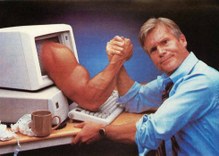 [The website Weird Dude Energy is singularly devoted to collecting the most inexplicable male behavior on the internet. It’s funny and weird, but if you study it carefully, it also raises some troubling and complicated questions: about contemporary masculinity and community—and about violence, misogyny, and Donald Trump.] Maybe THIS was my favorite episode. The creators of the tumblr account Weird Dude Energy have an amazing and scary but funny assortment of videos on their site. But they are not making fun of the people, exactly. They are not afraid of them, exactly, It’s more just an awareness of them. And the host of the episode who believes he is not a weird dude himself wonders if he actually is–as we all might. But some out some of the things they talk about [A man screams “why are you closed? Tell us the reason!” over and over as he rattles a pair of locked doors outside a Toronto shopping mall. Klaus Kinski berates the officiant at his own wedding while he lavishes a disturbing amount of affection on his bride. A clean-cut guy in glasses beatboxes the entire drum part of Rush’s “YYZ.”
Episode 70: A New Career in a New Town (August 5, 2016)
 [SNL’s Kyle Mooney on the art of crafting a three-dimensional bro impersonation and the ways in which the act of uploading a video to YouTube constitutes character development. Also: David J, the bassist of Bauhaus, follows a harmonica line from a jukebox playing “Groovin’ With Mr. Blow” all the way into David Bowie’s afterlife.] I don’t really know who Kyle Mooney is. I don’t really watch the SNL opening credits, although I have seen his name. The audio clips from his skits didn’t seem all that funny to me–although i did enjoy the interview. I enjoyed far more the short clip where David J, the bassist from Bauhaus and Love and Rockets, recounts an uncanny encounter with David Bowie, where a single harmonica line spans the ages, from a jukebox in 1971 into the afterlife. His story is wonderful it about how he first experienced David Bowie with the song “Andy Warhol” and he fell in love. Then in 1982 he met David Bowie in a film location. They were both looking at a jukebox (David J felt the presence of Bowie behind him). Bowie picked “Grooving with Mr Blow” and started full on dancing. He said that Bowie’s mischievous smile gave him the courage to say the song reminds him of Bowie’s “A New Career in a New Town.” Bowie put his finger to his lips and winked and kept dancing. Then David J says he was listening to the final track on Blackstar and he references that same part of the song–all of that harmonica business through the decades.
Episode 71: Everybody Loves a Winner (August 19, 2016)
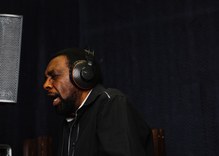 [The story of the guy who wrote a minor hit for a new label in 1961, watched everyone around him get famous singing his songs, and survived to write a great album about it all fifty years later] I had never heard of William Bell before listening to his Tony Desk Concert some time ago. It was about five minutes into this podcast that I realized it was the same guy. And while the story they gave at Tiny Desk was interesting, it in no way prepared me for the details of his life: [William Bell never became a household name. His debut single, the one he wrote and recorded the year that Satellite Records changed their name to Stax, barely cracked the Top 100 chart. That song, “You Don’t Miss Your Water,” worked out a bit better for Bell’s friend Otis Redding, and for a band called The Byrds. That’s more or less the same story as “Born Under a Bad Sign,” the song he cowrote with Booker T. Jones, which got covered by Cream and pretty much every blues rock band since 1968. Bell might have had a better chance at stardom if he hadn’t got drafted to serve in the U.S. Army in the middle of the sixties, right when Stax was taking off. After Stax dissolved in 1975, Bell tried to reinvent himself. He had a top forty hit for Mercury, an easy-listening number with a funk beat called “Trying to Love Two.” He moved to Atlanta, put out a few self-released albums, ran a business, and did well with songwriting royalties. He didn’t lose himself in God or women or indulgence after the peak of his career, like some of the other stories we’ve heard before. He kept his voice and lived a comfortable life. You might say he was hiding in plain sight.] The end of the story has him going to a show to see Roseanne Cash and John Leventhal and that he was asked to play live. It’s pretty beautiful.
The Organist Holiday Special 2016
 A holiday broadcast presentation of The Organist, featuring some of the show’s best stories.
The intro describes the podcast as: “Culturally omnivorous, it’s a carefully curated collection of smart and surprising works: interviews, essays, journalism and audio fiction.”
- Toni Morrison once said that good writing shouldn’t be “harangue passing off as art”—but she hadn’t heard Free Black Press Radio. Find the original episode here.
- Metaphysics of Dub The Nigerian-Jamaican-American writer Louis Chude-Sokei on black cyborgs, black blackface, and the intersections of race, technology, and robotics. Find the original episode here.
- Wish You Were Here An interview with a thoughtful android who lives with her caretaker in a cabin in rural Vermont. Find the original episode here.
- A New Career in a New Town David J, the bassist from Bauhaus and Love and Rockets, recounts an uncanny encounter with David Bowie, where a single harmonica line spans the ages, from a jukebox in 1971 into the afterlife.
I’m happy to have the weird and wonderful Organist back.

 I Just Read About That...
Leave a comment