 SOUNDTRACK: BANKS-Tiny Desk Concert #401 (October 30, 2014).
 I’d never heard of Banks before this Tiny Desk Concert. The blurb says that “Banks’ terrific full-length debut, Goddess, is constructed out of layer upon layer of electronics, beats, samples and other means of submerging the singer’s voice in swirling accoutrements…. On record, she’s placed at the center of lavish productions, each suitable for throbbing remixes and banks of swirling lights.”
In this version, it is just a keyboard and a drum box, so her voice is exposed. But I actually found her voice was a little annoying. Especially during the verses, where she uses too much vibrato.
On the first song, “Beggin For Thread,” I enjoyed the choruses where she sang loudly and with less affectation. Although it was during “Alibi” that I particularly didn’t like her voice–too much yea yea yea with a ton of vibrato.
For “Brain,” the accompaniment is acoustic guitar rather than piano. It has a very different feel although I liked it even less. I’m curious to see what their record sounds like with her voice buried, but I’m not going to find out.
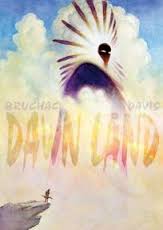
[READ: June 1, 2016] Dawn Land
Dawn Land was a novel that Joseph Bruchac wrote in 1993. The novel (as explained in the afterword) details the oral traditions of his people as filtered through a fictional story that he was inspired to write over a burst of about six weeks.
I may have enjoyed this graphic novel more if I’d known the original story first (I also didn’t know that Bruchac was Abenaki Indian, so I wasn’t sure what to think about the story in the first place–appropriation is such a hot topic these days. Of course having said that, I’d never heard of the Abenaki Indians before either (they lived in what is now New England).
I found the story a little confusing. But before getting into the story, I loved the artwork. In black and white, Will Davis conveyed so many amazing scenes and scenery–perfect depictions of people and animals and yes, giants.
I didn’t really “get” the giants in the story. The giants gave the story a more mythical feel (although the Second Afterword basically says hat there’s no reason to think that giants didn’t exist) whereas the characters themselves made the story feel a lot more “real.”
I was intrigued by the story of the owner-creator. He first made people from rocks but they were hard and unfeeling so he destroyed them. Instead he made people from trees and leaves.
The basic story is about Young Hunter. He is destined to fight the Stone Giants who have terrorized his tribe since before he was born (and had a huge impact on his life when he was a baby). When he was a little baby the giants came and killed his parents and also corrupted his closest non-relative: a boy named Weasel Tail. Weasel Tail was supposed to look after him but became different, darker.
11 years later the little boy, Young Hunter is growing strong and brave. I enjoyed watching Young Hunter grow older, and watched how his relationship with Willow Girl changed from one of teasing and playing to one of romance and respect. I also enjoyed the nastiness of Weasel Tail. And although I praised the art, sometimes it was hard to tell everyone apart in these scenes.
Once Young Hunter proves himself, he is given the long thrower to fight whoever or whatever is coming at them. He takes some dogs with him and off they go.
I enjoyed when he traveled to the area of the salmon people–they scrap but it appears to be fun–hey call him a skunk fucker. But it is here that he learns what his giant weapon actually is–a long bow
Part 3 was what really confused me. There are scenes with long houses and a fire and someone apparently setting the fire–but who? Weasel Tail? The giants? I was not sure what was going on there (there’s no words, which didn’t hep). I certainly understood the part with the buffalo and the earth mother but the giants are still a mystery to me–their actions are confusing.
He eventually meets a woman named Redbird. She does not speak his language (and I loved how it was handled by Davis–squiggles that almost look Arabic). Her pronunciation of his name is Yunn Hunnteh. She takes him to their village but it seems like they treat him very badly there–or is that just how any new person would be treated? I didn’t understand that scene either.
I also didn’t really understand the end. Why he doesn’t seem to stay with Redbird? There was a lot that felt elliptical and I wonder if they are more fleshed out in the short story.

 I Just Read About That...
Leave a comment