Feeds:
Posts
Comments

Archive for April, 2016

HarpersWeb-Cover-201603-302x410-21SOUNDTRACK: DIEGO GARCIA-Tiny Desk Concert #156 (September 12, 2011).

diegoDiego Garcia is an Argentine-American singer-songwriter.  When I saw the set up of guitar and cello I actually expected a more classical style.  But rather, Garcia is writing some beautiful, catchy songs about love and loss.

The blurb says that his album Laura is meant to be listened to as a full story, not just a few singles.  Since we only get four songs here I don’t know what part of the story we’re missing, but the songs we hear are pretty great.

“Nothing to Hide” is really quite lovely.  Diego sings and strums while Daniel on cello plays some aching notes.  Despite the aching quality the song is actually strangely upbeat sounding as well.

“You Were Never There” is interesting for where he plays the chords (way up on the neck).  And the cello plays the melody quite nicely (even taking a solo).  The song is poppy for such a dark sentiment.  The other guitarist, Zeke, plays a nylon-string acoustic guitar and adds some cool high notes (and a solo) as wonderful accents to what Garcia is playing.

“Under This Spell” begins with some minor chords and a much darker sound.  The tempo is fast again and the harmony vocals during the chorus really make it pop.

After the third song he asks if they can play a fourth song, “Would you mind?” (Who would ever say no?).

“Stay” features some really nice classical style playing from the nylon string guitar as Diego accompanies on strummed guitar and Daniel does some nice oooos as backing vocals.  I don’t really like the fluttering vocals he does in the middle of this song, though.  It might work better in studio or with a loud song, but it jut sounds weirdly affected here.  Nevertheless the way the song ends so dramatically really makes up for it.

I had never heard of him before, although apparently he was the leader of the band Elefant.  I get a sense that these songs tell a full story, and I’d like to hear the whole thing.

[READ: April 4, 2016] “Glory”

There was so much that I enjoyed about this story.  I loved that the main character Glory’s real name is Glorybetogod and how her parents (in Nigeria when she was born) believed that this would set her on the right path: to be smart, to attend church regularly and to “never stray from the Word (amen!).”  But in fact this name has given her nothing but trouble especially since they moved to the U.S.   She would always have to provide copies of her birth certificate for nearly every document and her Facebook account was constantly getting deleted because of their “real name” policy.  Her parents wanted the best for her, but it was her grandfather who was straight with them all: “That girl has something rotten in her, her chi is not well.”

And he proved to be correct as misery and failure followed her everywhere.  While some might say it was fate, a lot of it was her poor decision-making skills.  Like deciding when she was 5 to put her finger into a sleeping dog’s mouth.  And now at thirty she is disappointing everyone by working a terrible job at a call center.

And that is why that night she has written a suicide note and has a handful of sleeping pills. (more…)

Read Full Post »

1985SOUNDTRACK: KING CREOSOTE AND JON HOPKINS-Tiny Desk Concert #154 (September 4, 2011).

creosoteI’d heard of King Creosote but didn’t know anything about him.  He’s a Scottish folk singer.  And Jon Hopkins is an English producer and multi-instrumentalist who is better known for his room-filling electronic works–although here he only plays the…yes, harmonium and keyboards.

“John Taylor’s Month Away” is a somewhat upbeat song–although the King’s voice is somber and mellow on every song.  I like watching him thump on his guitar to keep the beat while he’s not strumming.  And when he comes back in with the guitar again it sounds all the bigger for it.

The chord structure and delivery of “Bubble” sounds like a 1960s British folk song.  It’s quite lovely.  And when Hopkins switches to piano, it really brings out a lot more in the song.

These two songs came from Creosote’s album Diamond Mine, which the blurb says was everyone’s favorite album in 2011 (although I don’t recall hearing anything about it back then).  Stephen Thompson writes: “To immerse yourself in Diamond Mine is to be transported to a small, calm town in the Scottish countryside: For all of [Kenny] Anderson’s [King Creosote’s real name] reflective ruminations on aging and regret, he and Hopkins know how to make listeners feel at peace; to make the faraway seem everyday. “

“Cockle Shell” is not from Diamond Mine, although Jon did work on it, he says.  The guitar is a played differently–more picking, less strumming.  And the piano sounds lovely again. Creosote sings a bit bigger on this song.  The way he sings the preposterously upbeat music behind the lyrics “choke me, blind me, cut off my hands,” reminds me a lot of Frightened Rabbit.

For the final song, Hopkins switches back to harmonium.  It’s a short song, lovely and sweet.  And I’m sure if I followed the lyrics a bit more closely it would be rather sad too, as the final line is “while they were alive.”

I enjoyed Creosote’s music, although I feel like I’d have to be in a certain mind frame to put it on intentionally.  I will have to give a listen to Diamond Mine in total though.

[READ: January 26, 2016] “Three Thousand Dollars”

After reading the Lipsky articles in Harper’s I thought I’d see if he had written anything in the New Yorker.  I only found this one item, a short story from his collection.

I was intrigued from the start by this story because of the duplicitous nature of the college-aged narrator.  This was especially interesting to read after reading Lipsky’s Harper’s article about slackers.

The story begins with the statement that the narrator’s mother doesn’t know he owes his father $3,000.  It transpires that his parents are divorced and his father–who has a ton of money–is going to pay for his college after they get financial aid based on his mother’s lower income.  The balance–$3000 is what his dad will pay.

But when the $3000 check came in, the narrator spent it on other things instead. (more…)

Read Full Post »

00011SOUNDTRACK: PHOSPHORESCENT-Tiny Desk Concert #153 (September 1, 2011).

phospI know Phosphorescent from a Newport Folk Festival Concert a number of years ago.  I remember liking the show, although I feel a little disappointed by this Tiny Desk Concert.  This show is just Matthew Houck and his guitar.

The blurb says that Phosphorescent specializes in “free wheeling weariness.”  And that seems to be true.  It also says that Houck’s voice is weary after a lengthy tour and could barely speak which made his voice sound even more weary.  Phosphorescent was wrapping up months of touring and Houck could barely talk, let alone sing solo for 20 minutes on camera. We quickly hooked him up with as much herbal tea as we could find and coaxed that crooked croon back to life.

I found all four songs to be pleasant and, yes a little weary-filled.

I know that Phosphorescent is basically a solo project for Houck.  but when I heard the Newport Folk festival show back in 2013, he had a full band with him.  And I think the fuller sound made his songs sound, well, fuller.

“My Dove, My Lamb” is a pretty song, gently picked with a rather lovely sound and good lyrics.  After “We’ll Be Here Soon” he says that  “The Mermaid Parade” is in the same key with a lot of the same chords, “I’m okay with that if you are.”  The songs do sound rather similar. Before “Los Angeles” he says he has a new guitar with new tuning.  I can’t iamgine what he means by that.  Is he playing all of his sings with the strings tuned differently?

All four songs were pleasant, but they didn’t make me want to get his record.

[READ: January 26, 2016] “The Packaging (and Re-packaging) of a Generation”

Since I found the essay by David Lipsky in the recent Harper’s I decided to see if he had written anything else for Harper’s over the years.  In fact he hadn’t, but they had excerpted a portion of a book that he co-wrote, Late Bloomers: The Declining Prospects of the Twentysomething Generation.  Interestingly, on Amazon, only Alexander Abrams is listed as an author, but only Lipsky’s bio is given )no respect for Gen X).  Of course, the book is only available used since it is 22 years old, but as the slackers say, whatever.

Back in the 90s I read an enjoyed a lot of books about my generation–Gen X–from insightful commentary to parody.  And I’m somewhat surprised that this one missed my radar–although the title is a bit of a downer, let’s be fair.

The Publishers Weekly Review from back then states “In this sweeping and often dull analysis,” but for what it’s worth I found this excerpt to be pretty interesting.  Now if that could be sustained for 224 pages is something else entirely. (more…)

Read Full Post »

feb20156SOUNDTRACK: ANTHONY HAMILTON-Tiny Desk Concert #517 (March 28, 2016).

anthamI don’t know Anthony Hamilton, probably because he is a soul singer and I don’t listen to soul music.  He’s won Grammy’s and everything!  He and this band The Hamiltones (nice) had just played for the Obamas, and they came to the NPR offices afterward.

The first song, “Amen,” is new and he says was his attempt to write an R. Kelly song.  The other three songs are apparently the ones that have made him famous.  The songs are “Best of Me,” “Cool” and “Charlene.”

I love his American Flag jacket/sweater or whatever it is.  And his voice and the voices of The Hamiltones are pretty sweet.  No doubt if I listened to soul music, I’d have a lot of Hamilton’s discs.

[READ: January 26, 2016] “Family Business”

This essay was an interesting mash-up of two writers that I’d like to read more of.  I am a fan of Nabokov’s although I have read but a smattering of his work.  And I have enjoyed what I’ve read by Lipsky, although I have yet to delve into his fiction.

This is a book review of the recent publication of Vladimir Nabokov’s letters to his wife Vera throughout the length of their mostly happy fifty-two year marriage.  Sadly, Vera’s letters were destroyed (by her), although as it turns out, she didn’t write very much back to him anyway.

This is the kind of book review that I find exceedingly enjoyable. It sums up what the book has to say and then lets me know that while I might enjoy reading it, I don’t actually have to.  Not that he gives away spoilers–are their spoilers if you know what their life is like already?  But he really gets the gist of the letters and their life. And frankly, I don’t need to be that intimate with the writer, even if I do enjoy his works. (more…)

Read Full Post »

fableSOUNDTRACK: CALLmeKAT-Tiny Desk Concert #152 (August 29, 2011).

callmekatKatrine Ottosen is CALLmeKAT and she is from Copenhagen.  I’m unclear what her sound normally is–if it’s fuller than it is here–but for this show, it’s her on a couple of synths and a drummer.

I like the interesting synth sound she gets in the beginning of “Tigerhead,” but, despite the two synths, the whole song feels a little thin to me. Nevertheless, she hits some admirable high notes.

She wrote the second song, “Going Home” at Newark airport—she says always miserable there, it’s “so depressing” (no argument there).  She samples herself on a tiny keyboard (Bob asks her what she’s doing singing into the tiny Casio–this has to have been before everyone was looping everything).  The song is very pretty but feels very slight again–even more so because there is no percussion.

The third song, “Glass Walls” also has a sample of her voice–the sample is just an “ooooooh” note.  She says she wrote this one in the Copenhagen airport (which must be nicer than Newark)  This song is a bit more robust.

I liked her voice but the whole show I wanted a bit more oomph, which is not a typical reaction from a Tiny Desk where I know things are usually stripped down somewhat.

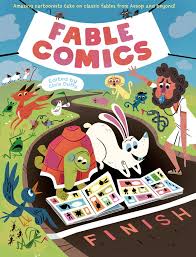
[READ: February 15, 2016] Fable Comics

Following up on First Second’s 2011 collection of Nursery Rhyme Comics, comes this new collection of Fable Comics, also edited by Chris Duffy.

Duffy says that for this collection they wanted to use mostly Aesop’s fables (because they are the most widely knows).  But the book also includes a sampling from other traditions.  He says that cartoonist were allowed to embellish the stories but we asked that the lesson remained.

And so there are 28 fables and the artists are pretty much a who’s who of contemporary comics.  I’ve broken down the Fables by their creators:

Aesop

The Fox and the Grapes-James Kochalka modernizes this a bit with a jet pack, which is hilarious.

The Town Mouse and the Country Mouse-Tom Gauld is back, and it’s great to see his work as he keeps the story fairly traditional

Hermes and the Man Who Was Bitten by an Ant ; Hermes and the Woodsman ; The Frogs Who Desired a King ; Hermes and the Sculptor. George O’Connor is responsible for the First Second Olympians series, so it’s no surprise that he tackles these stories about Hermes.  He remains faithful to the original and keeps up his very cool drawing style.

The Belly and the Body Members–Charise Harper has a wonderfully stylized look for this story about how the body parts need to work together or it can’t do anything.

Lion +Mouse–R. Sikoryak’s Mad Magazine style works very well for this familiar story about a mouse helping a lion (he has modified it somewhat of course).

Fox and Crow-Jennifer L. Meyer’s style is gorgeous.  This fable has a fantastic look to it with pale colors and circles of details.  I could look at it for hours.

The Old Man and Death–Eleanor Davis’s art is boxey and stark.  It works very well with this dark and Communist-looking story.

The Boy Who Cried Wolf–Jaime Hernandez.  I love when Hernandez does kids’ stoires because his characters are so perfectly cartoon and his colors are bright and fun.  His telling of this story is very good.

The Crow and the Pitcher–Simone Lia  I didn’t know this fable.  And I don’t really know how the beginning sets up the end. It shows crow as being very smart for others but the end has the crow being extremely smart for himself.   It’s a weird fable although it rings rather true.

The Dog and His Reflection–Graham Chafee does an awesome job of showing greed in others and leaving the dog’s story to be un-narrated.  He witnesses greed and acts accordingly.

The Dolphins, The Whales and the Sprat–Maris Wicks.  I was completely unfamiliar with this fable.  I’m also curious about how much Wicks has added.  I love that she adds some very funny factual details like that dolphins are actually a type of whale and that there are detailed asides about all of the animals throughout this story.  The moral is that they’d rather die than take advice from a sprat.  Still true today.

The Milkmaid and Her Pail–Israel Sanchez  This fable was also unfamiliar.  Sanchez’ drawings are stark and work well to tell this story of greed.

The Great Weasel War–Ulises Farinas.  This comes from a longer fable called The Mice and the Weasels.  I love Farinas’ art in this story.  The colors are spectacular and the creatures are great   And I love the moral is that they build these giant machines that cannot fight against nature.

The Sun and the Wind–R.O. Blechman. This fable was in Ava and Pip, so its funny to read it there and then see it here. Blechman’s simple drawings complement the story well.

The Hare and the Tortoise–Graham Annable’s art is great for this.  The tortoise is so crabby looking.  I’m unfamiliar with the deus ex machina that happens though.  It’s funny how many of these fables we may know without knowing them in total.

The Grasshopper and the Ants–John Kerschbaum’s art is so busy and full of detail, it’s really wonderful.  I’m unfamiliar with the ants asking the grasshopper to play for them at the end of the story tough.

The Thief and the Watchdog–Braden Lamb & Shelli Paroline. I really enjoyed the way these two created this fable.  The art is great–angular and simple but really powerful.  Having the dog explain why giving him meat won’t work is a great idea.

Demandes and His Fable–Roger Langridge.   I love Langridge’s clear lines and distinctive colors. He tries to get people’s attention and only succeeds by telling them a fable about Demandes.  I’m intrigued that his fable gets interrupted by himself.

The rest of the fables’ origins are mentions in parentheses after the title:

Leopard Drums Up Dinner (Angolan Fable)–Sophie Goldstein makes a fun visual of this story about animals trying to capture others with music.  I wonder how closely this aligns to the original, as its pretty crazy.

The Hare and the Pig (Indian Fable)–Vera Brosgol.  I didn’t know this fable at all.  Rabbit and Pig are arguing about who is best.  Leave it to fox to make the declaration.

The Demon, The Thief and the Hermit (Bidpai)–Keny Widjaja illustrates this amusing tale of a thief trying to join with a demon to rob a hermit

The Elephant in Favor (by Ivan Krilov)–Corinne Mucha.  I love that Corine modernizes the fable (the lion says Dude).  This is all about how everyone talks about the elephant.  He works slow but gets a raise. What makes him so great?  All the other animals speculate.  But it turns out that his ears are the real reason–for reasons other than the obvious.  This may be my favorite fable of all.

The Mouse Council (medieval European fable)–Liniers. This is the story of putting a bell on a cat and how no one wants to risk their life for the good of all.  Liniers’ art is spectacular.  I love the subtle shading of his drawings and then the rough drawings by the mice.

Man and Wart (Ambrose Bierce)–Mark Newgarden.  I love Ambrose Bierce but had no idea he wrote fables.  This one about people’s need for privacy and not belonging to a club is pretty strange.

The Hen and the Mountain Turtle (Chinese Fable)–Gregory Benton. I was unfamiliar with this story about a wise turtle saving a farm.

These collections of short pieces are quite wonderful. I wonder what genre First Second will tackle next.  #10yearsof01

Read Full Post »
glorkpieSOUNDTRACK: OTHER LIVES Tiny Desk Concert #150 (August 18, 2011).

otherlivesI didn’t know Other Lives before this Tiny Desk, but I really liked this one a lot.  It’s a little hard to get past the lead singers incredible facial hair, but his voice is great and the backing vcoals are excellent too.  I loved the combination of instruments and, yeah, pretty much every thing else about this set.

I enjoyed that at the beginning of the first song, “For 12,” the drummer is playing his lap.  The female backing vocalist (whose voice is great) is playing the cello.  The chorus–when everyone sings high notes—is wonderful.  And I love that the drums, once they kick in, are predominately floor tom and rims.

After the song and the polite applause the singer comments, “It’s so somber in here, we need a dance party after this.  And a bunch of caffeine.”

For “Old Statues” the cellist switches to autoharp, which makes a wonderful harp-like sound.  Again the backing vocals are lovely.  I love that she does a series off perfect oooohs as a backing note for his singing on the first verse.  There’s also a harmonium on this track (I can’t believe how many bands use the harmonium).    I love the intensity of the middle section too.

It’s amusing to see them use an iPhone tuner before the final song

“Dust Bowl III” has a cool picked guitar riff (reminds me a little of Neil Young).  There’s more harmonium on this track.  The cellist plays the autoharp upright instead of flat for this song—I wonder why.  The rumbling floor toms are great for this song as well.  And when the full band does the haunting ooohs at the end, it’s really great.

I definitely need to check out more by them.

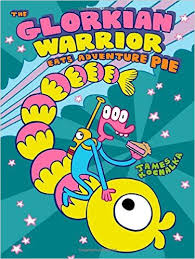
[READ: January 26, 2016] The Glorkian Warrior Eats Adventure Pie

This Glorkian Warrior story is similar to the previous one in that it is pretty crazy.  As it opens, the Glorkian Warrior and his backpack are riding a giant worm.  They are trying to destroy the worm, but while they are riding it, the tail pieces start popping–they are being shot by Buster Glark (who looks like the Glorkian Warrior but has only one eye).  He also a has a talking backpack (who says “they’re stupid, right boss”) to which the Glorkian Warrior’s backpack says “Don’t say stupid, it’s a swear”.

The head of the worm flies off to destroy another pie factory.

When the Glorkian Warrior gets home, baby alien (from the previous book) lands on his head and starts sucking his brains.  Backpack is concerned about this, but Glorkian Warrior says that all of his intelligence comes from his elbow anyhow.  And there is much fighting by the elbow. (more…)

Read Full Post »

glorkpizza SOUNDTRACK: NELLIE McKAY-Tiny Desk Concert #117 (April 4, 2011).

nellieNellie McKay is a singer I’d never heard of.  She is a blonde woman in a kind of yellow kimono and looks like she might be a funny folk singer as she plays a ukulele which is cut to look like an electric guitar.  But rather unexpectedly, she and her band burst into a reggae song.

McKay is, according to the blurb, an audacious artist who once devoted an entire album to Doris Day songs.  And now she writes a pretty authentic sounding Caribbean jam.  “Caribbean Time” has all the trappings of an island song–reggae guitars, bongos, and heavily wah-wahed guitars.

Between the songs, she makes some unexpected comments.  Like she says that she decided that a good sketch would be people sitting around a table asking for things and confessing at the same time, “Pass the syrup my father beat e as a child.”

When they start “Beneath the Underdog” the guitarist doesn’t start on time.  He says “Sorry, I forgot where we were for a second.”  She replies, “We’re in Washington D.C. fighting the man.”

“Beneath the Underdog” is a little less reggae influenced but still has a very tropical, light sound.  And her lyrics are wry and amusing, “beneath the underdog, that’s where I’m comfortable.”  It’s poppy and fun.  She even plays a keyboard solo with notes that sound kind of like steel drums.

“The Portal” is a ballad.  It’s much more traditional sounding, although with the same inflections that McKay has used on the other songs.  Her voice is quite distinctive without being unusual.  This is a somber song, but even while singing it she looks like she’s about to laugh.

And she caps off the set with an other weird  moment where she introduces her band and mispronounces her guitarists last name and seems to have a really hard time saying it.  She apologizes, “I was stoned when I met him.”  As the camera dims she says, “Thank you for fighting the good fight.  We are the silent majority but not so silent, we’re just quiet and tasteful.”

I found her to be quite engaging and charming.  I wonder if she’s still making music.

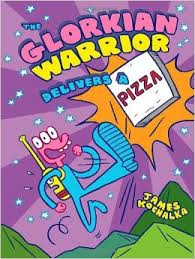
[READ: January 17, 2016] The Glorkian Warrior Delivers a Pizza

I have enjoyed everything I’ve read from John Kochalka.  His drawings are deceptively simple and his books are stupid but ultimately clever (and funny, either way).  His adult books are pretty over the top vulgar (don’t let your kids see them), but his kids books are very funny and perfectly juvenile.

This is his first book for First Second, and the first in a trilogy about the Glorkian Warrior.

Our copy also has an autograph for C.–our Vermont cousins sent it for his birthday (Kochalka is the artist laureate of Vermont, you know).

The premise of this book is painfully simple.  We meet the Glorkian Warrior who is, well, dumb.  His backpack talks to him and tries to get him to be less dumb.  And to be more heroic. (more…)

Read Full Post »

walkerSOUNDTRACK: THE CIVIL WARS-Tiny Desk Concert #137 (June 27, 3011).

civilMany Tiny Desk performances just show the band playing.  But there’s evidently a lot of time before hand where the band sets up and has fun.  I love seeing that, and it’s kind of a shame they cut so much of it out.

As this show starts, Joy Williams is holding the film clacker with Bob.  He tells her to give it a loud clack.  She kind of lets it go on its own accord and then says she didn’t do a good job.  John Paul White then says “I could have done it so much better,” to much laughter.

The Civil Wars are Joy and John Paul and they have terrific chemistry.  The first song is “Barton Hollow,” John Paul plays a loud percussive resonator guitar and the two sing great harmonies.  He sings loudly with her nice harmonies, but the middle part is quieter with her gorgeous voice singing out the lyrics.   I really like the down step chords in the “walking and running” section at the end of the song.

Before “Twenty Years” Bob asks if they ever had a desk job.

Joy says no: daycare, rock climbing.   John Paul says No: forklift driver, seed cleaning, (she asks what that means, but he doesn’t hear her which is a shame as I’d like to know too) cleaning out chicken houses.  He pauses…. I wanted a desk job.

For the song, John Paul switches to a simple acoustic guitar and plays less percussively for this somewhat quieter song.

It’s really fun to watch the two of them play together.  As the blurb notes: “There’s blissful, swooning chemistry as they stare into each other’s eyes and sing magnificently together.”  So it’s a bit of shock that they are not married to each other (they each have spouses, though).  Turns out that they met at a songwriting session at a Nashville studio in 2008.

Before “Poison & Wine” John Paul asks if they are all so quiet and respectful or if Bob rules with an iron fist.

Joy plays the keyboard for this song while John Paul plays a quiet guitar.  This song has wonderful harmonies in the beautiful if puzzling chorus , “I Don’t Love you, I always will.”

I didn’t know The Civil Wars before this set and I am really hooked.

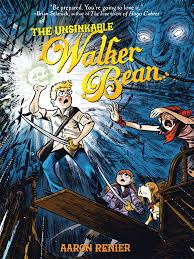
[READ: February 2, 2016] The Unsinkable Walker Bean

This book has some pretty great blurbs attached to its (from Brain Selznick and Jeff Smith) but I found that I couldn’t really get into it.

A lot of the problem was the artwork.  Interestingly, the artwork on the cover (which I assume is also one by Reiner since it looks like his style) is really great.  But the interior art feels like a sloppy version of this cover art.  And while it’s not sloppy, of course, it just doesn’t look as nice as it might.  Couple that with text that is hard to read, a story line that is full of weird little details and twists and it all wound up being a story that felt way too long for what it was.

There was a lot that I did like about it.  I liked the general premise and I liked two of the crew members that Walker Bean befriends, and of course I loved the various gadgets that they created.  I just didn’t enjoy the story all that much. (more…)

Read Full Post »

fairytaleSOUNDTRACK: JOE BOYD AND ROBYN HITCHCOCK-“Tiny Desk Concert #142 (July 18, 2011).

robynThis is one of the more unusual Tiny Desk Concerts because it is not just music.  It is music and a recitation.  Joe Boyd (who I didn’t know) is a producer of many classic 1970s albums, including albums by Pink Floyd, Syd Barret and Nick Drake.  Robyn Hitchcock is an unusual and often funny singer songwriter.

Hitchcock opens the concert by stating (in his wonderfully British broadcaster’s voice) “All my life I’ve been Robyn Hitchock [and I’m here with] Joe Boyd who has been Joe Boyd even longer than I’ve been me.”

Joe and Robyn were doing a tour together in which Joe would talk about his experiences with these artists and then Robyn would play a representative song.

Robyn plays two songs.  The first is Syd Barrett’s “Terrapin,” a song I’ve always like.  His cover sounds a lot like Barrett’s version while still retaining Hitchcock’s distinctive singing quality.

The second song is one that Hitchcock wrote for the tour called “I Saw Nick Drake.”  It was planned as the first encore. It’s very much a Hitchcock song, a little trippy and strangely  catchy about him seeing Nick Drake and Nick being fine.

Between these songs, Boyd talks for about fifteen minutes, telling about working with Syd and how amazing he was…until he wasn’t.  And then about working with Nick and how every recording he did was perfect and how big his hands were.

If you care about either of these musicians or about British rock from that era, this is a great performance to check out.  It’s informative and a little funny too.

[READ: January 19, 2016] Fairy Tale Comics

This book follows on First Second’s Nursery Rhyme Comics book. Perhaps because this was a thinner volume or perhaps because Fairy Tales are a bit more substantive than Nursery Rhymes, I found this book even more enjoyable than the other.

And even though I (and possibly you) think that you know every a fairy tale, there were quite a few in here that I didn’t know.  In his editors note, Chris Duffy notes that he encouraged the artists to pick stories other than Grimms (although Grim is well represented).

Brothers Grimm stories include:

“Sweet Porridge,” which I’d never heard of.  This is done in a classic cartoon style by Bobby London.

“The 12 Dancing Princesses” seemed vaguely familiar.  This was done in a very pretty style by Emily Carroll.

“Hansel and Gretel” I did know, of course.  It’s fun to see Gilbert Hernandez doing a children’s story since I think of his stories as very adult.  But his simple drawing style works perfectly for this story.

“Little Red Riding Hood” has a very simple almost anime style from Gigi D.G.  It ends with a happy ending.

“Snow White” was done by the other Hernandez brother, Jaime.  His style is so peculiar and yet so perfect for this tale (the fact that the baby is actually white is a wonderful touch.

“Rumpelstiltskin” is done by Brett Helquist whom I know from the Lemon Snicket stories.  I can see his style a bit in these drawings but the colors really bring his interesting style to life.  It’s a great version.

“Rapunzel”  I have recently become a huge fan of Raina Telgemeier, and I love what she does with this story.  Although as I finished it I had to wonder if this is how the story is usually finished.  This seemed much more positive than what I imagine the Grimms intended.

“Bremen Town” I had never heard of this story.  And I can’t believe that this was how it was originally written. In this story a group of animals forms a band.  They frighten away bad guys so that they can jam.  How weird.  Karl Kerschl’s style suits it well.

“Give Me the Shudders” is another Grimm story that I had never heard of.  It’s about a boy who can’t shudder or shiver and so every one assumes he is fearless. He keeps asking people to teach him to shiver, but when they see he can’t they keep promoting him to better stations in life. David Mazzucchelli’s style works nicely with this because of the simplicity of his design amid the craziness of the story.

In addition to stories from Grimm, there are these fairy tales

From Charles Perrault:

“Puss in Boots” makes me wonder if I don’t know the story all that well.  I was quite intrigued by the way this one turned out.  Vanessa Davis has a kind of sloppy style.

From 1001 Nights Tales:

“The Prince and the Tortoise.” I had never heard of this story.  It’s pretty wild and weird.  The drawing style by Ramona Fradon reminds me of adventure comics from the Sunday papers.

From a Japanese Tale:

“The Boy Who Drew Cats” is a wonderfully cool and interesting story about the powers of fantasy and doing what you are meant to do.  Luke Pearson’s drawing is perfectly old school and nearly monochromatic for the Japanese landscape.

From Bre’r Rabbit”

“Rabbit Will Not Help”  I don’t know this tale but I do know some Bre’r Rabbit.  He’s such a bastard, and the drawing style by Joseph Lambert works nicely with that.  It’s a little weird and dark–perfect for this tale.

From an English Tale”

“The Small Tooth Dog”  I had never heard of this tale.  It’s pretty weird from start to finish, and that includes the art by Charise Mericle Harper whose style is very dramatically cartoony and also a little weird.

“Goldilocks and the Three Bears” I didn’t realize that this wasn’t a Grimm story.  This was my favorite in the book because of the way Graham Annable chose to do it.  There are no words just wonderful illustrations and great looks by both Goldilocks and the bears.  I suppose it helps if you know the story already–it may not be ideal for those who are seeing for the first time (whoever that may be) but as an interpretation, I loved it,

From the Russian Tale:

“Baba Yaga”  Russian Tales are always so dark.  And Jillian Tamaki represents this very well. This story has a house with chicken legs, wolves, talking cats and much more.  I really like Tamaki’s work a lot and I enjoyed her interpretation.

From The King and His Storyteller:

“Azzolino’s Story Without End” is another story I’d never heard of.  In it, a boy king wants to be told a story without an end.  And the king’s story-teller think of a great way to do it The story is short but Craig Thompson’s style is right on.

I really enjoyed this collection a lot.  And I love getting introduced and reintroduced to these stories that I’ve known for quite some time.

Thanks First Second. #10yearsof01

Read Full Post »

dragonsbewareSOUNDTRACK: GIVERS-Tiny Desk Concert #144 (June 22, 2011).

giversGivers play a light on poppy tropical kind of music.  Their music feels summery and light.  Between the sorta reggae guitar and the tons of percussion, the songs are fun and danceable.

As “Meantime” opened the show, I was really struck by the bass.  The bass plays a lot of high notes and some seamless riffs.  It’s really the lead instrument.  And there’s also percussion all over the place.  The sound the great is really full for so few instruments.  Of course, it really comes as no surprise to hear there’s a flute solo, even though it wasn’t apparent that anyone had a flute–it’s as if a wandering flute minstrel happened by just at the right time.

The band has two singers, Taylor Guarisco and Tiffany Lamson.  On “Up Up Up” the two duet in the beginning and then switch off vocal lines.  Taylor’s voice is higher, while Tiffany’s is deeper, raspy and interesting (although I’m not quite sure it works with their sweet music, or perhaps she’s just not loud enough).  There’s more fun bass lines in this song (I’m intrigued that he switches from a pick to pickless playing).  This song features some xylophone which also sounds perfect with their music.  Perhaps it’s the way he sings the “up up up” part but it definitely gives the song a reggae feel (especially with that afropop bass).  I really like this song, especially the surprise ending of one, two, three, four-xylophone slide-five.

For the final song, “Atlantic” there’s much switching around.  Tyler and the bassist switch instruments and Tiffany picks up a large ukulele.  She sings lead and you can really hear her raspy voice (again, not loud enough).  This song is mellow and as such the bass isn’t quite as fun (although Tyler does have a similar bass sensibility).  I’m curious to hear what they sound like when they are not unplugged.

Although frankly, I can do without Tyler’s crazy faces.

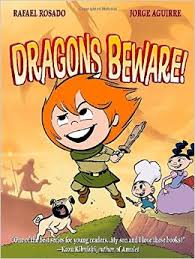
[READ: March 27, 2016] Dragons Beware

After the successes of Claudette in Giants Beware, everyone is back (with a new problem created by Claudette) in Dragons Beware.

As the book opens, Claudette is telling the story of a great sword made by the great blacksmith Augustine (her father).  The sword was called Breaker and no magic could defeat it.  One day Augustine went to fight the fearsome dragon Azra the Atrocious.  Sadly for him, the dragon is the one who did the damage that we saw in the first book (missing an arm and a leg..and the dragon swallowed the sword too).

When she finishes the story, she says that she can go fight Azra herself, with her own little wooden sword.

In the next scene we see that the evil Grombach is amassing an army–he has been magically converting ravens into giant walking gargoyles.  So although Claudette has invented a problem to solve, the village has a real problem coming their way. (more…)

Read Full Post »

« Newer Posts - Older Posts »