 SOUNDTRACK: TUTLIE-“The Bison” (Tiny Desk Contest Runner-Up 2016).
 Last week, a Tiny Desk Contest winner was announced. This week, All Songs Considered posted ten runners up that they especially liked. I want to draw attention to a couple of them.
I started out liking this song so much. It opens with a singer singing beautiful notes. And as the camera passes we see a harp (!) then keyboards, drums, bass, trumpet and glockenspiel.
There are many different parts to the song and lots of interesting harmonies. And its starts beautifully. I was surprised by the shift in tone (and the trippy end of the chorus). And their harmonies are truly wonderful.
I also liked that they were all filmed under a staircase.
But the song was a little too drifting and slow for me. It reminds me a lot of a slower song that might appear on a 70s prog rock album. The song that I would tolerate while I waited for the faster heavier song to come along. Of course, after many listens I would grow to appreciate it. And I’m sure I would grow to appreciate this song too.
[READ: February 10, 2016] “Untitled (Triptych)”
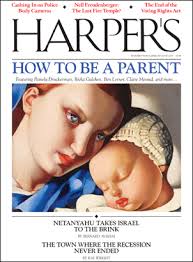
The August 2015 Harper’s had a “forum” called How to Be a Parent. Sometimes these forums are dialogues between unlikely participants and sometimes, like in this case, each author contributes an essay on the topic. There are ten contributors to this Forum: A. Balkan, Emma Donoghue, Pamela Druckerman, Rivka Galchen, Karl Taro Greenfeld, Ben Lerner, Sarah Manguso, Claire Messud, Ellen Rosenbush and Michelle Tea. Since I have read pieces from most of these authors I’ll write about each person’s contribution.
I am pretty sure I have read stuff by Ben Lerner but I didn’t expect a poem from him. Especially such a long one. And what can a poem teach us about parenting?
I was daunted by this piece, and the poem even helps address why. It talks about how “poems are great places to make information disappear, dissolve.”
And it also covers pretty much everything that has to do with art.
It begins with painted art and moves on to music and then to sculpture with works made of organic substances.
And after a stanza and a half we finally get to the parenting part: “I haven’t kept up since Lucia was born and now we are expecting another, not another Lucia, another girl.”
The poem addresses issues of Cesarean Sections:
the due date is late June,
a scheduled C for a number of reasons
Ari wouldn’t want me to put in a poem
even though she knows that poems are great
places to make information disappear,
dissolve. Should it bother me that Schedule
C is the name of a tax form on which you list
income and expenses
Then it’s back to art, and restoration.
The blue of pills, the blue of links, the two
blue lines that indicate you’re pregnant,
lapis lazuli mined in Afghanistan
then crushed to depict a donor’s garment:
none of these would have appeared as blue
to the ancients, who couldn’t see the color,
or so says a team of researchers at MIT
as you’ve probably read on the Internet.
If that’s true, we can’t restore ancient art
without delicate optical surgeries
insurance won’t cover, which means
only the wealthy will be able to afford
classical blindness.
Or how about this:
Where were you when you realized the white
marble statues had once been painted
garish colors, that the Parthenon looked
like a miniature-golf course in Topeka?
I was in the Roman Sculpture Court, avoiding
results among enucleated heroes, furies
a few hours ago, and thought I would
have preferred to have heard that news
from a poem, not an audio guide or placard.
The end talks about their forthcoming daughter. Hey says that he likes the name Marcela (“even though the root is war”). She will be
Chela to her friends, and a friend of my
daughters’ is how I think of you, reading
a poem you’re on both sides of like a court
painter during a historical transition,
the restoration spring always almost is.
Did it say anything about parenting? A little. And I’m not sure if any of those claims above are true, but I enjoyed the language and rhythm of the poem.

 I Just Read About That...
Leave a comment