 SOUNDTRACK: TIMMY THOMAS-“Dizzy Dizzy World” NPR’S SOUTH X LULLABY (March 21, 2016).
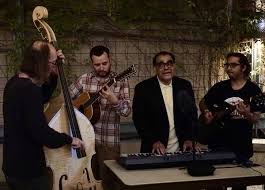 Timmy Thomas wrote many many hits in the 1970s and 1980s. His name is on credits that just about everyone has sung at some point.
Of course, I’d never heard of him. Thomas is 71 and was playing at SXSW, so they grabbed him for a Lullaby. And his voice sounds really fantastic–rich and full–you’d never guess he was over 70.
He sang a song from his 1973 album Why Can’t We Live Together called “Dizzy Dizzy World.” What’s so interesting to me about this song is that it sounds like it came from the 1970s. Not because of the instrumentation, which for this is just keyboards, acoustic guitar and upright bass. And it’s not exactly the lyrics (although they are earnest and slightly dated–but also still appropriate). There’s something about the feel of the song–it sounds like an anthem from the 70s for fighting against the craziness of the world.
It’s mellow and quite lovely. They just don’t write songs like this anymore. Well, maybe Thomas does, I don’t know.
[READ: February 10, 2016] “The Donor”
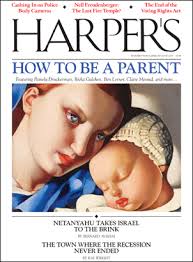
The August 2015 Harper’s had a “forum” called How to Be a Parent. Sometimes these forums are dialogues between unlikely participants and sometimes, like in this case, each author contributes an essay on the topic. There are ten contributors to this Forum: A. Balkan, Emma Donoghue, Pamela Druckerman, Rivka Galchen, Karl Taro Greenfeld, Ben Lerner, Sarah Manguso, Claire Messud, Ellen Rosenbush and Michelle Tea. Since I have read pieces from most of these authors I’ll write about each person’s contribution.
I read Emma Donoghue’s first novel Stir Fry back in 1994. She was an unknown author and I liked the book quite a bit. Since then she has taken off with her book Room, which I have not read.
Donoghue’s essay is about how she tells her children that they were both conceived through a sperm donor. She and her partner chose to go with a donor from a sperm bank rather than a known person. They refused to pay extra for the “premium collection of men with PhDs” since she and her partner both have PhDs “so we know what a feeble guarantee of intelligence they are.”
They had five donors to choose from. They refused the four “who sounded like men I wouldn’t shake hands with.” After that the decision kind of made itself. It was difficult to decided how many units of sperm to buy–you don’t know how many you’ll need, after all. They wanted two children, so they ordered three units–any less seemed like tempting fate.
With the first batch they conceived their son and with the second, three years later, they conceived their daughter (they threw away the third). I didn’t know this interest fact: “Sperm banks ‘retire’ a man once he’s had a certain number of bio-kids.”
Donoghue’s kids know about the donor and like to tell everyone they meet about him. And someday they will be eligible to meet their father (he had signed an agreement form to that effect). This was a fascinating insight into something I knew noting about.

 I Just Read About That...
Leave a comment