SOUNDTRACK: 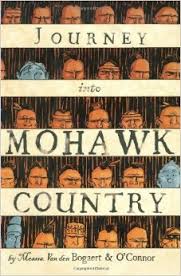 CHELSEA WOLFE-Tiny Desk Concert #507(February 12, 2016).
 I know Chelsea Wolfe from my fiends Liz and Eleanor who are fans of her. I have her album Pain is Beauty, which is atmospheric and gothic and reminds me of Siouxsie and the Banshees.
For this Tiny Desk, she strips away all of the band and noise and plays just her electric guitar (with some major fuzz) and sings (with some looping as necessary). I’m especially intrigued that one of her strings seems to be ever so slightly out of tune, which brings a really interesting tone to her echoed guitar playing.
Her voice is really pretty. On the record I’d been trying to think who she reminded me of. I hears Some Siouxsie Sioux, but in this set it’s someone else and I just can’t quite place it.
“Maw” really showcases her voice as she sings a lot of lines that soar, ever so briefly, and her voice sounds really powerful. There’s a whole goth kind of tone going on with her low guitar and her echoed voice. I especially like the end of the song where she wordlessly sings as her guitar echoes to a close.
She doesn’t talk between songs. And immediately she begins “Crazy Love.” This song has a beautiful melody and great singing but with a very dark overarching feel. I saw that her music was described as “doom folk” which certainly makes sense.
I like “Iron Moon” best. The slow riff in the beginning and the way her voice seems to want to crack but never does, it’s really powerful. And the way she always sounds great while she hits those big notes. It’s a great set and a rather unique sound for her.
It’s also nice to hear her talk at the end, just to know that she actually spoke to the people there.
[READ: February 27, 2016] Journey into Mohawk Country
Harmen Meyndertsz van den Bogaert was only twenty-three in 1634 when he ventured into Mohawk territory in search of the answers to a pressing question: where were all the beaver skins that the Indians should have been shipping down the river? And he wrote a journal of his experience of traveling into the future-New York State in the dead of winter accompanied by the delegates from the Mohawk tribe.
George O’Connor has taken van den Bogaert‘s diary and used it word for word (after being translated by Charles T. Gehring and William A. Starna in 1988) to create a visual representation of this journey. I know O’Connor mostly because he is the editor of First Second’s Fables and Fairy Tales collections. I gather he is also an illustrator, although this is my first exposure to him.
So this is a diary from 1634 (yes!), but it reads fairly modern (no doubt due to the translation). It’s a little slow and, given the nature of diaries back then, it is more concerned with distances traveled, sizes of houses and what they ate, rather than an actual story per se.
Nevertheless, there are some pretty exciting moments on the book. But more than exciting, this book gives a good representation of what the new world was like in the 17th century. The Dutch East India Trading Company had established New Amsterdam and they were able to trade with Native Americans. But at the same time, the French were also trading with the Native Americans, and there was no doubt some fighting about that. Not to mention, there were many tribes who fought with each other.
The story begins with van den Bogaert saying that the Maquasen and Sinneken Indians visited their camp to say they have called a truce with French Indians. So van den Bogaert asked his commander if he could travel to learn the truth of this situation because trade was going very badly.
He went with two others the many miles to the Maquasen camp.
The report details their lengthy, cold journey (and the amount of venison they ate) and how they were treated. The majority of the book described their arduous travels through the cold snowy landscape. How they didn’t die, I have no idea.
O’Connor has chosen to draw the participants in a somewhat stereotypical way (I saw someone complain that his Native Americans depictions might be racist). And yet I think they work very well, and I think that rather than racist, his Native American characters just look as accurate as O’Connor’s slightly cartoony style will allow. For instance, the Dutchmen look wonderfully Dutch. Van den Bogaert looks a bit like a Doonesbury character (with that goatee) and yet also very Dutch. And the Indians look very Indian–he draws the eyes very well, and he does wonders with their facial structure.
But what O’Connor has accomplished is to add a lot of artists interpretation to make this (frankly rather dry) diary a but more interesting and bit more fun. There are moments when the characters cast sideways glances at each other, or where things go on in the background that really flesh out the details and add some humor.
There are depictions of long houses (many of them in each camp) and the fact that many camps had a tamed bear which was being fattened up (and van den Bogaert tried to buy one).
They traded a lot of axes and awls for pelts and skins and then they traveled some more. I didn’t tally up how many miles he thinks they went but it would seem to be over 40 (many of them in deep snow). And (most of) the Mohawks treated them well on every step of the way.
I’m a little unclear if the problem with the trading ever got solved–it seems to be left out of the diary. But I found the whole journey interesting and moments of it were rather exciting. I love the details that were put in to teach us more about the Native folk who lived her before us. I also greatly appreciated the glossary at the end of the book. It was quite helpful.
So this was yet another excellent historical graphic novel from First Second. You know, I started reading their books because they were fun and well written. I had no idea I’d learn so much, too. #10yearsof01

 I Just Read About That...
Leave a comment