[LISTENED TO: August 2015] The Organist
 The final 10 episodes of The Organist’s second season were of the same caliber of podcast. I was surprised to see that it ended in March. And, in a recent Kickstarter from McSweeney’s, the talk about getting funding to make more episodes. I’d be bummed if they ran out of money to make more of these. Even if I have griped about the repeating, the quality of each episode is really quite good.
 Episode 40: Cosmo’s Factory (December 30, 2014)
I was fascinated by this piece because I found the drumming in the song to be nothing special. I never would have noticed all of the nuances that he fixated on. And the song really isn’t that interesting. Drummer Neal Morgan, who has supported Joanna Newsom, Bill Callahan, Robin Pecknold, and others, sat down with Creedence Clearwater Revival’s Doug Clifford to dive into ecstatic detail on the arrangement of “Long as I Can See The Light.”
 Episode 41: A Funeral for Everyone I Knew (January 6, 2015)
This week they finally get around to the Greta Gerwig piece they mentioned in Episode 38. It is Funeral for Everyone I Knew, a new radio play by novelist Jesse Ball. Starring Greta Gerwig and Whip Hubley, the play follows the dark machinations of a dying man, and his elaborate plans for his own funeral. Frankly it wasn’t really worth the wait, and Gerwig isn’t in it enough.
 Episode 42: The Oracle (January 13, 2015)
Joseph Makkos, made a once-in-a-lifetime discovery trolling Craigslist for free stuff. He found a nearly complete run of the New Orleans Times-Picayune. It’s an amazing one of a kind fond. Curmudgeon and archivist Nicholson Baker chimes in on hoe libraries failed to save print newspapers like this. You can see his scanned images here.
 Episode 43: Aetheric Vehicle (January 20, 2015) REPEAT FROM EPISODE 1
The Baltimore-based electronic duo Matmos break down the process behind a song from their last record, revealing cut-up ping-pong blindfolds, looped handcuffs, isolation chambers, and telepathic Ganzfeld experiments. Plus Jenn Wasner, from the band Wye Oak add vocals.
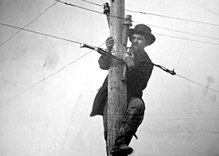 Episode 44: Contact Milk (January 27, 2015)
I wanted this to be even more interesting than it was. Using the aural equivalent of a zoom lens, people attach a contact-microphone to all sorts of things to hear the amazing amount of noise that goes on in seemingly quiet things (ponds, posts and the like). It was really interesting in theory but all the sounds just sound like things we hear in the “real world.”
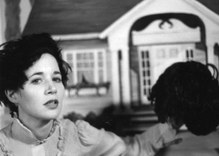 Episode 45: An interview with Miranda July (February 3, 2015)
The wildly, diversely prolific artist Miranda July discusses her earliest, rarely seen punk plays, her radio work in the 90s, and her brand-new novel. July is a pretty fascinating character. I have one of her early punk CDs, although i can’t say I love it.
 Episode 46: The Difference Between Cowboys and Cowboy Poets (February 10, 2015) REPEAT FROM EPISODE 2
I enjoyed both of these pieces the first time around, although to claim that they “unearth[ed] two gems from season one” is really pushing it. I unearthed them when I listened to them from the same site last week. A funny and strange interview with the funny and strange songwriter and artist Devendra Banhart, followed by “Old-News Summary” with novelist Sam Lipsyte.
 Episode 47: No More Road Trips (February 17, 2015)
This was easily my favorite episode of the last ten. Archivist, educator and filmmaker Rick Prelinger has taken a massive collection of educational and industrial films and co-founded the Prelinger Library in San Francisco. It is stuffed with printed material you’d be unlikely to find elsewhere. More recently he’s been working with old home movies — thousands of them, donated or otherwise acquired. This is basically material nobody else wanted, not even the descendants of whoever made them. He’s used it to build a remarkable series of films – one is made of footage from San Francisco, another from Detroit. Old home movies are mostly silent, and he adds no narration or even a score. Instead, he stands on stage at screenings, riffs about the clips, and encourages viewers to chime in from their seats. This actually works: the audience at Prelinger’s screenings are surprisingly vocal. Prelinger’s most recent is the more broadly themed No More Road Trips? I love that he talks about gas stations as being the most fascinating thing to see in these movies because nobody takes video of them. It’s all nature and mountains, never dull things–so to see these everyday things change over the years proves really interesting.
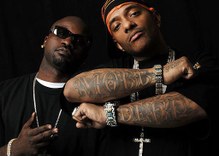 Episode 48: Shook Ones Revisited (March 3, 2015) REPEAT FROM EPISODE 6
Writer Hua Hsu on the mystifying genius of the great New York hip-hop group Mobb Deep, the genius of obsessive German hip-hop fans on the Internet, and the unfathomable, haunting piano loop that connects them. I might have enjoyed this more the second time, when I could really listen to the loops being assembled.
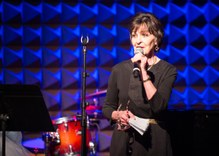 Episode 49: The Voice Teacher (March 10, 2015)
Barbara Maier Gustern is an 80-year-old classically trained singer in New York City. She teaches singing lessons out of her two-bedroom apartment in Chelsea. For decades, she’s taught a wide range of singers: Argentinian and opera singers, aspiring cantors, the Grammy-nominated vocalist Roseanna Vitro. But she’s become a favorite among the edgy and powerful voices of New York’s downtown queer, performance and rock scenes: Her students include Debbie Harry, Taylor Mac, Justin Vivian Bond, John Kelly, Lady Rizo, Penny Arcade, Handsome Dick Manitoba, Miss Guy and Kathleen Hanna. And she is funny as well. This was really enjoyable.
 Episode 50: The Happiest Accidents (March 24, 2015)
I’ve often heard great things about Studs Terkel, although I didn’t have any direct experience with him. He hosted a radio show on Chicago’s WFMT for 45-years, interviewing an astonishing range of artists, thinkers, workers, and activists. The writer and interviewer JC Gabel dips into Terkel’s massive archive to highlight three moments where Terkel stumbles sidelong into moments of sublime illumination, including arm-wrestling with Zero Mostel, sparring with Muhammad Ali, and impromptu guerrilla street theater with the organizer Saul Alinsky. This was a great episode to end on. It was profound and powerful and left me wanting more.
I wonder if and well The Organist will be back. I’ll even forgive them for repeating pieces–although now that I’ll be listening live, I may be even more upset if I wait a week only to hear that damned Stroffolino piece repeated again.

 I Just Read About That...
Leave a comment