 SOUNDTRACK: ASIA-Asia (1982).
 I’ll finish off this run through Yes with one final offshoot project–Asia. Geoff Downes (who had only been on Drama) and Steve Howe joined forces for this pop outfit with a hint of prog. Indeed, this is an album that is just chock full of poppiness–despite all of the trappings of prog rock–synths, connections to Yes, a cover by Roger Dean and Carl Palmer from Emerson Lake & Palmer on the drums.
This album was huge in 1982 & 1983. They had so many hits from it (okay well, only 3 singles, but surely everyone knows this entire album, right?).
“Heat of the Moment” opens with nice big ringing guitars. And while the drums aren’t fancy, they are quite distinctive. The synth isn’t too dated sounding, and the middle part with the guitar slide still sounds cool. And of course, the chorus is practically irresistible. “Only Time Will Tell” has a totally recognizable keyboard riff. While the riff itself hasn’t been copied, the sound has and yet at the time, Asia made it seem fresh. This song is so simple as it starts with just keys and drums and John Wetton’s voice. There’s great harmonies in the chorus and dramatic keyboard splashes. And once again, Carl Palmer’s drums are big and loud yet understated.
“Sole Survivor” opens with some darker chords nut some interesting noodling going on, too. (I always thought t was interesting that Blue Oyster Cult released a song called “Sole Survivor” the year before). Despite the darkness of the lyrics and the music the chorus is also very catchy (I also like how nearly every verse ends with a different keyboard sound or riff). This song also has an interesting break where things get quiet and feel very wasteland like.
“One Step Closer” has a some interesting riffs and another catchy chorus. This is probably my least favorite track on the disc even if it’s got a good chorus. “Time Again” has a cool dramatic opening and then a nice speedy bassline to start off with. I like the way the chorus leads to some quieter moments of unusual guitar and keyboard sounds.
Side two has some slightly longer, sightly less poppy songs. And yet to me all the songs on this side are really good as well. “Wildest Dreams” is a song that is a bit over the top (as all prog should be). I remember loving the dramatic “We fight” section. It seems a but silly but it was still fun to sing along to.
“Without You” is a slower darker song but with another big chorus. It also has the most prog rock sounding keyboard solos of the 1980s. There’s some time changes and even a big bell! “Cutting It Fine” opens with some mellow guitar and then a really interesting guitar sequence. It moves along quickly and dramatically and then stops for a quiet piano solo section (with a build up of strings, martial drums and horns–the drama seems like it is leading to something big but it just kind of fades out, which is a bummer.
“Here Comes the Feeling” ends the disc in more dramatic fashion. I love the way the bridge builds and builds (with the “now i can…” section that leads to the long held sung notes.). The solo section has some very yes-like moments from Howe and over all ends the disc with some wonderful prog moments.
As with apparently every progressive rock band of the era, this one was full of lineup changes too (don’t even get me started on King Crimson). The four stayed together for the next album, Alpha, but Steve Howe left after that and then various other incarnations have toured in one form or another to this day (in fact they’ve released about 20 albums over the years. Who knew?).
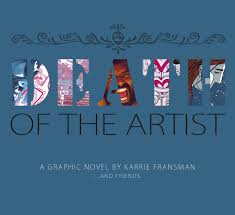
[READ: May 29, 2015] Death of the Artist
I grabbed this book from work because it looked interesting. And it was. I was more than a little confused as to how much is true. And that was clearly the point. Fransman totally pulled the wool over my eyes and I love her for that.
The premise of this book is that five artists are getting together for a weekend of debauchery. They were friends in art school in Leeds when they were in their 20s. Now, ten years later, they are reuniting in hopes of sparking creativity again. Of the five only one is still doing anything “creative,” and they are all looking to reignite that spark.
And this book is the result of their week.
All five artists draw (or something) a story inspired by that weekend. And in what turns out to be a pretty cool twist, Fransman has shaped the stories into a narrative.
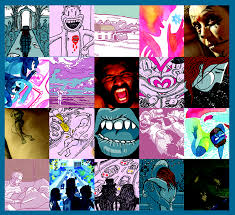 The five artists are Manuel, Jackson, Helena, Vincent and Karrie and each one has a very different style.
Manuel goes first. He works in watercolors–very loose and free. He recounts the story of how they first met–although a later story contradicts it somewhat. He says that they all met in a tree at a party–where they got high and fell out of the tree. It’s a funny wild story and the watercolor style really helps that.
Jackson goes next. His style is very cool. It is formal and almost computer looking. His realistic story recounts their arrival at the retreat and the eventual arrival of Vincent, their least mature friend. They drink and do drugs and drink more and walk about and drink and party and everything. They even go to a bar where they meet a young girl (19)–a future artist herself. I really enjoyed this section a lot.
Helena goes third. Her style is all with photographs. It’s very cool. She cut out the photos perfectly and made a narrative based on the photos she took during the week. I love the way it works. She also names all of the people in the story with a “Hag” name (since there is no comparable insult for men). In the story, one of them men seduces the young artist (see above) and then the older artists decide to paint all over her.
The fourth story comes from Vincent. His story has a very cool drawing style–reminiscent of the old Popeye cartoons or old rough tattoos. I like it (although I could never draw it myself). His story is all about the times he has died–or should have. He speaks of abuses from his parents, from hard living and lost love.
The final story is from Karrie–she collated and organized the book too. She has a very cool, unique style that is full of round shapes (puffed cheeks and the like). She writes first about how she doesn’t know what to write about. The others have worked so hard but she is stumped. And then she gets the impetus to tie the whole book together. Can this impetus be real?
The story went from a kind of fun experiment into some much more real–a true investigation of art and the creative process and the death of the process and art itself.
For more information (and some spoilers) check out her site about the book. I see that Fransman has some other books out and I’d like to check them out too.

 I Just Read About That...
Leave a comment