 SOUNDTRACK: PRIMUS-Frizzle Fry (1990).
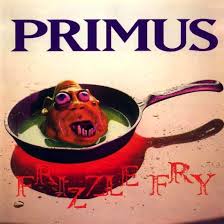 It always made me laugh that this album opens exactly the same as Suck on This–with the opening drums to Rush’s “YYZ.” But it quickly bends into the propulsive bass of “To Defy the Laws of Tradition.” For many, this was their first listen to Primus, and hearing the crazy noise of Ler’s guitar come roaring out of the speakers followed by Les’ insane bass line and Tim’s wild drumming–it’s unlike anything I’ve heard before or since. And then later to hear the tapping of the bass notes during the chorus–it’s certainly defying laws of rock tradition.
The lyrics of “To Defy” are interesting to me (if Christmas didn’t come, who would cry more the child or the stores?). I also always loved the lyrics of “Groundhog’s Day” (“lingering taste of toothpaste made the milk go down a bit funny”). I like the fidelity of this recording better than Suck on This (all five re-recorded songs actually). This song also gives Ler a lot of pace for a long solo. “Too Many Puppies” is one of the earliest song Les wrote (although I believe it was different in speed at the time). It is a loud song in which Ler’s guitar stays hidden for a while then bursts forth full of noise and chaos at opportune moments.
“Mr. Knowitall” is also full of great lyrics (“they call me mr know it all, i am so eloquent, perfection is my middle name and whatever rhymes with eloquent”) and a really groovy bass with interesting “lead” guitar work. I feel like the drums get a prominent place in “Frizzle Fry” (the drums are great all the way through, but they really shine here). Of course the fast section at 4:40 is pretty amazing, too.
The opening to “John the Fisherman” is different than on Suck on This and it is crazy the sounds he get out of that bass. The quality of this recording (and the video) are great.
“You Can’t Kill Michael Malloy” is 26 second piece that was composed and performed by Matt Winegar (according to the Primus book the song is actually much longer and Les wishes he had played the whole thing here). It leads to the slow intro of “The Toys Go Winding Down” which features one of my favorite triplet-filled bass lines ever. It also features some great bowed bass from Les.
I love that “Pudding Time” opens with such a great amount of noise and that the bass is actually more of a percussive instrument for the verses. “Sathington Willoughby” is another weird little song (25 seconds) that gave them a chance to play with banjos. It serves as a great intro to the wild drums of “Spaghetti Western.” This is the strangest song on the disc (which is saying a lot). It’s almost an instrumental with Les reciting a little story about watching Spaghetti Westerns on TV (the way the boots are all reverbed out).
“Harold of the Rocks” is such a great song and this version sounds great–you can really hear what Ler is doing. It ends the album in a fun way.
Frizzle Fry is still one of my favorite albums, and it still sounds totally weird and unique all these decades later. I was marveling at how long this album is and how long many of the songs are–quite an auspicious “debut.”
[READ: January 5, 2015] “Action”
I have basically blown off the New Yorker since last summer and have now made it my resolution to read all the issues I missed from last year in a timely fashion. So here I’m starting with August.
I often like Paul Theroux’s stories, although I don’t really have a sense of his style overall. This story proved to be very simple but incredibly detailed.
It is about a boy, Albert, who works for his father in his shoe store. Albert’s father was a widower and a very economical man–he would often only speak in one word sentences, especially to Albert (“‘Where?’ meaning, “Where have you been?'”). His father worried about him, but didn’t really show it. Rather, he monitored everything that Albert did. He made sure that Albert was working most of the time that he wasn’t in school (even when the store wasn’t busy). So Albert had no social life.
Albert did have one friend (whom his father greatly disapproved of) named Eddie. Albert liked Eddie especially because Eddie often said “I’m a wicked bad influence.” Eddie knew all about Boston and showed Albert around to places that his father would have been very upset by. Of course, Albert had no money so he never went in these places, he just knew of them. Eddie also introduced Albert to his “girl” Paige, whom he described as easy.
One time, Albert’s father sent him to pick up a special order pair of shoes in the city. And that expedition is what the bulk of this story consists of. After picking up the shoes, he is harassed by various people in Boston (a guy actually demands he give over the donut that he just bought) while another guy asks if he would like the man to “take a picture of you bollocky” (whatever that means). In this world Boston is a really scary place.
He runs away from these guys and winds up near Paige’s house. When he passes her house, her door is open and she is ironing something. He goes in to talk to her and she offers him a lemonade. While they are talking a broad man named Vic comes in. After a few minutes Vic accuses Albert of being Eddie, which he denies (unconvincingly).
The scene ends badly and Albert is forced to flee the apartment. He hops on the train and believes that his father will know everything that happened to him. It is a quite a dark story but very compelling.

 I Just Read About That...
Leave a comment