 SOUNDTRACK: NELLY FURTADO-“Time Stand Still” (2010).
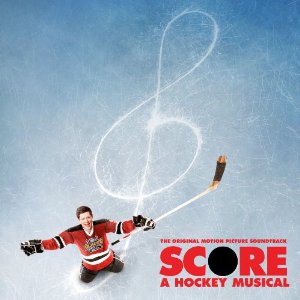 I stumbled upon this cover of a Rush song when I learned about Score: A Hockey Musical (which I stumbled on when looking for information about Dave Bidini). I hadn’t heard of the movie, but i was sure intrigued by it (the parts I’ve seen have terrible songs but since it’s all jokey, it’s okay).
This cover song is presumably an end credits song.
I don’t really have an opinion of Nelly Furtado, but, man, I really don’t like this cover. I’m of course delighted that she covered Rush at all (and it makes sense in a Canadian hockey movie to have a Rush song) but she basically strips away all of the music and adds a very simple synth riff and drums. It’s painful for a Rush fan to hear all the music taken away from this song.
Furtado’s voice actually works pretty well (especially since Aimee Mann does the backing vocals on the original) and she sings it quite nicely. I think I might like it if I didn’t know it was a Rush song, originally (the music is good, eh?). It just hurts my sense of righteousness to hear this weird lite version of Rush.
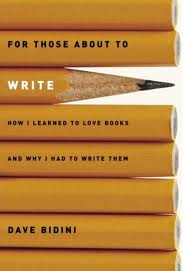
[READ: February 24, 2014] For Those About to Write
After reading Pseudonymous Bosch’s writing guide for young people, I figured I’d compare it to Dave Bidini’s writing guide for young people.
It’s interesting to see how two writers can try to accomplish the same thing in such vastly different ways. Bidini doesn’t really write fiction (he has written some, but not much), so unlike Bosch, he doesn’t try to get the young writer involved with a made up story. Rather, he presents his own life as an example of one way to become a writer.
Bidini talks about how he loved books as a kid–stapling together stories, or loving the feel of cardboard binding books together (he fondly remember his first writing project for school and how it all felt so official). He was also fortunate to have parents who could appreciate his artistic needs–so if he needed to write or to play music, they were supportive.
But the whole idea of writer as a career was an unusual one–who really knows anyone who does that? Which is why superheroes like Peter Parker an Clark Kent–who worked for newspapers–seemed to validate the career or a writer (or photographer). Then he shares his first published work–a poem about Toronto Maple Leaf Eddie Shack that he wrote as a kid (which was printed in the Toronto Sun and was a kind of encouragement for him as a writer–because someone actually believed in him!)
Later, in high school, he wrote for the Sunshine News, a national high school newspaper. He also begins defining terms in earnest (editing, publishing, reviewers, put to bed, etc–there’s a glossary at the back too). Bidini had more fun in these years–he became a music reviewer and talks about how awesome it was to go see bands and actually write about them. But it was awkward when he saw Styx and hated them–should he be truthful in his review and deal with the consequences of such a review. After High School, Bidini began writing for Shades magazine. I had no idea that he was such a long standing writer–I always assumed he was a musician first and a writer second.
Other formative things for Bidini–a good English teacher, a good library and a good bookstore (he lists one that I love the name of: This Ain’t the Rosedale Library.
He also includes some important (for him) novels (most of which I think many American readers might not know:
Peter Golenblock–Bums
Paul Quarrington-King Leary
Keith Maillard–The Knife in My Hands
Through inspiration from a college professor, Bidini went to Ireland. And that was a great experience. He says he wrote a lot of garbage. And that garbage was essential to writing good stuff–you need to weed out the garbage to find the gorgeous.
Bidini has had a lot of luck in his writing career–he had stepping stones and contacts and people who were willing to take a chance on him. Most writers won’t have that, unless they are willing to take chances themselves–an internship maybe, or just hanging around whatever constitutes a magazine or journal in the 21st century (he distinctly says he won’t talk about e-journals because when he wrote this in 2007 everything was in flux). And yet aside from a few fewer magazines, things really aren’t that far removed from what he knew in the print world.
So how does this book work as a manual? Well, it’s got a great tone, and it’s very encouraging. It is also a wonderful booster for writing in general. But I’m not sure how realistic it is for most new writers. Things were very different back in the 70s and things are very different in Canada where there’s not quite so many people vying for the same jobs. So, while it is inspirational, I’m not sure if it’s very practical.
Nevertheless, it’s a fun quick read, and if you like Bidini, it’s a quickie biography of the artist as a young hoser. And in fairness, that subtitle does say that the book would be all about him.

 I Just Read About That...
Leave a comment