 SOUNDTRACK: SANDRO PERRI-Tiny Mirrors [CST047] (2007).
 This album is mellow and jazzy. At first listen it sounds almost cheesy. But Perri is just peculiar enough to make this whole experience fun. As with his amazing Impossible Spaces (which came out after this) Perri pushes the bounds of mellow music with his delicate voice and wah wah’d guitar.
There’s not a ton of diversity on this record, and of you don’t like the opening minutes there’s nothing that will convert you. But there are some interesting musical moments here.
The guitar lines that wah wah through “Family Tree” are very cool. “Double Suicide” is the catchiest thing called “Double Suicide” you’ll ever hear. The guitars are pretty and Perri’s voice is just soothingly beautiful.
Perhaps the most surprising thing on the disc is the cover of “Everybody’s Talking.” It loses all sense of the original melody. It really sounds nothing like it. It’s very strange but beautiful .
I love the flute on “You’re the One.” Theres something about that flute that really brings out the pretty in Perri. I also really like the melody and guitar/horn interplay on “Love is Real.” The final song is an instrumental which really lets you focus on the music.
So while there is definitely the potential for cheese here, Perri manages to ride just above it, making some really pretty songs.
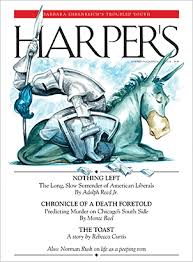
[READ: May 19, 2014] “The Toast”
Curtis is a holistic nutritionist. She wrote an essay about that in Harper’s a few months ago. And the main character in this story is a nutritionist. But the story is also extremely self referential, teasing the reader about believing that a character is the author, so I’m not willing to ascribe any kind of autobiography to it.
This is the first fiction of hers that I’ve read and I have to say I absolutely loved the first half of it. I enjoyed the end half as well, but I really loved the first half.
The story is a very simple one about a younger sister (Sonya, the narrator) having a difficult relationship with her older sister Leala. The older sister is successful, overachieving and just about to get married. Meanwhile Sonya has switched jobs (unsuccessfully), is in debt and is living in an attic loft with a landlord who barges in on her.
As the story opens, the narrator proves to be a snarky character who I found delightfully off putting. At first I though that perhaps there was some mocking of holistic folks in general (there’s lots of talk of fluoride), but that would not appear to be the case. However, when a character says this, I’m hooked:
The wedding, my sister said, would not be fancy. However, there would be a hair-metal band, a five-course local organic vegan dinner, and a life-size fair-trade chocolate baby elephant. I’m afraid that my sister went on explaining details about the wedding and I stopped listening; this is because I caught Lyme disease five years ago and have neurological damage that makes it difficult for me to listen when people talk, especially when that they’re saying isn’t interesting.
It’s a great paragraph–we learn about the older sister and we learn that the younger sister might just use her disease as an excuse to get out of things. She is also not afraid to say what she thinks, like when she calls her sister’s fiance a “walking pancake.”
So the older sister’s wedding is in Hawaii, and she would love it if her younger sister came. As I’ve mentioned, the younger sister is not only broke, she is in serious debt. She has to think fast to explain why she won’t go. So she says that she has been invited to Yaddo to a writer’s workshop. The older sister wishes that she would write more, so this seems like a good excuse.
Sonya also doesn’t want to admit that she is broke. She had been a successful Ivy-League writing instructor. But she quit that and became a health coach. Which has been a miserable failure (as her sister predicted). But since Sonya aid she’d never ask for money, she never admits that she is a failure.
When Sonya says she can’t come, Leala suggests that she write a toast, but
please don’t lecture about the dangers of fluoride and mercury. For just once, I would like you not to be a health coach and just be my sister.
The narrator then goes into an internal tirade about older siblings:
Oldest siblings, I learned on firstborns.com, disappoint their parents when they pop out from the vagina looking not-as-expected; soon, if they’re not retarded, they sense their parents’ disappointments, and in reaction, they achieve. All the first American astronauts to fly into outer space were firstborns. Oldest children are disproportionately represented in law, medicine, banking and engineering…. Oldest kids average two points higher on I.Q. tests. Oldest children are more self-righteous, insecure, and self-deluded than any other kind of offspring. That wasn’t on firstborns.com.
I was just tickled with the nasty nature of this story. Then I had to stop reading for the night. When I resumed the next day, the family’s truth came out and the story became much darker, much sadder and much more poignant. As I said I didn’t enjoy it as much (because the first part was very funny), but I was amazed at how good it was.
As the second half opens we learn a bit about the sisters’ mother. Her life was very hard, she was more or less raised by an Aunt who didn’t particularly like her. She spent most of her time with her best friend, Haven. In a flashback, when the narrator and her sister are young, we learn that her mother hadn’t seen Haven in a decade now but that she was coming for a visit. The stories about Haven seem to be touching (with their mom always excited when she gets a Christmas card from her), but we slowly see that the feeling may not go both ways. Especially when their mom was so insistent that they both look perfect for Haven when she comes for a visit.
Both girls hated getting their hair brushed. But Leala would sit through the whole thing (of course), tears streaming down her face, absorbing all of the abuse. But Sonya would simply scream and run away with her hair in a tangled mess. That proves to be a tip of the iceberg for their mother’s anger. And we slowly learn that while Sonya has resented Leala all of her life (and exhibited it in many different ways), Sonya is in no way the victim in the relationship. And we learn just how sad things have always been for Leala, the overachiever.
The story was quite moving and the end was pretty much devastating. The way Curtis went from a very funny dark opening to a simply dark ending was really masterful.

 I Just Read About That...
I’m going to have to read this – sounds like a continuation of her “The Christmas Miracle” from the 12/23/13 New Yorker. That was a story I hated, then as I went to blog it, decided I truly admired it when I discovered some really interesting little twists in it that got buried in the chaos of murdered cats, weird diseases, and general family dysfunction.
Hi Karen, welcome back to your site and to mine. I am just getting back into reading New Yorkers, so I didn’t realize she had a story at Xmas time. She reminds me of, gosh I can’t remember the author’s name, she’s a woman who practically has aspergers the way she talks about others. Which can be offputting or funny depending on your point of view.
I’ve enjoyed reading about your MOOGs by the way 🙂
Just wondering if anyone else caught all the references–an homage? what?–to “For Esme with Love and Squalor” in this story. Certainly the ending is not one of levitation, but it’s too much to ignore.