 SOUNDTRACK: RON GEESIN & L’ORCHESTRE PHILHARMONIQUE DE RADIO FRANCE-“Atom Heart Mother Suite” (2012).
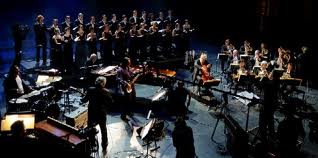 “Atom Heart Mother” is one of my favorite prog rock songs. And it’s amazing how much I didn’t know about it (which is what this book is for). This recording of the “Suite” is an extended version that Ron Geesin created for Radio France.
I’m fascinated by this version of the song because while it is basically the same (Geesin added a few extra measures for the cello solo), it sounds so “professional.” The original (as the book points out) was kind of slapdash and it has a very loose feel. This version is almost too perfect (although it’s not perfect as you can tell by the guitar solos). Nevertheless, I love that this song has broken free of an obscure Pink Floyd album with a cow on the cover.
You can see and hear the extended 2012 version here:
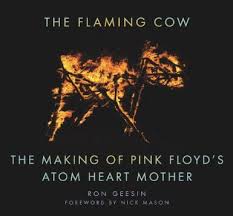
[READ: September 27, 2013] The Flaming Cow
Big news (to me) is that Ron Geesin created the orchestral score for Pink Floyd’s “Atom heart Mother.” He had nothing to do with side two of the album Atom Heart Mother (although he does say where the album title came from, and shows the proof–the first woman with an atomic pacemaker was in the news that day), but he was instrumental (ha) in creating the 23 minute epic.
I actually knew of Geesin from his score with Roger Waters for The Body (a vinyl album I own from when I was really into Floyd, but which I haven’t listened to in decades). But so here is the full explanation of how the crazy beast (which my high school friend Kevin deemed the number one “seriously drug induced” song) came to be.
Except that Geesin has a lot to say about himself first. The book is 120 pages (about half of those pages are pictures) and he doesn’t get to the song until Chapter III. At first I wasn’t all that interested in his biography, but it actually pays off when you see what his musical background was and how it was ideal for him to create the score for “AHM.” His musical background is interesting in his DIY approach and “one man band” esthetic. But really, we got this book to hear about this Epic (which is what it was called first).
And on that front, well, he doesn’t have a ton to say, believe it or not. We learn that Nick Mason (who was friends with Geesin and who wrote the Foreword to this book) and Waters had created the basic structure of the song. And they called on Geesin to flesh it out. So Geesin used his understanding of writing scores to create some really unexpected tones for this otherwise fairly simple song. It also turns out that (for me) recounting someone else’s recounting of recording a song is kind of boring, especially since there were no astonishing revelations.
I did enjoy reading that the band would make more money if the suite was broken up into various parts rather than one 20 minute song, so that’s where the arbitrary section names came from. And Geesin does give a fairly detailed explanation of why he did what he did in the score, but it only last for about three pages. Suffice it to say that although it was a very hectic schedule (and Geesin almost did come to blows with a horn player) the recording was not too dissimilar to other recording sessions that I’ve read about.
What was interesting was that the band had gone from really liking it to dismissing it. And that the band seemed to want to distance themselves from it because they wanted to go in a different direction (Meddle, their next record, also has a 23 minute song (the awesome “Echoes”) but it is very different from AHM).
Perhaps the most interesting thing to me was the life that the song has taken since the recording. In 2008 Geesin wrote an extended version of the suite for the Chelsea festival. The song was performed on two nights and on Sunday, June 15 2008, David Gilmour played guitar for the piece (he wasn’t able to make the Saturday night show).
There is a lengthy video from this concert as well (just below). For the first 20 minutes Geesin introduces the piece (which is basically a prelude to the book). The introduction is a little more dramatic than the book (but not all that much). In this video, the audio is quiet (and not that great) and there’s no actual video (just stills), but it is still entertaining. Then there’s the song itself. And it includes a reprise (with more Gilmour slide guitar) of the end of the song.
Someone also nicely recorded the Gilmour version (and included some video at the end of the piece)
The Radio France version above was commissioned for an entire evening of Geesin works. As I said above I only have his “music from The Body” which he recorded in 1970 and which was his second album. I have no idea what the rest of his work sounds like. But he was on hand to play the piano for “Atom Heart Mother” and the rest is history.
This book proves to be more about Geesin than “AHM,” but it’s still an interesting read.

 I Just Read About That...
Leave a comment