S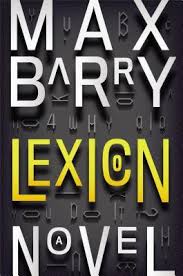 OUNDTRACK: FRANK TURNER & THE SLEEPING SOULS Live at the Newport Folk Festival (2013).
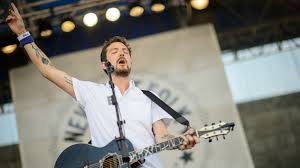 Whenever NPR streams and saves festivals shows, I like to check out the bands I love (of course), but I also check out some of the bands I’d never heard of before. And sometimes it leads to a fantastic discovery. Like Frank Turner. I had no idea who he was, but he was described as folk-punk which is quite accurate. He reminds me of Billy Bragg in his younger, harder days. Turner is British, he has a very thick accent when he sings and while he is nowhere near as political as Bragg, he treads in that same line of folkiness.
His lead off track, “Four Simple Words” (the words are “I Want to Dance”) begins as a folkie song, but it quickly morphs into a rollicking stomper (louder than most bands at Newport, he theorizes). But a song like “Try This at Home” seems to speak to his overall ethos—music for the people by the people:
Because there’s no such thing as rock stars There’s just people who play music
And some of them are just like us And some of them are dicks
So quick, turn off your stereo Pick up that pen and paper
Yeah, you could do much better Than some skinny half-arsed English country singer
There are a few more specifically pointed messages like “Glory Hallelujah,” whose chorus goes “There is no-o-o God, so clap your hands together.” As well as a funny (but not really) song which he introduces as being written because he read Gene Simmons’ autobiography. Simmons says he slept with 4,600 some women which he knows because he has taken a Polaroid of each one. Turner is appalled “what an ass” and wrote “Wherefore Art Thou, Gene Simmons” as a response.
But the majority of songs are about love and life, going home again and playing music. And, in this live setting Turner is fantastic—getting the crowd to sing along, having great banter and being a wonderful showman.
The final song is a great sing-along with the simple but effective chorus of: “I won’t sit down and I won’t shut up. And most of all I will not grow up.” I’m totally enjoying Turner’s music and now I’m going to have to check out his actual releases (he has four or five). See more about him at his website.
[READ: July 20, 2013] Lexicon.
Virginia Woolf has gotten a hold of a word which has caused untold destruction in a small town in Australia. W.B. Yeats has sent T.S. Eliot and a non-poet named Wil to get the word back and, if possible to kill Virginia Woolf.
Intrigued? Yeah me too.
I saw this book in Barnes & Noble and was really excited that Barry had a new book out. And when I pointed it out to Sarah she said , “I already have a hold on it.” So, when it came in I took it from her pile and now it has to go back before she gets a chance to read it.
Imprinted in the crazy cover image are a series of odd characters and amid them it says 4 why did you do it. I was trying to figure out if there was more to this secret message, but there isn’t. However, it is a clue to what lies inside.
I guess in the grand scheme of things, the story is pretty simple (if not a little confusing). What I laid out above is the skeletal outline; however, Barry interweaves the story with past and future (and a whole lot of mind control) and he begins the book right in the middle of utter chaos.
The book opens on a girl named Emily. Emily is a street urchin, hustling people for money. After making some money off of a guy, a new victim walks up and after totally screwing up her hustle, he begins asking her questions: Are you a cat person or a dog person? What is your favorite color? Select a random number. And then, Why did you do it? The man then offers to buy her breakfast. They sit and talk and, when she goes into the bathroom to sneak away from him, he follows her and asks her to give him a blow job. Which she inexplicably starts to do. Until she fights it and then fights him. Sometime later, we learn who he was and why he wanted Emily.
The man is looking for people who can resist various forms of mind control. Emily almost failed (the blow job was a test), but passed at the last minute. She received a “barely eligible” but was invited to a secret school in Virginia. At the school, Emily is among other select people who can resist the power of mind control and learns how to compartmentalize people into certain sectors. The sectors are given numbers and each number can be controlled with certain words.
The words thing is the hardest to understand, and Barry holds his information close to his chest. Basically, there are certain words (which are not actual English words at all) which, when spoken aloud, can be used as triggers to get people to do whatever you want. The people who succeed at the University are called poets. And they are very powerful. When they complete their training they can take on a famous poet’s name.
Like T.S. Eliot. Eliot is a graduate and a highly respected poet. He captures Wil in the bathroom of an airport and insists that he can help with Woolf in Australia. But Wil has never been to Australia, has no idea what Eliot is talking about and he just wants to go home with the girlfriend who is waiting for him in the parking lot. When Eliot realizes that Wil is the wrong guy, he’s plans to kill him. Until Wil says something that piques Eliot’s interest.
Eliot tells Wil very little except that his girlfriend is going to try to kill him. Which is crazy of course, until she actually tries to kill him.
And what’s really fun is that between Emily and the blow job and Wil and his story and nobody telling anybody what the hell is going on, the story is utter chaos for the first fifty or so pages. Barry earns this though with great writing and clever ideas. And the whole business of this killer word.
The rest of the story involves lots of travel, and incredible violence. The airport scene is pretty shocking (not unlike the incredible destruction in Barry’s last book Machine Man). There’s obviously a ton of killing in Broken Hill, Australia (there are moments when it becomes clear what happened when Barry doesn’t shy away from some gore–but he isn’t ever grotesquely explicit. And of course, there’s a lot of confusion about what words can actually do.
The book is very smart, mixing up real psychology with this magical mind control and creating precarious situations which seem impossible to get out of. What is also really awesome about the book is that because mind control is inevitable, people who do utterly despicable things may not be responsible for their actions, which changes the whole idea of who the “bad guy” is and of who can actually help poor Broken Hill.
I really enjoyed this book a lot. It was quite riveting, with the end being especially exciting. But beyond that I loved the whole premise. I loved that author’s names were invoked in this way. I loved that words could be used so powerfully. I loved that love was forbidden because emotions rocked any semblance of steadiness in your brain. And I loved seeing glimpses of small town Australia. (Barry is Australian, and while I have no idea if he lives near anywhere like Broken Hill, I trust him for his explanations of Australia, the Australian outback (and the immense dangers within) and small town Australian life. Like that there is a store that just sells wire–all different gauges for when your wire breaks. Oh, and kangaroos too. (No wombats or platypus though).
And be sure to stay for the credits. Barry (who has a blog) says that the acknowledgments page is a rare glimpse inside the author’s mind (they were blogs before blogs were a thing.
I’m going to quote from the end of the acknowledgments because most people won’t get that far and it made me really smile:
Thanks for being the kind of person who likes to pick up a book. That’s a genuinely great thing. I met a librarian recently who said she doesn’t read because books are her job and when she goes home, she just wants to switch off. I think we can agree that that’s as creepy as hell. Thank you for seeking out stories, the kind that take place in your brain.
Mr Barry, should you ever read this, let me say that as a librarian I am offended by that librarian (as is every librarian I know). That librarian is indeed creepy and is clearly in the wrong profession. The only regret I have about being a librarian is that every day I see two or three new books that I want to read that I know I’ll have no time to read. But I’ll make time for Barry’s next one.

 I Just Read About That...
Leave a comment