 SOUNDTRACK: SUGAR-“Helpless” single (1992).
 I loved that first Sugar album and even bought the single for “Helpless” (back then singles were ways for record labels to get more money out of fans of a band rather than for people to pay for one song). In addition to “Helpless,” the single contains three songs. “Needle Hits E” is a poppy song–very Mould, very Sugar. The song is a bright and vibrant addition and would fit nicely on Copper Blue.
The second track is an acoustic version of “If I Can’t Change Your Mind” which sounds wonderful. Mould really knows how to record a 12 string guitar to make it sound huge. “Try Again” is the final track. It reminds me of The Who, especially the bass line at the end of each verse. It’s a darker song (especially for his single which is so up). But I love the way the acoustic guitar seems to make it build and build. Then, some time around the two and a half minute mark, a feedback squall starts building. It’s way in the background (and actually sounds a bit like squealing balloons). It continues until the last thirty seconds just degenerate into full blown feedback noise–just so you know Sugar aren’t all pop sweetness. All three songs were later released on Sugar’s Besides collection.
[READ: May 10, 2013] The Art of McSweeney’s
Sarah got this book for me for my birthday and I devoured it. It answers every question I’ve had about McSweeney’s and many more that I didn’t. It provides behind the scenes information, previously unseen pieces and all kinds of interviews with the authors and creators of the issues as well as The Believer, Wholphin and some of the novels.
The real treasure troves come from the earliest issues, when there was very little information available about the journal. So there’s some great stories about how those early covers were designed (ostensibly the book is about the artwork, but it talks about a lot more), how the content was acquired and how the books were publicized (book parties where Arthur Bradford smashed his guitar after singing songs!).
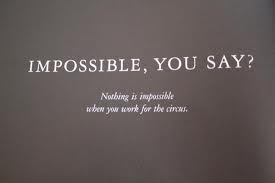
The cover of the book has a very elaborate series of very short stories by Eggers (these same stories appeared on the inside cover of McSweeney’s 23). For reasons I’m unclear about, the rings of stories have been rotated somewhat so it is does not look exactly the same–although the stories are the same. The inside photo of the book also gives the origin of the phrase “Impossible, you say? Nothing is impossible when you work for the circus.”
The opening pages show the original letters that Dave Eggers sent out to various writers seeking stories and ideas that were rejected by other publications (and interesting idea for a journal).
Starting with #1 we get brief interviews with Sarah Vowell, John Hodgman, and Arthur Bradford. There’s even an explanation of the Meg McGillicuddy Series (and a notice that David Foster Wallace ordered some). There’s talk about how they made #4, the issue in a box (and why and what they would do differently). There’s the many different covers off issue #5 (the Ted Koppel issue–which I had never taken the cover off of and never even saw Koppel until I read it not too long ag0).
Most interesting to me was information about the original McSweeney’s storefront (1999-2003) in Brooklyn, which I knew nothing about. There’s also a wonderful explanation of how they started publishing in Iceland. It comes with a funny story about an artist who dropped houses from cranes and photographed them (Peter Garfield) whose book was published by Oddi (which Eggers thought was a joke).
I can also remember when I first got my McSweeney’s issues that they offered a lifetime subscription for $100. I wish I had taken them up on it as they still honor it today.
Some other things they talk about are Lawrence Krauser’s Lemon, for which he drew an individual cover on each book (10,000!). There’s details about David Byrne’s books, along with an interview with him. He explains that The New Sins was put in hotels in Spain as a giveaway/joke. I wonder how many copies are still there. There’s an interview with Millard Kaufmann and a long explanation of the three awesome cover sleeves of Michael Chabon’s Maps and Legends (and how each of the separate paper covers depicts things mentioned in the book (I had no idea)).
I also enjoyed their system for reviewing unsolicited materials (and the accompanying bin).
My favorite moment was about Egger’s You Shall Know Our Velocity. When it was published the text began on the front cover, continued on the inside cover and proceed from there. I worked at Baker & Taylor and the people who received books could not wrap their head around the fact that it was supposed to be like this. And so they kept returning them. McSweeney’s happened to be my publisher at the time (how lucky was I?) and I kept getting more and more orders for this book which we then kept sending back. And since I was a peon (don’t even get me started about how much I hated working there) no one would listen to me until it finally went up to higher authorities who dealt with it. This book includes a photo of a B& T return form with the book circled. Now everyone can laugh at them as I did.
This book was also very helpful in explaining the difference between the subscription version of McSweeney’s 10 (which I never got as I wasn’t a subscriber for a short while) and the mass-market version. The real difference appears to be the cover–although I haven’t actually read it yet so I don’t get to compare. Eggers sad that their version is much much heavier than the Vantage one. I’d love to see a copy of it.
Issue #11 had three covers which I didn’t know. In this case the publishers had limited availability of the different colors, so they decided to do small runs of each. There’s also fun insights into the accompanying DVD.
There’s a lengthy bit about William Vollman’s Rising Up and Rising Down, the $500 7 volume set (and the one McSweeney’s book that I will never own–although I did just get the shorter paperback version pretty cheap). There’s a great discussion about the amount of time and energy (and interns) that went into proofing and fact checking the goliath and how happy Vollman was to see it in print.
For issue #13 there’s a lot of early sketches by Chris Ware and when they talk about The Believer, we get to see initial sketches by Charles Burns.
For issue #14 he says there were some complaints about the cover (a legless George W. Bush–I’m not surprised) and there’s a brief explanation as to why a comb was included in issue #16 (pretty much nonsense–although people have found meaning in it.
I loved reading about #17, the one that looks like a big pile of mail. The address is real (it was Eli Horowitz’ parents house) although the name is nonsense (they thought Sgt Maria Vasquez Jr was very funny). Horowitz’ parents got many many pieces of the book sent to their house because the packaging wasn’t very sturdy and pieces fell out all the time. (At first they tied to find Ms Vasquez, then they realized it was McSweeney’s thing). Incidentally Yeti Researcher is all “true” stuff from people who have done research on abominable snowmen. I do regret not getting Corrugated Miniaturist–which was cancelled in places of the TSA suitcase checklist, although that is probably just as funny.
It was fun reading the origins of Wholphin (including the name) and the origins of the booklets in issue #19 (the box of military ideas). It was frankly staggering to see how many of their ideas came from other sources which they copied as faithfully as possible. So very cool.
And, most exciting–the text on the cover of #20, which was obscured by art, is revealed!
For reasons unexplained they do not talk about issue #21, but they do give some great details on the beautiful cover of #23 (which was all hand drawn!) including a bunch of drawing that didn’t make the issue. People were disconcerted by Issue #26 with the Where to Invade Next book (as was I), and it shows the original books that they based the two smaller booklets on .
They get as far as Dave Eggers’ The Wild Things (with the fur cover) and McSweeney’s issue #31, which I always thought looked like a yearbook and which they say looks like a yearbook although they didn’t want it to.
This book was simply fantastic. There are far too many names of authors and artists to include here. Some have a paragraph, other get a longer section. But basically, anyone who has contributed to the books gets to give their two cents. It’s a lot of fun.
Even if you don’t care about the McSweeney’s empire, it’s a fascinating look at how a small company made beautiful books on the cheap and didn’t scrimp when it came to quality. And the art is great, too.

 I Just Read About That...
Leave a comment