 SOUNDTRACK: OS MUTANTES-” Picadilly Willie” (2013).
I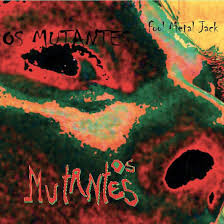 enjoyed this album so much (thanks NPR for the stream) that I had to talk about this song and how radically different it was from yesterday’s track. “Picadilly Willie” is this wonderful old-sounding rock song. It’s got a very classic rock riff, but there’s something slightly off-kilter which makes it sounds more like Frank Zappa classic than radio classic. And when the vocals come in (with a sinister laugh) it sounds more like Mr Bungle than anything else (I wouldn’t be surprised if Mike Patton was a fan of Os Mutantes).
The song ends with what sounds to me like Middle Eastern sitar music and echoed chants of “Bra-zil!”
And these are just two of the styles of music on this wonderfully wild and diverse CD. I can’t wait for its release.
[READ: April 22, 2013] Bartelby & Co.
I read about this book in the Bolaño interview book. Vila-Matas was one of many authors that Bolaño highly recommended–this book in particular. And, it was one of the few books on that extensive list that has been translated into English.
This book follows in the rich tradition of books that are more or less lists about people and not really novels at all. (This seems like a peculiarly Latin American pastime, at least in my experience, as there are nearly a half dozen books that seem to do this, including several by Bolaño).
The key to this book is in the title: Bartelby. The narrator is a hunchbacked loner, and he decides to catalog all of the instances of writers who have in the grand tradition of Herman Melville’s Bartelby the Scrivener said “no, I would prefer not to” write anymore. And so this book becomes a series of notes without a text. The glorious list includes many famous and not so famous writers (the most famous being Salinger) who whether famous or not, decided to write no more. And thus we have 86 “sections” in which the narrator writes about writers who stopped writing. For most of the he gives their reason for no longer writing, for others he simply likes talking about how they stopped writing or what their circumstances were before they stopped.
He more or less refuses to talk about writers who stopped writing because they killed themselves, although he does include one or two exceptions. And I admit that I didn’t know a majority of these authors, because they are primarily Latin American or Spanish. But whether they were real or not (which, again, I assume they are all real), the stories were fascinating and the whole premise was an interesting one.
Now, there isn’t much “story” to this book. It is pretty explicitly just “notes.” But the narrator’s own life creeps into the sections once in a while like when his friend Derain sends him items to add to his list. Derain helps him out but seems to be sending things that will moderately upset the narrator (and he asks for money for the information, too). And while obviously the narrator is putting his own spin on the information, it’s only in section 57 (page 120 of the 186 page book) that we see a bit of the narrator himself. He introduces us to an old school friend named Luis Pineda. Pienda was cool and hip and, surprisingly, treated the narrator and his hunchback respectfully. This whole section, in which he continues to revisit his occasional friendship with the man turns out to be surprisingly touching and rather sweet and is certainly the heart of the book.
I enjoyed Vila-Matas’ writing style (or at least Jonathan Dunne’s translation). There were a few times when I wished the book had more narrator and less academic feelings, but overall this was an unexpected find and one that I really enjoyed. (It’s also not lost on me that Vila-Matas has written seven novels since this one).

 I Just Read About That...
Leave a comment