
SOUNDTRACK: OS MUTANTES-“Fool Metal Jack” (2013).
I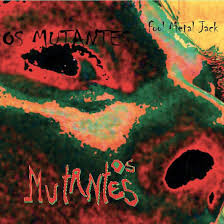 have known about Os Mutantes for years. I never knew anything about them (and never really understood their name–although now that I have been working with Brazilian books at work I realize that their name is Portuguese for The Mutants (it was the Os that always threw me off). I had no idea that a) they’d been around since the 60s and were part of the psychedelic scene or b) that they were still around (after some breakups and with a largely new lineup) or c) that they sang in English (which they do on several songs on this album) or d) that their new album kicked so much ass.
The album is called Fool Metal Jack and it is a fantastic mixture of fast heavy rock, Brazilian traditional sounds, what I assume are Native Brazilian chants and a heavy dose of weirdness. All wrapped up in an anti-war stance, like on this track “Fool Metal Jack.”
A creepy, distorted bassline introduces this song which sounds like the guy from Gogol Bordello singing a Tom Waits march. It’s about a soldier in the middle of a war. The bridge means more voices come in, bringing in an even more disorienting sound. And the chorus chanted “Yes. No More War” completes the song. By the time the wailing guitar solo comes in the chants of “This is the war of hell” have even more impact.
This stomping song was a great introduction to this band who I now need to explore further.
[READ: April 18. 2013] The Last Interview
I enjoyed Kurt Vonnegut’s “Last Interview” and since I had always intended to read Bolaño’s I was delighted to see that our library had it. Bolaño is a fascinating interview subject because you never really know what he is going to say. There are even serious questions about the veracity of his life story which many people believe he fabricated for more dramatic effect.
But the one thing that is absolutely consistent about Bolaño is that he always praises writers whom he respects (and will trash those he doesn’t, although that seems to come more from the interviewer’s instigation (not that he needs a lot). So the last interview that he did is the one from Mexican Playboy which has been collected in Between Parentheses. But the other three are earlier and, it seems, a little more “truthful” or at least less naughty-seeming.
What’s fascinating about this book is that the introduction by Marcela Valdes (“Alone Among the Ghosts”) is over 30 pages long! The article originally appeared in The Nation on Dec 8, 2008 (read it here). As such it’s not an introduction to this book, it’s introduction for English readers to Bolaño circa 2666. And it’s a great read. It is primarily about 2666, which Valdes has read many times. She goes into interesting depth about the story but mostly she relates it to Bolaño’s own experiences while writing the book. It focuses especially on his research about the real murders. His interest was genuine and he sought help from a reporter who was doing genuinely decent work (ie. not accepting the word of the state about what was going on).
Bolaño has said he wished he was a detective rather than a writer, which explains The Savage Detectives and Woes of the True Policeman. But Valdes also points out how almost all of his shorter novels have some kind of detective work involved–seeking someone who is lost or hiding. The article was really great and is worth a read for anyone interested in Bolaño, whether you have read him or not.
The first interview “Literature is Not Made from Words Alone” is from the Spanish magazine Capital from 1999 with Hector Soto and Matias Bravo. It is primarily about Bolaño influences (he unequivocally praises Vargas Llosa and Garcia Marquez, e especially GM’s No One Writes to the Colonel).
The second interview is from 2002. It is with Carmen Boullisa and was printed in the American magazine Bomb (after being translated by Margaret Carson). It’s called “Reading is Always More Important that Writing.” This interview starts with discussions of Latin American writers and the division of realist vs fantastist. Boullisa is a writer herself and her work focuses on feminism and gender roles. It’s always fun when writers are interviewed by writers, and it’s clear that Bolaño respects Boullisa so the interview is very interesting and informative (and yes, very name drop-y). Bolaño has a very funny sequence in which he talks about things that are more fun than writing–like robbing a bank. Unfortunately the bank robber is usually killed, so writing is the safest amusement for him.
The third interview is in the Barcelona magazine Turia. From June of 2005, the interviewer was Eliseo Alvarez and it was called “Positions are Positions and Sex is Sex.” This interview opens with questions about his reading as a child and about his parents (they never read). Bolaño says that he never stole a book that he didn’t read cover to cover. This interview has a lot of his personal history. How he became a Trotskyite and about being in jail in Chile for 8 days (which he says some reporters have stretched to eight months). There’s also a great discussion about Latin American poets, Octavio Paz and Carlos Fuentes and of course the beloved Neruda and Borges. Bolaño is an excellent resource for great authors (most of whom have at least one book translated into English).
The final interview, from Playboy (with Monica Maristain) is lighthearted and fun. There are some serious questions, but they are primarily lighthearted and the type of question you might expect from Playboy. I wrote about it in the Between Parentheses post.
One really nice thing about this series, especially for Bolaño is that in the left and right margins they give a little “footnote” about all of the writers that he mentions. So you get a huge compendium of writers that Bolaño respected, admired or derided with a little summary of each writer’s highlights. It’s a great little chart and I have written down a number of books to check out from the list.
I’m not sure why I got the impression that this series of books wasn’t really very good. Again, perhaps people were put off by the recycled nature of the interviews, but I think they’re a great resource for fans of these authors.
For ease of searching, I include: Roberto Bolano.

 I Just Read About That...
Leave a comment