 SOUNDTRACK: MATISYAHU-“Chop ‘Em Down” (2004).
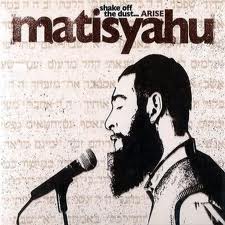 Matisyahu was something of a novelty when he appeared in 2004–a Hasid who performed dancehall reggae. And yes, it does look very strange. But he is quite adept at the style. And lyrically it works really well. Reggae is (often) a very spiritual music so Matisyahu’s own spiritualism works with the beats he lays down. Instead of Jah, we hear about Egypt and Pharaoahs. And the “scatting” that he does is like the scatting found in more typical reggae but it has a more Middle Eastern feel. It’s a neat concept and well executed.
This is not a style of music that I like a lot (one song is usually enough for me), but I really like the sound he has conjured. It’s clear that he transcends the novelty and is a genuine fan of the music. It’s an interesting way to expand people’s horizons (on both sides).
Interestingly, in 2011, Matisyahu shaved off his beard and dropped his Orthodoxy. He is still spiritual, but without the trappings of his faith. Fascinating. Here’s a before and after photo.


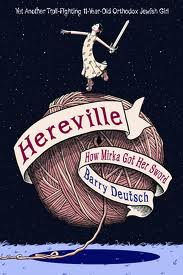
[READ: January 18, 2012] Hereville: How Mirka Got Her Sword
I enjoyed the second book in this series quite a lot. So I found the first one to read too. Who can pass up a book subtitled: Yet another troll-fighting 11 year-old Orthodox Jewish girl. I had said that you didn’t need the first one to enjoy the second one. And that’s true, although I now know that the first one would have laid down a foundation for me to enjoy the second one even more.
What is neat about this story is that there isn’t a lot of exposition up front. We learn that Mirka is an 11-year-old Orthodox Jew living with her family (which contains many siblings). She is a little wild and not interested in being “good.” She’s not bad at all, just spirited–she really wants to fight a dragon. It’s not until later in the story that we learn that she has a stepmother (unless that is obvious to Orthodox readers from the way Mirka addresses her) and that there may actually be dragons in this world.
The book presents Orthodox life and its day to day realities. It doesn’t explain or justify the details, it just shows them (with occasional translations of Yiddish terms). Although it must be admitted that Hereville, where the family lives, is a bit unlike other communities. Everyone who lives there is Orthodox and non-Orthodox reading materials are not permitted. And indeed, when a pig shows up, the children don’t know what it is.
So where did the pig come from? Well, it turns out that Mirka and her siblings discovered a huge old castle. It was very old, so how had they never noticed it before? When Mirka plucks a grape from the vine, a pig comes out and charges at her. And every day for the next few weeks, the pig seeks revenge on Mirka: eating her homework, butting her and generally terrorizing her. (And of course no one believes her because why would a pig be there?)
After she has had enough she subdues the pig and he pledges to leave her alone. But later that afternoon, she sees that the pig has been caught by two bullies (the bullies who abuse her little brother). She beats up the boys and frees the pig (who can talk of course). When she frees it, a witch comes along and thanks her. She wants to repay a favor and reads Mirka’s mind. She learns about the dragon slaying wish. The witch tells her how she can get a sword to start her on her way.
She must defeat a troll. And the bulk of the end of the book is devoted to preparing for battle with the troll–despite the protestations of her brother and the fact that Shabbos is coming.
I loved this story. I really loved the style of art–there’s something so clean and simple about the lines Deutsch uses (he says it was all done online and I can’t believe he can draw so well with a tablet!) I also love the mix of Orthodoxy and fantasy–that they observe Shabbos but also have witches in town. I also enjoyed learning little details about Orthodoxy that I never knew. I knew that they didn’t turn light switches off or on (what a waste of electricity!), but did not know that they pre-ripped toilet paper (can that be true?). I’m also surprised to see Orthodox bullies, as I never imagined that there could be Orthodox bullies–it just seems…wrong.
This was a great story, in which wits are more important that brawn–but a little bit of brawn sure helps.

 I Just Read About That...
Leave a comment