 SOUNDTRACK: THE SMITHS-“Girlfriend in a Coma” (1987).
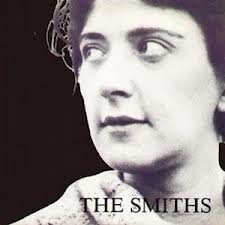 Big bouncy basslines open this poppy little ditty that belies its happy music by saying “I know it’s serious.” The song is catchy and poppy and then there are some strings and martial drums and in 2 minutes it’s over. What a strange and wonderful single from the Smith’s final album.
The single came with two B-Sides. “Work is a Four Letter Word” which I never realized was a cover until reading about it now. Of course it does seem very un-Smiths upon reflection. And apparently Johnny Marr hated it. “I Keep Mine Hidden” is the second B-Side. I thought I had heard every Smiths song, but I don’t recognize this one at all. It’s an okay song, not exactly a great hidden gem or anything. If it were on the album, you;d say it should have been a B-side. So, well done, lads.
The craziest thing about this whole single–three songs–is that it is under 7 minutes long in total. Ah, I remember the 80s.
[READ: October 14, 2012] Girlfriend in a Coma
I’m glad I watched the short film Close Personal Friend just before reading this because it really did put forth a lot of the ideas in this story. The crazy thing is that I read this book in 1998 but I didn’t remember very much of the story until the very end (which is surprising given how over the top some of the scenes are!).
And, let’s not overlook the Smiths connection. Not only is the title a Smiths song, but there are dozens of instances where Coupland includes Smiths song titles and lyrics, sometimes in conversation. In a short succession I saw: the queen is dead, oscillate wildly, bigmouth strikes again, hand in glove. It’s like a scavenger hunt.
But on to the book.
Like other Coupland stories, this one centers around a group of high school friends. There are six in the beginning because one (Jared) died of cancer. But Jared is actually the narrator of the novel (Parts 1 and 3, anyway). [Since the Vonnegut connections are unavoidable now, this set up is not that dissimilar from Galapagos–with a ghostly/angelic narrator who tells you right off the bat that he is either dead or ghostly or simply not living].
The other friends include Hamilton and Pam, Wendy and Linus and Richard and Karen. As the book opens we learn a bit about each of the characters, but we focus on Richard and Karen. They are about to have sex for the first time–on a ski slope. Karen has been having very weird premonitions lately She even wrote them in a letter to Richard which she insisted that he not open. After the ski slope, they went to a party. There were drugs and alcohol (the party was a homewrecker, literally, although they did not participate in that part).
And then that night she went into a coma. Which lasted 17 years. (This was evidently inspired by the case of Karen Quinlan who did not survive her multi-year vegetative state). The friends’ lives go on while Richard and his parents and of course Karens’ parents visit her regularly. And this is where we learn a bit about the friends: Linus goes on a soul searching quest; Wendy becomes a doctor; Pam becomes a model.
It’s fun to see how the lives of the others progress through that 17 year span–the connections that they make with each other and with the world. But it’s also sad to see how little they change over the years (this is Coupland’s point). Sure, some get money and some lose money and some get addicted, but largely they seem to barely move forward. Never really questioning anything. Being more excited by things than by life.
Oh, and there’s one more thing. Early into her coma, we learn that Karen is pregnant from the night on the slopes. And so Karen’s mother, deeming Richard unfit, pledges to raise the baby.
Slowly (and yet quickly at the same time) 17 years pass. The baby is grown, the characters have paired off and Richard is an unholy mess, essentially waiting for something to happen with Karen before moving on. And then Karen wakes up. Fortunately for all, her mind is sharp (although she’s still 17) but her body is a wreck. And she can still see visions. Obviously the media attention is huge, but they stay safe and secure, hiding out, until they decide to give that one interview.
And that’s when the novel changes utterly. Suddenly, Part Two becomes a post-apocalyptic nightmare world in which a plague starts killing off everyone on the planet.
Seriously.
Part Two is a weird section indeed.
Part Three gives us the reason for this dramatic occurrence, and it’s one that works. It also allows the story to become the spiritual work that Coupland clearly intended. When Jared returns to them to explain just what happened, it brings depth to these shells of humanity. This finale of the book becomes the moral heart that Coupland has been advocating at least since Close Personal Friend–a dropping away from things and a return to love of humanity.
It’s a little preachy, but Coupland’s style always takes some of the saccharine off his stories.
All in all, despite the similarities to Vonnegut Coupland comes down 180 degrees away from him, with a spiritually uplifting novel that cynics may scoff at (and that’s the point), but which really does try to work to save people’s humanity (and souls). It may come as something of a surprise when you think about Coupland’s more famous works, but it fits perfectly with his overall worldview.
I didn’t love the book–the transitions were really jarring and it felt a little too much (and too long) at times, but it was still a good read.

 I Just Read About That...
Leave a comment