 SOUNDTRACK: NADA SURF-The Stars Are Indifferent to Astronomy (2012).
 Nada Surf continues to put out poppy guitar rock. I tend to link them with Guster, in that they write really catchy pop songs about unexpected things. The songs are usually fast, but they also writes some slower songs too. They would make a good double bill.
This album with the wonderful title is 38 minutes long, a perfect light summer album. If you don’t get “Waiting for Something” (which I agree is repeated waaay too often in the chorus) stuck in your head, then you haven’t been listening to this record.
All ten songs feature bouncy guitars (except “When I Was Young” which opens as a slow ballad), although even this song, after about 2 minutes, calls forth loud electric guitars. There are some elements that show the band “maturing”–strings on “When I Was Young” horns on “Let the Fight Do the Fighting.” But one of the songs references Gilligan’s Island, so they’re not maturing too much.
And some of the songs sound like throwbacks to other eras too, the 60s guitar intro of “Jules and Jim,” the R.E.M. ish intro of “Waiting for Something.” It’s a great album, fun, catchy and perfect for driving.
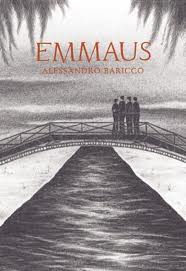
[READ: July 24, 2012] Emmaus
I had no idea who Alessandro Baricco was when I got this book as part of my Book of the Month deal with McSweeney’s. But I’ve never been disappointed by one of their new books before, so it was worth checking out.
The book is short–134 pages–and is novella length, which is the perfect length for this story. [I had just read about Jim Harrison and his novellas, and I believe that there needs to be more novellas published]. This book was originally written in Italian and was translated by Ann Goldstein.
There is a prologue which is completely exciting and absolutely wonderful. It’s only a page and a half, but it is intriguing, funny, deep and, most of all, really surprising.
The opening of the book doesn’t quite match the excitement of the prologue, but that’s because this novella has two aspects–deep, thoughtful introspection and base, animal instinct. And Baricco/Goldstein does an excellent job keeping the flow and continuity going between these two very different writing extremes.
The book reminds me of Jeffrey Eugenides’ The Virgin Suicides for two reasons. One: it is written about a group of boys and is written in the second person plural (at least the beginning is) and two: they are all watching a girl who is beyond their ken–someone of their world but not, someone who is en route to hurt herself. And there’s nothing they can do about it.
But this book is entirely its own. There are four boys who make up the initial “we” (and when it diverges from plural to singular, you really feel the loss of the other boys). And so the book starts: “We’re all sixteen or seventeen years old, but we aren’t really aware of it.” The four boys are good boys–Catholic (and believers, at that), who play in the church band, who volunteer removing catheters at the poor person’s hospital and who plan to not have sex before marriage (heavy petting is okay but it never goes too far). The four boys are: the narrator, whose name is never given I don’t think; Luca, whose father is rumored to be suicidal; Bobby, the most outgoing of the bunch and The Saint, a very pious young man who has designed for the priesthood and who is not afraid to be seen as more pious than you.
The girl whom they are all obsessed with is Andre. Andre is the kind of girl that all eyes are drawn to. But when we first see her, she is little more than a partying girl (who has lots of sex). They don’t really lust after her, they are just aware of her. And when they see her giving a blow job in the front seat of a car (well, they see the top of her head), that seems to solidify something for them. Incidentally, because I grew up in New Jersey, I assume all Italians are dark-haired. Imagine my surprise to hear that Andre is blonde (even the “triangle between her thighs”). [Baricco grew up in Turin, so I guess that makes sense].
Baricco packs this brief story with lots of details about the families (although very little about the narrator’s family). We learn about Andre’s mother (and her hard-to-believe story about how Andre was born), we learn about Luca’s father and why he goes to the balcony and looks out over the railing every night during dinner. And we learn that Andre tried to kill herself by jumping off of a bridge (the bridge that the cover image shows).
I really enjoyed the way the boys remained true to their piety until it was too much for them to manage. And how some even tried to retrieve their piety once it was gone. But the devil works in mysterious ways–the boys invite Andre to sing with them (not at church but like a real band), in what seems more like an attempt to keep an eye on her than anything else. She declines, but somehow Bobby winds up playing songs for her while she dances. This leads to a fairly shocking scene later in the story. I enjoyed the way the narrator and The Saint went to Andre’s mother and warned her about what was happening to her daughter. Their piety and cockiness leave her mother unfazed. And yet somehow her reply tears them down a bit as well.
And inevitably the boys start to drift apart–Bobby and The Saint try to go for a hike together to bring themselves closer but Bobby just can’t be bothered with that anymore. And besides why did The Saint bring a gun? Afterwards, Bobby starts hanging around with Andre’s friends. Even the Saint gets mixed up in surprising events. But when all four boys reunite for a big party, it seems like they may be able to reunite as a posse again. Until, once more, Andre changes that. And that’s when things get really intense.
The last quarter of the book is really interesting–going in directions I never would have guessed (a transvestite is involved).
Interspersed with all of this action are reflections on holiness, the Bible, decency and purity. The title comes from the bible (not Emmaus, PA, as I might have guessed, right Nico?). The resurrected Jesus appeared to two disciples who were walking from Jerusalem to Emmaus. Some of these sections are a little ponderous (which is the point I suppose), but when there is so much action to be had, and so many things to clear up, I found them to be a little tedious). But overall the story was wonderful, mixing equal parts sacred and profane (and the boys’ inability to determine the difference was a great touch).
I would certainly look for more works by Baricco. (Quite a few of his books have been translated into English).

 I Just Read About That...
Leave a comment