 SOUNDTRACK: YOU SAY PARTY! WE SAY DIE!-“Monster (RAC Remix)” and “Like I Give a Care (Octopus Project Remix)” from Viva Piñata! (2008).
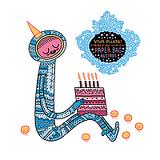 Viva Piñata is a free CD compilation that I received I think when I ordered a Tokyo Police Cub CD. It celebrates “5 years of ass-whippin’ at Paper Bag Records.” It came out in 2008, so presumably, Paper Bag Records has now been whippin’ ass for 9 years.
You Say Party! We Day Die! (that’s a name that seems to be trying too hard) is from British Columbia, Canada and they seem to be a noisy keyboard band. “Monster” is a keyboard-heavy poppy song. Of course, since this is a remix I have no idea what the original sounds like. The lead singer has a cool deep voice (a more poppy Kim Gordon, perhaps?). But this song is dominated by the propulsive synths.
“Like I Give a Care” has a remix that is even more intense, overeffected, noisy and chaotic with a great propulsive bass. It also seems like most of the song has been stripped, leaving just a chorus repeated. As a remix it works fine.
I’ve often complained about remixes–if I like a song, why would I want to hear a remix of it? This is the opposite. I’ve never heard the song before and the remix is kind of fun. I’m intrigued to hear what they actually sound like.
[READ: March 22, 2012] “I Can’t Read”
Another month, another excerpt from a new posthumous Bolaño release. This latest book is called The Secret of Evil which Harper’s says will be out this month (we’ll see about that). The Secret of Evil is evidently a collection of unfinished pieces that Bolaño was working on when he died.
This particular story certainly seems finished, so who knows what the rest of the book will be like.
I am particularly fond of this kind of story from Bolaño–it reads like nonfiction (and maybe it is). It seems to be a true account from his life (written in first person and about his family)–it’s a personal, relaxed style in which he muses about things and events. It is also set during his first trip back to Chile since leaving in 1974 (a subject he mines quite well).
This one starts with the line: “This is a story about four people.” The first two people he talks about are his son Lautaro and a new friend that his son made named Pascual. Lautaro was eight and Pascual was four, but since Lautaro was desperate for someone to play with, he overlooked the age difference and made a holiday friend.
Bolaño tries to synthesize a few things that happened on this trip. The first is when Lautaro peed in the swimming pool. But he wasn’t in the pool, rather, he stood outside and peed into it. The second is that his son had learned a cool trick about approaching automatic doors in such a stealthy way that they did not open. Bolaño inserts a comment about this and in typical Bolaño fashion says “I can’t remember which writer said [this]” that “if God was omnipresent, automatic doors should always be open. And since they’re not, God doesn’t exist.”
Lautaro became quite good at this–his stillness was the key. Or was it his desire for invisibility? Maybe that’s why he peed in the pool, thinking he was invisible?
The essay or story ends with a trip back to Chile the following year. Bolaño was invited back by the Book Fair and was thoroughly attacked by the other writers–calling him an ass kisser (from both the political left and the political right). The final two lines are pretty darn hilarious.
Although I’m not entirely certain how it all ties together, in Bolaño’s story-essays tangential ties seem to make for the most enjoyable anecdotes.
For ease of searching, I include: Bolano, pinata

 I Just Read About That...
Leave a comment