 SOUNDTRACK: BLACK 47-ep (1992).
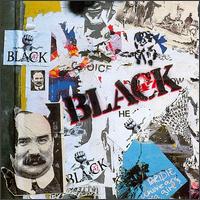 The name Black 47 comes from the Irish famine (and it’s mentioned in Episode 12 of Ulysses. I saw Black 47 on tour in Boston just before this EP came out. They played a fantastic live set and had a ton of energy. I was really excited to ge the EP. And I liked it very much.
Then I got a new roommate who was from Ireland, staying in the US for school. And man did he hate Black 47. He hated the “fiddle dee diddle dee” and the “Bridie!” and oh so much about the band. And now when I listen to it I hear all of his complaints and I like the disc a bit less.
It’s true, the single “Funky Ceili” is pretty over the top with the Irishyness, and having a chorus of fiddle dee diddle dee didley dee is kind of obnoxious. But the song still stands pretty strong.
I am much more taken with “James Connolly” a rousing rocker with historical awareness. I can do without the over-earnest bit about “Lily” but the rest is pretty great.
Overall the disc has a bit too much in the wailing saxophone department. I don’t dislike the saxophone in general, but there’s a bit too much of it on here. Larry Kirwan’s voice tends to veer into some weird whiny territory (once or twice I thought he sounded like Robert Smith), but his main singing voice is just fine, especially when he’s rocking out.
The band is still playing today and in fact released an album this year, although I haven’t listened to them much since the 90s.
[READ: Week of August 2, 2010] Ulysses: Episodes 10-12
Much like last week’s reading I really didn’t enjoy this week’s very much on the first read through. On my second skim through the chapters, I got a lot more out of it. It feels like there’s a lot of “noise” in the chapters–he’s including little bits of everything–but if you can cut through the chatter, you can find the meat.
Episode 10, which was from many different perspectives, was a nice break in the stream of consciousness. But Episode 11 was a dry slog about music and Episode 12, while often kind of funny was (I assume deliberately) long-winded with many man lists and all kinds of esoterica about Ireland.
Episode 10 “Wandering Rocks”
As mentioned, Episode 10 comes from neither Bloom nor Stephen’s point of view. In fact, it follows about 19 characters as they wander through the city. It opens in third person with a look at the very reverend John Conmee, S.J. And we watch as he walks through the city. He talks to some kids (and gives one a letter to see if he can jump to the slot in the mailbox). He mentions his surprise that there is no tramline on such an important thoroughfare (a similar thought was mentioned by the gentlemen on the way to the funeral, but I’m not sure if it was the same part of the city).
Although the priest hops on a train to avoid going through a particularly unpleasant section of town, he does marvel at the “providence of the Creator who had made turf to be in bogs whence men might dig it out and bring it to town and hamlet to make fires in the houses of poor people” (182).
As we get to the end of his travels, a flushed young man and woman sneak out of the bushes. He “blessed them both gravely and turned a thin page of his breviary: Sin.” (184).
Next we move to Corny Kelleher, whom we have seen before (is there a site which details all of the character’s appearances?). Kelleher owns the funeral home. He watches Father Conmee get onto the tram and has a nice chat with the constable.
Next a one-legged sailor begins begging down Eccles Street shouting “For England” and “home and beauty.” He walks past Katey and Boody Dedalus, two of Stephen’s sisters (more on them in a moment). Some people give him coins, including a woman who throws the coin out the window (a street urchin puts it in his cup for him).
Katey & Boody (Boody?) go home where Maggy is cooking. They tried to sell some of Stephen’s books but they got nothing. They learn that Dilly (so that’s 4 sisters) has gone to meet their father (“who art not in heaven,” says Boody) (186).
Blazes Boylan goes to Thornton’s and buys a bottle swathed in pink tissue paper & fruit. And he has them sent by tram. He takes a red carnation in his mouth and leaves the store (but not without flirting with the girl there).
A brief interlude with Almidano Artifoni (“art phony?”) with a lot of Italian in the section. His section is the first to mention Stephen in the Episode.
Miss Dunne hides a copy of The Woman in White as the sandwichmen from H.E.L.Y’S walk past. And here is where we learn the date that the book takes place: “16 June 1904” (188). She sees Blazes Boylan and tells him that the gentleman from Sport will meet him at 4 in the Ormond.
Ned Lambert & J.J. O’Molloy are in the chamber of saint Mary’s abbey, “the most historic spot in all Dublin” (189). O’Madden Burke is going to write something about it one of these days. Lambert is speaking to a vicar named Jack. Then Lambert starts sneezing.
Tom Rochford is in the newspaper office showing off the new mechanized set up (something involving discs). Nosey Flynn is impressed. Then Lenehan says he’s going to “sound” Boylan in the Ormond. We learn that Tom Rochford dove down a drain with a rope tied around himself to save someone (“the act of a hero”) (191). And I believe that Lenehan talks about the lovely pulchritude of Molly Bloom (I don’t think he’s suggesting anything more than that).
Bloom himself is looking for a book for Molly. And he chooses Sweets of Sin.
Dilly Dedalus goes to her father for money. He says he has none. She insists and he says, “You’re like the rest of them, are you? An insolent pack of little bitches since your poor mother died” (195). Which rather takes some of the shine of of Simon’s star for me.
Mr Kernan and Mr Crimmins speak about, among other things, the General Slocum disaster: a thousand casualties. And they joke: “America. What is it? The sweepings of every country including our own. Isn’t that true?” (197). His excellency passes but they miss him by a hair.
Stephen gets more time here. He watches the lapidary’s fingers. He browses books, and picks up How to win a woman’s love. Dilly spies him. She is buying a French primer and he warns her that Maggie might pawn it. And he thinks Inwit’s agenbite. (which translates as “remorse of conscience”).
We then see Simon and Fr Cowley (a snippet of their conversation appeared in the Kernan/Crimmins section). Father Cowley is in trouble with a certain gombeen man, but he’s going to ask Ben Dollard for help. While they are chatting Cashel Boyle O’Connor Fitzmaurice Tisdall Farrell walks past. Ben Dollard arrives and eases Fr Cowley’s fears about he matter.
Martin Cunningham thinks about the two barmaids from the upcoming scene: Bronze: Miss Kennedy; Gold: Miss Douce. He is talking with Mr Power & John Wyse Nolan. Nolan says that Bloom put himself down for 5 shillings at Dignam’s funeral (and already paid up). Long John Fanning joins them, although he does not know who Dignam was.
Then Buck Mulligan whispers to Haines: “Parnell’s brother. There in the corner. John Howard Parnell, the city marshal” (204). They order mélanges and scones and butter (and cakes as well). Mulligan says they call the place D.B.C. because they have damn bad cakes. Mulligan tells Haines that he missed Dedalus talking about Hamlet, to which Haines replies, “Shakespeare is the happy hunting ground of all minds that have lost their balance” (204). The one legged sailor walks past, Mulligan said, “You should see him when his body loses his balance. Wandering Aengus I call him” (204).
Almidano Artifoni reappears and Cashel Boyle O’Connor Fitzmaurice Tisdall Farrell walks behind him, with stickumbrelladustcoat dangling. His umbrella catches on the blind stripling (whom Bloom had helped in a previous Episode) who almost falls and shouts, “God’s curse on you…whoever you are! You’re blinder nor I am you bitch’s bastard” (206)
Then we meet Patrick Dignam, Paddy Dignam’s son (this will cause confusion in a bit). He is carrying the porksteaks that he was sent for. He walks along, tells his schoolmates he won’t be in class tomorrow. He thinks about his poor Pa and hopes he’s in purgatory.
The final section sees William Humble, earl of Dudley accompanied by lieutenantcolonel Heseltine drive by in a carriage. And the carriage passes by just about all the characters we have seen this section (his carriage was spotted by many of the people as well).
Episode 11 “Sirens”
This episode is very challenging. The title Sirens makes sense as there is a lot of music in it.
It opens with almost two pages of single lined sentences. They are mostly abbreviated (Bloo) or nonsensical (Imperthnthn thnthnthn). And it ends with Begin!
From there we meet the two servers mentioned in Episode 10: Bronze Ms Douce and Gold Miss Kennedy (looks like Cunningham got it wrong?). And they gossip. Bloom’s name keeps surfacing, although I don’t believe he himself does for some time (or he is there and being ignored?) Bloom’s story parallels the action, and yet I never quite figured out if he was in the same restaurant.
A man enters and bangs on the bar. (This is where we hear Imperthnthn thnthnthn in context (impertinent insolence)).
Simon Dedalus walks in. Then Lenehan. Lenehan tells Simon he drank with Stephen today (and with Hugh MacHugh and O’Madden Burke). “That must have been highly diverting, says Simon” (216).
Simon changes the subject and comments that the bar has moved the piano. The tuner was in today (he’s blind…I think he is the man who Bloom helped and who cursed at the end of the last episode).
Then Blazes Boylan comes in (tan shoes creaking). He flirts with everyone. He buys a drink and plans to leave until Lenehan asks him to wait, “Come to Blazes” said Blazes going” (219).
Ben Dollard enters the pub and he asks Simon to play for them all. In addition to all the oddities of this Episode, we have a paragraph like this:
Father Crowley blushed hi brilliant purply lobes. He saved the situa. Tight Trou. Brilliant ide (221).
This is in reference to a scene with Molly Bloom in which Father Cowley saved the situation (with tight trousers apparently). Lenehan quips, “Mrs. Marion Bloom has left off clothes of all descriptions” (221).
George Lidwell comes in. Father Cowley plays the piano too. Ben “Bass Barreltone” Dollard sings. And there is much appreciation for Simon and Ben’s abilities.
While this is going on, Bloom is doing his own thing. Deaf to everyone else; Bloom is walking and thinking about writing to Martha. Eventually, he writes to Martha, and he runs into Richie Goulding. Richie invites him for dinner, which Bloom accepts. They have a simultaneous discussion about music while Simon is playing. This is what makes me think he’s in the same place as Simon, because the music seems to be answering his questions. And yet there’s no mention of him spotting Blazes Boylan, I don’t think.
He addresses his letter to Martha Richie asks if he’s answering an ad. To which he answers, yes.
And then we get more stream of consciousness from Bloom. “One rapped on a door, one tapped with a knock, did he knock Paul de Kock, with a loud proud knocker, with a cock carracarracarra cock. Cockcock” (232). And thus begins the Tap. Tap. I’m not entirely sure what the taps represent, except perhaps the taps of the blind man.
Bloom makes several excuses and then finally leaves. He makes it to the post office and mails his letter. He thinks of fate or kismet or yasmak (which is actually a burqa), and then he sees “the whore of the lane” (238) whom he had apparently long ago made an appointment with knowing they’d never.
He tries to avoid her by looking into a shop. And he yet again thinks about sales, “Course everything is dear if you don’t want it. That’s what good salesman is. Make you buy what he wants to sell” (238).
It appears that Bloom is getting drunk. “Must be the burgund” (239). And the episode ends with the fascinating:
Let my epitaph be. Kraaaaaa. Written. I have.
Pprrpffrrppffff.
Done (239).
Episode 12 “Cyclops” [I don’t have my copy here, so I don’t have page numbers at the moment; I will add them in shortly]
An unnamed narrator narrates this entire section. He is telling Joe Hynes about an incident that he witnessed. There are quotations all over the Episode, but they all come second-hand from this narrator. This Episode is very hostile to Bloom, and Jews in general. The end includes a discussion about race and nationalism.
This section is also notorious (so say I) for exceptionally long-winded passages that are little more than lists. Some of them are amusing and have little pay offs, but most of them are just lists and list of things. There’s also long-winded passages of legalese and medicalese.
And this Episode is primarily about “the citizen” another unnamed character and his dog Garryowen.
Garryowen is a mean mongrel dog. Everyone seems afraid of him and the citizen seems to beat the crap out of him at every opportunity.
The conversation seems to be between the unnamed narrator, Joe Hynes, Alf Bergan, Bob Doran and the citizen. The first order of business is drinks, of course. Terence O’Riley is the barkeep. And then they see Breen walking down the street so there’s more of that “U.P: up” business (everyone has an opinion about it, but again, it is not explained).
There is talk about hanging (Long John the executioner), and Bloom (who is walking around outside of the building). Alf says that he has a pile of letters from actual hangmen, and he takes them out of his pocket.
And then Alf reveals that he just saw Paddy Dignam walking down the street with Willy Murray. The men try to convince Alf that Paddy is dead, but there is nothing but confusion between them all. Bob Doran, who has been asleep through much of this, postulates that God is not good for taking away Willy Dignam.
Finally Bloom comes in. Garryowen growls at him, but the citizen says pay no mind. Bloom asks Terry if Martin Cunningham has been in to see him. (We learn a little later that Bloom needs to see him regarding Dignam’s insurance).
They read aloud the hangman’s letter and they all have a drink (except Bloom, who just wants a cigar). And they mention that after a hanging, an erection is the byproduct: “when they cut [Joe Brady] down after the drop it was standing up in their faces like a poker” (***).
And here we have the first mockery of Bloom. He chimes is about the erection:
— That can be explained by science, says Bloom. It’s only a natural phenomenon, don’t you see, because on account of the…
We return to the narrator:
And then he starts with his jawbreakers about phenomenon and science and this phenomenon and the other phenomenon.
And then we get one of the lengthy “medicalese passages” which mocks Bloom:
The distinguished scientist Herr Professor Luitpold Blumenduft tendered medical evidence to the effect that the instantaneous fracture of the cervical vertebrae and consequent scission of the spinal cord would…. [and this goes on and on] (**).
After some chatter, the citizen glares at Bloom and shouts:
— Sinn Fein! says the citizen. Sinn fein amhain! The friends we love are by our side and the foes we hate before us. [Sinn Fein literally means “ourselves alone”].
The talk moves on to the playing of Irish games in the park. The citizen is asked how well he played, Na bacleis he replies (“don’t worry about it”). He was as good as anyone else. (***). Even Bloom joins in the discussion, and our narrator mocks:
And of course Bloom had to have his say too about if a fellow had a rower’s heart violent exercise was bad. I declare to my antimacassar if you took up a straw from the bloody floor and if you said to Bloom: Look at, Bloom. Do you see that straw? That’s a straw. Declare to my aunt he’d talk about it for an hour so he would and talk steady.
And the men proceed to talk over Bloom anyhow.
Eventually they return to Bloom to ask about Molly’s summer tour. It’s organized by Blazes, he tells them. And the narrator chimes in with a bunch of nonsense which I assume insinuates that Blazes is touring Molly as well:
Blazes doing the tootle on the flute. Concert tour. Dirty Dan the dodger’s son off Island bridge that sold the same horses twice over to the government to fight the Boers. Old Whatwhat. I called about the poor and water rate, Mr Boylan. You what? The water rate, Mr Boylan. You whatwhat? That’s the bucko that’ll organise her, take my tip. ‘Twixt me and you Caddereesh.
J.J. and Ned come in (more jokes about U.P:up). And Bloom says Breen should sue for libel (a postcard is a publication). At least for his wife’s benefit.
The citizen jumps in:
— Pity about her, says the citizen. Or any other woman marries a half and half.
— How half and half? says Bloom. Do you mean he.
— Half and half I mean, says the citizen. A fellow that’s neither fish nor flesh.
— Nor good red herring, says Joe.
— That what’s I mean, says the citizen. A pishogue, if you know what that is. [it means “black magic”] (**).
Bloom doesn’t rise to the bait. And he keeps up his conversation. Meanwhile the citizen keeps throwing out barbs:
— Those are nice things, says the citizen, coming over here to Ireland filling the country with bugs.
— Swindling the peasants, says the citizen, and the poor of Ireland. We want no more strangers in our house.
— The strangers, says the citizen. Our own fault. We let them come in. We brought them. The adulteress and her paramour brought the Saxon robbers here.
Lenehan comes in all smiles because the tip that Bloom gave him came in (It was Throwaway 20-1).
There’s talk of the encroaching power of Europe in Irish affairs. They dismiss the French
— And as for the Prooshians and the Hanoverians, says Joe, haven’t we had enough of those sausageeating bastards on the throne from George the elector down to the German lad and the flatulent old bitch that’s dead? (***).
(It’s in this part that we get the citizen saying “They were driven out of house and home in the black 47.”)
More drinks, and then we hear Bloom and John Wyse talking about nations:
— Persecution, says he, all the history of the world is full of it. Perpetuating national hatred among nations.
— But do you know what a nation means? says John Wyse.
— Yes, says Bloom.
— What is it? says John Wyse.
— A nation? says Bloom. A nation is the same people living in the same place.
— By God, then, says Ned, laughing, if that’s so I’m a nation for I’m living in the same place for the past five years.
So of course everyone had a laugh at Bloom and says he, trying to muck out of it:
— Or also living in different places.
— That covers my case, says Joe.
— What is your nation if I may ask, says the citizen.
— Ireland, says Bloom. I was born here. Ireland. (**)
Bloom continues:
— And I belong to a race too, says Bloom, that is hated and persecuted. Also now. This very moment. This very instant.
He winds up:
— But it’s no use, says he. Force, hatred, history, all that. That’s not life for men and women, insult and hatred. And everybody knows that it’s the very opposite of that that is really life.
— What? says Alf.
— Love, says Bloom. I mean the opposite of hatred. (***).
And with that Bloom leaves, and the citizen makes some offhand remarks.
Finally, Lenehan says that Bloom is really off to collect his own winnings on Throwaway.
Bet you what you like he has a hundred shillings to five on. He’s the only man in Dublin has it. A dark horse.
— He’s a bloody dark horse himself, says Joe. (**)
The narrator throws in a few more jibes at Bloom:
God save Ireland from the likes of that bloody mouseabout. Mr Bloom with his argol bargol. And his old fellow before him perpetrating frauds, old Methusalem Bloom, the robbing bagman, that poisoned himself with the prussic acid after he swamping the country with his baubles and his penny diamonds. Loans by post on easy terms. Any amount of money advanced on note of hand. (*).
Finally Martin Cunningham comes in looking for Bloom, so there is even more chat about him:
— And after all, says John Wyse, why can’t a jew love his country like the next fellow?
— Why not? says J. J., when he’s quite sure which country it is.
— Is he a jew or a gentile or a holy Roman or a swaddler or what the hell is he? says Ned. Or who is he? No offence, Crofton.
— We don’t want him, says Crofter the Orangeman or presbyterian. (***)
The citizen eventually chimes in:
– A wolf in sheep’s clothing, says the citizen. That’s what he is. Virag from Hungary! Ahasuerus I call him. Cursed by God. (**) [Virag is Bloom’s father original name.]
Bloom returns, saying he was looking for Cunningham. Cunningham agrees to leave with him, and as they head out the door, one more barb from the citizen is all Bloom can take:
— Three cheers for Israel! […]
— Mendelssohn was a jew and Karl Marx and Mercadante and Spinoza. And the Saviour was a jew and his father was a jew. Your God.
— Whose God? says the citizen.
— Well, his uncle was a jew, says he. Your God was a jew. Christ was a jew like me.
Gob, the citizen made a plunge back into the shop.
— By Jesus, says he, I’ll brain that bloody jewman for using the holy name. By Jesus, I’ll crucify him so I will. Give us that biscuitbox here.
The citizen hurls the biscuitbox at Bloom and misses. But when the box hits the earth:
The catastrophe was terrific and instantaneous in its effect. The observatory of Dunsink registered in all eleven shocks, all of the fifth grade of Mercalli’s scale, and there is no record extant of a similar seismic disturbance in our island since the earthquake of 1534, ()***
Finally, the citizen sics Garryowen on the carriage. But no harm comes to Bloom.
And that ends the week’s read.
COMMENTS
For all of the writing (and confusion), still not much has happened this week (although it is getting later and later). Nevertheless, this answers a lot of questions about Bloom’s background and temperament. It’s also a completely comprehensive look at everything going on in Dublin. Chapter 10 scans pretty much the whole city. And Chapters 11 and 12 focus on two locations, and all of the talk and palaver that occurs. (Not to mention how much drink is drunk).
The reading is frustrating and slow going. Don’t even consider reading it quickly. And yet, there is definitely reward in the reading. When I re-read sections I get a lot more out of them (but really, who expects their readers to read twice?).
I said last time that the book would probably sound very good in audio format, and Episode 11 in particular is especially musical. I have requested a copy of the audiobook from another library, but it’s 40 discs! Wow.
Episode 12 was much better on a second read through: once I stopped reading the lengthy (and yes boring) passages, the rhythm of the dialogue was much more apparent.
I can’t help but wonder what the book would be like if it was written in a more conventional (or less difficult) style. Is it the difficulty that makes the book great or the actual amount of detail packed into it.

 I Just Read About That...
[…] James Joyce–[Week 4] Ulysses (1922) [Wandering Rocks, Sirens, Cyclops] August 2010 […]
thanks for sharing
Um, you’re welcome, spammer?