 SOUNDTRACK: tUnE-yArDs-WHOKILL (2011).
 I bought this album because NPR was raving about it back in the summer. When I first played it I was really disappointed. rather than the interesting experimental music, it sounded like a kind of unpleasant R&B. So I put it aside for a while. And when I listened to it again, I was really blown away by it.
For those of you unfamiliar with tUnE-yArDs, there are three or four different singers in the band. There’s the raspy voiced R&B singer that opens the album. There’s the whispering vocalist and the spoken word backing vocalists of “Es-So.” And there’s the rasta singer of “Gangsta.” There’s the soulful male who sings “Powa” and the woman who can hit the amazing high notes at the end of “Powa.” And all of those singers are named Merrill Garbus. For she is more or less the one woman operation behind the band. (I’m a little unclear if the rest of the musicians are part of her band or just session folks).
I have deliberately been avoiding reading about Merrill Garbus before writing this because I didn’t want to be influenced by reality. I honestly had no idea who she was or what she looked like when I started listening to the disc. I assumed, by her voice, that she was a black woman. But then the liner notes talk about Jewish grandparents and the disc itself includes samples of them, and they are clearly white. And then yes I saw a photo of her, and she’s quite white. None of that is of any consequence except to really highlight the chameleonic nature of the music and how it really transcends genres. That’s pretty awesome.
The trick that you will read about ad nauseam about tUnE-yArDs is that Garbus loops her own stuff live. It’s not screamingly apparent on the disc but you can certainly hear stuffed looped as the disc goes along.
This album made almost every best of year-end list. And that surprises me somewhat because it’s not always easy listening. “My Country” has all kinds of screamed parts, a staccato horn solo and a cacophonous ending. The second song, “Es-So” opens with a some clunking drums and what seems like a slightly out of tune guitar playing a simple, aggressive riff. The rhythm and tune of the song is infectious and yet so…odd. “Gangsta” is one of my favorite songs of the year. It opens with a great bassline and then several “sirens” which I suspect are Merril’s own voice. It seems to end after 2 minutes but there’s more…a bizarre interlude in which the song seems to have a hard time starting up again. (“bang bang bang oy, never move to my hood coz danger is crawling out the wood”).
“Powa” is probably my least favorite song on the album although I still like it. It’s slow and kind of ballady but the vocals are just so wild it keeps it from being dull. “Riotriot” is strange meandering song full of peculiar percussion. It’s a bit too long, but there’s some really interesting parts, especially at about 3 minutes when the song suddenly turns into a psychedelic freak out. “Bizness” opens with Garbus’ crazy distorted voice over some pretty descending notes (which I assume are from Garbus’ pretty singing voice).
“Doorstep” has a bunch of fast sha la las that I normally dislike but which work so well within the song and with Garbus’ amazing, angsty singing near the middle of the song. “You Yes You” has some great guitar work in the beginning and a very fun segment that ends with a big “Ha!” “Wooly Wooly Gong” is a cool slow song, minor key with delicate vocals. The disc ends with “Killa” another great song featuring Garbus’ rough voice and scratchy guitars.
The whole album keeps you on your toes. There’s something for everyone, but it’s all mashed together so it’s not always clear than anyone will like it. It’s a really fun release and although it took me several listens to really appreciate it, I simply can’t stop playing it now.
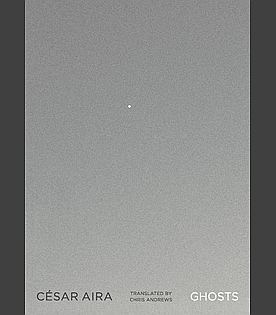
[READ: January 9, 2012] Ghosts
I had planned to read this book a little earlier than I did, but then three holds came in from the library which pushed everything back (those were all new and this book, well, to be fair, I’m not sure it was ever checked out, so I was allowed to renew it). The only bummer thing about it is that this entire story is set on New Year’s Eve, so it would have been nice to post it then. Oh well, what’s two weeks?
So, this is the first novel by Aira that I have read. I really enjoyed his short story recently and, since Roberto Bolaño is a big fan, I wanted to see what he had written. As I’ve mentioned elsewhere, Aira has written approximately forty-five novels (!) (since 1981 (!!)) He had five in 2005. Most of them are fairly short (Ghosts is less than 140 pages), so it’s not quite as daunting as it could be. And for English readers, there are only seven books translated into English. So now is the time to jump on his bandwagon!
This novel was translated by Chris Andrews, who has translated many of Bolaño’s shorter works as well. I did notice one or two British/Australian spellings in there (Andrews is Australian). But I am very impressed with the translation, especially the occasional fifty-cent words that were wonderful choices (I wish I had written them down).
The story itself is fairly simple, although there are waves of complex ideas that come throughout. As I mentioned, the entire story is set on New Year’s Eve in Argentina (which, North Americans please note, is really really hot–like super crazy hot, which is a little disconcerting to read during a cold January]. It’s also almost entirely set in one building (there’s a quick trip to the market). And the bulk of the story centers around one (extended) family.
But as it starts, we see something altogether different. The building in question is a condominium. It was supposed to be finished on January 31, but, of course, it isn’t. All of the families who have bought into the condo have shown up to see the proceedings. They are pretty much all there at the same time although some are coming and others are going. We learn a lot about the building itself, the pool on the roof, the rooms and cabinets, the elevators. It’s a pretty nice place. We meet most of the families who will be living there when it is finally finished. The kids love running around in the unfinished house, watching the workmen carting things away and being a mild nuisance. But it’s basically a holiday so no one cares all that much.
Oh, and there are ghosts all over the building.
The ghosts are naked men. At one point one of the workers even grabs a ghost’s penis and stretches it about 20 yards before letting it go. [Okay, is this a cultural thing? Aira is Argentinian, so I don’t know if this is something that culturally would be normal or if this story has crazy supernatural overtones for all readers. The characters know that the ghosts are there and expect them at certain times. They are unsurprised to see them and even seem to be able to tell things by the movements of the ghosts. I don’t want to suggest that all Argentinians believe in ghosts, I simply don’t know if this is a cultural thing or not].
So, that’s pretty weird. But once you accept that, you can just get on with the story.
We learn pretty early on that although the building is not finished, there is one family currently living there–the caretaker, Raúl Viñas, and his extended family. The caretaker is a drunk, but he doesn’t have a lot of responsibility aside from making sure that nothing gets stolen from the site. They have running water but not much else. But the family doesn’t seem to mind very much (although his wife is about ready for this job to be done so that they can move into their own house).
We meet the contractor of the building, we see the workers loading bricks into trucks, we see them getting ready for lunch. And we watch a member of the family go to the market to load up on lunch for the workers and on food for the party that night (Abel is a young man who believes that having long hair is very cool–it’s cool in Argentina but very uncool in Chile, where he is from); however, he looks so much like a girl that even his family seems concerned by it. After buying his wares, he brings it up to the Viñas’ residence.
Once the condo families have left and the work day is done, we settle into the condo. It’s siesta time and they try to round up the kids for the midday nap. We learn a lot about the Viñas family and the different behaviors of the generations. And then finally the story settles on daughter Patri (I’m not sure exactly how old she is–old enough to watch the younger kids). Patri sees the ghosts and talks with them. They tell her that all the ghosts are off to the best party in the whole world. And she should join them. Flattered, she thinks about it. She realizes of course that she must be dead to join the party. And suddenly this jaunty, light, philosophic novel grows potentially very dark, as Patri seriously considers joining the ghosts.
There are so many different things goes on in this story. It’s a book about Argentina v Chile, it’s a book about architecture through the ages (I have no idea if the stories about Mbutu tribes, Bushmen and Aborigines are true, but they are certainly believable). The book looks at class and how different classes of people deal with money. It looks at pregnancy among the young. And in that respect it seems like such a strange story. The details about the house and the families are so intimate, so striking, that you get lulled into an idea that nothing will happen in the story. And then the concepts are so grand and sweeping that they seem to come from nowhere. To have these two threads tied up with this idea of Patri and the ghosts is quite surprising.
I didn’t love this story. I think the amalgamation of so many different things never quite jelled in my head, I never felt compelled to find time to finish it. But I enjoyed parts of it quite a lot. The details were wonderful. I think if it had stuck with the families instead of going into the history and philosophies it would have been more enjoyable. And yet at the same time without that speculative writing the whole idea of ghosts would be too abruptly un-real. So, perhaps he struck just the right balance.
Regardless of my enjoyment level, the writing was beautiful and always thought-provoking and I will certainly be checking out some of his other novels (which are also short!). I’m going to try to get My Life as a Nun next because that sounds wild and fun.
For ease of searching, I include: Raul , Cesar, Bolano, Tuneyards

 I Just Read About That...
Leave a comment