 SOUNDTRACK: LONDON PHILHARMONIC ORCHESTRA-Angry Birds Theme (2011).
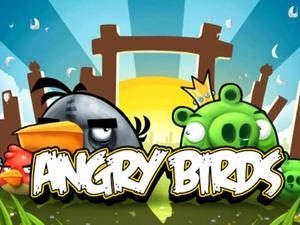 My son, Clark, loves Angry Birds. I’ve played it a few times and found it enjoyable, but he is obsessed. He is absolutely the target market for this song. And who knows maybe it will get him to like classical music.
I wasn’t sure if I’d recognize the tune, but it is already ingrained in my head.
This version is wonderful. It sounds like it might be from a Tim Burton movie.
The full CD is a collection of video game themes. We don’t have a console, so I don’t know any of the other songs on the disc. But I do rather like this one. I can’t wait to see his face when he hears it.
Check it out on NPR!
[READ: December 15, 2011] “What We Talk About When We Talk About Anne Frank”
This story went from being a (rather) funny piece about Hasidic Jews to being a (rather) emotional story about marriage, religion and self-preservation.
As the story opens, Mark and Lauren are visiting the narrator and Deb. Deb and Lauren grew up together. But after school Lauren met Mark and they moved to Israel where they became Hasidic (and took the new names Shoshana and Yerucham). As the story opens, the narrator (a non-observant Jew) is trying to hold his tongue while these religious folks are well, kind of judging them. It’s wonderfully summed up by this comment:
“Jewish to you?” I say. “The hat, the beard, the blocky shoes. A lot of pressures, I’d venture, to look jewish to you. Like, say, maybe Ozzy Osbourne or the guys from Kiss, like them telling Paul Simon, ‘You do not look like a musician to me.'” [Is there a joke in there since the guys from Kiss are indeed Jewish, or no?]
The narrator and Deb has a son, Trevor, who is sixteen. The scene where he comes into the room to discover the Hasidic couple is hilariously subtle (very well written). Then we learn that Shoshana and Yerucham (which Deb calls them) have ten children–all girls. Yikes. But the narrator continues to refer to them (at least in his story) as Mark and Lauren. And the more questions he asks the more we find out that although they keep Holy the traditions, they are a bit lax about some of the rules (maybe?) I actually don’t know the rules so I don’t know if what they’re doing is “wrong” or not. And, amusingly there’s a bit in the story in which Yerucham complains about non-Jews giving them shit for what they do–“Can you eat in there?” kind of questions.
So, when the narrator asks if they can drink, Yerucham says he can make the whiskey kosher. And that starts them on their way.
The story turns to the Holocaust. Deb is morbidly fascinated by the Holocaust, reading every story she can about it. The narrator says, “Her grandparents were all born in the Bronx, and here we are twenty minutes from downtown Miami but it’s like it’s 1937 and we live on the edge of Berlin.” When Yerucham tells her a story about two survivors she (and the room) is transfixed.
Now that they are revealing secrets, Shoshana reveals that she and her husband do more that just drink. They enjoy pot quite a bit. She’s bummed they didn’t bring any (security never checks under a woman’s wig). It happens that there is some in the narrator’s house (which leads to a wonderful “fight” that will obviously be resolved at a nother time). The four light up and the honesty comes with even more intensity,
Anne Frank comes up in the story when the narrator reveals a game that Deb used to play. Shoshana remembers it as “Righteous Gentile” game and the narrator calls it “Who Will Hide Me?” In the event of another Holocaust situation, are there any gentile friends whom you could trust to protect you and your family. It’s obviously a dark game. And it’s made even more so as the story progresses.
And suddenly, the story is no longer funny, but is very thoughtful and makes you rethink everything you’ve seen earlier.
This was magnificent.
First it’s w

 I Just Read About That...
Leave a comment