 SOUNDTRACK: QUEENSRŸCHE-The Warning (1984).
 Queensrÿche fulfilled the promise of their debut EP with this album. It takes the blueprint of the EP and expands it wonderfully. They introduce some cool low vocal chants to compliment Tate’s soaring alto (like on “En Force”), they also introduce some wonderful effects and riffs and scales (also on “En Force”).
There’s also some really great, odd “keyboard” bits thrown in as kind of sound effects or jarring moments (“Deliverance”). “Deliverance” also has great backing vocals, and I love the way the “Deliver Us” part of the song is quite different from the soaring of the rest of the vocals. The back and forth of “No Sanctuary” also showcases the bands skills very well.
The band even shows signs that they’re not sticking to standard heavy metal. On “N.M. 156” there’s some sci-fi chanting and the really cool section of the song in which Tate sings “Forgotten…Lost…Memories” and the “Lost” part is a completely unexpected note. They were taking chances from the beginning.
“The Lady Wore Black” is updated with the stunning “Take Hold of the Flame,” a slightly more progressive version of that first song. “Before the Storm” was the first song I heard from this album and it has always been my favorite on the record (this is one of those few albums where the better songs aren’t front loaded). “We watch the sun rise and hope it won’t be our last” (they were always happy guys).
“Child of Fire” opens with a wonderful riff and the compelling, “the souls that are damned by the pain that you bring send you higher.” The song settles down into a slow part and Tate growls “Damn you and the pain they must feel” and you can tell he means it (whatever else the song is about).
All this time I don’t think I ever realized that “Roads to Madness” was nine minutes long. It is definitely foreshadowing the kind of epic work they would do later. And it closes out the album in a cathartic blast. It’s wonderfully pure metal from the mid-80s.
[READ: October 20, 2011] Celebrations of Curious Characters
I had never heard of Ricky Jay before getting this book, but apparently he is a reasonably well know radio personality (on KCRW), he is also an actor on Deadwood, and he’s a magician. This book is a collection of his KCRW radio show broadcasts along with accompanying pictures from his vast collection of obscure ephemera.
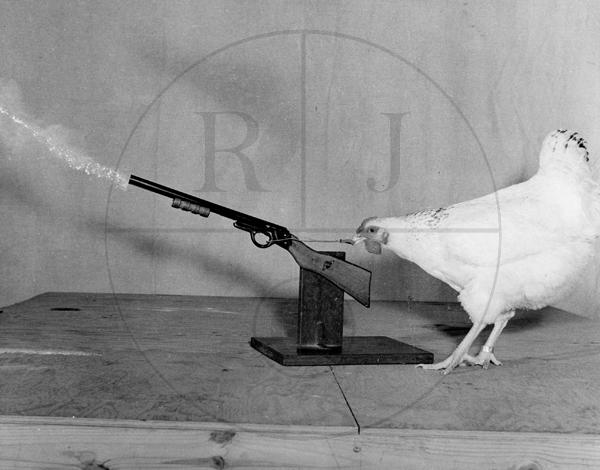 There are forty-five entries in the book–each one is a page long (it’s an oversized book and they are two columns each). Each essay is Jay’s take on a particular subject or, as the title says, curious character. Jay is a collector of esoteric information, especially that related to magic and, for lack of a better word, freakish behavior. One of the most enjoyable parts of the book are the pictures that accompany each entry. The pictures come from Jay’s collection and each picture’s provenance is given in the back of the book. So we get pictures like “The little Count Boruwlaski, engraving by A. van Assed ([London]) Borowlaski [sic], 1788). or Lithograph of Chung Ling Soo (Birmingham: J. Upton, c. 1912) or Frontispiece portrait from George Devol, Forty Years a Gambler on the Mississippi (Cincinnati: Devol & Haines, 1887). Some of these photos you can see on his website. Or you can enjoy this picture of a chicken firing a gun that is not in the book (it comes from his site).
So what of the book itself? Well, it is an enjoyable romp through some unusual people and/or events in the last hundred and fifty or so years. And it speaks to the truth that people have been doing crazy stuff forever.
Like in “Rubber Suit” which is about Paul Boyton–the first person to swim the English Channel. But he will always have an asterisk next to his name because he used a rubber suit, which in addition to keeping him warm and dry, also contained compartments for a small ax, a flask of brandy and a foghorn. In “Blind Faith” Jay talks about people who tried to fool the public by claiming they could see while blindfolded. In one instance, he speaks of Margaret M’Avoy who claimed that she could see with her fingers (after contracting scarlet fever and going blind). She demonstrated her ability to tell color while blindfolded and to tell the time from a closed pocketwatch!
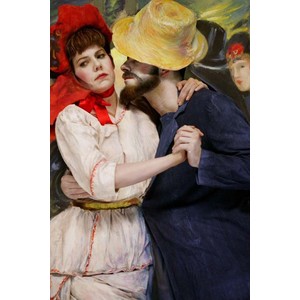 In “Living Pictu
 res” he talks about The Pageant of the Masters, which has been celebrated in Laguna Beach, California since the 1930s (and is seen in Arrested Development and The Gilmore Girls–they did their own Stars Hollow version, of course). The history of the event is easy enough to research, but Jay offers some other interesting insights, like how similar this exhibit is to “tableau arts’ as seen in vaudeville. He then relates a very funny story about a live show with a dog, gold paint and a very entertained audience–that story alone makes it worth tracking down the book.
Jay also talks about crooks, gamblers and sham artists, which makes sense since he is a magician (the legitimate form of fooling people). So you gets some essays on “Reformed Gamblers” (like the ones who tries to sell books showing how you could fool people at cards) or “Jesus on a Tortilla” (people have been seeing faces in things for ages). My personal favorite of this batch was “Bottle Conjurer” in which a man promised to place himself in a quart bottle in full view of the audience. How much would you pay to see that?
I also really enjoyed “Lair’s Lariat” which addresses the conceit seen in cartoons since the 1950s: throwing a rope up into the clouds and then magically climbing it (the most famous version of this is from 1890 and is all about The Indian Rope Trick–the greatest hoax/illusion ever). Another item that I learned about through cartoons is the flea circus (started in Times Square in 1925 at Hubert’s Museum).
He also mentions some genuine freaks, like “The Monstrous Craws” (who had excrescences that extended from their chins like a pelican’s pouch or “The Pig-Faced Lady” or Matthew Buchinger, the armless and legless calligrapher and magician.
But what is best about this book is that Jay is sympathetic to these people–well almost all of them. He treats them with kid gloves and shows them off to be masters at their arts. He also doesn’t talk exclusively about one subject in each essay. It’s not a biographical sketch of one person, but rather a gently rambling assessment of various stories that relate to the one theme–it’s amazing how much ground you can cover in four-minutes.
This is a great compendium for anyone interested in the unusual side of life.
For ease of searching I include: Queensryche

 I Just Read About That...
Leave a comment