 SOUNDTRACK: PHISH-Live Bait (2010-2011).
 If you’re a fan of Phish, you no-doubt know about their live concert releases. Phish has always encouraged bootlegging of their shows. And people traded the shows all around the country. Back about twelve years ago, they started releasing some of these concerts officially–soundboard quality recordings. There was no indication that they would release every concert they had played, but they selected a very interesting mix of recent and early shows as well as Halloween shows (where they cover an entire album from another band) and shows from unusual places.
Starting in 2009 (after their hiatus), the band started making (almost) all of their concerts available for download (for a fee) on their site. You can get any show–you can even get them in CD format, for a quite sizable fee–soundboard quality. One thing that I really like about their site if you go to a concert, you can redeem the bar code on your ticket for free MP3 of the show, usually within 48 hours. Back when I used to go to concerts, I would have loved to have copies of a lot of the shows I saw. This is a cool service for their fans.
And speaking of cool services, this post is about Live Bait. I love the title of the series, which is obviously a pun about places where you can buy live bait (the covers all have pictures of bait stands), but it’s also a wonderful way to bait users into buying more music–crass and clever. Anyhow, the Live Bait downloads (up to #6 right now) are a collection of live recordings taken from various shows. (Live Bait #5 has songs from 2009 and songs from all the way aback to 1989). They’re assembled together into a kind of seamless show and they are all available for free.
Okay, big deal. But it is a big deal because, while the first couple were 80 or so minutes of music (not too shabby in and of itself), Live Bait #3 features a 58-minute version of a song (!); Live Bait #4 contains almost 4 hours of free music and Live Bait #5 contains over 6 hours of free music. So if you’re curious about why people like Phish so much, here’s several opportunities to listen to some of their live songs for free.
Their most recent download is from their Benefit for Vermont Flood Recovery–if you’re going to buy a show, it’s a good place to start
[READ: September 25, 2011] “Radisson Confidential”
For a time (I wish I could remember exactly when this was) it seemed like all the young hip writers were named Jonathan: Ames, Lethem, Franzen, Safran Foer, and I wasn’t sure what to make of it. I think I grew weary of the whole episode and decided not to read any of them. That has since changed, and I have now read (and enjoyed) all of them–but each for very different reasons. The funny thing to me though is that they were all lumped together and yet they are all so very different, especially now that Safran Foer has been writing nonfiction and Franzen has proven himself to be a writer of occasional big books that get lots of attention.
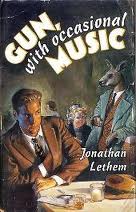 But Lethem is probably the one that stands out the most because when he was a new writer, he wrote primarily science fiction (I had no idea!). To quote Wikipedia, his first novel, “Gun, with Occasional Music, is a merging of science fiction and the Chandleresque detective story, which includes talking kangaroos, radical futuristic versions of the drug scene, and cryogenic prisons.” Huh. It was nominated for a Nebula award.
That works as a nice lead in to this article which is all about science fiction conventions and being a “sci fi author” at them. I admit I found this essay hard going. It seemed kind of stiff to me, which I didn’t care for. But by the end I rather liked the message. The message being that as a young sci-fi author he hated being lumped in with all the other genre fiction writers. At conventions and whatnot, he always felt like just another person on a panel, and he would it in the bar afterwards with all the other writers. It wasn’t until later that he began to appreciate that being part of this group gave him a very appreciative audience (science fiction readers) who weren’t themselves aspiring writers and who “savored their work, collected their editions, and were conversant in literary-critical context.”
Now that he has graduated from out of the genre, he has really begun to appreciate what he had within the genre. It’s not essential reading, but I did find it interesting.

 I Just Read About That...
Leave a comment