 SOUNDTRACK: BUFFALO TOM-Birdbrain (1990).
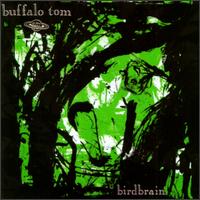 If Buffalo Tom’s first album was a kind of punky Hüsker Dü album (which I contend it was), their second album switches gears towards the Afghan Whigs. In other words, they still have a raw punky feel, but they’ve added more textures and melodies to the proceedings.
And while Janovitz’ voice is still loud and bold, rather than the screamy sound of say Bob Mould, he’s got a more nuanced sound like Greg Dulli (for some of the disc, anyway). I notice this especially on the second track “Skeleton Key” which sounds like it could be an outtake from an Afghan Whigs session (it’s not as a good as a typical Whigs song, however). You can hear more of those Dulli-notes on “The Guy Who is Me.”
The songwriting is somewhat more comlex overall. The title track “Birdbrain” is catchy not only in the verse, but the chorus is a wonderful surpise–really redirecting the momentum of the song. Despite some variants in texture and pacing, the disc still retains that raw punk sound of the first.
The album feels kind of long to me, though (and not because there are two acoustic songs tacked on at the end). At almost 5 minutes, “Enemy” is way too long. And by the end of the album, some of the sameiness that was eveident on the debut has crept into this disc as well. The last few songs in particualr seem to have a lot of that screaming voice over a fairly simple riff thing going on.
The cover of the Psyhedeclic Furs’ “Heaven” in a live aocustic setting is a nice change, but really should have been laced around track 7 or 8 to minimize redundancy. The last track is a live acoustic version of the tenth song off their first album. How odd to resurrect a very deep album cut in this way. But, again, at almost 5 minutes (two minutes longer than the original), it just doesn’t hold up.
There are signs of change here, but they won’t become fully evident until their next album, Let Me Come Over.
[READ: July 29, 2011] “Reverting to a Wild State”
This story plays around with a timeline, but not in a crazy way–in other words, the story is out of sequence, but it’s not a gimmick.
In Part 3, we see the narrator “cleaning” a rich man’s apartment, in his underwear. We have no real context for him or what he’s doing, but it’s an amusing little section, and ends with him seeming content.
In Part 2, we see the narrator fighting with Justin, the man who we learn was his boyfiorned. They broke up, but are in a diner having what seems like a final hash-out.
In Part 1, we see the reason for the big fight in Part 2
In Part 0, we see both the narrator and Justin, at 19 years old, first falling in love.
What I really liked about the story is that through each of the parts, little revelations about the two charctaer’s personalities appear, which help to flesh out not only who they are, but why Part 3 ends the way it does. And in a nutshell, even though Part 3 could actually stand on its own (it’s be a little unsatisfying but it would work), those earlier sections (which don’t impact Part 3 directly), provide enough insight so that the final line of Part 3 resonates more and more.
This was a really clever story.

 I Just Read About That...
[…] story is a sad and lonesome tale (not unlike Torres’ other story that was recently published in the New Yorker–it’s like these two magazines are linked […]