 SOUNDTRACK: GOGOL BORDELLO-Trans-Continental Hustle (2010).
 When I first heard Gogol Bordello, they were touring for this album (thanks NPR). Consequently, I knew this album pretty well when I bought it. At first I felt that it didn’t have the vibrancy of the live show (how could it?). But after putting it aside for a few weeks, when I re-listened, I found the album (produced by Rick Rubin) to be everything I expect from Gogol Bordello: loud, frenetic fun, a bit of mayhem, and some great tunes that sound like traditional gypsy songs, but which I assume are not.
While I was listening to the album, I kept thinking of The Pogues. They don’t really sound anything alike but they have that same feel of punk mixed with traditional music. For The Pogues, it’s Irish trad, and for GB it’s a gypsy sound–I’m not sure if it is attributable to any specific locale. But they have a common ground in a kind of Spanish-based trad style. From the Pogues, you get a song like “Fiesta” which is overtly Spanish. From GB, you get songs like “My Companjera” or “Uma Menina Uma Cigana.” Singer/ringleader Eugene Hutz has been living in Brazil, and he has really embraced the culture (and the accent). He also sings in a kind of drunken tenor (his accent is probably more understandable than MacGowan’s drunken warble, but not always).
I’m led to understand that previous albums were a bit more high-throttle from start to finish. This disc has a couple of ballads. At first they seem to not work as well, but in truth they help to pace the album somewhat.
It’s obvious this band will not suit everyone’s tastes, but if you’re looking for some high energy punk with some ethnic flare, GB is your band (and if you like skinny guys with no shirts and big mustaches, GB is definitely your band. It is entirely conceivable that Hutz does not know how to work a button).
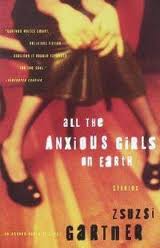
[READ: June 20, 2011] All the Anxious Girls on Earth
I’ve really enjoyed Zsuzsi’s stories in recent issues of The Walrus. So much so that I wanted to get a copy of her new book. It wasn’t available anywhere in the States yet, so I went back and got her first collection of short stories.
This collection felt to me like a younger, less sophisticated version of Zsuzsi’s later works that I liked so much. This is not to say that I didn’t like them. I just wasn’t as blown as w.
“How to Survive in the Bush”
I had to read the opening to this story twice for some reason. The second read made much more sense and I was able to follow what was going on (I think there were a few terms that I didn’t know–a 1941 Tiger Moth, East Kootenays–that were given context after a few pages. It transpires that this is a story o a woman who has given up her life to move to the boonies with/for her husband. The whole story is written in second person which while typically inviting, I found alienating. It made the story harder to read for me, but once I got into the groove of it I found it very rewarding.
“The Tragedy of Premature Death Among Geniuses”
This story also looks at a character from an unusual angle. We learn early on that the narrator has been given custody of Edgar the Human Cheetah when the narrator’s sister and husband both died. Edgar is of course not a real cheetah, just a wild boy. Something seems off kilter about the way the narrator is describing the boy though. And as the story continues we learn just what is underpinning the whole story. And of course, I can’t help but wonder what the sister and her husband’s agony of their decision for custody must have been like.
“City of My Dreams”
I enjoyed the details of this story. Lila’s job as a programmer at a local film festival was wonderfully imagined. And the grief (and more) that she goes through from the participants was pretty amazing. And I loved the detail of her cousin’s house which was built to withstand earthquakes. But the overall story felt a bit too nebulous.
“Pest Control for Dummies”
The main thrust of this story is that Daisy has just found out that she had a brother who died. He died in childbirth and her (quite sensitive obviously) mother says that if he had lived she wouldn’t have been born. Daisy (who is an adult) takes the news very hard. But what makes the story especially weird is that Daisy retreats into herself and begins having conversations with her brother-fetus. The title of the story refers to Daisy’s boyfriend who is copyediting the titular Dummies book, and getting a very hard time from the editor. I found it a bit over the top.
“Boys Growing”
This is a story of a teacher dealing with three boys in particular. I didn’t get all that much out of it.
“Measuring Death in Column Inches (a nine-week manual for girl rim pigs)”
Although rim pigs is never actually defined, one gets the impression that a rim pig is a late night copyeditor. Like many of the other stories, this takes a story and uses a unique format for telling it. In this case, a weekly-advice-column style explains the weird and unsettling characters you meet when you work the graveyard shift. But it’s also a critique of newspapers and sensationalism in general. I enjoyed this piece, although it was a wee bit long.
“The Nature of Pure Evil”
This story starts out with an attention grabber: “Hedy reaches for the telephone to make another bomb threat.” Hedy is the protagonist and Gartner manages to make her (a person who calls in bomb threats, mind you) sympathetic. Hedy has recently been dumped in a most spectacular fashion within the first two pages, [I tell you Zsuzsi crammed a ton of great stuff into this story]. The rest of the story is a discussion (with Hedy’s friends) of what pure evil is, with the readers knowing what her friends don’t. It’s a wonderful (dark) story.
“Anxious Objects”
This is funny, twisted look at parenting. As the details of the parent’s hovering grows more insane, you realize just how over protective society has become. Very funny.
“Odds That, All Things Considered, She’d Someday Be Happy”
This is a very long story (practically a novella). Most of Gartner’s stories in The Walrus have been quite short, so finding these stories, especially this one, so long was quite surprising. Nevertheless, this was a tour de force and an excellent piece to end with.
The story is set up from the point of view of different characters, which lends a wonderfully complex air to the proceedings. The story opens with “the former teen terrorist.” We learn about her story and why a seemingly good girl would resort to blowing up a pizza place. Then we learn that there was a young girl in the pizza place who was killed by the blast.
Section two is from the point of view of Her Victim’s Mother. This section introduces the unthinkable possibility that Dorothy (Dot!) Hay is actually better off without her daughter. Her daughter was developmentally challenged, and this was a major drag on her. Then we learn about Dorothy’s backstory and how the explosion affected her as she sat at the trial day in day out for so many months. And we learn about how Dorothy became Dot!–morning talk show host.
Part three looks at the terrorist’s mother and what she went through when she learned what her daughter had done. Part Four is from the point of view of the victim herself, from heaven (or wherever she is). It truly shapes the story that has formed around her since she died.
The finale shows all (sort of) the living characters converging on Dot!’s stage for a forgiveness episode.
This was a great great story and an excellent end to an interesting collection of stories.

 I Just Read About That...
Leave a comment